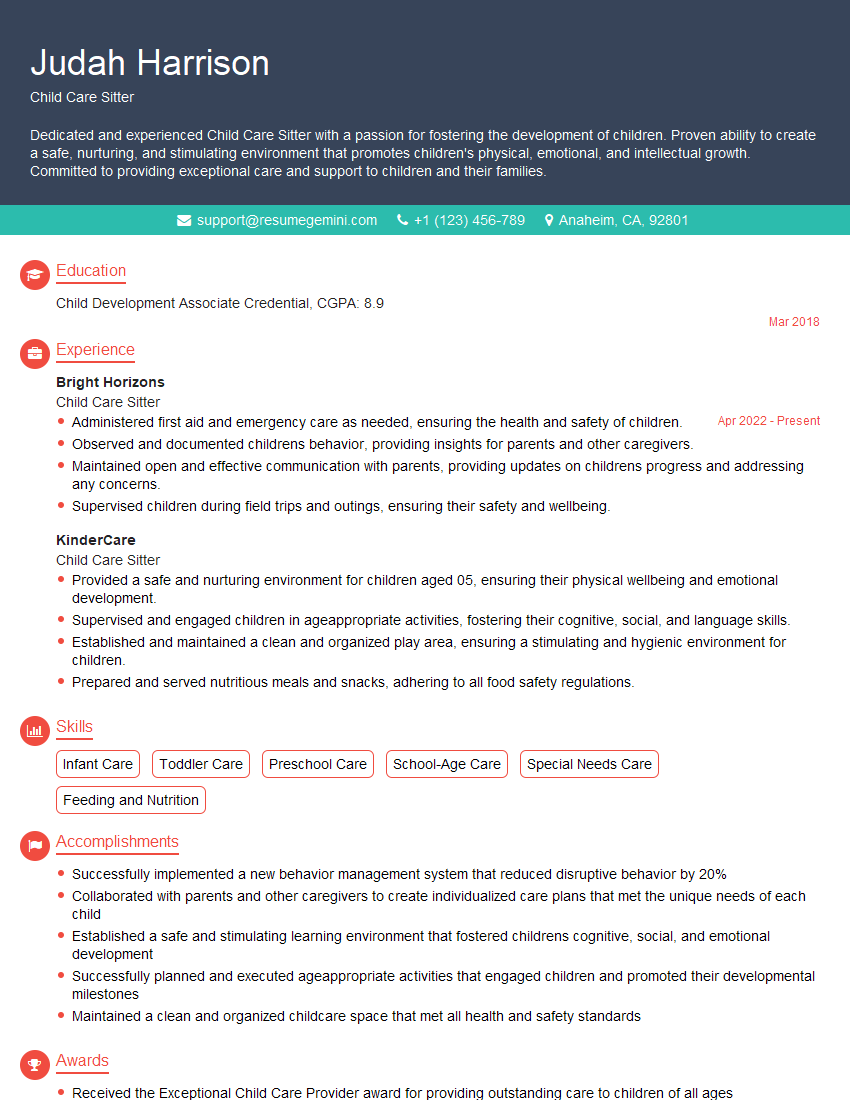
Feeling lost in a sea of interview questions? Landed that dream interview for Child Care Sitter but worried you might not have the answers? You’re not alone! This blog is your guide for interview success. We’ll break down the most common Child Care Sitter interview questions, providing insightful answers and tips to leave a lasting impression. Plus, we’ll delve into the key responsibilities of this exciting role, so you can walk into your interview feeling confident and prepared.
Acing the interview is crucial, but landing one requires a compelling resume that gets you noticed. Crafting a professional document that highlights your skills and experience is the first step toward interview success. ResumeGemini can help you build a standout resume that gets you called in for that dream job.






Essential Interview Questions For Child Care Sitter
1. What are the most important qualities of a successful child care sitter?
As a successful child care sitter, I believe compassion, patience, responsibility, and excellent communication skills are essential.
- Compassion and empathy allow me to understand and meet the emotional and physical needs of children.
- Patience and a calm demeanor help me navigate challenging situations and maintain a positive and supportive environment.
- Responsibility ensures that I prioritize the safety, well-being, and development of the children in my care.
- Effective communication enables me to build strong relationships with children, parents, and other caregivers.
2. Describe your experience in creating and implementing age-appropriate activities for children.
Planning and Preparation
- Research and gather ideas from reputable sources, such as educational websites and developmental books.
- Consider the children’s interests, age, and developmental stage when selecting activities.
- Plan activities that promote cognitive, physical, social-emotional, and creative development.
Implementation and Adaptation
- Set up the environment and gather necessary materials to ensure a safe and engaging experience.
- Introduce the activity in a clear and enthusiastic manner, providing instructions and guidelines.
- Supervise and support children as they engage in the activity, providing encouragement and assistance as needed.
- Reflect on the activity’s effectiveness and make adjustments as necessary to meet the children’s learning needs.
3. How would you handle a situation where a child under your care is misbehaving?
- Stay calm and approach the child calmly without escalating the situation.
- Acknowledge the child’s feelings and validate their emotions without condoning the behavior.
- Set clear and firm limits, explaining the consequences of inappropriate behavior.
- Offer alternative or positive behavior choices and provide gentle guidance.
- Use positive reinforcement to reward desired behaviors and encourage cooperation.
- Communicate with the parents about the incident and work together to develop strategies to address future misbehavior.
4. What are your strategies for promoting healthy eating habits in children?
- Offer a variety of healthy foods from all food groups to ensure a balanced diet.
- Involve children in meal preparation to foster independence and teach them about healthy choices.
- Create a positive and enjoyable mealtime atmosphere where children feel comfortable trying new foods.
- Be a role model by demonstrating healthy eating habits and encouraging children to make wise choices.
- Educate children about the importance of nutrition and healthy eating through age-appropriate activities and discussions.
5. How do you ensure the safety and well-being of children in your care?
- Maintain a safe and clean environment, free from potential hazards.
- Supervise children closely at all times, especially during transitions and outdoor activities.
- Follow established safety policies and procedures, such as emergency evacuation plans.
- Administer first aid and CPR as needed and seek professional medical attention promptly.
- Stay alert and aware of the children’s surroundings, potential risks, and changes in behavior.
6. How do you build strong relationships with the parents of the children you care for?
- Communicate regularly and openly, providing detailed updates on the child’s day and any concerns or achievements.
- Listen attentively to parents’ instructions, preferences, and concerns regarding their child’s care.
- Respect parents’ decisions and values, even if they differ from your own, maintaining confidentiality and discretion.
- Involve parents in planning activities and outings to foster collaboration and build trust.
- Be responsive and flexible to accommodate parents’ schedules and needs.
7. Describe your experience in administering medication to children.
- Always follow the doctor’s orders and the parents’ instructions explicitly.
- Check the medication, dosage, frequency, and administration route carefully before administering.
- Explain the purpose of the medication to the child in a way they can understand.
- Use appropriate tools and techniques to administer the medication safely and comfortably.
- Document the time, dosage, and route of administration accurately.
- Monitor the child for any adverse reactions and report them to the parents or medical professional immediately.
8. How do you handle a child who is experiencing emotional distress?
- Stay calm and approach the child with empathy and compassion.
- Listen attentively to the child’s concerns and validate their feelings without judgment.
- Provide a safe and comforting space for the child to express their emotions.
- Use calming techniques such as deep breathing exercises or gentle physical contact (if appropriate).
- Identify the root cause of the distress and help the child develop strategies to cope with it.
- Contact the parents if the emotional distress persists or if there are concerns about the child’s well-being.
9. How do you manage multiple children with different needs and developmental stages?
- Establish a consistent schedule and routines to provide structure and predictability for the children.
- Divide the children into smaller groups based on their age, interests, or developmental needs.
- Plan activities that cater to the varying abilities and interests of the children.
- Provide individualized attention to each child, ensuring their needs are met and their development is supported.
- Foster cooperation and peer interactions among the children by encouraging them to participate in shared activities.
10. Why are you interested in becoming a child care sitter, and what sets you apart from other candidates?
I am passionate about working with children and believe that I possess the skills and qualities necessary to be an exceptional child care sitter. I am confident in my ability to provide a safe, nurturing, and stimulating environment for children, fostering their physical, emotional, and cognitive development.
My experience working with children in various settings, including daycare centers and summer camps, has equipped me with a strong understanding of child development and age-appropriate practices. I am particularly adept at creating and implementing engaging activities that promote learning and growth.
Furthermore, my calm demeanor, patience, and ability to connect with children on their level make me an ideal candidate for this role. I am committed to providing the highest quality care and ensuring that the children in my care have a positive and memorable experience.
Interviewers often ask about specific skills and experiences. With ResumeGemini‘s customizable templates, you can tailor your resume to showcase the skills most relevant to the position, making a powerful first impression. Also check out Resume Template specially tailored for Child Care Sitter.
Career Expert Tips:
- Ace those interviews! Prepare effectively by reviewing the Top 50 Most Common Interview Questions on ResumeGemini.
- Navigate your job search with confidence! Explore a wide range of Career Tips on ResumeGemini. Learn about common challenges and recommendations to overcome them.
- Craft the perfect resume! Master the Art of Resume Writing with ResumeGemini’s guide. Showcase your unique qualifications and achievements effectively.
- Great Savings With New Year Deals and Discounts! In 2025, boost your job search and build your dream resume with ResumeGemini’s ATS optimized templates.
Researching the company and tailoring your answers is essential. Once you have a clear understanding of the Child Care Sitter‘s requirements, you can use ResumeGemini to adjust your resume to perfectly match the job description.
Key Job Responsibilities
Child Care Sitters are responsible for providing a safe and nurturing environment for children in the absence of their parents or guardians. Key responsibilities include:
1. Childcare and Supervision
Provide age-appropriate care and supervision to children, ensuring their safety and well-being.
- Monitor children’s activities and intervene as necessary to prevent accidents or harm.
- Attend to children’s physical, emotional, and developmental needs, including feeding, bathing, dressing, and changing diapers.
2. Activities and Stimulation
Engage children in age-appropriate activities that promote their cognitive, physical, and social development.
- Play games, read stories, and engage in imaginative play.
- Supervise outdoor activities, ensuring children’s safety and fostering their physical development.
3. Communication and Reporting
Communicate effectively with parents or guardians regarding children’s well-being, progress, and any concerns.
- Provide regular updates on children’s activities, meals, and naptimes.
- Report any accidents, illnesses, or behavioral issues to parents or guardians promptly.
4. Household Responsibilities
Maintain a clean and organized environment for children, including tidying up toys, preparing snacks, and keeping common areas clean.
- Assist with light household duties, such as laundry, vacuuming, and meal preparation, when necessary.
- Ensure the safety of the home environment by following established protocols and reporting any hazards.
Interview Tips
‘Practice makes perfect’ is a well-known adage that can significantly enhance your interview preparation. Here are some invaluable tips and hacks to equip you with the confidence to ace your Child Care Sitter interview:
1. Research and Preparation
Familiarize yourself with the family’s needs, the children’s ages and schedules, and any special requirements. Research childcare best practices to demonstrate your knowledge and dedication to providing quality care.
- Visit the family’s home or request a virtual tour to gain a sense of the environment where you will be working.
- Prepare thoughtful questions to ask the interviewer, demonstrating your interest and proactive approach.
2. Highlight Your Skills and Experience
Emphasize your relevant childcare experience, certifications, and training. Quantify your accomplishments whenever possible, using specific examples to showcase your effectiveness in providing care.
- If you have experience working with children of different ages, highlight your ability to adapt your caregiving style and activities to meet their individual needs.
- Share specific examples of how you have handled challenging situations, resolving conflicts, and fostered children’s development.
3. Emphasize Your Safety-Consciousness
Demonstrate your understanding of childcare safety protocols and your commitment to creating a safe environment for children. Highlight any first-aid or CPR certifications you possess.
- Explain your approach to supervision and how you ensure children’s safety during both indoor and outdoor activities.
- Discuss any experience you have in handling emergencies, such as medical situations or accidents.
4. Showcase Your Communication Abilities
Effective communication is crucial for any childcare provider. Highlight your strong communication skills and ability to build rapport with children and parents.
- Provide examples of how you communicate children’s progress and any concerns promptly and clearly to parents.
- Explain how you involve children in decision-making and encourage open communication to foster a positive and trusting relationship.
5. Be Enthusiastic and Professional
Convey your passion for working with children and your commitment to providing them with the best possible care. Maintain a professional demeanor and demonstrate a positive attitude throughout the interview.
- Share anecdotes or personal experiences that demonstrate your love for children and your understanding of their developmental needs.
- Dress appropriately and arrive on time for the interview, showing respect for the interviewer and the position you are seeking.
Next Step:
Armed with this knowledge, you’re now well-equipped to tackle the Child Care Sitter interview with confidence. Remember, a well-crafted resume is your first impression. Take the time to tailor your resume to highlight your relevant skills and experiences. And don’t forget to practice your answers to common interview questions. With a little preparation, you’ll be on your way to landing your dream job. So what are you waiting for? Start building your resume and start applying! Build an amazing resume with ResumeGemini.