Feeling lost in a sea of interview questions? Landed that dream interview for Commercial Airline Pilot but worried you might not have the answers? You’re not alone! This blog is your guide for interview success. We’ll break down the most common Commercial Airline Pilot interview questions, providing insightful answers and tips to leave a lasting impression. Plus, we’ll delve into the key responsibilities of this exciting role, so you can walk into your interview feeling confident and prepared.
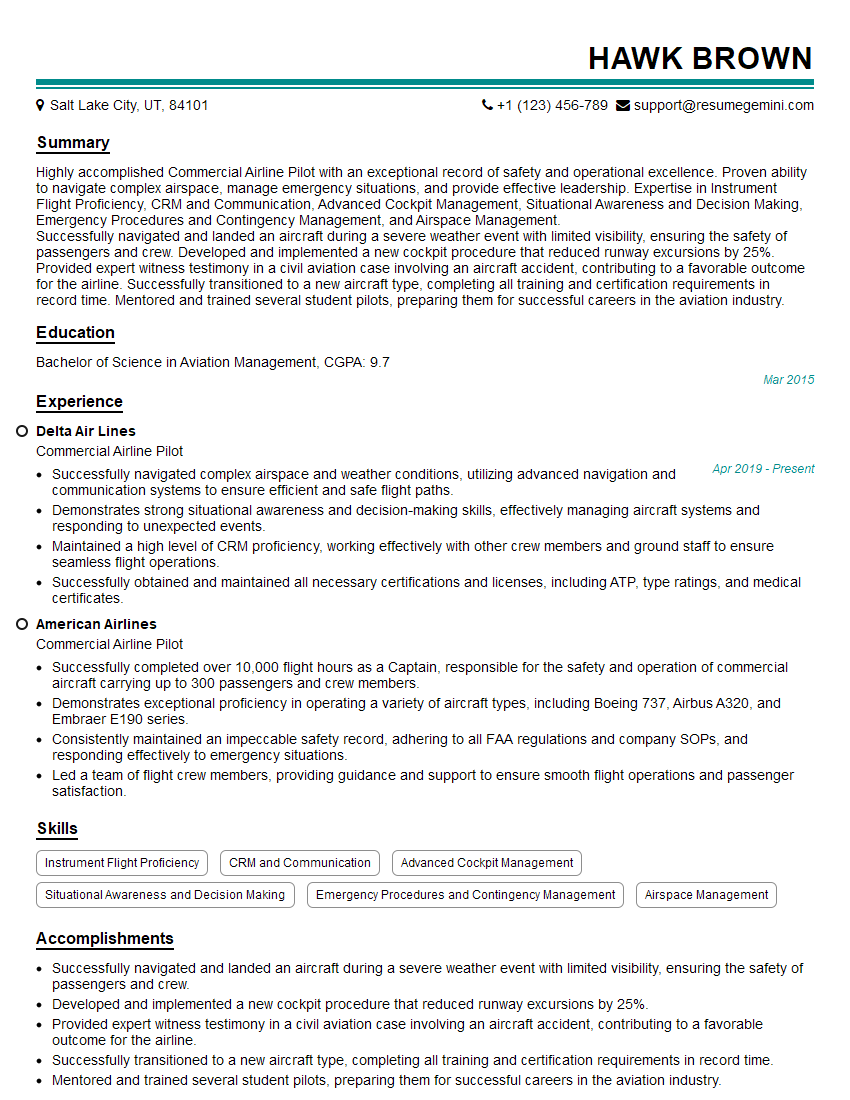
Acing the interview is crucial, but landing one requires a compelling resume that gets you noticed. Crafting a professional document that highlights your skills and experience is the first step toward interview success. ResumeGemini can help you build a standout resume that gets you called in for that dream job.






Essential Interview Questions For Commercial Airline Pilot
1. Describe the key considerations for calculating the takeoff and landing performance of an aircraft?
As a commercial airline pilot, I must meticulously consider several key factors when determining the takeoff and landing performance of an aircraft. These factors include, but are not limited to:
- Aircraft Specifications: Aircraft weight, wingspan, engine power, and flap configuration are critical determinants of takeoff and landing performance.
- Environmental Conditions: Runway conditions (length, slope, surface), wind speed and direction, and air density significantly impact performance.
- Operational Procedures: Standard operating procedures, such as engine power settings, flap deployment, and trim settings, play a crucial role in optimizing performance.
2. Explain the role of the flight management system (FMS) in modern aircraft and how it aids pilots during flight?
: Navigation and Guidance
- The FMS utilizes GPS, inertial navigation systems, and other sensors to provide accurate navigation and guidance throughout the flight.
- It calculates and displays optimal flight paths, taking into account aircraft performance, weather conditions, and air traffic control instructions.
Subheading: Performance Optimization
- The FMS calculates fuel consumption, flight time, and arrival estimates, allowing pilots to plan and optimize flight efficiency.
- It monitors aircraft systems and performance, providing alerts and warnings to ensure safe and efficient operation.
3. Discuss the principles of aerodynamics that govern the flight of an aircraft and how they influence your decision-making as a pilot?
- Lift: Understanding the principles of lift generated by the aircraft’s wings is essential for safe and efficient flight.
- Drag: Minimizing drag through proper airframe design and flight techniques is crucial for maximizing aircraft performance and fuel efficiency.
- Stability: Ensuring aircraft stability during various flight conditions, such as turbulence, is vital for maintaining control and preventing accidents.
4. Describe the procedures and techniques you employ to manage the workload during a complex flight operation, such as a transoceanic flight?
- Task Prioritization: Identifying and prioritizing critical tasks to ensure timely and accurate execution.
- Crew Coordination: Effective communication and collaboration with the co-pilot and cabin crew to distribute workload and maintain situational awareness.
- Automation Utilization: Utilizing advanced aircraft systems, such as autopilots and flight management systems, to reduce pilot workload and enhance safety.
5. Explain how you assess and manage risk during flight operations, particularly in challenging weather conditions?
- Weather Analysis: Utilizing weather reports, forecasts, and onboard weather radar to assess potential risks and plan alternative routes if necessary.
- Risk Mitigation: Implementing procedures and techniques, such as terrain avoidance and icing prevention, to minimize risks associated with adverse weather conditions.
- Decision-Making: Making timely and informed decisions regarding flight path adjustments, altitude changes, or potential diversions to ensure passenger safety.
6. Describe the communication and coordination protocols you follow when interacting with air traffic control (ATC)?
- Clear and Concise Communication: Using standard phraseology and maintaining clear and concise communication to ensure effective coordination.
- Active Listening: Paying close attention to ATC instructions and repeating back clearances to avoid misunderstandings.
- Situational Awareness: Maintaining situational awareness through regular communication with ATC to ensure a shared understanding of airspace and traffic conditions.
7. Explain the procedures you implement to ensure the safety and security of passengers and crew during an emergency situation?
- Emergency Procedures: Following established emergency procedures for various scenarios, such as engine failure, decompression, or fire.
- Passenger Management: Communicating clearly with passengers, providing instructions, and calming fears during emergency situations.
- Crew Coordination: Working closely with cabin crew to ensure effective coordination and efficient emergency response.
8. Describe the regulatory and compliance requirements you are familiar with as a commercial airline pilot?
- FAA Regulations: Adherence to Federal Aviation Administration (FAA) regulations regarding flight operations, pilot training, and aircraft maintenance.
- Company Policies: Compliance with airline-specific policies and procedures to ensure operational safety and efficiency.
- International Standards: Knowledge of international aviation standards and regulations, such as those set by the International Civil Aviation Organization (ICAO).
9. Explain the use of advanced avionics and technology in modern aircraft and how it has influenced your role as a pilot?
- Enhanced Situational Awareness: Advanced avionics provide real-time flight data, weather information, and terrain mapping, improving situational awareness.
- Automated Systems: Integration of automated systems, such as autothrottles and flight directors, reduces pilot workload and enhances flight precision.
- Safety Enhancements: Advanced technology, such as terrain warning systems and predictive wind shear detection, improves safety by alerting pilots to potential hazards.
10. Describe your approach to continuous professional development and how you stay abreast of the latest advancements in aviation?
- Training and Certifications: Regular participation in training programs and certifications to maintain proficiency and acquire new skills.
- Industry Publications: Staying updated with industry publications, journals, and online resources to keep abreast of technological advancements.
- Conferences and Seminars: Attending industry conferences and seminars to network with peers and learn about best practices.
Interviewers often ask about specific skills and experiences. With ResumeGemini‘s customizable templates, you can tailor your resume to showcase the skills most relevant to the position, making a powerful first impression. Also check out Resume Template specially tailored for Commercial Airline Pilot.
Career Expert Tips:
- Ace those interviews! Prepare effectively by reviewing the Top 50 Most Common Interview Questions on ResumeGemini.
- Navigate your job search with confidence! Explore a wide range of Career Tips on ResumeGemini. Learn about common challenges and recommendations to overcome them.
- Craft the perfect resume! Master the Art of Resume Writing with ResumeGemini’s guide. Showcase your unique qualifications and achievements effectively.
- Great Savings With New Year Deals and Discounts! In 2025, boost your job search and build your dream resume with ResumeGemini’s ATS optimized templates.
Researching the company and tailoring your answers is essential. Once you have a clear understanding of the Commercial Airline Pilot‘s requirements, you can use ResumeGemini to adjust your resume to perfectly match the job description.
Key Job Responsibilities
Commercial Airline Pilots are responsible for the safe and efficient operation of commercial aircraft. Their key job responsibilities include:
1. Flight Operations
Pilots are responsible for all aspects of flight operations, including pre-flight planning, takeoff, landing, and in-flight navigation.
- Develop and maintain flight plans, taking into account weather conditions, aircraft performance, and air traffic control requirements.
- Execute flight plans safely and efficiently, ensuring compliance with all applicable regulations and procedures.
2. Aircraft Systems
Pilots must have a thorough understanding of all aircraft systems, including navigation, communication, and flight control systems.
- Monitor and operate aircraft systems, identifying and resolving any malfunctions or emergencies promptly.
- Maintain a comprehensive understanding of aircraft performance and limitations, including fuel consumption, range, and takeoff and landing capabilities.
3. Passenger Safety
Pilots are responsible for the safety and well-being of all passengers and crew members on board.
- Conduct safety briefings and ensure compliance with all safety procedures.
- Respond appropriately to emergencies, including medical emergencies, weather-related incidents, and aircraft malfunctions.
4. Communication and Teamwork
Pilots must be able to communicate effectively with air traffic control, ground personnel, and other crew members.
- Maintain clear and concise communication during all phases of flight.
- Collaborate effectively with ground personnel, including mechanics and flight attendants, to ensure smooth and safe flight operations.
Interview Tips
To ace an interview for a Commercial Airline Pilot position, follow these tips:
1. Research the Airline
Before the interview, thoroughly research the airline you’re applying to. This will demonstrate your interest and enthusiasm for the position.
- Visit the airline’s website to learn about their history, fleet, routes, and culture.
- Read industry news and articles to stay up-to-date on the airline’s operations and performance.
2. Prepare Common Interview Questions
Prepare answers to common interview questions, such as:
- Tell me about your experience as a pilot.
- Why do you want to work for our airline?
- What are your strengths and weaknesses as a pilot?
- How do you handle emergencies in the cockpit?
3. Practice Your Answers
Practice answering interview questions out loud to improve your delivery and confidence.
- Use the STAR (Situation, Task, Action, Result) method to structure your answers and provide specific examples.
- Record yourself answering questions and review the recording to identify areas for improvement.
4. Ask Thoughtful Questions
At the end of the interview, ask thoughtful questions that demonstrate your engagement and interest in the position.
- Ask about the airline’s plans for growth and expansion.
- Inquire about training and career advancement opportunities.
5. Dress Professionally
Dress professionally for the interview, as it shows respect for the interviewer and the airline.
- Wear a suit or business casual attire.
- Ensure your clothes are clean, pressed, and fit well.
6. Be Punctual
Punctuality is essential for a pilot, so arrive on time for your interview.
- If possible, arrive a few minutes early to allow for unexpected delays.
- Call or email the interviewer if you’re running late for any reason.
7. Be Enthusiastic and Positive
Throughout the interview, maintain a positive and enthusiastic attitude.
- Smile, make eye contact, and show genuine interest in the position.
- Avoid negative comments or complaints.
8. Follow Up
After the interview, follow up with the interviewer within a week.
- Send a thank-you note reiterating your interest in the position.
- Inquire about the next steps in the hiring process.
Next Step:
Armed with this knowledge, you’re now well-equipped to tackle the Commercial Airline Pilot interview with confidence. Remember, preparation is key. So, start crafting your resume, highlighting your relevant skills and experiences. Don’t be afraid to tailor your application to each specific job posting. With the right approach and a bit of practice, you’ll be well on your way to landing your dream job. Build your resume now from scratch or optimize your existing resume with ResumeGemini. Wish you luck in your career journey!