Feeling lost in a sea of interview questions? Landed that dream interview for Tower Switch Operator but worried you might not have the answers? You’re not alone! This blog is your guide for interview success. We’ll break down the most common Tower Switch Operator interview questions, providing insightful answers and tips to leave a lasting impression. Plus, we’ll delve into the key responsibilities of this exciting role, so you can walk into your interview feeling confident and prepared.
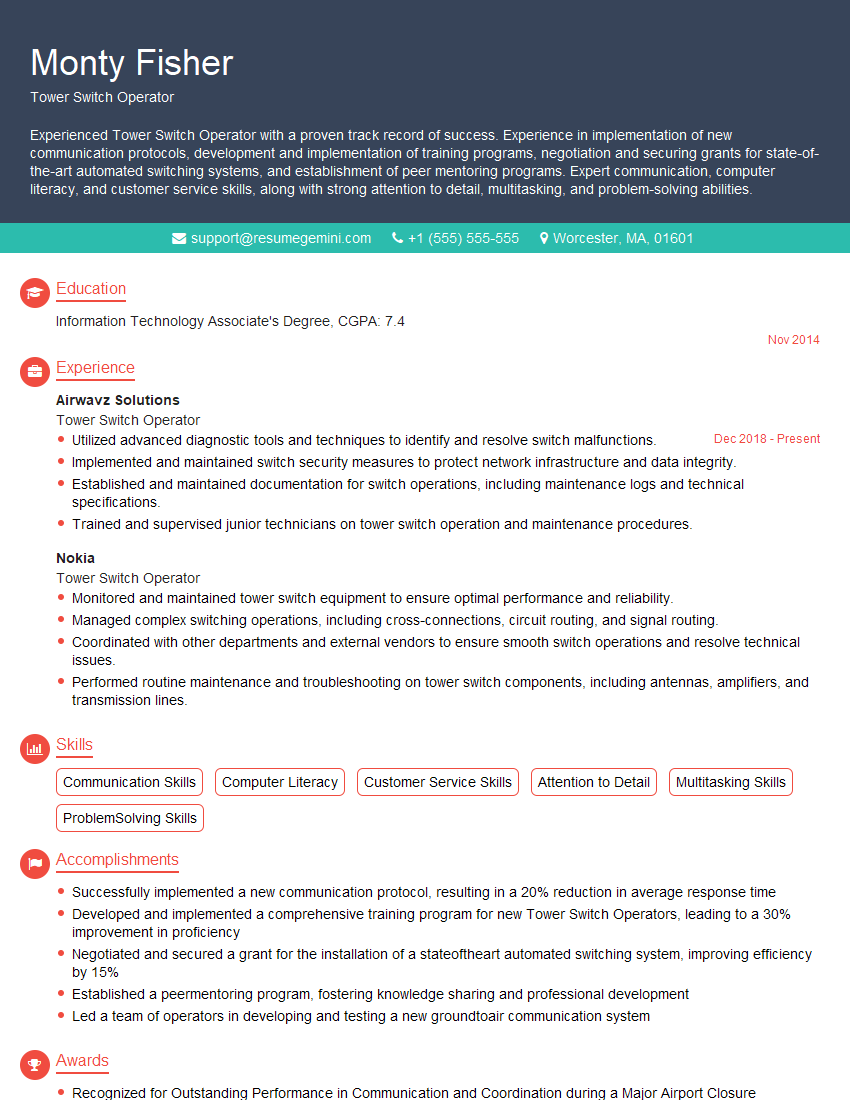
Acing the interview is crucial, but landing one requires a compelling resume that gets you noticed. Crafting a professional document that highlights your skills and experience is the first step toward interview success. ResumeGemini can help you build a standout resume that gets you called in for that dream job.






Essential Interview Questions For Tower Switch Operator
1. What are the basic responsibilities of a Tower Switch Operator?
As a Tower Switch Operator, my primary responsibilities include:
- Operating and maintaining the switchboard to connect incoming and outgoing calls
- Answering incoming calls, screening callers, and directing them to the appropriate department or individual
- Logging call details and maintaining records
- Monitoring and troubleshooting the switchboard and telecommunications system
- Providing assistance to callers and resolving any issues or queries they may have
2. Can you describe the process of patching a call?
Signalling and Routing
- Receive a call and identify the destination
- Check for line availability and signal the destination
- Establish a connection and route the call through the switchboard
Verification and Monitoring
- Verify the connection and ensure clear audio
- Monitor the call for any interruptions or issues
- Disconnect the call upon its completion
3. How do you prioritize calls when multiple lines are ringing simultaneously?
When multiple lines ring simultaneously, I prioritize calls based on the following criteria:
- Urgency: Calls from emergency services, security personnel, or internal staff requiring immediate assistance
- Caller Type: VIP clients, senior executives, or guests with pre-arranged appointments
- Line Type: If a particular line is designated for specific departments or functions, I prioritize calls on that line accordingly
- First-Come, First-Served: When urgency and caller type are not factors, I answer calls in the order they were received
4. What procedures do you follow when encountering an irate or difficult caller?
When dealing with irate or difficult callers, I adhere to the following procedures:
- Remain Calm and Professional: Maintain a calm demeanor and avoid escalating the situation
- Empathize and Listen: Acknowledge the caller’s frustration and listen attentively to their concerns
- Identify the Issue: Clearly understand the caller’s problem and determine the best course of action
- Provide Solutions: Offer helpful solutions or alternative options to resolve the issue
- Refer or Escalate: If unable to resolve the issue myself, I refer the caller to a supervisor or appropriate department
5. Can you explain the importance of call logging and how you maintain accurate records?
Call logging plays a crucial role in:
- Tracking Call Volume: Monitoring call frequency and patterns to identify peak times and staffing needs
- Performance Evaluation: Assessing operator performance, identifying areas for improvement, and rewarding excellence
- Customer Service Analysis: Analyzing call logs to identify common issues, improve call handling techniques, and enhance customer satisfaction
I maintain accurate records by:
- Recording all incoming and outgoing call details
- Logging the date, time, caller information, and call purpose
- Noting any special instructions or requests made by callers
- Regularly reviewing and updating call logs to ensure accuracy
6. What are some common technical issues you encounter and how do you resolve them?
Common technical issues and my troubleshooting approach:
- No Dial Tone: Check cables, connections, and telephone equipment; reset the line if necessary
- Static or Noise on the Line: Identify the source of the interference (e.g., loose connections, damaged cables) and take corrective action
- Call Dropouts: Check for signal strength, network connectivity, and equipment malfunctions; escalate the issue to the IT department if necessary
- Echo or Feedback: Adjust microphone and speaker levels, check for proper grounding, and reduce background noise
- Intermittent Interruptions: Check for loose or damaged cables, faulty equipment, or network issues; replace or repair components as needed
7. How do you stay up-to-date with advancements in telecommunications technology?
To stay abreast of technological advancements, I engage in the following practices:
- Attend Industry Events and Webinars: Participate in conferences, seminars, and online events to learn about new technologies and best practices
- Read Trade Publications and Blogs: Stay informed through industry-specific magazines, journals, and online resources
- Network with Professionals: Connect with colleagues, attend industry meet-ups, and engage in discussions to exchange knowledge and ideas
- Seek Internal Training and Development: Leverage opportunities provided by the organization to enhance my skills and knowledge
8. What is your understanding of call center metrics and how do you track your performance?
Call center metrics provide insights into operator performance and overall call handling efficiency. I track my performance against the following key metrics:
- Average Call Handling Time: Measures the average duration of calls handled by an operator
- Call Resolution Rate: Indicates the percentage of calls successfully resolved by an operator without the need for escalation
- Customer Satisfaction: Assesses the level of satisfaction callers have with the service and support received
- First Call Resolution: Measures the percentage of calls resolved during the initial contact with the operator
- Call Abandonment Rate: Tracks the number of callers who hang up before their call is answered or transferred
9. How do you handle high-volume call traffic during peak hours?
During peak hours with high call volume, I employ the following strategies:
- Prioritize Call Handling: Focus on answering emergency calls and urgent requests first
- Utilize Call Queuing: Use the switchboard’s queuing system to manage incoming calls and minimize wait times
- Efficient Call Routing: Route calls to the most appropriate department or extension to reduce call transfers
- Seek Support: Request assistance from colleagues or supervisors to handle the increased call load
10. How do you ensure that sensitive information is handled securely and confidentially?
I adhere to strict data security protocols to ensure the confidentiality of sensitive information, including:
- Data Encryption: Encrypting sensitive data during transmission and storage to prevent unauthorized access
- Password Protection: Using strong passwords and regularly changing them to safeguard access to systems
- Limited Access Controls: Granting access to sensitive information only to authorized personnel on a need-to-know basis
- Privacy Compliance: Following industry best practices and regulations related to data protection and privacy
Interviewers often ask about specific skills and experiences. With ResumeGemini‘s customizable templates, you can tailor your resume to showcase the skills most relevant to the position, making a powerful first impression. Also check out Resume Template specially tailored for Tower Switch Operator.
Career Expert Tips:
- Ace those interviews! Prepare effectively by reviewing the Top 50 Most Common Interview Questions on ResumeGemini.
- Navigate your job search with confidence! Explore a wide range of Career Tips on ResumeGemini. Learn about common challenges and recommendations to overcome them.
- Craft the perfect resume! Master the Art of Resume Writing with ResumeGemini’s guide. Showcase your unique qualifications and achievements effectively.
- Great Savings With New Year Deals and Discounts! In 2025, boost your job search and build your dream resume with ResumeGemini’s ATS optimized templates.
Researching the company and tailoring your answers is essential. Once you have a clear understanding of the Tower Switch Operator‘s requirements, you can use ResumeGemini to adjust your resume to perfectly match the job description.
Key Job Responsibilities
Tower Switch Operators are responsible for operating and maintaining telecommunication tower sites, ensuring that they are functioning optimally and providing seamless connectivity to customers. Their key job responsibilities include:
1. Monitoring and Maintaining Equipment
Tower Switch Operators are responsible for monitoring and maintaining all equipment at tower sites, including antennas, transmitters, receivers, power systems, and other infrastructure. They conduct regular inspections, diagnose problems, and perform repairs and maintenance as needed.
- Conduct regular site inspections to check equipment condition and identify potential issues.
- Troubleshoot and repair equipment malfunctions or failures.
- Replace faulty or damaged components, such as antennas, cables, and transmitters.
- Maintain and calibrate equipment to ensure optimal performance and meet regulatory standards.
2. Technical Support and Resolution
Tower Switch Operators provide technical support to customers and resolve network issues. They work closely with field technicians and engineers to troubleshoot problems and ensure service continuity.
- Respond to customer complaints and resolve network issues promptly.
- Diagnose and resolve technical problems with equipment and infrastructure.
- Coordinate with field technicians and engineers to resolve complex technical issues.
- Document and report network issues and maintenance activities.
3. Safety and Security
Tower Switch Operators are responsible for maintaining a safe and secure work environment at tower sites. They follow strict safety protocols, and ensure compliance with industry regulations and standards.
- Adhere to all safety protocols and wear appropriate personal protective equipment.
- Conduct risk assessments and take necessary precautions to mitigate hazards.
- Enforce security measures at tower sites to prevent unauthorized access.
- Maintain accurate records of site maintenance activities and safety inspections.
4. Documentation and Reporting
Tower Switch Operators maintain detailed records of their work activities and observations. They prepare reports, logs, and other documentation to ensure compliance and support decision-making.
- Maintain accurate records of maintenance activities, repairs, and site inspections.
- Prepare reports on equipment performance, network issues, and safety incidents.
- Document all changes and modifications made to tower site infrastructure.
- Provide data and insights to support network optimization and decision-making.
Interview Tips
Preparing thoroughly for a Tower Switch Operator interview is crucial to showcase your qualifications and impress the hiring manager. Here are some helpful tips:
1. Research the Company and Position
Take the time to research the company’s background, industry reputation, and current projects. Familiarize yourself with the specific responsibilities of a Tower Switch Operator within the organization.
- Visit the company website and social media pages.
- Read industry news and articles to stay informed about the latest trends.
- Network with professionals in the field to gain insights into the company and position.
2. Practice Answering Common Interview Questions
Prepare for common interview questions related to your skills, experience, and motivations. Practice answering them concisely and confidently, providing specific examples to support your statements.
- Describe your experience in operating and maintaining telecommunication equipment.
- Explain how you troubleshoot and resolve technical issues.
- Share an example of how you ensured safety and security at a tower site.
3. Highlight Your Technical Skills and Abilities
Emphasize your technical skills and abilities, including your knowledge of telecommunication systems, equipment, and industry standards. Quantify your accomplishments whenever possible.
- Describe your experience with specific telecommunication technologies, such as GSM, LTE, and 5G.
- Mention any certifications or training programs you have completed.
- Provide examples of projects where you have successfully implemented or improved telecommunication systems.
4. Demonstrate Your Problem-Solving Abilities
Tower Switch Operators are expected to be able to quickly and effectively solve problems. In your interview, highlight your problem-solving abilities and provide examples of how you have applied them in the past.
- Describe a situation where you identified and resolved a complex technical issue.
- Explain how you approach problem-solving and prioritize tasks.
- Share an example of how you collaborated with others to solve a problem.
5. Show Your Passion for the Industry
Convey your passion for the telecommunications industry and your eagerness to contribute to its advancement. Express your interest in the latest technologies and trends, and explain how you stay updated with the field.
- Describe your favorite aspects of working in the telecommunications industry.
- Share your thoughts on the future of telecommunications and how you see yourself contributing.
- Ask questions about the company’s plans for innovation and growth.
Next Step:
Now that you’re armed with interview-winning answers and a deeper understanding of the Tower Switch Operator role, it’s time to take action! Does your resume accurately reflect your skills and experience for this position? If not, head over to ResumeGemini. Here, you’ll find all the tools and tips to craft a resume that gets noticed. Don’t let a weak resume hold you back from landing your dream job. Polish your resume, hit the “Build Your Resume” button, and watch your career take off! Remember, preparation is key, and ResumeGemini is your partner in interview success.