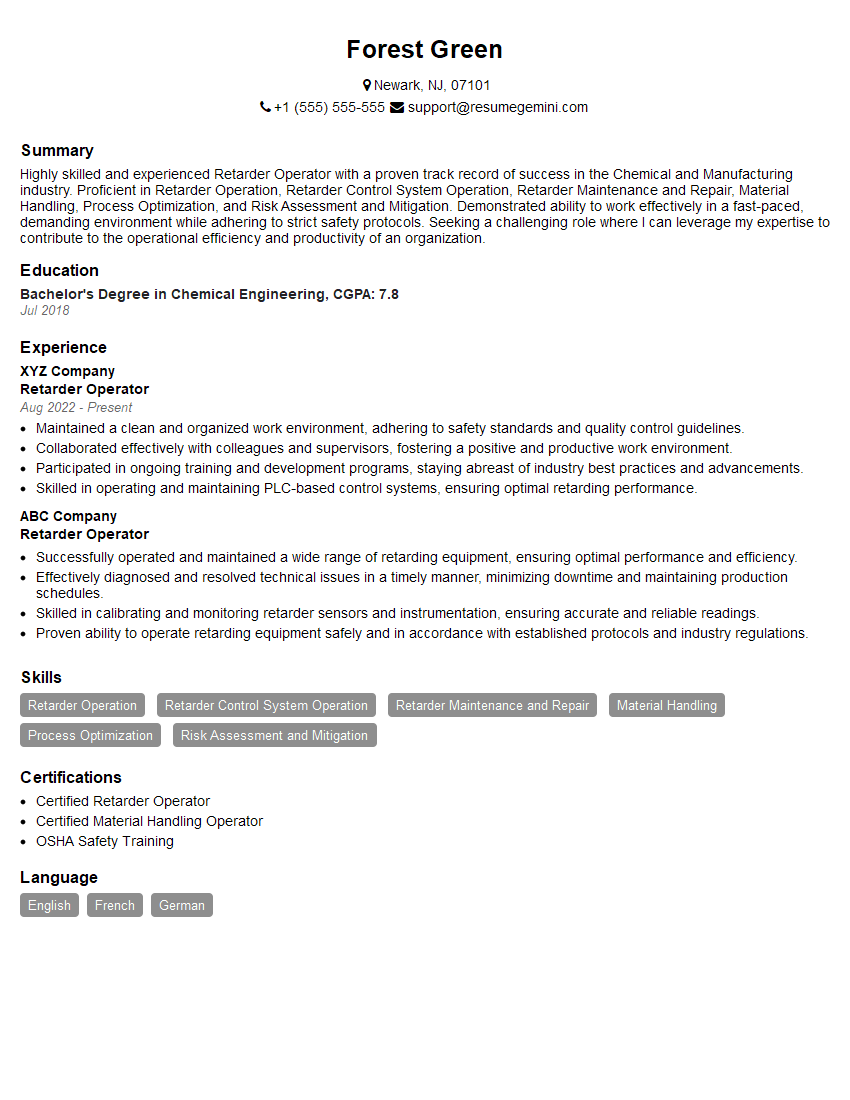
Are you gearing up for a career in Retarder Operator? Feeling nervous about the interview questions that might come your way? Don’t worry, you’re in the right place. In this blog post, we’ll dive deep into the most common interview questions for Retarder Operator and provide you with expert-backed answers. We’ll also explore the key responsibilities of this role so you can tailor your responses to showcase your perfect fit.
Acing the interview is crucial, but landing one requires a compelling resume that gets you noticed. Crafting a professional document that highlights your skills and experience is the first step toward interview success. ResumeGemini can help you build a standout resume that gets you called in for that dream job.






Essential Interview Questions For Retarder Operator
1. Describe the key responsibilities of a Retarder Operator?
- Operate and monitor retarders to control the speed of vehicles.
- Inspect retarders and related equipment for proper functioning and wear.
- Perform maintenance and repairs on retarders as needed.
- Maintain logbooks and records of retarder operations and maintenance.
- Assist with other tasks related to vehicle maintenance and safety.
2. What are the different types of retarders used in heavy vehicles?
- Hydraulic retarders: Use hydraulic fluid to create resistance against a rotating disc or rotor.
- Electric retarders: Use electromagnetic fields to create resistance against a rotating disc or rotor.
- Engine brakes: Use the engine’s compression to create resistance against the crankshaft.
- Exhaust brakes: Use the exhaust gases to create backpressure against the engine.
3. How do you determine the appropriate retarding force for a given situation?
- Consider the vehicle’s weight, speed, and road conditions.
- Refer to manufacturer’s recommendations and guidelines.
- Use experience and judgment to adjust the retarding force as needed.
4. What are the common signs of a faulty retarder?
- Reduced braking effectiveness
- Unusual noises or vibrations
- Leaking or damaged components
- Error codes or warning lights
5. Describe the steps involved in inspecting a retarder?
- Visually inspect for leaks, damage, or corrosion.
- Check fluid levels and condition.
- Test the retarder’s operation at different speeds and loads.
- Inspect electrical connections and wiring.
6. How do you troubleshoot a retarder that is not functioning properly?
- Check for loose connections or damaged components.
- Verify that the power supply and electrical system are functioning properly.
- Use diagnostic tools to identify any error codes or fault indicators.
- Refer to manufacturer’s service manuals for specific troubleshooting procedures.
7. What are the safety precautions that must be followed when working on retarders?
- Ensure the vehicle is parked on a level surface.
- Disconnect the electrical system before performing any maintenance.
- Wear appropriate personal protective equipment (PPE).
- Use proper tools and techniques to avoid injury.
8. How do you stay updated on the latest advancements and best practices in retarder technology?
- Attend industry conferences and workshops.
- Read technical publications and research papers.
- Consult with manufacturers and experts.
- Participate in training programs.
9. Describe a challenging situation you faced as a Retarder Operator and how you overcame it?
Example Answer:- Once, I encountered a faulty retarder that caused the vehicle to lose control on a steep downhill grade.
- I quickly diagnosed the problem and identified a loose electrical connection.
- Using my knowledge and experience, I was able to repair the connection and restore the retarder’s functionality.
10. What are your goals and aspirations for your career as a Retarder Operator?
Example Answer:- I aim to continuously improve my technical skills and knowledge in retarder technology.
- I aspire to become a lead operator and mentor junior colleagues
- I am interested in exploring opportunities in vehicle maintenance and safety management.
Interviewers often ask about specific skills and experiences. With ResumeGemini‘s customizable templates, you can tailor your resume to showcase the skills most relevant to the position, making a powerful first impression. Also check out Resume Template specially tailored for Retarder Operator.
Career Expert Tips:
- Ace those interviews! Prepare effectively by reviewing the Top 50 Most Common Interview Questions on ResumeGemini.
- Navigate your job search with confidence! Explore a wide range of Career Tips on ResumeGemini. Learn about common challenges and recommendations to overcome them.
- Craft the perfect resume! Master the Art of Resume Writing with ResumeGemini’s guide. Showcase your unique qualifications and achievements effectively.
- Great Savings With New Year Deals and Discounts! In 2025, boost your job search and build your dream resume with ResumeGemini’s ATS optimized templates.
Researching the company and tailoring your answers is essential. Once you have a clear understanding of the Retarder Operator‘s requirements, you can use ResumeGemini to adjust your resume to perfectly match the job description.
Key Job Responsibilities
Retarder Operators play a vital role in the manufacturing industry by ensuring the smooth and efficient flow of materials. Their primary responsibilities include:
1. Material Handling
Operate and control machines that apply a retarding agent to materials such as paper, plastic, and metal.
- Adjust machine settings to achieve desired retardation levels.
- Monitor material flow and make adjustments as needed.
2. Process Monitoring
Monitor and maintain the desired retardation levels throughout the process.
- Conduct regular quality checks to ensure product specifications are met.
- Identify and resolve any process deviations or interruptions.
3. Equipment Maintenance
Maintain and repair retarding equipment, including machines, conveyors, and sensors.
- Perform routine inspections and minor repairs.
- Report major maintenance needs to supervisors.
4. Safety and Compliance
Adhere to all safety regulations and guidelines.
- Use personal protective equipment (PPE) as required.
- Follow established lockout/tagout procedures.
- Report any safety concerns or hazards.
Interview Tips
To ace an interview for a Retarder Operator position, candidates should:
1. Research the Position and Company
Familiarize yourself with the specific job responsibilities and the company’s industry and operations.
- Visit the company website and review job descriptions.
- Search for industry-related news and articles.
2. Highlight Relevant Skills and Experience
Emphasize your skills in material handling, process monitoring, and equipment maintenance.
- Quantify your achievements using specific examples.
- Use keywords from the job description to demonstrate your fit.
3. Prepare for Common Interview Questions
Practice answering common interview questions about your experience, skills, and motivations.
- Consider why you’re interested in the position.
- Explain how your past experiences have prepared you.
4. Ask Insightful Questions
Prepare thoughtful questions to ask the interviewer, demonstrating your interest and enthusiasm.
- Inquire about the company’s growth plans or industry trends.
- Ask about the specific responsibilities and challenges of the role.
Next Step:
Now that you’re armed with the knowledge of Retarder Operator interview questions and responsibilities, it’s time to take the next step. Build or refine your resume to highlight your skills and experiences that align with this role. Don’t be afraid to tailor your resume to each specific job application. Finally, start applying for Retarder Operator positions with confidence. Remember, preparation is key, and with the right approach, you’ll be well on your way to landing your dream job. Build an amazing resume with ResumeGemini