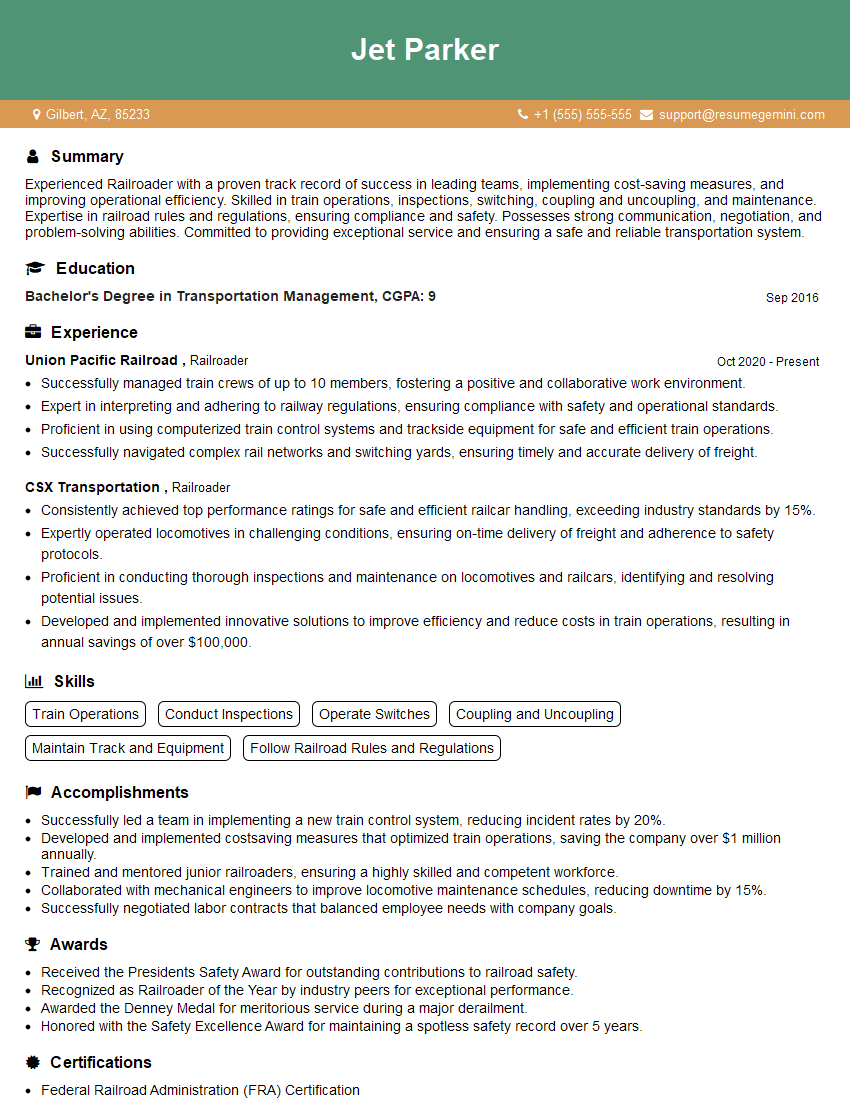
Are you gearing up for a career shift or aiming to ace your next interview? Look no further! We’ve curated a comprehensive guide to help you crack the interview for the coveted Railroader position. From understanding the key responsibilities to mastering the most commonly asked questions, this blog has you covered. So, buckle up and let’s embark on this journey together
Acing the interview is crucial, but landing one requires a compelling resume that gets you noticed. Crafting a professional document that highlights your skills and experience is the first step toward interview success. ResumeGemini can help you build a standout resume that gets you called in for that dream job.






Essential Interview Questions For Railroader
1. Describe the key responsibilities of a Railroader?
As a Railroader, my primary responsibilities would include:
- Operating and maintaining locomotives and rail cars
- Ensuring the safe and efficient movement of trains
- Inspecting tracks and equipment
- Following established railroad regulations and procedures
- Communicating effectively with dispatchers and other railroad personnel
2. Can you explain the different types of trains and their purposes?
- Freight trains: Transport goods and materials over long distances
- Passenger trains: Carry passengers for various purposes
- Intermodal trains: Combine multiple modes of transportation, such as rail and truck
- Work trains: Perform maintenance and construction tasks on railroad lines
- Special trains: Handle unique or irregular operations, such as transporting oversized cargo
3. What are the essential safety regulations and procedures that Railroaders must adhere to?
Railroaders must strictly follow established regulations and procedures, including:
- Federal Railroad Administration (FRA) regulations: Govern all aspects of railroad operations
- Company safety rules: Specific guidelines and protocols for each railroad
- Train orders: Instructions issued by dispatchers regarding train movements and operations
- Signal systems: Provide guidance and instructions to train operators
- Emergency procedures: Outlined steps to follow in the event of accidents or incidents
4. How do you ensure the safe and efficient movement of trains?
- Adhering to train orders: Following instructions from dispatchers
- Maintaining proper communication: Using radios and signals to coordinate with other trains
- Monitoring track conditions: Inspecting tracks for defects or hazards
- Operating locomotives safely: Controlling speed, braking, and handling
- Responding to emergencies: Taking appropriate actions in the event of accidents or incidents
5. What are the common mechanical issues that Railroaders need to be able to troubleshoot and repair?
- Engine problems: Diagnosing and repairing issues with locomotive engines
- Brake malfunctions: Identifying and fixing brake system failures
- Electrical faults: Troubleshooting and repairing electrical components
- Coupling and uncoupling issues: Connecting and separating train cars
- Mechanical damage: Assessing and repairing damage to locomotives or rail cars
6. How do you stay informed about changes in railroad regulations and operating procedures?
- Regular training: Participating in company-mandated training programs
- Reading industry publications: Staying up-to-date on industry news and developments
- Attending conferences and seminars: Networking and learning from other professionals
- Seeking guidance from supervisors: Consulting with more experienced colleagues
- Reviewing company bulletins and notices: Staying informed about internal changes and updates
7. How do you manage stress and maintain focus while operating trains?
- Remaining calm and collected: Maintaining composure in stressful situations
- Prioritizing tasks: Focusing on the most important tasks first
- Taking breaks: Stepping away from the locomotive periodically to rest and refresh
- Communicating effectively: Seeking support and guidance from colleagues when needed
- Utilizing stress-reducing techniques: Practicing relaxation techniques or engaging in hobbies outside of work
8. What are the physical demands of being a Railroader?
- Extended periods of sitting: Maintaining a seated position for prolonged hours
- Physical exertion: Lifting heavy equipment, climbing ladders, and operating controls
- Exposure to weather conditions: Working outdoors in all types of weather
- Noise and vibrations: Operating locomotives can be noisy and cause vibrations
- Irregular hours: Working shifts that may include nights, weekends, and holidays
9. How do you work effectively as part of a team in a railroad environment?
- Communicating clearly: Sharing information and coordinating actions with colleagues
- Supporting each other: Assisting other team members when needed
- Respecting authority: Following instructions from supervisors and dispatchers
- Resolving conflicts: Handling disagreements and finding solutions collaboratively
- Maintaining a positive attitude: Contributing to a supportive and productive work environment
10. What is your understanding of the role of technology in modern railroad operations?
Technology plays a significant role in enhancing railroad operations:
- Communications systems: Improving communication between trains, dispatchers, and stations
- Signal systems: Increasing safety and efficiency by automating train movement
- Computerized train controls: Providing automated assistance with locomotive operation
- GPS tracking: Monitoring train locations and optimizing schedules
- Data analytics: Identifying trends and improving decision-making
Interviewers often ask about specific skills and experiences. With ResumeGemini‘s customizable templates, you can tailor your resume to showcase the skills most relevant to the position, making a powerful first impression. Also check out Resume Template specially tailored for Railroader.
Career Expert Tips:
- Ace those interviews! Prepare effectively by reviewing the Top 50 Most Common Interview Questions on ResumeGemini.
- Navigate your job search with confidence! Explore a wide range of Career Tips on ResumeGemini. Learn about common challenges and recommendations to overcome them.
- Craft the perfect resume! Master the Art of Resume Writing with ResumeGemini’s guide. Showcase your unique qualifications and achievements effectively.
- Great Savings With New Year Deals and Discounts! In 2025, boost your job search and build your dream resume with ResumeGemini’s ATS optimized templates.
Researching the company and tailoring your answers is essential. Once you have a clear understanding of the Railroader‘s requirements, you can use ResumeGemini to adjust your resume to perfectly match the job description.
Key Job Responsibilities
Railroaders play a critical role in the safe and efficient operation of railroads, ensuring the timely and reliable transportation of goods and passengers.
1. Train Operation
Operate trains by controlling speed, braking, and switching, adhering to established schedules and safety protocols.
2. Loading and Unloading
Load and unload cargo from trains, inspecting shipments for damage or discrepancies, ensuring proper placement and securement.
3. Track Maintenance
Inspect and maintain railroad tracks, bridges, and other infrastructure, identifying and repairing defects to ensure safe and efficient train movement.
4. Communication
Communicate effectively with dispatchers, fellow railroaders, and passengers using radios, signals, and other communication systems to coordinate operations and respond to emergencies.
5. Safety Compliance
Follow all safety regulations and procedures, including wearing proper attire, conducting safety checks, and reporting any hazards or incidents to ensure the safety of operations.
Interview Tips
Preparing for a railroader interview requires a comprehensive approach that encompasses both technical knowledge and a deep understanding of the industry’s safety-critical nature.
1. Research the Railroad Industry
Before the interview, thoroughly research the railroad industry, including the company you are applying to, its operations, safety record, and current trends.
- Visit the company’s website and read industry publications to gain insights into their culture and practices.
- Connect with current or former railroaders on LinkedIn to learn about the industry firsthand.
2. Practice Technical Skills and Safety Knowledge
Railroaders must possess strong technical skills and a thorough understanding of safety regulations. Practice answering questions related to:
- Train operation, including braking systems, speed control, and signaling.
- Loading and unloading procedures, ensuring proper cargo handling and securement.
- Track maintenance techniques, identifying and repairing defects, and adhering to safety standards.
3. Highlight Safety-Consciousness
In a railroader interview, it is essential to emphasize your commitment to safety. Discuss your understanding of safety regulations, your experience in implementing safety measures, and your ability to identify and mitigate potential hazards.
- Share examples of your proactive approach to safety, such as reporting near-misses or suggesting improvements to safety protocols.
- Explain how you prioritize safety over efficiency or meeting deadlines.
4. Prepare for Behavioral Questions
Interviewers may ask behavioral questions to assess your problem-solving, teamwork, and decision-making skills. Prepare to discuss:
- Situations where you had to resolve conflicts or handle unexpected events on the job.
- Times when you took initiative to improve operations or enhance safety measures.
- How you work effectively as part of a team and contribute to a positive work environment.
Next Step:
Now that you’re armed with a solid understanding of what it takes to succeed as a Railroader, it’s time to turn that knowledge into action. Take a moment to revisit your resume, ensuring it highlights your relevant skills and experiences. Tailor it to reflect the insights you’ve gained from this blog and make it shine with your unique qualifications. Don’t wait for opportunities to come to you—start applying for Railroader positions today and take the first step towards your next career milestone. Your dream job is within reach, and with a polished resume and targeted applications, you’ll be well on your way to achieving your career goals! Build your resume now with ResumeGemini.