Ever felt underprepared for that crucial job interview? Or perhaps you’ve landed the interview but struggled to articulate your skills and experiences effectively? Fear not! We’ve got you covered. In this blog post, we’re diving deep into the Rail Walker interview questions that you’re most likely to encounter. But that’s not all. We’ll also provide expert insights into the key responsibilities of a Rail Walker so you can tailor your answers to impress potential employers.
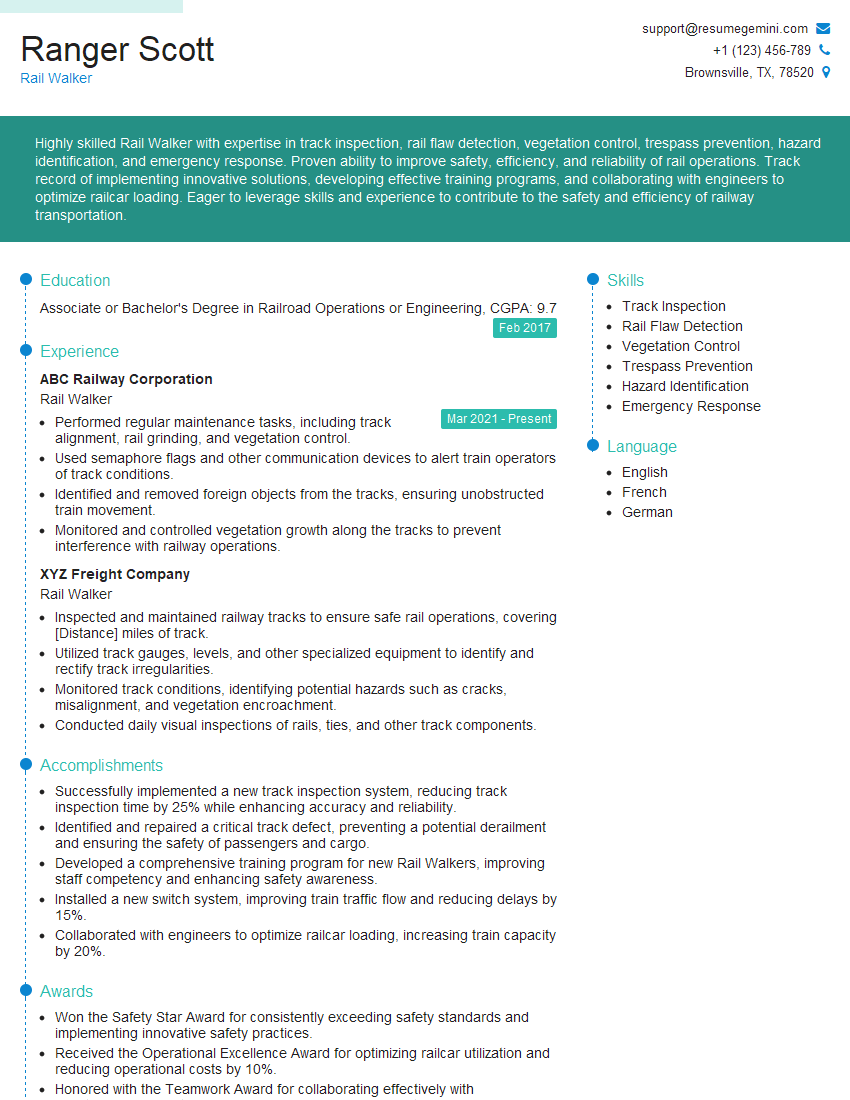
Acing the interview is crucial, but landing one requires a compelling resume that gets you noticed. Crafting a professional document that highlights your skills and experience is the first step toward interview success. ResumeGemini can help you build a standout resume that gets you called in for that dream job.






Essential Interview Questions For Rail Walker
1. What are the key responsibilities of a Rail Walker?
The primary responsibilities of a Rail Walker include:
- Patrolling railway lines to ensure safety and identify potential hazards
- Inspecting tracks, bridges, and other infrastructure for defects or damage
- Monitoring train movements and reporting any irregularities
- Communicating with dispatchers and train crews to provide updates and resolve issues
- Enforcing railway safety regulations and responding to emergencies
2. Describe the different types of track defects you may encounter and how you would identify them.
Visual inspection:
- Cracked or broken rails
- Loose or missing bolts
- Deformed or misaligned tracks
Other methods:
- Using track gauges to measure track width and alignment
- Inspecting ties for rot or damage
- Checking for vegetation growth that could obstruct the tracks
3. How do you prioritize which hazards to address first?
I would prioritize hazards based on the following criteria:
- Severity of the hazard (e.g., cracked rail vs. loose bolt)
- Potential impact on train operations
- Accessibility of the hazard
- Available resources and time constraints
4. What are the safety precautions you take when working on or near railway tracks?
- Wearing appropriate protective gear (e.g., high-visibility clothing, safety shoes)
- Maintaining a safe distance from moving trains
- Using proper tools and equipment for track maintenance
- Following established safety protocols and procedures
- Communicating clearly with train crews and dispatchers
5. How do you communicate effectively with train crews and dispatchers in different situations?
- Using radio or telephone to relay information clearly and concisely
- Using standardized codes and terminology to ensure understanding
- Providing timely updates on track conditions and potential delays
- Reporting emergencies promptly and accurately
- Maintain a professional and respectful demeanor
6. How do you handle emergencies, such as train derailments or track obstructions?
- Assessing the situation and ensuring the safety of passengers and crew
- Contacting emergency responders and providing them with location and details
- Assisting with evacuation efforts if necessary
- Protecting the scene from further damage or tampering
- Providing updates to dispatchers and train crews
7. What is your experience with using portable track inspection tools, such as ultrasonic detectors or rail flaw detectors?
I have extensive experience using various portable track inspection tools, including:
- Ultrasonic detectors to identify internal rail defects
- Rail flaw detectors to detect surface cracks and other anomalies
- Geotechnical tools to assess track stability and soil conditions
I am proficient in operating these tools and interpreting the data they provide.
8. How do you stay up-to-date with industry best practices and safety regulations for rail track maintenance?
- Attending industry conferences and workshops
- Subscribing to industry publications and online resources
- Participating in training programs offered by the company
- Networking with other rail professionals
- Seeking feedback and guidance from experienced supervisors
9. What is your understanding of the importance of maintaining vegetation control along railway lines?
- Preventing vegetation from obscuring signals or encroaching on the tracks
- Reducing the risk of fires and other hazards caused by overgrown vegetation
- Ensuring clear visibility for train crews and track inspectors
- Maintaining drainage and preventing erosion
- Improving overall track safety and reliability
10. How do you handle working in extreme weather conditions, such as heavy rain, snow, or high winds?
- Wearing appropriate protective clothing and gear
- Taking frequent breaks and staying hydrated
- Being aware of slippery or icy conditions
- Adjusting work schedules to avoid peak weather conditions
- Communicating any potential hazards or delays to dispatchers and train crews
11. What are your strengths and weaknesses as a Rail Walker?
Strengths:
- Excellent track inspection skills and attention to detail
- Strong communication and interpersonal skills
- Ability to work independently and as part of a team
- Proficient in using portable track inspection tools
- Commitment to safety and compliance with industry regulations
Weaknesses:
- Limited experience with specialized track repair equipment
- Working in extreme weather conditions can occasionally be challenging
- Can be physically demanding at times
12. Why are you interested in working as a Rail Walker for our company?
- Your company has a reputation for safety and operational excellence
- I am eager to contribute my skills and experience to your team
- I am passionate about railway safety and the important role that Rail Walkers play
- The opportunity to work in a dynamic and challenging environment
- The chance to make a meaningful contribution to the company and the industry
13. What are your career goals and aspirations?
- To become a highly skilled and respected Rail Walker
- To advance my knowledge of track maintenance and inspection techniques
- To eventually become a supervisor or manager in the rail industry
- To contribute to the safety and efficiency of railway operations
- To make a positive impact on the community
14. Do you have any questions for me about the position or the company?
This question is an opportunity for you to demonstrate your interest and engagement. Prepare a few thoughtful questions that will help you learn more about the role and the organization.
15. Is there anything else you would like to add about your qualifications or experience?
This is your chance to highlight any additional skills, certifications, or accomplishments that may not have been covered in the previous questions. It is also an opportunity to reiterate your enthusiasm for the position and the company.
Interviewers often ask about specific skills and experiences. With ResumeGemini‘s customizable templates, you can tailor your resume to showcase the skills most relevant to the position, making a powerful first impression. Also check out Resume Template specially tailored for Rail Walker.
Career Expert Tips:
- Ace those interviews! Prepare effectively by reviewing the Top 50 Most Common Interview Questions on ResumeGemini.
- Navigate your job search with confidence! Explore a wide range of Career Tips on ResumeGemini. Learn about common challenges and recommendations to overcome them.
- Craft the perfect resume! Master the Art of Resume Writing with ResumeGemini’s guide. Showcase your unique qualifications and achievements effectively.
- Great Savings With New Year Deals and Discounts! In 2025, boost your job search and build your dream resume with ResumeGemini’s ATS optimized templates.
Researching the company and tailoring your answers is essential. Once you have a clear understanding of the Rail Walker‘s requirements, you can use ResumeGemini to adjust your resume to perfectly match the job description.
Key Job Responsibilities
Rail Walkers are responsible for ensuring the safety and integrity of railway tracks and infrastructure. Their key responsibilities include:
1. Track Inspection
Conduct regular inspections of railway tracks, bridges, tunnels, and other infrastructure to identify potential hazards, defects, or damage.
- Inspect rails, ties, and ballast for cracks, breaks, or other signs of wear and tear.
- Examine bridges and tunnels for structural damage, corrosion, or other issues.
2. Maintenance and Repair
Perform routine maintenance and repairs to ensure the functionality and safety of railway infrastructure.
- Replace damaged rails or ties.
- Tighten bolts and nuts on bridges and tunnels.
- Clear debris from tracks and culverts.
3. Safety Monitoring
Monitor railway traffic and report any potential safety concerns or incidents.
- Observe train movements and identify any unusual or unsafe conditions.
- Report any track defects, signal malfunctions, or other hazards to dispatchers or supervisors.
4. Communication and Coordination
Communicate effectively with dispatchers, supervisors, and other railway personnel to ensure smooth operations and safety.
- Report findings of inspections and repairs to designated authorities.
- Coordinate with track maintenance crews to schedule and prioritize repairs.
Interview Tips
To prepare effectively for a Rail Walker interview, consider the following tips:
1. Research the Company and Industry
Familiarize yourself with the railway company, its operations, and the specific industry it serves. Research the company’s safety record, recent projects, and any relevant news or developments.
- Visit the company’s website and social media pages.
- Read industry publications and news articles.
2. Highlight Relevant Experience and Skills
Emphasize your experience in track inspection, maintenance, and safety monitoring. Highlight any specific training or certifications you possess, such as FRA Track Safety Training.
- Quantify your accomplishments and provide specific examples of your contributions.
- Prepare to discuss your knowledge of railway regulations and safety protocols.
3. Demonstrate Physical Fitness and Endurance
Rail Walkers must be physically fit and able to walk long distances on uneven terrain. Be prepared to discuss your physical capabilities and how you maintain them.
- Mention any relevant fitness activities or hobbies.
- Explain how you manage to stay alert and focused during extended periods of walking.
4. Understand the Importance of Safety
Safety is paramount for Rail Walkers. Demonstrate your understanding of the importance of safety and how you prioritize it in your work. Discuss your commitment to following safety protocols and procedures.
- Describe your experience in identifying and mitigating safety hazards.
- Explain how you would respond to a safety incident or emergency.
Next Step:
Armed with this knowledge, you’re now well-equipped to tackle the Rail Walker interview with confidence. Remember, preparation is key. So, start crafting your resume, highlighting your relevant skills and experiences. Don’t be afraid to tailor your application to each specific job posting. With the right approach and a bit of practice, you’ll be well on your way to landing your dream job. Build your resume now from scratch or optimize your existing resume with ResumeGemini. Wish you luck in your career journey!