Are you gearing up for a career shift or aiming to ace your next interview? Look no further! We’ve curated a comprehensive guide to help you crack the interview for the coveted Hot Box Checker position. From understanding the key responsibilities to mastering the most commonly asked questions, this blog has you covered. So, buckle up and let’s embark on this journey together.
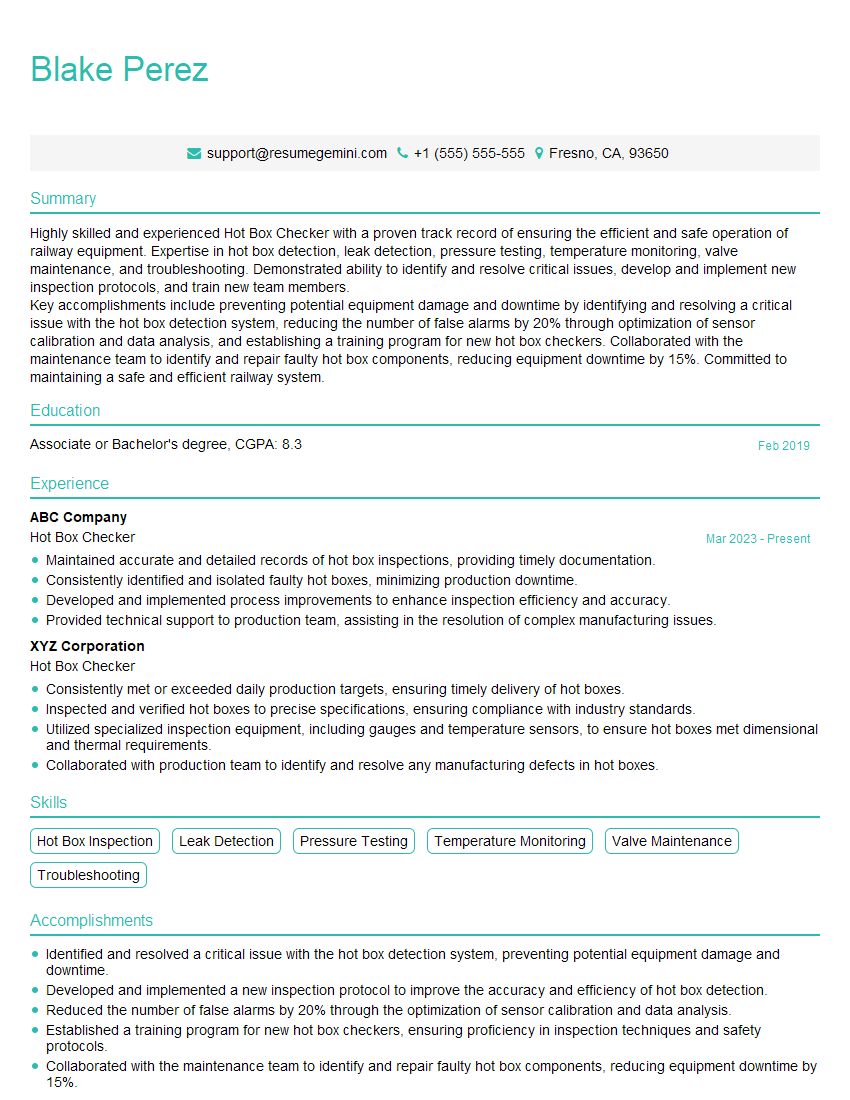
Acing the interview is crucial, but landing one requires a compelling resume that gets you noticed. Crafting a professional document that highlights your skills and experience is the first step toward interview success. ResumeGemini can help you build a standout resume that gets you called in for that dream job.






Essential Interview Questions For Hot Box Checker
1. Explain the importance of maintaining proper temperature in hot boxes?
Maintaining proper temperature in hot boxes is crucial for the following reasons:
- Ensuring Food Safety: Proper temperature prevents bacterial growth, ensuring food is safe for consumption.
- Preserving Food Quality: Optimal temperature helps maintain the freshness, texture, and flavor of hot food.
- Compliance with Regulations: Food establishments are legally obligated to adhere to temperature regulations set by health agencies.
2. What are the key indicators of a properly functioning hot box?
Temperature Range
- Hot food should be maintained at or above 63°C (145°F) to kill harmful bacteria.
Temperature Uniformity
- Temperature should be consistent throughout the hot box, ensuring all food is heated evenly.
Internal Structure
- The hot box should be clean and free of debris to prevent contamination.
- Shelves should be adjustable to accommodate different food containers.
External Features
- The hot box should have an insulated door that fits snugly to minimize heat loss.
- It should be equipped with a reliable thermostat to maintain the desired temperature.
3. Can you explain the HACCP principles as they relate to hot box operations?
HACCP (Hazard Analysis and Critical Control Points) is a systematic approach to ensure food safety. In hot box operations, HACCP principles include:
- Identifying Hazards: Acknowledging potential hazards associated with hot box use, such as bacterial contamination.
- Determining Critical Control Points: Establishing key steps where hazards can be controlled, such as maintaining proper temperature.
- Establishing Control Limits: Setting specific temperature ranges and monitoring systems to prevent hazards.
- Monitoring: Regularly checking and recording temperatures to ensure compliance with control limits.
- Corrective Actions: Implementing procedures to address any deviations from control limits and prevent hazards.
4. How would you troubleshoot a hot box that is not maintaining the required temperature?
- Check the thermostat settings and calibrate if necessary.
- Inspect the door gasket for any gaps or tears that could cause heat loss.
- Examine the heating element for any signs of damage or malfunction.
- Ensure the hot box is not overloaded, as excessive food can block heat circulation.
- Inspect the temperature probes to make sure they are accurate and properly placed.
5. What steps would you take to clean and sanitize a hot box?
- Unplug the hot box and allow it to cool completely.
- Remove all food and debris from the interior.
- Wipe down all surfaces with a warm, soapy solution.
- Rinse thoroughly with clean water and wipe dry with a clean cloth.
- Sanitize using a food-grade sanitizer and follow the manufacturer’s instructions.
- Allow the hot box to air dry completely before reusing.
6. What are the best practices for loading and unloading hot boxes to ensure food safety?
- Load hot food directly into the hot box after cooking.
- Avoid overloading the hot box to ensure proper heat circulation.
- Use food containers that are designed for holding hot food.
- Place food in the center of the hot box to ensure it is evenly heated.
- Unload hot food in a timely manner to prevent temperature loss.
7. How do you keep up to date on the latest food safety regulations and best practices for hot box operations?
- Attend industry workshops and seminars.
- Read trade publications and industry newsletters.
- Consult with food safety experts.
- Follow updates from food regulatory agencies.
- Participate in online training programs.
8. What would you do if you noticed that food in the hot box was not reaching the required temperature?
- Immediately remove the food from the hot box.
- Check the temperature of the hot box and adjust as necessary.
- Record the incident and notify the appropriate personnel.
- Discard the food if it cannot be reheated to the required temperature.
- Implement corrective actions to prevent similar incidents in the future.
9. How do you ensure that the hot boxes are maintained in a safe and sanitary condition?
- Regularly clean and sanitize hot boxes following established procedures.
- Inspect hot boxes daily for any damage or malfunctions.
- Calibrate thermometers regularly to ensure accuracy.
- Train staff on proper hot box use and maintenance.
- Keep records of cleaning, inspection, and maintenance activities.
10. What is your understanding of the different types of hot boxes available, and which types are best suited for specific applications?
There are various types of hot boxes, each with its own advantages and applications:
- Electric Hot Boxes: Provide precise temperature control and are ideal for indoor use.
- Gas-Powered Hot Boxes: Offer portability and can be used both indoors and outdoors.
- Self-Contained Hot Boxes: Equipped with a built-in heat source and are suitable for use in mobile settings.
- Insulated Hot Boxes: Designed to maintain temperature for a limited period and are suitable for short-term holding.
- Humidity-Controlled Hot Boxes: Maintain both temperature and humidity levels, ensuring food quality and texture.
Interviewers often ask about specific skills and experiences. With ResumeGemini‘s customizable templates, you can tailor your resume to showcase the skills most relevant to the position, making a powerful first impression. Also check out Resume Template specially tailored for Hot Box Checker.
Career Expert Tips:
- Ace those interviews! Prepare effectively by reviewing the Top 50 Most Common Interview Questions on ResumeGemini.
- Navigate your job search with confidence! Explore a wide range of Career Tips on ResumeGemini. Learn about common challenges and recommendations to overcome them.
- Craft the perfect resume! Master the Art of Resume Writing with ResumeGemini’s guide. Showcase your unique qualifications and achievements effectively.
- Great Savings With New Year Deals and Discounts! In 2025, boost your job search and build your dream resume with ResumeGemini’s ATS optimized templates.
Researching the company and tailoring your answers is essential. Once you have a clear understanding of the Hot Box Checker‘s requirements, you can use ResumeGemini to adjust your resume to perfectly match the job description.
Key Job Responsibilities
Hot Box Checkers are responsible for ensuring the safety and quality of food products by inspecting and testing hot boxes used to transport food.
1. Inspect Hot Boxes
Inspect hot boxes for damage, cleanliness, and proper functionality, including temperature control, insulation, and sealing.
- Verify that hot boxes meet regulatory standards and company requirements.
- Maintain detailed records of inspections and any issues identified.
2. Test Temperatures
Use calibrated thermometers to measure and record temperatures of hot boxes to ensure they maintain proper food-safe temperatures.
- Monitor temperature data and take corrective actions if temperatures fall outside acceptable ranges.
- Collaborate with maintenance personnel to resolve temperature-related issues.
3. Maintain Records
Maintain accurate records of all inspections, test results, and any maintenance or repairs performed on hot boxes.
- Document findings, including any deviations from standards or issues that require attention.
- Provide reports to management and regulatory agencies as required.
4. Train and Supervise
Train and supervise other Hot Box Checkers or staff on proper inspection and testing procedures.
- Ensure that all staff follows established protocols and safety guidelines.
- Provide guidance and support to ensure consistency and accuracy in inspections and testing.
Interview Tips
To ace the interview for a Hot Box Checker position, candidates should prepare thoroughly and highlight their relevant skills and experience.
1. Research the Company
Learn about the company’s industry, products or services, and mission. This will demonstrate your interest and give you a better understanding of the role.
- Visit the company website
- Read industry news and articles
2. Practice Common Interview Questions
Prepare answers to common interview questions, such as:
- Tell me about yourself.
- Why are you interested in this position?
- What are your strengths and weaknesses?
3. Highlight Relevant Skills and Experience
Emphasize your experience in food safety, temperature control, and record-keeping. Quantify your accomplishments whenever possible.
- Describe your previous roles and responsibilities in similar positions.
- Provide examples of how you have improved or maintained food safety standards.
4. Be Enthusiastic and Professional
Show your enthusiasm for the role and demonstrate your professionalism throughout the interview.
- Dress appropriately and arrive on time.
- Be polite and respectful to everyone you meet.
Next Step:
Now that you’re armed with interview-winning answers and a deeper understanding of the Hot Box Checker role, it’s time to take action! Does your resume accurately reflect your skills and experience for this position? If not, head over to ResumeGemini. Here, you’ll find all the tools and tips to craft a resume that gets noticed. Don’t let a weak resume hold you back from landing your dream job. Polish your resume, hit the “Build Your Resume” button, and watch your career take off! Remember, preparation is key, and ResumeGemini is your partner in interview success.