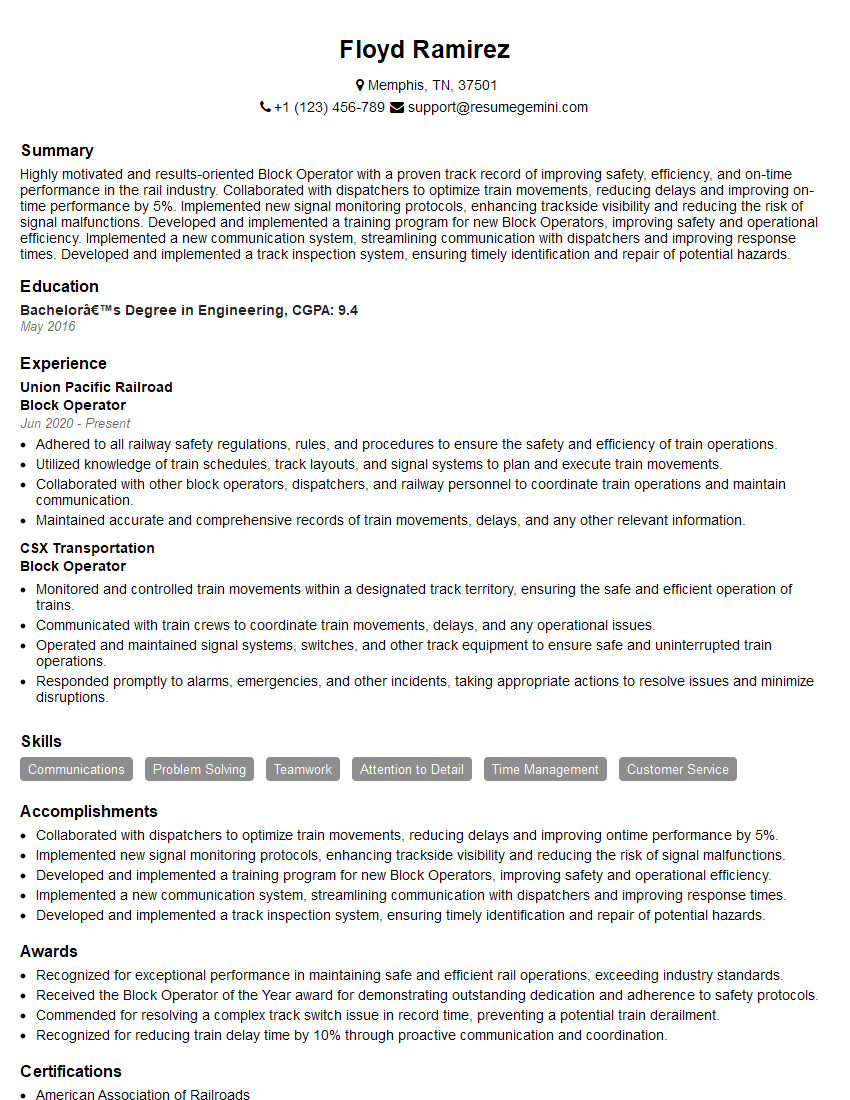
Are you gearing up for an interview for a Block Operator position? Whether you’re a seasoned professional or just stepping into the role, understanding what’s expected can make all the difference. In this blog, we dive deep into the essential interview questions for Block Operator and break down the key responsibilities of the role. By exploring these insights, you’ll gain a clearer picture of what employers are looking for and how you can stand out. Read on to equip yourself with the knowledge and confidence needed to ace your next interview and land your dream job!
Acing the interview is crucial, but landing one requires a compelling resume that gets you noticed. Crafting a professional document that highlights your skills and experience is the first step toward interview success. ResumeGemini can help you build a standout resume that gets you called in for that dream job.






Essential Interview Questions For Block Operator
1. Explain your understanding of the role and responsibilities of a Block Operator?
As a Block Operator, I would be responsible for the safe and efficient movement of trains within my assigned block. This involves:
- Monitoring train movements and ensuring they adhere to established schedules
- Operating switches and signals to guide trains along the tracks
- Communicating with train crews and other personnel to coordinate operations
- Enforcing safety regulations and responding to emergencies
- Maintaining accurate records and documentation of train movements
2. Describe the safety procedures you would follow while operating a block system?
- Adhering to all established safety rules and regulations
- Maintaining a clear understanding of train movements within my block
- Communicating effectively with train crews and other personnel
- Operating switches and signals correctly and promptly
- Responding appropriately to emergencies and reporting any irregularities
3. How would you handle a situation where a train is running behind schedule and requests access to your block?
- Assess the situation and determine if it is possible to accommodate the train without compromising safety
- Communicate with train crews and other personnel to coordinate a safe and efficient entry into the block
- Monitor the train’s progress and make adjustments as necessary to ensure it arrives at its destination safely and on time
4. What would you do if you noticed a train entering your block without authorization?
- Immediately contact the train crew and request an explanation
- Notify the dispatcher and other relevant personnel about the unauthorized entry
- Take appropriate action to prevent a collision or other incident
- Document the incident and report it to the supervisor
5. How would you communicate with train crews and other personnel during an emergency?
- Use established communication channels such as radio, telephone, or intercom
- Provide clear and concise instructions and information
- Listen attentively to responses and acknowledge all communications
- Maintain a calm and professional demeanor under pressure
6. What types of trackside equipment are you familiar with?
- Switches and signals
- Control panels
- Track circuits and detectors
- Communication systems
- Emergency equipment
7. Describe your experience with using signal systems to control train movements
- In my previous role as [Previous Position], I was responsible for operating a signal system to [Describe Responsibilities]
- I am proficient in using various types of signal systems, including [List Signal Systems]
- I have a strong understanding of signal aspects and their significance
- I am able to quickly and accurately interpret signal indications and make appropriate decisions
8. What is your understanding of the role of dispatcher in the railway system?
- The dispatcher is responsible for coordinating train movements across multiple blocks
- Dispatchers issue train orders and directives to Block Operators
- They monitor train progress and respond to any incidents or delays
- Dispatchers work closely with Block Operators to ensure the safe and efficient operation of the railway system
9. How would you prioritize your responsibilities if you were faced with multiple tasks at once?
- I would first assess the urgency of each task
- Tasks related to safety would take precedence over other tasks
- I would communicate with other personnel to delegate or coordinate tasks as necessary
- I would remain calm and focused under pressure and work efficiently to complete all tasks
10. What are your strengths and weaknesses as a Block Operator?
Strengths
- Strong attention to detail
- Ability to remain calm and focused under pressure
- Excellent communication and interpersonal skills
- Proficient in operating various types of trackside equipment
- Commitment to safety and customer service
Weaknesses
- Limited experience with certain types of signal systems
- Working irregular hours may be challenging
- I am willing to learn and develop to overcome these weaknesses
Interviewers often ask about specific skills and experiences. With ResumeGemini‘s customizable templates, you can tailor your resume to showcase the skills most relevant to the position, making a powerful first impression. Also check out Resume Template specially tailored for Block Operator.
Career Expert Tips:
- Ace those interviews! Prepare effectively by reviewing the Top 50 Most Common Interview Questions on ResumeGemini.
- Navigate your job search with confidence! Explore a wide range of Career Tips on ResumeGemini. Learn about common challenges and recommendations to overcome them.
- Craft the perfect resume! Master the Art of Resume Writing with ResumeGemini’s guide. Showcase your unique qualifications and achievements effectively.
- Great Savings With New Year Deals and Discounts! In 2025, boost your job search and build your dream resume with ResumeGemini’s ATS optimized templates.
Researching the company and tailoring your answers is essential. Once you have a clear understanding of the Block Operator‘s requirements, you can use ResumeGemini to adjust your resume to perfectly match the job description.
Key Job Responsibilities
Block Operators, also known as Switch Operators or Signal Operators, play a vital role in ensuring the safe and efficient movement of trains within a railroad system. Some key job responsibilities include:
1. Monitoring and Controlling Train Traffic
Using a variety of communication systems, Block Operators monitor and control the movement of trains within their assigned territory. They receive and issue train orders, and determine which routes are clear for trains to travel on.
2. Setting and Adjusting Switches and Signals
Block Operators operate and adjust track switches and signals to ensure trains are routed correctly and safely. They also monitor the status of switches and signals to identify any potential issues.
3. Communicating with Train Crews and Dispatchers
Effective communication is crucial for Block Operators. They communicate with train crews to provide instructions and updates, and with dispatchers to coordinate train movements and resolve any issues.
4. Monitoring Safety Systems and Equipment
Block Operators constantly monitor safety systems and equipment, such as track circuits, signals, and communication devices, to ensure they are functioning properly and to identify any potential problems that could impact train safety.
Interview Tips
Preparing thoroughly for an interview can significantly increase your chances of success. Here are some tips to help you ace your Block Operator interview:
1. Research the Company and Industry
Take the time to research the railroad company you’re applying to and the industry as a whole. This will demonstrate your interest and enthusiasm, and it will also help you understand the company’s culture and goals.
2. Practice Your Communication Skills
Communication is essential for Block Operators. Practice speaking clearly and concisely, and be prepared to answer questions about your experience and qualifications. Consider practicing with a friend or family member, or using a mock interview tool.
3. Highlight Your Safety Knowledge
Railroad safety is paramount. Emphasize your knowledge of safety regulations, procedures, and equipment during your interview. Share examples of how you have maintained safety in your previous roles.
4. Be Punctual and Dress Professionally
Punctuality and professionalism are highly valued in the railroad industry. Arrive on time for your interview and dress appropriately. Your appearance and demeanor will make a positive impression on the interviewers.
5. Follow Up After the Interview
After the interview, send a thank-you note to the interviewers. This is an opportunity to reiterate your interest and highlight any specific points that you feel would make you a valuable asset to the company.
Next Step:
Now that you’re armed with interview-winning answers and a deeper understanding of the Block Operator role, it’s time to take action! Does your resume accurately reflect your skills and experience for this position? If not, head over to ResumeGemini. Here, you’ll find all the tools and tips to craft a resume that gets noticed. Don’t let a weak resume hold you back from landing your dream job. Polish your resume, hit the “Build Your Resume” button, and watch your career take off! Remember, preparation is key, and ResumeGemini is your partner in interview success.