Are you gearing up for a career in Ballast Regulator Operator? Feeling nervous about the interview questions that might come your way? Don’t worry, you’re in the right place. In this blog post, we’ll dive deep into the most common interview questions for Ballast Regulator Operator and provide you with expert-backed answers. We’ll also explore the key responsibilities of this role so you can tailor your responses to showcase your perfect fit.
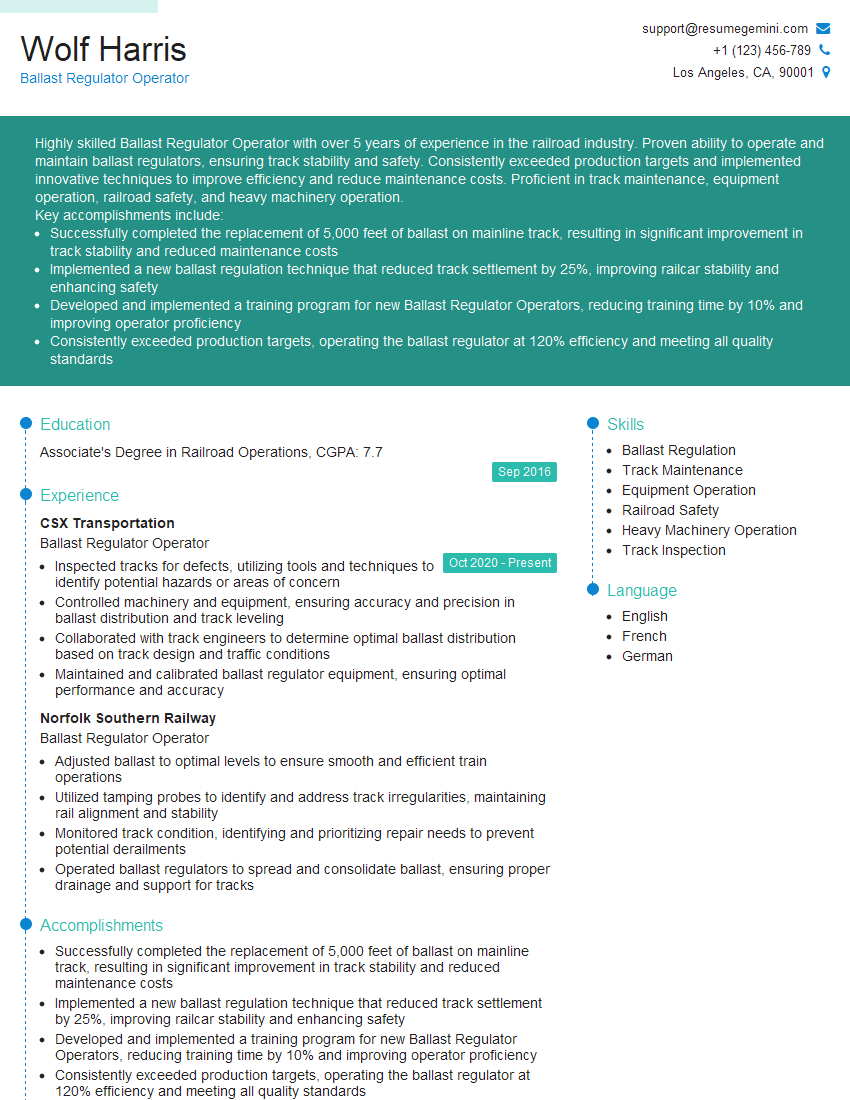
Acing the interview is crucial, but landing one requires a compelling resume that gets you noticed. Crafting a professional document that highlights your skills and experience is the first step toward interview success. ResumeGemini can help you build a standout resume that gets you called in for that dream job.






Essential Interview Questions For Ballast Regulator Operator
1. What are the key responsibilities of a Ballast Regulator Operator?
- Operate ballast regulator machines to distribute, shape, and compact ballast under railroad tracks.
- Monitor ballast distribution and make adjustments to ensure proper alignment and track stability.
- Perform routine maintenance and repairs on ballast regulator equipment.
- Follow safety protocols and operate equipment in a safe and efficient manner.
- Communicate effectively with other team members and supervisors.
2. Describe the different types of ballast used in railway construction and their properties?
Types of Ballast:
- Crushed Stone: Angular shape, good drainage, and load-bearing capacity.
- Slag: Lightweight, porous, and resistant to weathering.
- Gravel: Rounded shape, good drainage, and moderate load-bearing capacity.
- Sand: Fine texture, poor drainage, and low load-bearing capacity.
Properties:
- Particle Size: Affects drainage, stability, and track alignment.
- Shape: Angular particles provide better interlock and stability.
- Porosity: Allows water to drain, preventing track damage.
- Density: Determines load-bearing capacity and track stability.
3. Explain the process of ballast regulating and its importance in railway maintenance?
- Process:
- Prepare track by lifting rails and removing old ballast.
- Distribute new ballast evenly under the ties.
- Shape ballast to provide proper drainage and support.
- Compact ballast to ensure stability and track alignment.
- Importance:
- Maintains track stability and alignment.
- Prevents track damage from excessive vibrations.
- Improves drainage, reducing water damage to tracks.
- Extends track life and reduces maintenance costs.
4. Describe the safety hazards associated with ballast regulating operations and how to mitigate them?
- Hazards:
- Heavy machinery and moving parts.
- Falling or flying objects.
- Noise and vibration.
- Electrical hazards.
- Mitigation:
- Wear appropriate safety gear (hard hat, safety glasses, gloves).
- Stay clear of moving machinery and never put hands or feet in hazardous areas.
- Use eye and ear protection in noisy environments.
- Follow proper electrical safety procedures.
- Be aware of surroundings and potential hazards.
5. Explain the importance of track geometry and how ballast regulating contributes to maintaining it?
Track Geometry: Refers to the alignment, level, and gauge of railway tracks.
- Importance: Proper geometry ensures smooth and safe train operations, reduces wear on wheels and tracks, and extends track life.
- Ballast Regulating:
- Distributes ballast evenly under ties.
- Shapes ballast to provide proper support and alignment.
- Compacts ballast to stabilize tracks and maintain geometry.
6. Describe the role of ballast regulator operators in ensuring efficient railway operations?
- Maintain proper track geometry by distributing and compacting ballast.
- Identify and repair ballast-related issues that could affect track stability.
- Coordinate with other track maintenance crews to ensure smooth operations.
- Follow safety protocols and operate equipment efficiently to minimize delays.
- Monitor equipment performance and report any required maintenance or repairs.
7. Explain the different types of ballast regulator machines and their applications?
- Shoulder Ballast Regulators: Regulate ballast on the shoulders of tracks.
- Undercutter Ballast Regulators: Remove old ballast and shape new ballast under tracks.
- Crib Ballast Regulators: Distribute and compact ballast under ties.
- Tie Inserters: Insert new ties into tracks while regulating ballast.
- Tamping Machines: Tamp and compact ballast around ties to improve stability.
8. Describe the maintenance procedures for ballast regulator equipment?
- Regular inspections and lubrication.
- Checking and replacing worn parts.
- Monitoring hydraulic and electrical systems.
- Cleaning and removing debris from machinery.
- Performing major overhauls as per manufacturer’s recommendations.
9. Explain the role of ballast regulators in track rehabilitation projects?
- Remove and replace old, deteriorated ballast.
- Re-distribute and re-compact ballast to improve track stability.
- Shape ballast to create proper drainage and support for tracks.
- Coordinate with other track rehabilitation teams to ensure efficient work flow.
- Operate equipment safely and maintain project schedules.
10. Describe your experience in operating ballast regulator machines and managing ballast-related track issues?
- Years of experience and specific types of machines operated.
- Key responsibilities and accomplishments in ballast regulating operations.
- Examples of identifying and resolving ballast-related track problems.
- Safety record and adherence to industry standards.
- Availability for shift work and travel as required.
Interviewers often ask about specific skills and experiences. With ResumeGemini‘s customizable templates, you can tailor your resume to showcase the skills most relevant to the position, making a powerful first impression. Also check out Resume Template specially tailored for Ballast Regulator Operator.
Career Expert Tips:
- Ace those interviews! Prepare effectively by reviewing the Top 50 Most Common Interview Questions on ResumeGemini.
- Navigate your job search with confidence! Explore a wide range of Career Tips on ResumeGemini. Learn about common challenges and recommendations to overcome them.
- Craft the perfect resume! Master the Art of Resume Writing with ResumeGemini’s guide. Showcase your unique qualifications and achievements effectively.
- Great Savings With New Year Deals and Discounts! In 2025, boost your job search and build your dream resume with ResumeGemini’s ATS optimized templates.
Researching the company and tailoring your answers is essential. Once you have a clear understanding of the Ballast Regulator Operator‘s requirements, you can use ResumeGemini to adjust your resume to perfectly match the job description.
Key Job Responsibilities
Ballast Regulator Operators are responsible for the safe and efficient operation of ballast regulators, which are used to maintain and repair railroad tracks. Their primary duties include:
1. Operating Ballast Regulators
Ballast Regulator Operators control the ballast regulator machine, which distributes ballast (crushed rock) evenly along railroad tracks. They ensure that the ballast is properly distributed and compacted to provide a stable foundation for the tracks.
2. Maintaining Track Quality
Operators monitor the condition of the tracks as they work, identifying any areas that require attention. They adjust the ballast regulator settings as needed to correct any deviations from the desired track profile.
3. Ensuring Safety
Safety is paramount for Ballast Regulator Operators. They adhere to strict safety protocols to protect themselves, their coworkers, and the general public. They also inspect the ballast regulator regularly to ensure it is in good working condition.
4. Troubleshooting and Repairs
Operators troubleshoot and perform basic repairs on the ballast regulator. They can identify and resolve common issues, ensuring the machine operates smoothly and efficiently.
Interview Tips
To ace the interview for a Ballast Regulator Operator position, candidates should:
1. Highlight Relevant Experience and Skills
Emphasize your experience operating heavy machinery, particularly in the railroad industry. Showcase your knowledge of ballast regulator operations and your ability to maintain track quality.
- Provide specific examples of your work experience that demonstrate your proficiency in operating ballast regulators.
- Quantify your accomplishments whenever possible, using metrics to demonstrate the impact of your work.
2. Research the Company and Industry
Learn about the company you are interviewing with, their values, and their role in the railroad industry. Familiarize yourself with industry trends and best practices.
- Visit the company website and read industry publications to stay informed.
- Network with professionals in the field to gain insights and build connections.
3. Practice Common Interview Questions
Prepare answers to commonly asked interview questions, such as “Tell me about yourself” and “Why are you interested in this role?”
- Tailor your answers to the specific requirements of the job and the company.
- Use the STAR method (situation, task, action, result) to structure your responses and provide concrete examples.
4. Prepare Questions for the Interviewer
Preparing questions for the interviewer demonstrates your interest in the position and the company. Ask thoughtful questions that show your understanding of the role and the industry.
- Ask about the company’s safety protocols and training programs.
- Inquire about the opportunities for career advancement and professional development.
Next Step:
Armed with this knowledge, you’re now well-equipped to tackle the Ballast Regulator Operator interview with confidence. Remember, preparation is key. So, start crafting your resume, highlighting your relevant skills and experiences. Don’t be afraid to tailor your application to each specific job posting. With the right approach and a bit of practice, you’ll be well on your way to landing your dream job. Build your resume now from scratch or optimize your existing resume with ResumeGemini. Wish you luck in your career journey!