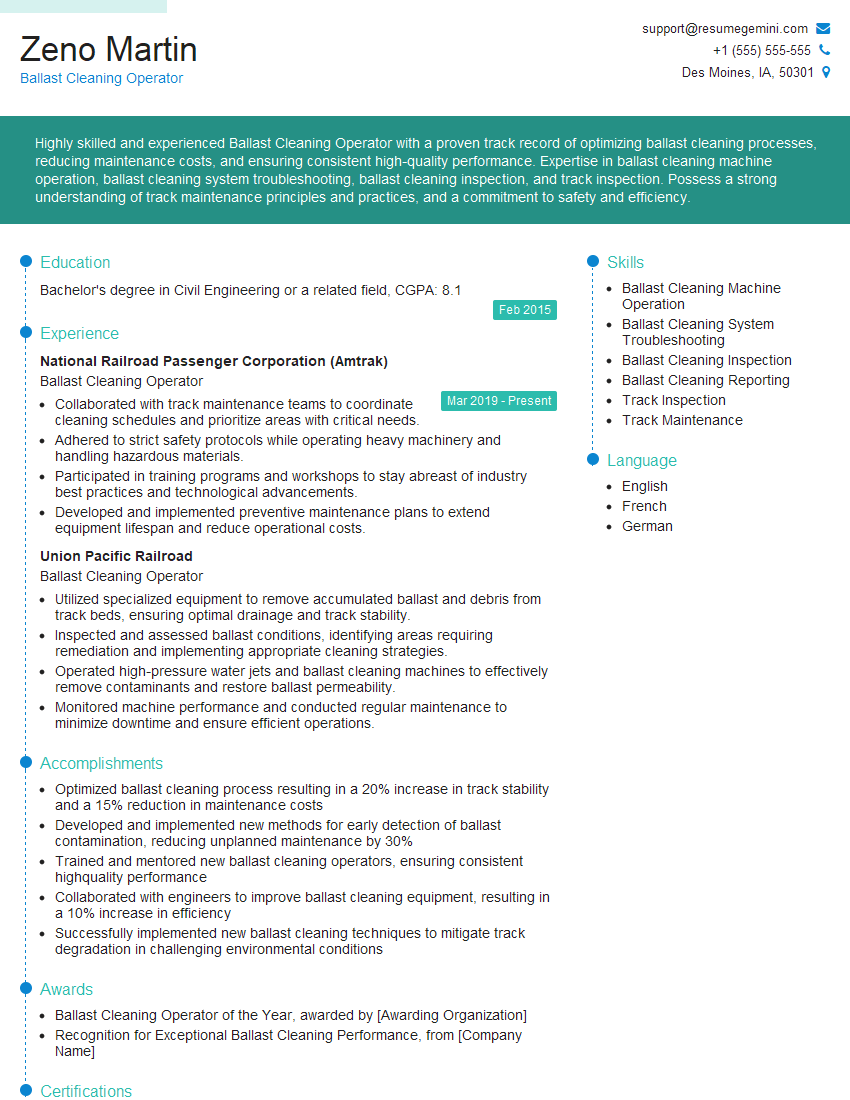
Ever felt underprepared for that crucial job interview? Or perhaps you’ve landed the interview but struggled to articulate your skills and experiences effectively? Fear not! We’ve got you covered. In this blog post, we’re diving deep into the Ballast Cleaning Operator interview questions that you’re most likely to encounter. But that’s not all. We’ll also provide expert insights into the key responsibilities of a Ballast Cleaning Operator so you can tailor your answers to impress potential employers.
Acing the interview is crucial, but landing one requires a compelling resume that gets you noticed. Crafting a professional document that highlights your skills and experience is the first step toward interview success. ResumeGemini can help you build a standout resume that gets you called in for that dream job.






Essential Interview Questions For Ballast Cleaning Operator
1. How do you ensure the safety of the ballast cleaning process?
- Follow established safety protocols and procedures.
- Wear appropriate personal protective equipment (PPE).
- Inspect equipment and tools before use.
- Maintain a clean and organized work area.
- Communicate effectively with team members.
2. What is the purpose of ballast cleaning, and how does it impact railway operations?
Importance of ballast cleaning
- Improves drainage and prevents waterlogging.
- Maintains track stability and alignment.
- Reduces track maintenance costs.
- Enhances safety and reliability of rail operations.
Impact on railway operations
- Improved track performance and reduced derailment risk.
- Lower maintenance costs and extended track life.
- Increased train speed and efficiency.
3. How do you operate and maintain ballast cleaning machines?
Operation
- Set up and operate the machine according to manufacturer’s instructions.
- Monitor machine performance and adjust settings as needed.
- Operate the machine safely and efficiently.
Maintenance
- Perform regular inspections and maintenance tasks.
- Lubricate and clean components as per schedule.
- Identify and repair any faults or breakdowns.
4. What are the different types of ballast cleaning methods, and how do you choose the appropriate method for a given situation?
- Screening: Removes fine particles and debris.
- Cycloning: Separates ballast into different fractions using centrifugal force.
- Vacuuming: Removes dust and small particles.
- Blowing: Disperses ballast to improve drainage and aeration.
Selection criteria
- Type of ballast and its condition.
- Desired level of cleaning.
- Availability of resources and equipment.
- Access to the track.
5. How do you ensure the quality of ballast after cleaning?
- Conformance to specifications (size, shape, cleanliness).
- Regular sampling and testing.
- Visual inspection for any contamination or damage.
- Comparison to industry standards and best practices.
6. What are the potential environmental impacts of ballast cleaning, and how do you minimize them?
Potential impacts
- Noise and dust generation.
- Discharge of wastewater and sludge.
- Disturbance of wildlife and vegetation.
Mitigation measures
- Use noise-suppressing equipment and work during designated hours.
- Employ dust control techniques and water suppression.
- Treat wastewater and dispose of sludge responsibly.
- Schedule work to minimize disruption to wildlife and vegetation.
7. What is the role of ballast in railway tracks, and how does ballast cleaning affect its performance?
Role of ballast
- Provides support and stability to railway tracks.
- Distributes loads from trains to the subgrade.
- Facilitates drainage and prevents waterlogging.
- Insulates the track from vibrations and noise.
Effect of ballast cleaning
- Improves drainage and reduces waterlogging.
- Restores ballast strength and stability.
- Reduces track settlement and improves alignment.
- Enhances track performance and safety.
8. What are the different types of ballast cleaning equipment, and what are their respective advantages and disadvantages?
Screening machines
- Advantages: Efficient, cost-effective, suitable for removing large debris.
- Disadvantages: Can generate noise, may not remove fine particles.
Cycloning machines
- Advantages: Effective in separating ballast into different fractions, removes fine particles.
- Disadvantages: Requires higher energy input, can be complex to operate.
Vacuum machines
- Advantages: Removes fine particles and dust, quieter than other methods.
- Disadvantages: Limited cleaning depth, requires specialized equipment.
Blowing machines
- Advantages: Disperses ballast, improves drainage and aeration.
- Disadvantages: Can generate dust, requires careful control to avoid ballast loss.
9. How do you manage and dispose of waste materials generated during ballast cleaning?
- Identify and classify waste materials (hazardous vs. non-hazardous).
- Secure appropriate disposal methods (landfills, recycling facilities).
- Comply with environmental regulations and best disposal practices.
- Train personnel on proper waste handling and disposal.
- Establish procedures for handling spills and leaks.
10. What are the safety precautions you take when operating ballast cleaning equipment near railway tracks?
- Wear appropriate PPE (hard hat, safety glasses, earplugs).
- Establish clear communication with train operators.
- Maintain a safe distance from tracks.
- Secure loose equipment and prevent debris from entering the track.
- Follow established safety protocols and procedures.
Interviewers often ask about specific skills and experiences. With ResumeGemini‘s customizable templates, you can tailor your resume to showcase the skills most relevant to the position, making a powerful first impression. Also check out Resume Template specially tailored for Ballast Cleaning Operator.
Career Expert Tips:
- Ace those interviews! Prepare effectively by reviewing the Top 50 Most Common Interview Questions on ResumeGemini.
- Navigate your job search with confidence! Explore a wide range of Career Tips on ResumeGemini. Learn about common challenges and recommendations to overcome them.
- Craft the perfect resume! Master the Art of Resume Writing with ResumeGemini’s guide. Showcase your unique qualifications and achievements effectively.
- Great Savings With New Year Deals and Discounts! In 2025, boost your job search and build your dream resume with ResumeGemini’s ATS optimized templates.
Researching the company and tailoring your answers is essential. Once you have a clear understanding of the Ballast Cleaning Operator‘s requirements, you can use ResumeGemini to adjust your resume to perfectly match the job description.
Key Job Responsibilities
A Ballast Cleaning Operator is accountable for executing the maintenance and repair of ballast and roadbed in railway tracks. Their main objectives are to ensure the optimal efficiency and safety of train operations, adhering to established policies and regulations.
1. Ballast Maintenance and Cleaning
To effectively manage ballast, the Ballast Cleaning Operator must carry out regular cleaning and maintenance activities. This encompasses:
- Removing impurities and fouled material from the ballast layer using specialized machinery like ballast cleaners and tampers.
- Maintaining proper drainage systems to prevent waterlogging and ensure ballast stability.
2. Ballast Reshaping and Stabilization
To ensure the stability of the tracks and prevent derailments, the Operator reshapes and stabilizes the ballast:
- Using tamping and stabilizing machines, they compact and level the ballast, distributing it evenly to support the tracks effectively.
- They monitor track geometry and identify any deviations from established standards, promptly addressing any issues to maintain the integrity of the tracks.
3. Track Repair and Maintenance
In addition to ballast maintenance, the Operator also performs essential track repair and maintenance tasks:
- In the event of track damage or derailment, they swiftly respond to repair the affected areas, restoring the track to operational condition.
- They conduct regular inspections of tracks, identifying potential hazards and taking proactive measures to prevent accidents and ensure the safety of train operations.
4. Equipment Operation and Maintenance
To perform their duties effectively, the Operator must be proficient in operating and maintaining specialized equipment:
- They are responsible for the operation of ballast cleaners, tampers, and other track maintenance equipment, ensuring they are in good working condition.
- Regular maintenance of this equipment is crucial, and the Operator performs inspections, repairs, and adjustments to keep the machinery running optimally.
Interview Tips
To succeed in an interview for a Ballast Cleaning Operator position, it is recommended to have substantial knowledge of the industry and its practices. Here are some specific tips to help you prepare and perform your best:
1. Research the Industry and Company
Familiarize yourself with the railway industry, common track maintenance procedures, and the specific company you are applying to. Research their track record, recent projects, and any unique practices they may have.
- Read industry publications, attend webinars, and connect with professionals in the field.
- Visit the company’s website, study their annual reports, and follow them on social media.
2. Highlight Your Technical Skills
In the interview, emphasize your technical abilities, including your proficiency in operating and maintaining specialized equipment. Provide specific examples from your previous experiences to demonstrate your competence.
- Quantify your accomplishments whenever possible. For instance, mention the percentage improvement in track stability or efficiency that you achieved.
- Be prepared to discuss your understanding of ballast cleaning techniques, track repair methods, and safety regulations.
3. Emphasize Safety and Teamwork
Safety is paramount in railway operations. Highlight your commitment to following safety protocols and regulations, as well as your experience in working effectively as part of a team.
- Describe situations where you identified and mitigated potential safety hazards.
- Share examples of how you collaborated with colleagues to achieve common goals.
4. Prepare for Common Interview Questions
Practice answering common interview questions related to your qualifications, experience, and motivations. This will help you feel more confident and prepared during the actual interview.
- Consider questions about your knowledge of track maintenance techniques.
- Prepare to discuss your experience in operating and maintaining ballast cleaning equipment.
Next Step:
Armed with this knowledge, you’re now well-equipped to tackle the Ballast Cleaning Operator interview with confidence. Remember, preparation is key. So, start crafting your resume, highlighting your relevant skills and experiences. Don’t be afraid to tailor your application to each specific job posting. With the right approach and a bit of practice, you’ll be well on your way to landing your dream job. Build your resume now from scratch or optimize your existing resume with ResumeGemini. Wish you luck in your career journey!