Ever felt underprepared for that crucial job interview? Or perhaps you’ve landed the interview but struggled to articulate your skills and experiences effectively? Fear not! We’ve got you covered. In this blog post, we’re diving deep into the Train Brake Operator interview questions that you’re most likely to encounter. But that’s not all. We’ll also provide expert insights into the key responsibilities of a Train Brake Operator so you can tailor your answers to impress potential employers.
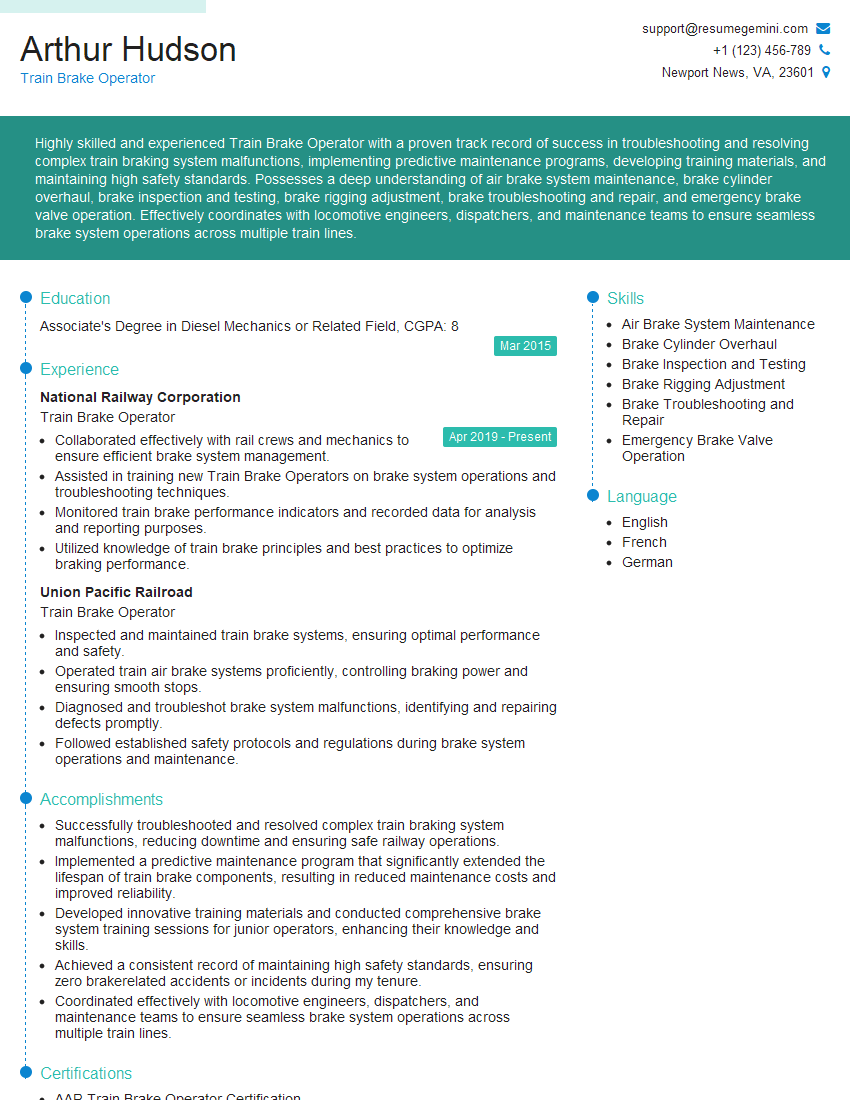
Acing the interview is crucial, but landing one requires a compelling resume that gets you noticed. Crafting a professional document that highlights your skills and experience is the first step toward interview success. ResumeGemini can help you build a standout resume that gets you called in for that dream job.






Essential Interview Questions For Train Brake Operator
1. Describe the role of a Train Brake Operator and its primary responsibilities?
- Operate the train’s braking system to ensure optimal train performance and safety.
- Monitor and maintain the train’s air brake system, including compressors, reservoirs, and brake lines.
2. Explain the different types of brake systems used on trains and their operational principles.
- Air Brakes: Use compressed air to actuate brake pads against the wheels, providing friction for deceleration.
- Electro-Pneumatic Brakes: Combine an air brake system with an electrical control system for quicker and more precise braking.
3. How do you perform routine inspections and maintenance checks on train brake systems?
- Check reservoirs for proper air pressure levels and leaks.
- Inspect brake pads and shoes for wear or damage.
- Test brake system components, such as valves, switches, and gauges.
4. What safety precautions should be taken when working on train brake systems?
- Ensure the train is stationary and secure before performing any work.
- Wear appropriate personal protective equipment (PPE) such as gloves, safety glasses, and earplugs.
- Follow established procedures and protocols for safety.
5. Describe how you would troubleshoot common problems with train brake systems.
- Identify the root cause of the problem through diagnostic testing.
- Repair or replace faulty components, such as valves, solenoids, or pipes.
- Test and verify the proper functionality of the repaired system.
6. What are the emergency procedures to be followed in case of a train brake failure?
- Activate the emergency brake handle to apply the brakes manually.
- Isolate the faulty brake valve or component to prevent further loss of air pressure.
- Contact the control center and follow their instructions.
7. How do you stay up-to-date with industry standards and regulations related to train brake operations?
- Attend training programs and workshops.
- Read industry publications and manuals.
- Participate in professional development opportunities.
8. What is the role of Train Brake Operators in ensuring the smooth and efficient operation of trains?
- Maintain optimal brake performance to minimize stopping distances and ensure passenger safety.
- Prevent train derailments or collisions by ensuring timely and effective braking.
- Contribute to the safety and reliability of rail transportation systems.
9. How do you prioritize safety and efficiency while operating train brake systems?
- Adhere strictly to established safety protocols and procedures.
- Regularly monitor and troubleshoot brake systems to prevent failures.
- Operate trains within specified speed limits and observe proper braking distances.
10. What are some of the challenges you have encountered as a Train Brake Operator and how did you overcome them?
- Troubleshooting Complex Faults: Required extensive knowledge and diagnostic skills to identify and repair unusual brake system issues.
- Emergency Situations: Remained calm under pressure and followed emergency procedures effectively to prevent accidents.
Interviewers often ask about specific skills and experiences. With ResumeGemini‘s customizable templates, you can tailor your resume to showcase the skills most relevant to the position, making a powerful first impression. Also check out Resume Template specially tailored for Train Brake Operator.
Career Expert Tips:
- Ace those interviews! Prepare effectively by reviewing the Top 50 Most Common Interview Questions on ResumeGemini.
- Navigate your job search with confidence! Explore a wide range of Career Tips on ResumeGemini. Learn about common challenges and recommendations to overcome them.
- Craft the perfect resume! Master the Art of Resume Writing with ResumeGemini’s guide. Showcase your unique qualifications and achievements effectively.
- Great Savings With New Year Deals and Discounts! In 2025, boost your job search and build your dream resume with ResumeGemini’s ATS optimized templates.
Researching the company and tailoring your answers is essential. Once you have a clear understanding of the Train Brake Operator‘s requirements, you can use ResumeGemini to adjust your resume to perfectly match the job description.
Key Job Responsibilities
A Train Brake Operator is responsible for ensuring the safe and efficient operation of train brakes. Key job responsibilities include:
1. Train Brake System Maintenance
Train Brake Operators maintain, test, and diagnose train brake systems to ensure they are in proper working order. This includes replacing worn parts, checking brake pads, and testing brake pressure.
2. Train Brake Operation
Train Brake Operators control the brakes of trains to ensure they start, stop, and slow down as needed. They use a variety of switches and levers to apply and release brake pressure.
3. Troubleshooting and Repairs
Train Brake Operators troubleshoot and repair any problems that arise with train brakes. This includes diagnosing the problem, making repairs, and testing the system to ensure it is working properly.
4. Communication and Reporting
Train Brake Operators communicate with other train crew members and dispatchers to ensure the safe operation of trains. They also keep records of brake inspections and repairs.
Interview Tips
To ace an interview for a Train Brake Operator position, candidates should:
1. Research the Company and Position
Candidates should research the company and position to gain a good understanding of the company’s culture, the role’s responsibilities, and the qualifications required.
2. Practice Answering Common Interview Questions
Candidates should practice answering common interview questions, such as “Why are you interested in this position?” and “What are your strengths and weaknesses?”.
3. Highlight Relevant Experience and Skills
Candidates should highlight their relevant experience and skills in their resume and during the interview. They should emphasize their experience with train brake systems, troubleshooting, and repairs.
4. Be Prepared to Discuss Safety Procedures
Train Brake Operators are responsible for ensuring the safety of the train and its passengers. Candidates should be prepared to discuss their knowledge of safety procedures and how they would implement them in the workplace.
5. Dress Professionally and Arrive on Time
Candidates should dress professionally and arrive on time for their interview. This shows that they are serious about the position and respectful of the interviewer’s time.
Next Step:
Armed with this knowledge, you’re now well-equipped to tackle the Train Brake Operator interview with confidence. Remember, preparation is key. So, start crafting your resume, highlighting your relevant skills and experiences. Don’t be afraid to tailor your application to each specific job posting. With the right approach and a bit of practice, you’ll be well on your way to landing your dream job. Build your resume now from scratch or optimize your existing resume with ResumeGemini. Wish you luck in your career journey!