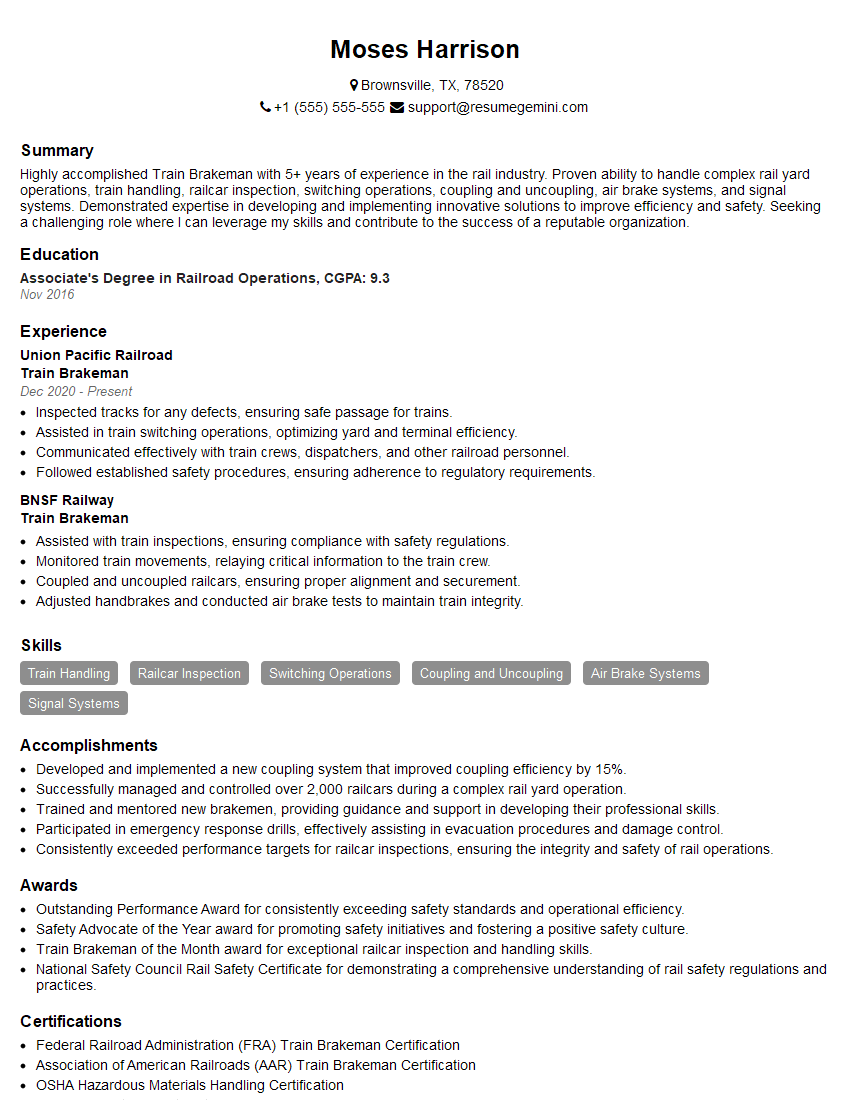
Are you gearing up for an interview for a Train Brakeman position? Whether you’re a seasoned professional or just stepping into the role, understanding what’s expected can make all the difference. In this blog, we dive deep into the essential interview questions for Train Brakeman and break down the key responsibilities of the role. By exploring these insights, you’ll gain a clearer picture of what employers are looking for and how you can stand out. Read on to equip yourself with the knowledge and confidence needed to ace your next interview and land your dream job!
Acing the interview is crucial, but landing one requires a compelling resume that gets you noticed. Crafting a professional document that highlights your skills and experience is the first step toward interview success. ResumeGemini can help you build a standout resume that gets you called in for that dream job.






Essential Interview Questions For Train Brakeman
1. What are the primary responsibilities of a Train Brakeman?
As a Train Brakeman, my primary responsibilities revolve around ensuring the safe and efficient operation of trains. This encompasses:
- Coupling and uncoupling railcars to assemble and break up trains
- Inspecting trains for defects and reporting any issues to the engineer
- Assisting the engineer with switching operations and yard work
- Checking air brakes and ensuring proper brake operation
- Monitoring train movements and communicating with the engineer
2. Describe the different types of train brake systems and their components.
Air Brake Systems
- Consist of an air compressor, air reservoir, and brake valves
- Air pressure is used to apply and release brakes
Dynamic Brake Systems
- Use the train’s motors to generate electricity and slow the train
- More efficient than air brakes for high-speed trains
Hydraulic Brake Systems
- Use hydraulic fluid to apply pressure to brake pads
- Often used on locomotives and passenger cars
3. What are the different types of train signals and how do they work?
Train signals are visual, audible, or electronic devices used to convey information to train crews. They include:
- Semaphore Signals: Physical arms or lights that indicate train movements
- Color Light Signals: Colored lights that convey speed and movement restrictions
- Cab Signals: Electronic signals displayed in the locomotive cab, indicating train speed and signal aspects
- Audible Signals: Whistles, bells, or horns used for communication and warnings
4. How do you handle potential emergencies while working as a Train Brakeman?
In the event of an emergency, I prioritize the safety of passengers, crew, and the train. My response plan includes:
- Notifying the engineer and relevant authorities
- Assisting in evacuating passengers and securing the area
- Inspecting the train for damage and potential hazards
- Following established emergency procedures and protocols
- Remaining calm and communicating clearly during the situation
5. What are the physical demands and hazards associated with the role of a Train Brakeman?
The role requires significant physical ability and awareness of potential hazards. These include:
- Physical Demands: Lifting heavy equipment, climbing ladders, and working in all weather conditions
- Hazards: Exposure to noise, vibration, moving machinery, and hazardous materials
- Mitigation Strategies: Use of proper safety gear, following safety protocols, and maintaining physical fitness
6. How do you ensure the proper operation of air brakes on a train?
Ensuring proper air brake operation is crucial for train safety. I perform the following steps:
- Inspection: Visually inspect brake components for leaks or damage
- Testing: Conduct brake tests to verify response time and effectiveness
- Maintenance: Report any issues or perform minor repairs as needed
- Communication: Notify the engineer of any brake-related concerns
7. What are the different types of train couplers and how do they work?
Train couplers are essential for connecting railcars. The most common types include:
- Automatic Couplers: Self-aligning and locking devices that couple cars automatically
- Janney Couplers: Hook-and-link type couplers used on North American railroads
- Buffer Couplers: Used on European railroads, providing both coupling and shock absorption
8. How do you communicate with the train engineer while working as a Train Brakeman?
Clear and efficient communication is essential. I use the following methods:
- Hand Signals: Standardized gestures to convey commands and information
- Whistle Signals: Audible signals used for communication and warnings
- Radio Communication: Two-way radios for real-time communication
9. What are the regulations and standards that govern the work of a Train Brakeman?
I am familiar with and adhere to the following regulations and standards:
- Federal Railroad Administration (FRA) regulations
- Railroad company operating rules and procedures
- Relevant industry standards and best practices
10. How do you maintain a safe and professional work environment as a Train Brakeman?
Safety is my top priority. I follow these principles:
- Adhering to Safety Regulations: Strictly following established safety protocols and guidelines
- Hazard Identification: Recognizing and mitigating potential hazards in the workplace
- Communication and Teamwork: Collaborating effectively with other crew members and following instructions promptly
- Continuous Learning: Staying up-to-date on new safety measures and best practices
Interviewers often ask about specific skills and experiences. With ResumeGemini‘s customizable templates, you can tailor your resume to showcase the skills most relevant to the position, making a powerful first impression. Also check out Resume Template specially tailored for Train Brakeman.
Career Expert Tips:
- Ace those interviews! Prepare effectively by reviewing the Top 50 Most Common Interview Questions on ResumeGemini.
- Navigate your job search with confidence! Explore a wide range of Career Tips on ResumeGemini. Learn about common challenges and recommendations to overcome them.
- Craft the perfect resume! Master the Art of Resume Writing with ResumeGemini’s guide. Showcase your unique qualifications and achievements effectively.
- Great Savings With New Year Deals and Discounts! In 2025, boost your job search and build your dream resume with ResumeGemini’s ATS optimized templates.
Researching the company and tailoring your answers is essential. Once you have a clear understanding of the Train Brakeman‘s requirements, you can use ResumeGemini to adjust your resume to perfectly match the job description.
Key Job Responsibilities
As a Train Brakeman, you will play a pivotal role in the safe and efficient operation of train services. Your primary duties will encompass various aspects of train operations, ensuring the safety and well-being of passengers and crew members.
1. Signal Communication
You will be responsible for conveying signals to the locomotive engineer, using hand and whistle signals, to control the movement of the train. This includes starting, stopping, and adjusting the speed of the train according to the established regulations.
2. Train Inspection
Prior to departure, you will conduct thorough inspections of the train to ensure that all components are in good working order. This includes checking the brakes, couplers, and other safety equipment to identify any potential issues that could impact the safe operation of the train.
3. Coupling and Uncoupling Cars
You will be involved in coupling and uncoupling train cars, ensuring that they are securely connected or detached as needed. This task requires a keen eye for detail, as the proper alignment and connection of cars is critical for the safety and smooth operation of the train.
4. Assisting Passengers
In addition to your technical responsibilities, you will also provide assistance to passengers as needed. This may include answering questions, providing directions, or assisting passengers with luggage or other needs. Maintaining a courteous and professional demeanor is essential in creating a positive experience for passengers.
5. Emergency Response
In the event of an emergency, you will be expected to respond quickly and efficiently to ensure the safety of passengers and crew members. This may involve evacuating passengers, providing first aid, or assisting with any necessary repairs or recovery efforts.
Interview Tips
Preparing thoroughly for your interview is crucial to making a strong impression and increasing your chances of success. Here are some tips and insights to guide your preparation:
1. Research the Company and Position
Familiarize yourself with the railway company and the specific role of a Train Brakeman. Learn about their history, mission, and values, as well as the specific requirements and expectations of the position. This will demonstrate your genuine interest in the company and the job, and will allow you to tailor your answers accordingly.
2. Practice Common Interview Questions
Anticipate typical interview questions and prepare your responses. Practice answering questions related to your skills, experience, and qualifications. Prepare examples that showcase your abilities and highlight your suitability for the role. You can use the STAR method to structure your answers, providing specific situations, tasks, actions, and results to illustrate your points.
3. Highlight Safety and Customer Service
Emphasize your commitment to safety and your ability to provide excellent customer service. Train Brakemen play a vital role in ensuring the safety of passengers and crew, and they must be able to interact with passengers in a courteous and professional manner. Share examples of your safety-conscious approach and your experience in providing exceptional customer service.
4. Dress Professionally and Arrive Punctually
First impressions matter. Dress professionally for your interview, as it conveys respect for the interviewer and the company. Punctuality is also crucial, as it demonstrates your reliability and respect for the interviewer’s time. Plan your journey in advance to avoid any delays or unexpected circumstances.
5. Ask Thoughtful Questions
At the end of the interview, take the opportunity to ask thoughtful questions about the position, the company, or the industry. This shows your engagement and interest in the opportunity, and it also gives you a chance to clarify any remaining questions you may have.
Next Step:
Now that you’re armed with the knowledge of Train Brakeman interview questions and responsibilities, it’s time to take the next step. Build or refine your resume to highlight your skills and experiences that align with this role. Don’t be afraid to tailor your resume to each specific job application. Finally, start applying for Train Brakeman positions with confidence. Remember, preparation is key, and with the right approach, you’ll be well on your way to landing your dream job. Build an amazing resume with ResumeGemini