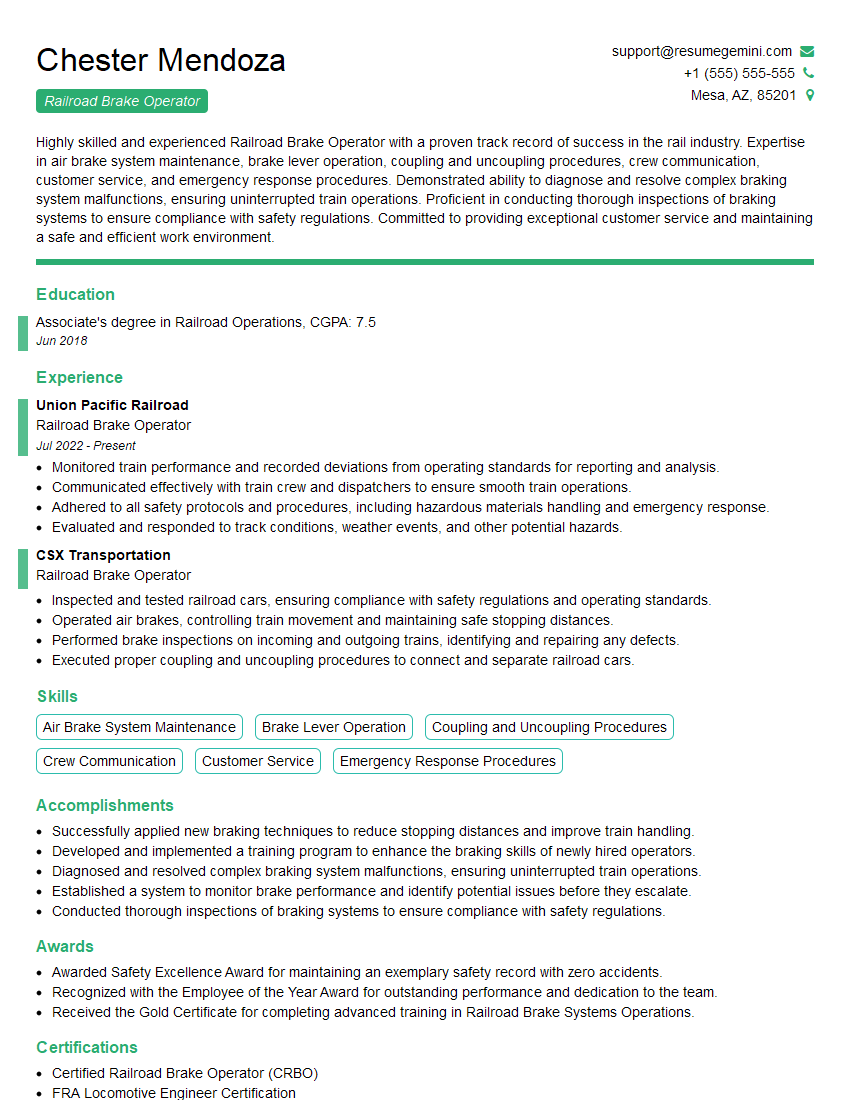
Feeling lost in a sea of interview questions? Landed that dream interview for Railroad Brake Operator but worried you might not have the answers? You’re not alone! This blog is your guide for interview success. We’ll break down the most common Railroad Brake Operator interview questions, providing insightful answers and tips to leave a lasting impression. Plus, we’ll delve into the key responsibilities of this exciting role, so you can walk into your interview feeling confident and prepared.
Acing the interview is crucial, but landing one requires a compelling resume that gets you noticed. Crafting a professional document that highlights your skills and experience is the first step toward interview success. ResumeGemini can help you build a standout resume that gets you called in for that dream job.






Essential Interview Questions For Railroad Brake Operator
1. What are the key responsibilities of a Railroad Brake Operator?
- Inspect trains and ensure that the brakes are in good condition.
- Operate the brakes to control the speed and movement of trains.
- Monitor the condition of the brakes and make repairs as needed.
- Follow safety procedures and regulations.
- Communicate with other members of the train crew.
2. What are some of the challenges you have faced as a Railroad Brake Operator?
subheading of the answer
- Working in all weather conditions, including extreme heat and cold.
- Working in a confined space on the train.
- Dealing with the stress of working on a moving train.
- Working long hours, including nights and weekends.
- Working with a team of people in a high-pressure environment.
subheading of the answer
- I have overcome these challenges by staying focused on the task at hand and by following safety procedures and regulations.
- I have also developed good communication skills and I am able to work well with others in a team environment.
3. What are some of the most important skills for a Railroad Brake Operator?
- Mechanical skills.
- Electrical skills.
- Pneumatic skills.
- Hydraulic skills.
- Troubleshooting skills.
- Communication skills.
- Teamwork skills.
4. What is your experience with operating different types of brake systems?
- I have experience operating the following types of brake systems:
- Air brakes
- Vacuum brakes
- Hydraulic brakes
- Electric brakes
- I am also familiar with the different types of brake valves and controls.
5. What is your understanding of the different types of brake tests?
- There are several different types of brake tests that can be performed on a train, including:
- Static brake test
- Dynamic brake test
- Emergency brake test
- Functional brake test
- I am familiar with the procedures for conducting these tests and I understand the importance of following them correctly.
6. What is your experience with working on different types of trains?
- I have experience working on the following types of trains:
- Freight trains
- Passenger trains
- Locomotives
- I am familiar with the different types of brake systems used on these trains and I am able to work on them safely and efficiently.
7. What is your experience with working in a team environment?
- I have experience working in a team environment on a variety of projects.
- I am able to communicate effectively with others and I am willing to share my knowledge and skills.
- I am also able to work independently and I am motivated to complete my tasks on time and to the best of my ability.
8. What is your understanding of the FRA regulations for railroad brake systems?
- I am familiar with the FRA regulations for railroad brake systems.
- I understand the importance of following these regulations and I am committed to doing so.
- I am also aware of the consequences of violating these regulations and I am committed to avoiding them.
9. What is your experience with using different types of tools and equipment?
- I have experience using a variety of tools and equipment, including:
- Wrenches
- Sockets
- Screwdrivers
- Pliers
- Clamps
- Measuring tapes
- Gauges
- I am also familiar with the safe use of hand tools and power tools.
10. What is your understanding of the different types of hazardous materials that can be transported by rail?
- I am familiar with the different types of hazardous materials that can be transported by rail.
- I understand the importance of following the regulations for transporting these materials and I am committed to doing so.
- I am also aware of the consequences of violating these regulations and I am committed to avoiding them.
Interviewers often ask about specific skills and experiences. With ResumeGemini‘s customizable templates, you can tailor your resume to showcase the skills most relevant to the position, making a powerful first impression. Also check out Resume Template specially tailored for Railroad Brake Operator.
Career Expert Tips:
- Ace those interviews! Prepare effectively by reviewing the Top 50 Most Common Interview Questions on ResumeGemini.
- Navigate your job search with confidence! Explore a wide range of Career Tips on ResumeGemini. Learn about common challenges and recommendations to overcome them.
- Craft the perfect resume! Master the Art of Resume Writing with ResumeGemini’s guide. Showcase your unique qualifications and achievements effectively.
- Great Savings With New Year Deals and Discounts! In 2025, boost your job search and build your dream resume with ResumeGemini’s ATS optimized templates.
Researching the company and tailoring your answers is essential. Once you have a clear understanding of the Railroad Brake Operator‘s requirements, you can use ResumeGemini to adjust your resume to perfectly match the job description.
Key Job Responsibilities
Railroad Brake Operators play a crucial role in ensuring the safe and efficient operation of trains. Their primary responsibilities include:
1. Train Operation
Operate the train’s brakes and other safety systems to ensure smooth and controlled movement.
2. Communication
Maintain clear communication with the locomotive engineer, other train crew members, and dispatchers.
3. Inspection and Maintenance
Inspect the train’s brake systems and other components to identify and resolve any issues.
4. Compliance
Adhere to all applicable safety regulations and company policies.
5. Emergency Response
Act quickly and effectively in emergency situations to minimize damage and protect passengers and crew.
Interview Tips
To ace the interview for a Railroad Brake Operator position, it is essential to:
1. Research the Company and Industry
Research the railroad company and the industry to demonstrate your knowledge and interest.
- Visit the company website.
- Follow industry news.
2. Highlight Relevant Skills
Emphasize your skills in train operation, communication, inspection, and emergency response.
- Quantify your accomplishments with data.
- Use specific examples from your previous experience.
3. Prepare for Technical Questions
Expect questions about railroad brake systems, safety regulations, and train operation procedures.
- Review the technical aspects of the job.
- Brush up on your knowledge of railroad terminology.
4. Demonstrate Safety Awareness
Emphasize your strong safety consciousness and commitment to following all safety protocols.
- Explain your understanding of the importance of safety.
- Share examples of your proactive safety measures.
5. Dress Professionally
Dress professionally to make a good impression.
- Wear business attire or appropriate workwear.
- Consider wearing safety shoes or boots.
Next Step:
Now that you’re armed with the knowledge of Railroad Brake Operator interview questions and responsibilities, it’s time to take the next step. Build or refine your resume to highlight your skills and experiences that align with this role. Don’t be afraid to tailor your resume to each specific job application. Finally, start applying for Railroad Brake Operator positions with confidence. Remember, preparation is key, and with the right approach, you’ll be well on your way to landing your dream job. Build an amazing resume with ResumeGemini