Are you gearing up for an interview for a Passenger Train Braker position? Whether you’re a seasoned professional or just stepping into the role, understanding what’s expected can make all the difference. In this blog, we dive deep into the essential interview questions for Passenger Train Braker and break down the key responsibilities of the role. By exploring these insights, you’ll gain a clearer picture of what employers are looking for and how you can stand out. Read on to equip yourself with the knowledge and confidence needed to ace your next interview and land your dream job!
Acing the interview is crucial, but landing one requires a compelling resume that gets you noticed. Crafting a professional document that highlights your skills and experience is the first step toward interview success. ResumeGemini can help you build a standout resume that gets you called in for that dream job.






Essential Interview Questions For Passenger Train Braker
1. What are the primary responsibilities of a Passenger Train Braker?
As a Passenger Train Braker, my primary responsibilities include:
- Operating and maintaining train brake systems to ensure safe and efficient train operation.
- Monitoring train performance and identifying any potential issues or malfunctions.
- Performing routine inspections and maintenance on brake equipment to maintain optimal performance and ensure compliance with safety regulations.
2. What types of brake systems are typically used on passenger trains, and how do they differ from freight train brake systems?
Electro-Pneumatic Brakes (EP Brakes):
- Used on both passenger and freight trains.
- Utilize electrical signals to control pneumatic brake systems.
- Provide faster and more responsive braking compared to air brake systems.
Air Brakes:
- Commonly used on freight trains.
- Rely on compressed air to apply and release brakes.
- May have a slower response time and require more maintenance compared to EP brakes.
3. What are the safety protocols and procedures that you must adhere to as a Passenger Train Braker?
- Thoroughly inspect brake systems prior to train operation.
- Follow established guidelines for brake testing and maintenance.
- Report any observed defects or issues to supervisors immediately.
- Comply with all applicable safety regulations and industry standards.
- Maintain a high level of situational awareness and follow instructions from train crew.
4. What are the consequences of failing to maintain and operate brake systems properly?
- Potential for train derailments or collisions.
- Compromised passenger safety and comfort.
- Increased risk of equipment damage or failure.
- Violation of safety regulations and legal liabilities.
- Operational delays and disruptions.
5. How do you stay up-to-date on the latest industry best practices and technological advancements in train brake systems?
- Attend industry conferences and training programs.
- Study technical manuals and publications.
- Consult with experienced colleagues and supervisors.
- Participate in online forums and discussion groups.
- Stay informed about regulatory changes and updates.
6. What are some common troubleshooting techniques you use when encountering brake system issues?
- Conduct visual inspections to identify any obvious defects.
- Use diagnostic tools to pinpoint the source of the issue.
- Follow prescribed troubleshooting procedures.
- Consult with more experienced colleagues or supervisors.
- Refer to technical manuals and documentation.
7. How do you handle situations where you need to make quick decisions under pressure while operating brake systems?
- Remain calm and assess the situation.
- Prioritize the safety of passengers and train crew.
- Follow established protocols and procedures.
- Communicate clearly with the train crew.
- Make informed decisions based on my training and experience.
8. How do you ensure that you are physically and mentally fit for the demands of the job as a Passenger Train Braker?
- Maintain a healthy diet and exercise regimen.
- Get adequate sleep and rest.
- Undergo regular medical checkups.
- Practice mindfulness techniques to manage stress.
- Stay hydrated and avoid substance abuse.
9. What are the key qualities and traits that make a successful Passenger Train Braker?
- Strong technical knowledge and skills.
- Excellent communication and interpersonal skills.
- High level of attention to detail and precision.
- Ability to work independently and as part of a team.
- Physical fitness and stamina.
10. Why are you interested in working as a Passenger Train Braker, and how do you see your skills and experience contributing to our team?
I am passionate about ensuring the safety and comfort of passengers while traveling by rail. My technical expertise in train brake systems, combined with my strong work ethic and dedication to safety, makes me an ideal candidate for this role. I am eager to contribute my skills to your team and work alongside experienced professionals to maintain a high standard of train operations.
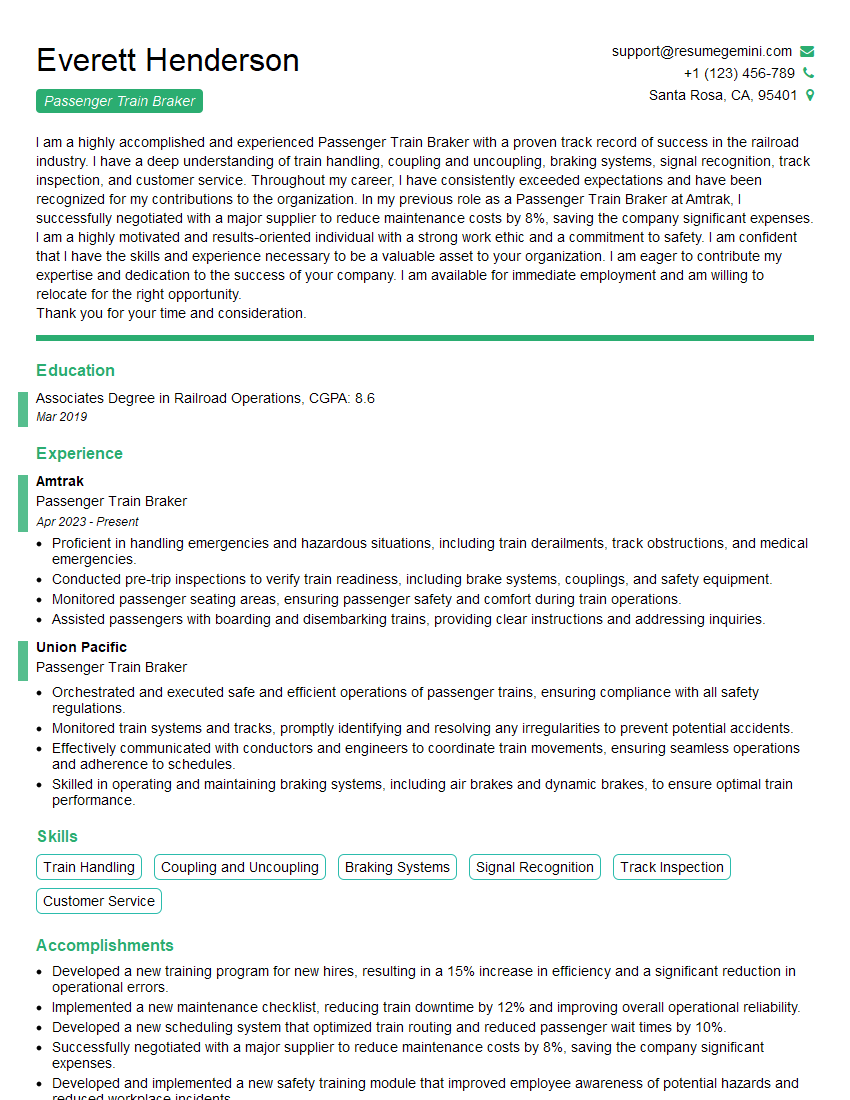
Interviewers often ask about specific skills and experiences. With ResumeGemini‘s customizable templates, you can tailor your resume to showcase the skills most relevant to the position, making a powerful first impression. Also check out Resume Template specially tailored for Passenger Train Braker.
Career Expert Tips:
- Ace those interviews! Prepare effectively by reviewing the Top 50 Most Common Interview Questions on ResumeGemini.
- Navigate your job search with confidence! Explore a wide range of Career Tips on ResumeGemini. Learn about common challenges and recommendations to overcome them.
- Craft the perfect resume! Master the Art of Resume Writing with ResumeGemini’s guide. Showcase your unique qualifications and achievements effectively.
- Great Savings With New Year Deals and Discounts! In 2025, boost your job search and build your dream resume with ResumeGemini’s ATS optimized templates.
Researching the company and tailoring your answers is essential. Once you have a clear understanding of the Passenger Train Braker‘s requirements, you can use ResumeGemini to adjust your resume to perfectly match the job description.
Key Job Responsibilities
Passenger Train Brakers are a vital part of the safe and efficient operation of passenger trains. They work under the direction of the locomotive engineer and are responsible for operating the brakes, opening and closing doors, and providing assistance to passengers.
1. Operate the brakes
Passenger Train Brakers are responsible for operating the brakes on the train. This includes applying the brakes to stop or slow the train, and releasing the brakes to start or accelerate the train. They must be able to operate the brakes safely and efficiently, and they must be able to respond quickly to any emergencies.
- Apply the brakes to stop or slow the train.
- Release the brakes to start or accelerate the train.
- Monitor the brake system for any problems.
2. Open and close doors
Passenger Train Brakers are also responsible for opening and closing the doors on the train. This includes opening the doors to allow passengers to board and disembark the train, and closing the doors to secure the train before it departs. They must be able to open and close the doors quickly and efficiently, and they must be able to ensure that the doors are properly secured.
- Open the doors to allow passengers to board and disembark the train.
- Close the doors to secure the train before it departs.
- Ensure that the doors are properly secured.
3. Provide assistance to passengers
Passenger Train Brakers also provide assistance to passengers. This includes answering questions, providing information, and helping passengers with their luggage. They must be able to communicate effectively with passengers, and they must be able to provide assistance in a courteous and professional manner.
- Answer questions from passengers.
- Provide information about the train and its destination.
- Help passengers with their luggage.
4. Other duties
In addition to the above responsibilities, Passenger Train Brakers may also be required to perform other duties, such as:
- Inspect the train before it departs.
- Monitor the train’s performance during the journey.
- Report any problems to the locomotive engineer.
- Assist with the loading and unloading of freight.
Interview Tips
If you’re preparing for an interview for a Passenger Train Braker position, here are a few tips to help you ace the interview:
1. Research the company and the position
Before you go to your interview, take some time to research the company and the position you’re applying for. This will help you to understand the company’s culture and the specific requirements of the job. You can find information about the company on their website, in their annual report, and in news articles. You can also find information about the position in the job description.
- Visit the company’s website.
- Read the company’s annual report.
- Read news articles about the company.
- Review the job description.
2. Practice your answers to common interview questions
There are a few common interview questions that you’re likely to be asked, such as “Why are you interested in this position?” and “What are your strengths and weaknesses?”. It’s a good idea to practice your answers to these questions so that you can deliver them confidently and concisely. You can also prepare for other questions by reading the job description and researching the company.
- Why are you interested in this position?
- What are your strengths and weaknesses?
- What is your experience with operating brakes?
- What is your experience with opening and closing doors?
- What is your experience with providing assistance to passengers?
3. Dress professionally and arrive on time
First impressions matter, so it’s important to dress professionally for your interview. You should also arrive on time, as this shows that you’re respectful of the interviewer’s time. When you arrive, be sure to greet the interviewer with a firm handshake and make eye contact.
- Dress professionally.
- Arrive on time.
- Greet the interviewer with a firm handshake.
- Make eye contact.
4. Be prepared to talk about your experience
The interviewer will likely ask you about your experience, so it’s important to be prepared to talk about your skills and qualifications. Be sure to highlight your experience with operating brakes, opening and closing doors, and providing assistance to passengers. You should also be prepared to talk about your safety record and your ability to work under pressure.
- Highlight your experience with operating brakes.
- Highlight your experience with opening and closing doors.
- Highlight your experience with providing assistance to passengers.
- Talk about your safety record.
- Talk about your ability to work under pressure.
5. Ask questions
At the end of the interview, the interviewer will likely ask if you have any questions. This is your opportunity to learn more about the company and the position. It’s also a good way to show the interviewer that you’re interested in the job. Some good questions to ask include:
- What are the biggest challenges facing the company right now?
- What are the company’s plans for the future?
- What is the training program for new Passenger Train Brakers?
- What is the company’s safety record?
- What is the company’s culture like?
Next Step:
Armed with this knowledge, you’re now well-equipped to tackle the Passenger Train Braker interview with confidence. Remember, preparation is key. So, start crafting your resume, highlighting your relevant skills and experiences. Don’t be afraid to tailor your application to each specific job posting. With the right approach and a bit of practice, you’ll be well on your way to landing your dream job. Build your resume now from scratch or optimize your existing resume with ResumeGemini. Wish you luck in your career journey!