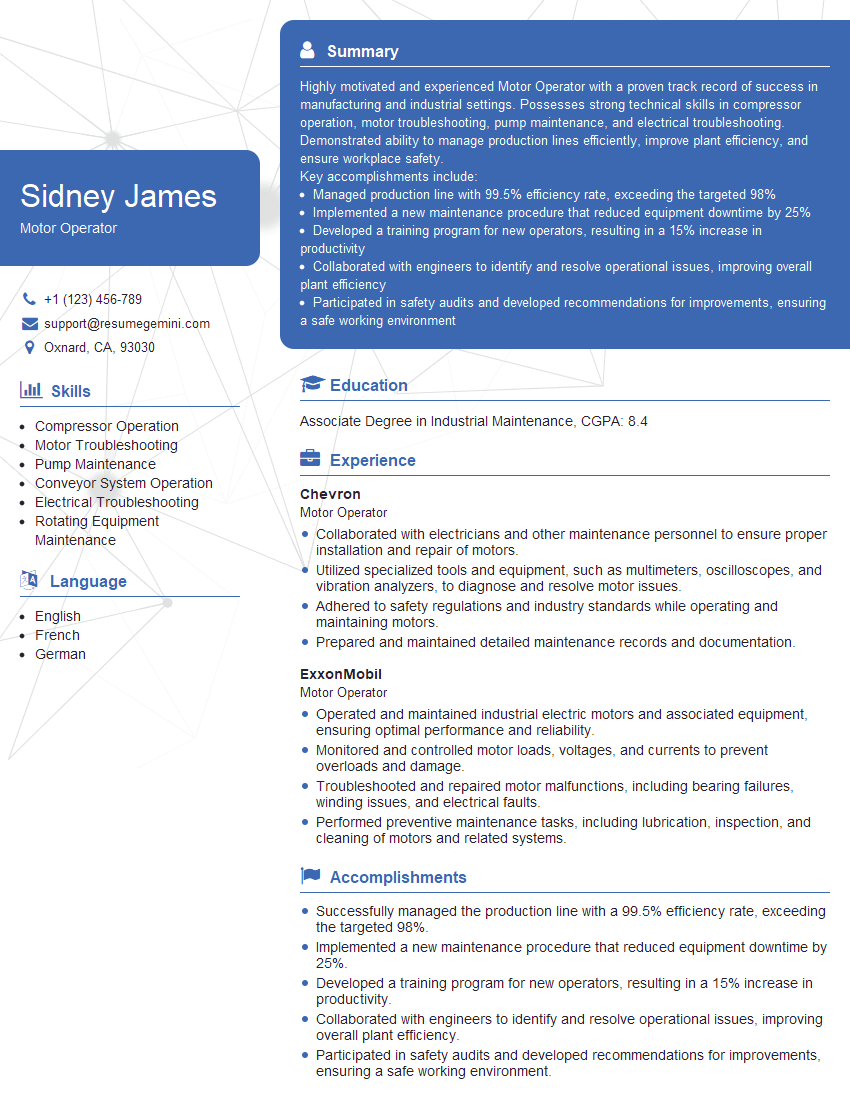
Are you gearing up for an interview for a Motor Operator position? Whether you’re a seasoned professional or just stepping into the role, understanding what’s expected can make all the difference. In this blog, we dive deep into the essential interview questions for Motor Operator and break down the key responsibilities of the role. By exploring these insights, you’ll gain a clearer picture of what employers are looking for and how you can stand out. Read on to equip yourself with the knowledge and confidence needed to ace your next interview and land your dream job!
Acing the interview is crucial, but landing one requires a compelling resume that gets you noticed. Crafting a professional document that highlights your skills and experience is the first step toward interview success. ResumeGemini can help you build a standout resume that gets you called in for that dream job.






Essential Interview Questions For Motor Operator
1. Explain the purpose and working principle of a motor operator?
A motor operator is an electrical device that converts electrical energy into mechanical energy to operate a valve. It is used to remotely open, close, or modulate the flow of fluid in a трубопровод. The working principle of a motor operator involves the following steps:
- An electrical signal is sent to the motor operator from a control system.
- The motor operator converts the electrical signal into mechanical energy, which is used to rotate a motor.
- The motor is connected to a gearbox, which increases the torque and reduces the speed of the motor.
- The gearbox is connected to the valve stem, which opens or closes the valve.
2. Describe the different types of motor operators and their applications?
Electric Motor Operators
- Electric motor operators are the most common type of motor operator. They are powered by an electric motor and can be used to operate a wide range of valves.
- They are typically used in applications where precise control of the valve is required, such as in chemical processing plants or water treatment facilities.
Pneumatic Motor Operators
- Pneumatic motor operators are powered by compressed air and are typically used in applications where high torque is required, such as in the oil and gas industry.
- They are also used in applications where there is a risk of explosion, as they do not produce sparks.
Hydraulic Motor Operators
- Hydraulic motor operators are powered by hydraulic fluid and are typically used in applications where high power is required, such as in the mining industry.
- They are also used in applications where there is a need for precise control of the valve, such as in the aerospace industry.
3. What are the key factors to consider when selecting a motor operator?
The key factors to consider when selecting a motor operator include:
- The type of valve being operated
- The size and weight of the valve
- The required operating torque
- The required operating speed
- The environmental conditions in which the motor operator will be used
- The cost of the motor operator
4. How do you maintain a motor operator?
To maintain a motor operator, you should:
- Regularly inspect the motor operator for any signs of damage or wear.
- Lubricate the motor operator according to the manufacturer’s instructions.
- Test the motor operator regularly to ensure that it is functioning properly.
- Keep the motor operator clean and free of debris.
- Follow the manufacturer’s instructions for troubleshooting and repair.
5. What are some common problems that can occur with motor operators?
Some common problems that can occur with motor operators include:
- The motor operator does not respond to the control signal.
- The motor operator does not open or close the valve completely.
- The motor operator makes a loud noise when operating.
- The motor operator leaks fluid.
- The motor operator overheats.
6. How do you troubleshoot a motor operator?
To troubleshoot a motor operator, you should:
- Check the power supply to the motor operator.
- Check the control signal to the motor operator.
- Inspect the motor operator for any signs of damage or wear.
- Lubricate the motor operator according to the manufacturer’s instructions.
- Test the motor operator manually to see if it is functioning properly.
- Follow the manufacturer’s instructions for troubleshooting and repair.
7. What are the safety precautions that should be taken when working with motor operators?
The following safety precautions should be taken when working with motor operators:
- Do not work on a motor operator that is energized.
- Lock out and tag out the motor operator before performing any maintenance or repairs.
- Wear appropriate personal protective equipment, such as gloves and safety glasses.
- Be aware of the moving parts of the motor operator and keep your hands and body clear.
- Do not operate the motor operator in a hazardous environment.
8. What are the latest trends in motor operator technology?
The latest trends in motor operator technology include:
- The use of electronic controls to improve the performance and reliability of motor operators.
- The development of new materials that are lighter and more durable than traditional materials.
- The integration of motor operators with other building systems, such as building automation systems and fire alarm systems.
- The use of wireless technology to control motor operators remotely.
9. What are the challenges facing the motor operator industry?
The motor operator industry is facing a number of challenges, including:
- The increasing demand for energy efficiency.
- The need to reduce the cost of motor operators.
- The need to improve the reliability of motor operators.
- The need to meet the increasing demand for motor operators in developing countries.
10. What are the opportunities for the motor operator industry?
The motor operator industry has a number of opportunities for growth, including:
- The increasing demand for motor operators in developing countries.
- The growing popularity of smart buildings.
- The development of new technologies, such as wireless technology and electronic controls.
- The increasing demand for energy-efficient products.
Interviewers often ask about specific skills and experiences. With ResumeGemini‘s customizable templates, you can tailor your resume to showcase the skills most relevant to the position, making a powerful first impression. Also check out Resume Template specially tailored for Motor Operator.
Career Expert Tips:
- Ace those interviews! Prepare effectively by reviewing the Top 50 Most Common Interview Questions on ResumeGemini.
- Navigate your job search with confidence! Explore a wide range of Career Tips on ResumeGemini. Learn about common challenges and recommendations to overcome them.
- Craft the perfect resume! Master the Art of Resume Writing with ResumeGemini’s guide. Showcase your unique qualifications and achievements effectively.
- Great Savings With New Year Deals and Discounts! In 2025, boost your job search and build your dream resume with ResumeGemini’s ATS optimized templates.
Researching the company and tailoring your answers is essential. Once you have a clear understanding of the Motor Operator‘s requirements, you can use ResumeGemini to adjust your resume to perfectly match the job description.
Key Job Responsibilities of a Motor Operator
Motor operators play a crucial role in ensuring smooth operations within manufacturing and industrial settings. Their responsibilities encompass a wide range of tasks related to the operation, maintenance, and troubleshooting of motor-driven equipment.
1. Equipment Operation
Operate various types of motor-driven equipment, including pumps, generators, fans, compressors, and conveyors.
- Adhere to standard operating procedures and safety protocols.
- Monitor equipment performance and make necessary adjustments to optimize efficiency.
2. Maintenance and Troubleshooting
Perform routine maintenance tasks to ensure equipment longevity and prevent breakdowns.
- Inspect, clean, lubricate, and adjust equipment components as required.
- Troubleshoot equipment issues, identify root causes, and implement corrective actions.
3. Electrical Safety
Handle electrical equipment with expertise and ensure adherence to safety regulations.
- Understand electrical principles and wiring diagrams.
- Test and troubleshoot electrical circuits, transformers, and other components.
4. Communication and Collaboration
Communicate effectively with supervisors, colleagues, and maintenance personnel.
- Report equipment status, performance issues, and maintenance recommendations.
- Coordinate with other departments to resolve complex problems and ensure seamless operations.
Interview Tips for Motor Operator Candidates
To ace an interview for a Motor Operator position, it is imperative to prepare thoroughly and showcase your relevant skills and experience. Here are some tips to enhance your chances of success:
1. Research the Company and Position
Familiarize yourself with the company’s industry, products, and services. Understand the specific responsibilities and requirements of the Motor Operator role.
2. Highlight Relevant Experience
Emphasize your hands-on experience in operating and maintaining motor-driven equipment. Quantify your accomplishments and provide specific examples of successful troubleshooting and repairs.
3. Demonstrate Electrical Understanding
Showcase your knowledge of electrical principles, wiring diagrams, and electrical safety protocols. Highlight any experience or certifications in electrical maintenance or troubleshooting.
4. Emphasize Safety Commitment
Stress your unwavering commitment to safety and adherence to industry regulations. Describe your experience in implementing safety measures and mitigating electrical hazards.
5. Practice Common Interview Questions
Prepare for common interview questions related to your skills, experience, and motivation for the role. Practice your answers to ensure clear and concise delivery.
Next Step:
Now that you’re armed with a solid understanding of what it takes to succeed as a Motor Operator, it’s time to turn that knowledge into action. Take a moment to revisit your resume, ensuring it highlights your relevant skills and experiences. Tailor it to reflect the insights you’ve gained from this blog and make it shine with your unique qualifications. Don’t wait for opportunities to come to you—start applying for Motor Operator positions today and take the first step towards your next career milestone. Your dream job is within reach, and with a polished resume and targeted applications, you’ll be well on your way to achieving your career goals! Build your resume now with ResumeGemini.