Are you gearing up for an interview for a Registered Nurse (RN) position? Whether you’re a seasoned professional or just stepping into the role, understanding what’s expected can make all the difference. In this blog, we dive deep into the essential interview questions for Registered Nurse (RN) and break down the key responsibilities of the role. By exploring these insights, you’ll gain a clearer picture of what employers are looking for and how you can stand out. Read on to equip yourself with the knowledge and confidence needed to ace your next interview and land your dream job!
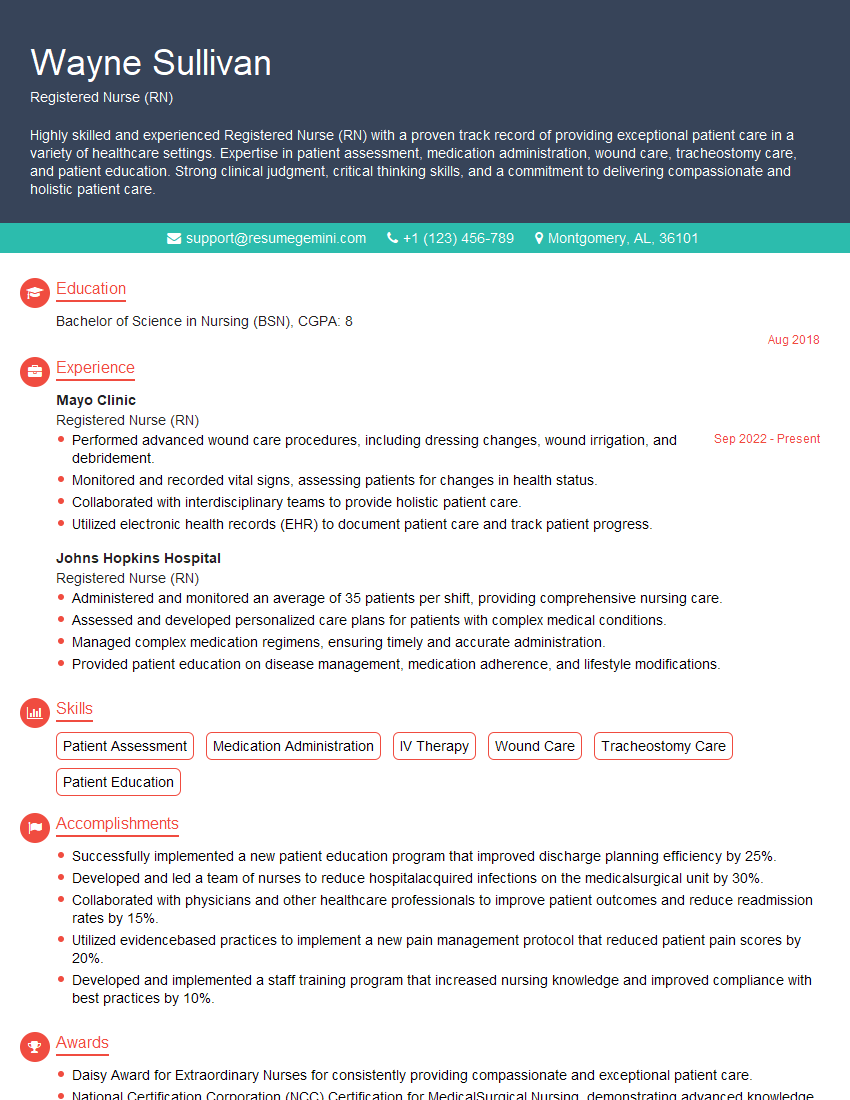
Acing the interview is crucial, but landing one requires a compelling resume that gets you noticed. Crafting a professional document that highlights your skills and experience is the first step toward interview success. ResumeGemini can help you build a standout resume that gets you called in for that dream job.






Essential Interview Questions For Registered Nurse (RN)
1. Describe your experience in assessing and monitoring patient’s vital signs and overall health status?
In my previous role at [Hospital Name], I was responsible for performing comprehensive patient assessments, including taking vital signs, assessing pain, and monitoring overall health status. I used my strong clinical judgment and critical thinking skills to accurately interpret patient data and identify any potential health concerns. I also effectively communicated my findings to physicians and other members of the healthcare team to ensure timely and appropriate interventions.
2. How do you prioritize and delegate tasks effectively in a fast-paced healthcare environment?
Communication and Collaboration
- Communicate clearly with team members, including physicians, nurses, and support staff, to establish priorities and ensure seamless care delivery.
- Foster a collaborative work environment by sharing information and seeking input from colleagues to make informed decisions.
Assessment and Triage
- Assess patient needs and acuity levels to determine the urgency of tasks and allocate resources accordingly.
- Triage patients effectively to ensure that those with the most critical conditions receive immediate attention.
Time Management and Efficiency
- Utilize time management techniques, such as prioritizing tasks, setting deadlines, and delegating effectively, to optimize workflow.
- Stay organized and maintain clear documentation to minimize errors and ensure efficient task completion.
3. Discuss your knowledge and experience in administering medications safely and effectively?
I have extensive experience in administering medications safely and effectively in various healthcare settings. I am proficient in calculating dosages, preparing and administering medications via different routes, and monitoring patients for any adverse reactions. I strictly adhere to the seven rights of medication administration: right patient, right medication, right dose, right time, right route, right documentation, and right reason. I also prioritize patient education, ensuring that patients understand the purpose, side effects, and proper administration of their medications.
4. How do you handle ethical dilemmas that may arise in the nursing profession?
When faced with ethical dilemmas, I approach them with a structured and compassionate approach. I begin by identifying the ethical principles involved, such as autonomy, beneficence, non-maleficence, and justice. I then gather relevant information from the patient, family, and healthcare team to fully understand the situation. I consider different perspectives and potential outcomes, seeking guidance from ethical guidelines and professional resources as needed. I engage in open and honest communication with all parties involved, ensuring that their values and concerns are respected. Ultimately, I strive to make decisions that align with ethical principles, prioritizing patient well-being and respecting their autonomy while upholding professional standards.
5. What is your experience in providing emotional support and counseling to patients and their families?
Providing emotional support and counseling to patients and their families is an integral part of my nursing practice. I approach these interactions with empathy, compassion, and a non-judgemental attitude. I actively listen to patients and families, allowing them to express their concerns and emotions. I validate their feelings and provide emotional support, recognizing that they may be experiencing a range of emotions, including fear, anxiety, and grief. I offer information about their condition and treatment plan, answering questions and addressing any misconceptions. I also provide guidance and support for coping mechanisms, such as relaxation techniques and stress management strategies. By establishing a therapeutic relationship, I aim to create a safe and supportive environment where patients and families feel heard, understood, and empowered to navigate their healthcare journey.
6. How do you stay up-to-date on the latest nursing practices and advancements?
Staying up-to-date on the latest nursing practices and advancements is crucial for providing high-quality patient care. I regularly engage in continuing education activities to expand my knowledge and skills. I attend conferences, workshops, and webinars to learn about new evidence-based practices, innovative technologies, and emerging trends in nursing. I also subscribe to nursing journals and online resources to stay abreast of current research and best practices. Additionally, I actively participate in professional organizations and engage in discussions with colleagues to share knowledge and experiences. By continuously seeking opportunities for professional development, I ensure that I am delivering the most up-to-date and effective care to my patients.
7. Describe your experience in collaborating with other healthcare professionals to provide comprehensive patient care?
Collaboration is essential in healthcare, and I have consistently demonstrated strong teamwork and communication skills in my interactions with other healthcare professionals. I actively participate in interdisciplinary rounds, patient care conferences, and case discussions to share patient information and coordinate care plans. I consult with physicians, specialists, and allied health professionals to ensure a holistic approach to patient care. I also work closely with support staff, such as nursing assistants and patient care technicians, to delegate tasks and provide guidance, fostering a positive and efficient work environment. By effectively collaborating with others, I contribute to the seamless delivery of high-quality care that meets the unique needs of each patient.
8. How do you manage patient confidentiality and maintain patient privacy in accordance with HIPAA regulations?
Maintaining patient confidentiality and privacy is of paramount importance in nursing practice. I strictly adhere to HIPAA regulations and ethical guidelines to protect patient information. I only access patient records when necessary and use them solely for the purpose of providing care. I communicate patient information only to authorized healthcare professionals who have a legitimate need to know. I am mindful of my surroundings and avoid discussing patient information in public areas. I also ensure that patient records are stored securely and that electronic health records are accessed using strong passwords and encryption. By maintaining patient confidentiality, I uphold the trust that patients place in me and contribute to a safe and respectful healthcare environment.
9. What are your strengths and weaknesses as a nurse?
Strengths:
- Strong clinical judgment and critical thinking skills
- Excellent communication and interpersonal skills
- Proficient in performing various nursing procedures
- Passionate about providing compassionate and holistic patient care
- Ability to work effectively in a fast-paced and demanding environment
Weaknesses:
- Limited experience in specialized areas, such as intensive care or emergency nursing (if applicable)
- Can be self-critical at times and may need to work on self-care strategies
- Occasionally prone to perfectionism, which can lead to increased stress levels
I am actively working on addressing my weaknesses. I am seeking opportunities to gain experience in specialized areas and am implementing self-care practices to manage stress. I believe that by acknowledging my weaknesses and striving for improvement, I can continue to grow as a nurse and provide the best possible care to my patients.
10. Why are you interested in working at our hospital?
I am eager to join your esteemed hospital because of its reputation for providing exceptional patient care and its commitment to nursing excellence. I am particularly drawn to your hospital’s focus on [specific areas of interest], as I am passionate about contributing my skills and experience in these areas. I believe that my expertise in [relevant skills] would be a valuable asset to your team and enable me to make a meaningful contribution to your hospital’s mission of delivering compassionate and high-quality healthcare.
Interviewers often ask about specific skills and experiences. With ResumeGemini‘s customizable templates, you can tailor your resume to showcase the skills most relevant to the position, making a powerful first impression. Also check out Resume Template specially tailored for Registered Nurse (RN).
Career Expert Tips:
- Ace those interviews! Prepare effectively by reviewing the Top 50 Most Common Interview Questions on ResumeGemini.
- Navigate your job search with confidence! Explore a wide range of Career Tips on ResumeGemini. Learn about common challenges and recommendations to overcome them.
- Craft the perfect resume! Master the Art of Resume Writing with ResumeGemini’s guide. Showcase your unique qualifications and achievements effectively.
- Great Savings With New Year Deals and Discounts! In 2025, boost your job search and build your dream resume with ResumeGemini’s ATS optimized templates.
Researching the company and tailoring your answers is essential. Once you have a clear understanding of the Registered Nurse (RN)‘s requirements, you can use ResumeGemini to adjust your resume to perfectly match the job description.
Key Job Responsibilities
Registered Nurses play a pivotal role in providing comprehensive care to patients across diverse healthcare settings. Their responsibilities encompass a wide range of tasks, including:
1. Patient Care and Assessment
Conduct comprehensive patient assessments, including physical examinations, vital signs monitoring, and medical history review.
- Develop and implement individualized care plans based on patient needs and medical orders.
- Monitor patient progress, evaluate the effectiveness of interventions, and adjust care plans accordingly.
2. Medication Administration
Safely administer medications according to physician’s orders, including oral, intravenous, and intramuscular routes.
- Monitor patients for adverse reactions and take appropriate actions.
- Educate patients and families about medications, their side effects, and proper usage.
3. Wound Care and Management
Perform and assist with wound care, including dressing changes, wound cleansing, and suture removal.
- Monitor wounds for signs of infection or healing complications.
- Collaborate with physicians to develop and implement wound care plans.
4. Patient Education and Support
Provide patient education and counseling on a range of topics, including disease management, medication use, and healthy lifestyle practices.
- Support patients and their families emotionally, providing comfort and reassurance during times of illness or distress.
- Advocate for patients’ rights and ensure that their needs are met.
5. Team Collaboration and Communication
Collaborate effectively with physicians, other nurses, and healthcare professionals to provide seamless patient care.
- Communicate patient updates, concerns, and changes in condition to the appropriate team members.
- Participate in interdisciplinary team meetings to discuss patient care plans and progress.
Interview Tips
Preparing for a Registered Nurse interview requires thorough research and practice. Here are some tips to help you ace the interview:
1. Research the Company and Position
Demonstrate your interest and enthusiasm by researching the hospital or healthcare facility, as well as the specific role you are applying for. Understand the organization’s mission, values, and key initiatives.
- Visit the organization’s website and read through their recent news and publications.
- Connect with current or former employees on LinkedIn to gain insights into the work environment.
2. Prepare Your Answers to Common Interview Questions
Anticipate and prepare for standard interview questions, such as “Tell me about yourself,” “Why are you interested in this role,” and “What are your strengths and weaknesses as a nurse.” Practice your responses to highlight your skills, experience, and qualifications.
- Use the STAR method (Situation, Task, Action, Result) to structure your answers.
- Quantify your accomplishments with specific numbers and metrics whenever possible.
3. Highlight Your Nursing Skills and Experience
Emphasize your clinical skills and experience, including your knowledge of medical terminology, medication administration, wound care, and patient assessment. Highlight any specialized certifications or training you possess.
- Provide specific examples of how you have successfully applied your nursing skills in previous roles.
- Discuss your experience in working with diverse patient populations and addressing their specific needs.
4. Showcase Your Patient-Centered Approach
Nursing is a patient-centered profession. Emphasize your commitment to providing compassionate and holistic care. Share examples of how you have gone above and beyond to meet patient needs.
- Describe how you build rapport with patients and families, creating a trusting and supportive environment.
- Discuss your understanding of patient confidentiality and privacy practices.
5. Prepare Questions to Ask the Interviewer
Asking thoughtful questions demonstrates your interest and engagement. Prepare questions about the specific unit or department you are applying to, the hospital’s patient care philosophy, and opportunities for professional development.
- This shows that you are genuinely interested in the position and the organization.
- It also allows you to gather additional information that can help you make an informed decision.
Next Step:
Armed with this knowledge, you’re now well-equipped to tackle the Registered Nurse (RN) interview with confidence. Remember, preparation is key. So, start crafting your resume, highlighting your relevant skills and experiences. Don’t be afraid to tailor your application to each specific job posting. With the right approach and a bit of practice, you’ll be well on your way to landing your dream job. Build your resume now from scratch or optimize your existing resume with ResumeGemini. Wish you luck in your career journey!