





In today’s competitive job market, acing your interview is crucial for landing your dream job. With preparation and confidence, you can showcase your skills, build rapport, and leave a lasting impression that will make you stand out. Here are 10 essential tips to help you conquer your job interviews in 2026:
1. Research the Company and Position Thoroughly:
Before stepping into the interview room, make sure you have thoroughly researched the company and the specific position you are applying for. Visit the company website, read industry news, and check out their social media pages to gain insights into their culture, values, and recent developments. Understanding the company’s mission, products or services, and key players will demonstrate your genuine interest and align your qualifications with their needs.
Additionally, carefully review the job description and identify the essential skills and experience required. Analyze how your qualifications match the requirements and prepare specific examples that showcase your abilities.
2. Practice Your Answers to Common Interview Questions:
Anticipate the most common interview questions, such as “Tell me about yourself,” “Why are you interested in this position,” and “What are your strengths and weaknesses?” Prepare concise and compelling answers that highlight your relevant skills, experience, and career aspirations. Practice delivering your answers aloud to improve your fluency and confidence.
Remember to tailor your answers to the specific role and company. Use industry-specific jargon and provide concrete examples that demonstrate your abilities in a way that is relevant to the job requirements.
3. Prepare Thought-Provoking Questions to Ask the Interviewers:
Asking thoughtful questions at the end of the interview shows that you are engaged, interested in the role, and willing to go the extra mile. Prepare a few questions that demonstrate your understanding of the company, the industry, and the position. This is also an opportunity to clarify any aspects of the job or the company that you may be curious about.
Avoid asking questions that are easily found on the company website or that demonstrate a lack of research. Instead, focus on questions that reveal your genuine interest and engagement with the role.
4. Dress Professionally and Arrive on Time:
First impressions matter. Dress professionally for your interview, ensuring your attire is clean, pressed, and appropriate for the company culture. Pay attention to fit and style, as it reflects your attention to detail and respect for the interviewers.
Punctuality is essential. Plan your route in advance, consider potential delays, and aim to arrive at least 15 minutes early. Being on time shows that you value the interviewer’s time and are organized and reliable.
5. Maintain Eye Contact and Body Language:
Nonverbal cues play a significant role in effective communication. Maintain eye contact with the interviewer, as it conveys confidence, attentiveness, and sincerity. Avoid fidgeting or slouching, as it can indicate nervousness or disinterest. Instead, sit up straight, maintain an open and relaxed posture, and use appropriate hand gestures to emphasize your points.
Mirroring the interviewer’s body language can build rapport and create a sense of connection. However, be subtle and avoid copying every single movement.
6. Speak Clearly and Articulately:
Articulate your thoughts clearly and concisely. Avoid using jargon or technical terms that the interviewer may not understand. Speak at an appropriate pace, neither too fast nor too slow, and enunciate your words properly. Pauses can be effective for emphasis or to give the interviewer time to process your information.
Listen actively to the interviewer’s questions and respond directly to the points raised. Show enthusiasm and passion for the role and the company, but avoid being overly aggressive or interrupting.
7. Be Enthusiastic and Confident:
Your enthusiasm and confidence will shine through and make a positive impression. Believe in yourself and your abilities, and convey that confidence in your words, body language, and overall demeanor. A positive attitude will create a more enjoyable interview experience and show the interviewer that you are excited about the opportunity.
However, avoid being overbearing or arrogant. Instead, maintain a balance between confidence and humility, demonstrating that you are eager to learn and grow.
8. Follow Up Promptly After the Interview:
Within 24 hours of the interview, send a thank-you note to the interviewer. Express your appreciation for their time and reiterate your interest in the position. Briefly reiterate one or two of your key qualifications and how they align with the company’s needs. You can also use this opportunity to address any points you may have forgotten to mention during the interview.
If you have not heard back within a week or two, you can follow up with a polite email or phone call to inquire about the status of your application. Be persistent but not pushy, and respect the interviewer’s time and schedule.
9. Seek Feedback and Reflect on Your Performance:
Whether you get the job or not, take the time to reflect on your interview performance. Identify what went well and what could have been improved. Ask for feedback from the interviewer if possible, as constructive criticism can help you grow and improve your interviewing skills for future opportunities.
Consider practicing with a friend, family member, or career counselor. Mock interviews provide a great opportunity to receive feedback and improve your delivery, body language, and overall confidence.
10. Stay Updated on Interview Trends and Best Practices:
The job interview landscape is constantly evolving, so it is important to stay updated on the latest trends and best practices. Read articles, attend workshops, and connect with professionals in your field to gain insights into the latest interviewing techniques and expectations.
Staying informed will help you adapt your approach to the changing job market and demonstrate your willingness to learn and grow.
Career Expert Tips:
- Select the ideal resume template to showcase your professional experience effectively.
- Master the art of resume writing to highlight your unique qualifications and achievements.
- Checkout the resume writing tips for guidance and best practices.
- Make your 2025 brighter with a new job. Build a powerful resume with ResumeGemini and save big, enjoy exclusive discounts on premium templates.
Frequently Asked Questions (FAQ’s)
How can I prepare effectively for job interviews in today’s market?
Preparing for job interviews in today’s market requires a comprehensive approach that encompasses research, practice, and confidence-building. Follow these steps to make a strong impression:
- Research the company and position: Gather information about the company’s values, mission, and industry standing. Understand the specific requirements of the role you’re applying for to tailor your answers accordingly.
- Practice common interview questions: Anticipate questions related to your skills, experience, and motivations. Practice answering them clearly and concisely, highlighting your strengths and fit for the position.
- Build confidence: Believe in your abilities and the value you bring to the table. Visualize yourself succeeding in the interview and focus on your positive attributes.
What are the most common interview questions and how should I answer them?
Common interview questions fall into several categories:
- Tell me about yourself: Briefly summarize your background, skills, and career goals, highlighting aspects relevant to the position.
- Why are you interested in this role? Explain your interest in the company and the specific attributes of the role that align with your aspirations.
- What are your strengths and weaknesses? Showcase your core competencies and be honest about areas for improvement, demonstrating self-awareness and a growth mindset.
How do I make a strong first impression and build rapport with interviewers?
Creating a positive first impression is crucial for establishing rapport with interviewers. Here are some tips:
- Dress professionally: First impressions matter, so choose attire that is appropriate for the industry and company culture.
- Arrive on time: Punctuality demonstrates respect for the interviewer’s time and professionalism.
- Be polite and respectful: Greet the interviewer with a firm handshake, maintain eye contact, and listen attentively to their questions.
- Show enthusiasm: Convey your genuine interest in the position and the company by asking thoughtful questions and actively participating in the conversation.
What are the best ways to showcase my skills and experience during an interview?
Highlighting your skills and experience effectively during an interview is essential for demonstrating your value as a candidate. Consider the following strategies:
- Use specific examples: Quantify your accomplishments and provide concrete examples of how you have applied your skills and experience to achieve positive outcomes.
- Tailor your answers to the job description: Connect your skills and experience to the specific requirements of the role, emphasizing how you can contribute to the company’s success.
- Be prepared to discuss your resume: The interviewer will likely ask questions about your work history, so be well-versed in your resume and be able to articulate your key accomplishments.
How can I prepare thought-provoking questions to ask interviewers?
Asking thoughtful questions during an interview demonstrates your engagement and interest in the position. Here are some tips:
- Research the company and industry: Ask questions that show you have taken the time to understand the company’s goals, challenges, and market position.
- Focus on the role and responsibilities: Ask questions about the specific Aufgaben of the role, the team you would be working with, and opportunities for professional development.
- Be respectful of the interviewer’s time: Keep your questions concise, avoid asking personal questions, and be mindful of the time constraints of the interview.
What are the biggest mistakes to avoid during a job interview?
To make a positive impression, avoid these common interview pitfalls:
- Being unprepared: Not researching the company or the role, or failing to practice answering common interview questions, can undermine your confidence and performance.
- Lack of enthusiasm: Appearing disinterested or unenthusiastic about the position will not convince the interviewer of your genuine interest.
- Negative body language: Poor posture, lack of eye contact, or fidgeting can convey disinterest or nervousness, so maintain a positive and engaged demeanor throughout the interview.
- Inappropriate attire: Dressing too casually or inappropriately for the industry or company culture can create a negative first impression.
- Talking too much: Allow the interviewer to ask questions and actively listen to their inquiries. Avoid dominating the conversation or interrupting the interviewer.
- Badmouthing previous employers: Refrain from speaking negatively about former colleagues or companies, as this can raise concerns about your professionalism and attitude.
How do I follow up after an interview to increase my chances of success?
Following up after an interview is a crucial step in the process. Here’s how to do it effectively:
- Send a thank-you note: Within 24 hours of the interview, send a personalized thank-you note to the interviewer. Express your appreciation for their time and reiterate your interest in the position.
- Reaffirm your skills and experience: Briefly highlight your key skills and experience, and how they align with the company’s needs.
- Address any concerns: If you have any concerns or questions that were not addressed during the interview, use the thank-you note to clarify them.
- Be polite and professional: Maintain a professional tone throughout your communication, and proofread your message carefully before sending it.
What are the latest trends in job interviews and how can I stay ahead?
The job interview landscape is constantly evolving. Here are some emerging trends:
- Virtual interviews: Virtual interviews have become increasingly common, so be prepared to conduct interviews remotely using video conferencing platforms.
- Behavioral interviews: Behavioral interviews focus on your past experiences and how they relate to the skills and qualities required for the role.
- Case study interviews: Case study interviews present you with a hypothetical business scenario and ask you to analyze and solve it, assessing your problem-solving abilities.
- Panel interviews: Panel interviews involve multiple interviewers from different departments or levels of the organization.
How can I overcome nerves and perform confidently during an interview?
Interview nerves are common, but there are ways to manage them and perform confidently:
- Practice: The more you practice answering interview questions, the more confident you will become.
- Visualize success: Imagine yourself succeeding in the interview and focus on the positive outcomes.
- Control your breathing: Deep breathing exercises can help calm your nerves and reduce anxiety.
- Maintain a positive attitude: Believe in yourself and your abilities. Confidence is contagious, and it will make a positive impression on the interviewer.
What resources and tools are available to support my interview preparation?
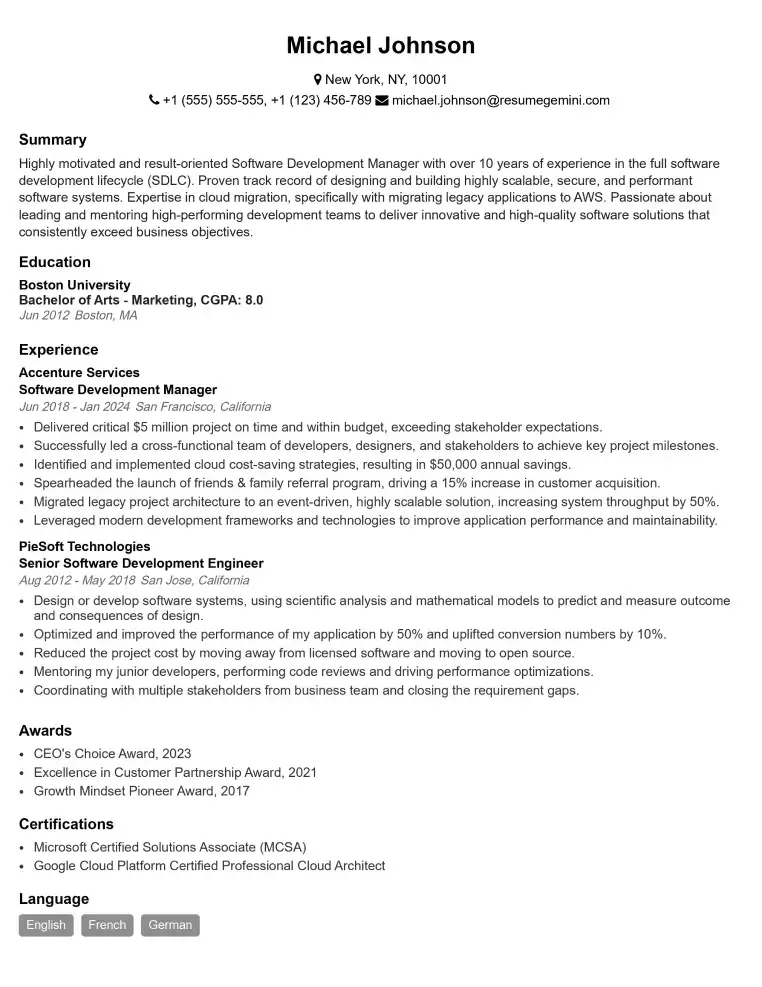
Elevate your job search with our premium resume templates. Here is an amazing resume template that can be used to build a professional and elegant resume. You can build a resume from scratch or revamp your existing resume. Impress hiring managers and secure your next opportunity.
- Top 50 Most Common Interview Questions
- The Psychology of a Great Resume: Hacks to Impress Recruiters
- What Mistakes to Avoid When Writing a Resume: A Comprehensive Guide
- Elevate Your Career with Expert Resume Building: Introducing ResumeGemini
- How to Write a Resume Using Google Gemini: Step-by-Step Guide