





In the competitive job market, your resume is your first impression on potential employers. It serves as a gateway to securing your dream job. However, even the most qualified candidates can sabotage their chances by making common resume mistakes. This blog will delve into 10 critical resume writing pitfalls to avoid, ensuring that you craft a compelling resume that stands out from the crowd.
1. Grammar and Spelling Errors: The Silent Resume Killers
Grammar and spelling errors are glaring red flags that can instantly damage your credibility. Remember, your resume is a professional document, and even a single typo can convey a lack of attention to detail. Ensure that your resume is meticulously proofread by yourself and preferably by a trusted friend or colleague. Consider using grammar checking tools to minimize errors.
2. Lack of Focus: Trying to Be Everything to Everyone
Your resume should be tailored to each job you apply for. Avoid the temptation to create a generic resume that tries to appeal to every potential employer. Instead, carefully consider the specific requirements of each job and highlight the skills and experiences that are most relevant to the position. Remember, recruiters spend an average of 7 seconds scanning your resume, so make sure your relevant information is front and center.
3. Vague and Generic Language: Diluting Your Impact
Avoid using vague and generic language that fails to convey your accomplishments. Instead, use specific and quantifiable examples to showcase your achievements. For example, instead of stating “Managed a team,” write “Led a team of 10 engineers in the successful development of a new product, resulting in a 20% increase in sales.” By providing concrete details, you make your accomplishments memorable and easier for potential employers to evaluate.
4. Insufficient Action Verbs: Weakening Your Accomplishments
Action verbs are essential for conveying your contributions and accomplishments on your resume. Avoid using weak verbs like “helped” or “participated.” Instead, opt for strong action verbs such as “achieved,” “developed,” “led,” or “managed.” These verbs convey a sense of ownership and emphasize your active role in your accomplishments.
5. Exaggerating or Fabricating: Damaging Your Credibility
Honesty is paramount in resume writing. Never exaggerate or fabricate your experience or accomplishments. While it may be tempting to stretch the truth to make yourself appear more qualified, remember that potential employers can easily verify your information. Dishonesty can damage your credibility and undermine your chances of landing the job.
6. Poor Formatting: Creating a Visual Obstacle Course
The visual appeal of your resume is just as important as its content. Poor formatting can make your resume difficult to read and uninviting, increasing the likelihood that it will be discarded. Use a consistent and visually appealing font, and ensure that your text is properly formatted. Use headings and subheadings to break up the content and make it more accessible. Consider using different font sizes to highlight important information and draw the reader’s attention.
7. Missing Keywords: Compromising Your Visibility to Recruiters
Modern recruiters often use Applicant Tracking Systems (ATS) to scan resumes for specific keywords. If your resume lacks these keywords, it may fail to make it past the initial screening process. Research the specific job description and industry you’re applying for, and incorporate relevant keywords throughout your resume. However, be authentic and avoid keyword stuffing, as this can harm your credibility.
8. Overuse of Buzzwords and Clichés: Drowning in a Sea of Redundancy
Using industry buzzwords and clichés can make your resume sound generic and impersonal. While some buzzwords may be helpful in conveying your skills, excessive use can dilute your impact. Instead, focus on using specific and relatable language to describe your unique contributions. Avoid using overused terms like “go-getter,” “team player,” or “results-oriented.” Show, don’t tell, by providing concrete examples of your accomplishments.
9. Inconsistency: Sending Mixed Signals to Potential Employers
Maintaining consistency throughout your resume is crucial. Use the same font, text formatting, and heading styles throughout the document. Inconsistent formatting can create a visually distracting and unprofessional resume. Ensure that your personal information, such as your name, contact information, and social media links, are consistent across all pages of your resume. Inconsistency can undermine your credibility and suggest a lack of attention to detail.
10. Lack of Customization: Missing the Mark for Industry-Specific Jobs
Tailoring your resume to each job you apply for is essential. A generic resume that fails to address the specific requirements of the position will likely be overlooked. Research the industry and company you’re applying to, and highlight the skills and experiences that are most relevant to the job requirements. Consider using different templates and customizing the content to match the industry’s norms. For example, if you’re applying for a creative role, you may want to use a more visually appealing resume. By customizing your resume for each job, you increase your chances of making a positive first impression on potential employers.
Crafting a compelling resume is essential for securing your dream job. By avoiding the common mistakes outlined above, you can create a resume that showcases your skills, experience, and accomplishments in a professional and impactful way. Remember, your resume is a representation of who you are, so take the time to create a document that accurately reflects your value as a candidate. Consider using a resume builder like ResumeGemini to help you create a polished and high-impact resume that will stand out in the crowd.
Career Expert Tips:
- Select the ideal resume template to showcase your professional experience effectively.
- Master the art of resume writing to highlight your unique qualifications and achievements.
- Checkout the resume writing tips for guidance and best practices.
- Make your 2025 brighter with a new job. Build a powerful resume with ResumeGemini and save big, enjoy exclusive discounts on premium templates.
Frequently Asked Questions (FAQ’s)
Why are grammar and spelling errors so detrimental to a resume?
- Unprofessional Appearance: Errors in grammar and spelling create a negative impression of your professionalism and attention to detail.
- Difficulty in Reading: Resumes with grammatical mistakes can be difficult to read and understand, making it harder for recruiters to quickly grasp your qualifications.
- Lack of Credibility: Errors in grammar and spelling suggest that you may not be as competent as you claim to be.
How can I avoid making my resume too generic and unfocused?
- Tailor to the Job: Customize your resume to match the specific requirements of each job you apply for, highlighting skills and experiences relevant to that role.
- Use Specific Examples: Provide concrete examples of your accomplishments and responsibilities to demonstrate your qualifications and abilities.
- Quantify Your Results: Use numbers and data to quantify your achievements, making your resume more impactful and persuasive.
What are alternatives to using vague and overused language?
- Use Specific Verbs: Replace general verbs with specific action verbs that accurately describe your contributions and responsibilities.
- Avoid Cliches: Steer clear of overused phrases and clichés that lack originality and specificity.
- Be Concise and to the Point: Convey your message succinctly, avoiding unnecessary words or filler content.
Why is it important to use strong action verbs in a resume?
- Emphasize Accomplishments: Strong action verbs highlight your accomplishments and make your resume more dynamic and engaging.
- Showcase Skills: By using specific action verbs, you can demonstrate your proficiencies and abilities in a concise and impactful way.
- Increase Readability: Active verbs improve the flow and readability of your resume, making it easier for recruiters to scan and identify your qualifications.
What are the consequences of exaggerating or fabricating information on a resume?
- Loss of Credibility: Fabricating or exaggerating information can damage your reputation and make it difficult to be taken seriously as a candidate.
- Legal Repercussions: In some cases, providing false information on your resume can result in legal consequences.
- Missed Opportunities: Exaggerating your qualifications can lead to unrealistic expectations and ultimately missed job opportunities.
How does poor formatting affect a resume’s readability and impact?
- Visual Clutter: Poor formatting can create a visually cluttered and overwhelming resume that is difficult to navigate and read.
- Reduced Readability: Inconsistent fonts, margins, and spacing can make your resume hard to read and understand, reducing its impact.
- Lack of Professionalism: A poorly formatted resume can create a negative impression of your professionalism and attention to detail.
Why should I research and include relevant keywords in my resume?
- Applicant Tracking Systems (ATS): Many companies use ATS software to screen and filter resumes, so including relevant keywords increases your chances of passing the initial screening.
- Recruiters’ Search Patterns: Recruiters often use specific keywords when searching for candidates, so incorporating these keywords makes your resume more visible.
- Emphasize Your Skills: Keywords allow you to highlight your relevant skills and qualifications, making it easier for recruiters to identify you as a potential match for the job.
How can I avoid using buzzwords and clichés in my resume?
- Be Specific: Replace buzzwords with specific and measurable accomplishments that demonstrate your value and impact.
- Use Data and Metrics: Quantify your achievements with numbers and data to provide concrete evidence of your results.
- Seek Feedback: Ask a trusted friend, mentor, or career counselor to review your resume and identify any areas where buzzwords or clichés may be present.
Why is consistency important in resume writing?
- Professional Appearance: A consistent resume creates a polished and professional impression, demonstrating your attention to detail.
- Improved Readability: Consistency in formatting, font style, and spacing makes your resume easy to read and navigate, improving its impact.
- Emphasis on Relevant Information: By using consistent formatting, you can highlight the most important information and guide the reader’s eye to your key qualifications.
How can I tailor my resume to different job industries and roles?
- Research Industry Trends: Familiarize yourself with the specific industry and its hiring practices to understand the common job requirements and expectations.
- Analyze Job Descriptions: Carefully review job descriptions for the roles you are applying for, noting the key skills, experiences, and qualifications required.
- Highlight Relevant Skills: Select and emphasize the skills and experiences from your resume that align most closely with the requirements of the specific job and industry.
Next Step:
Avoid these resume pitfalls and maximize your chances of securing your dream job! ResumeGemini offers premium resume templates, expert writing guidance, and industry-specific examples to help you create a resume that stands out. With our easy-to-follow process and one-time payment plan, you can craft a professional and impactful resume that will open doors to new opportunities.
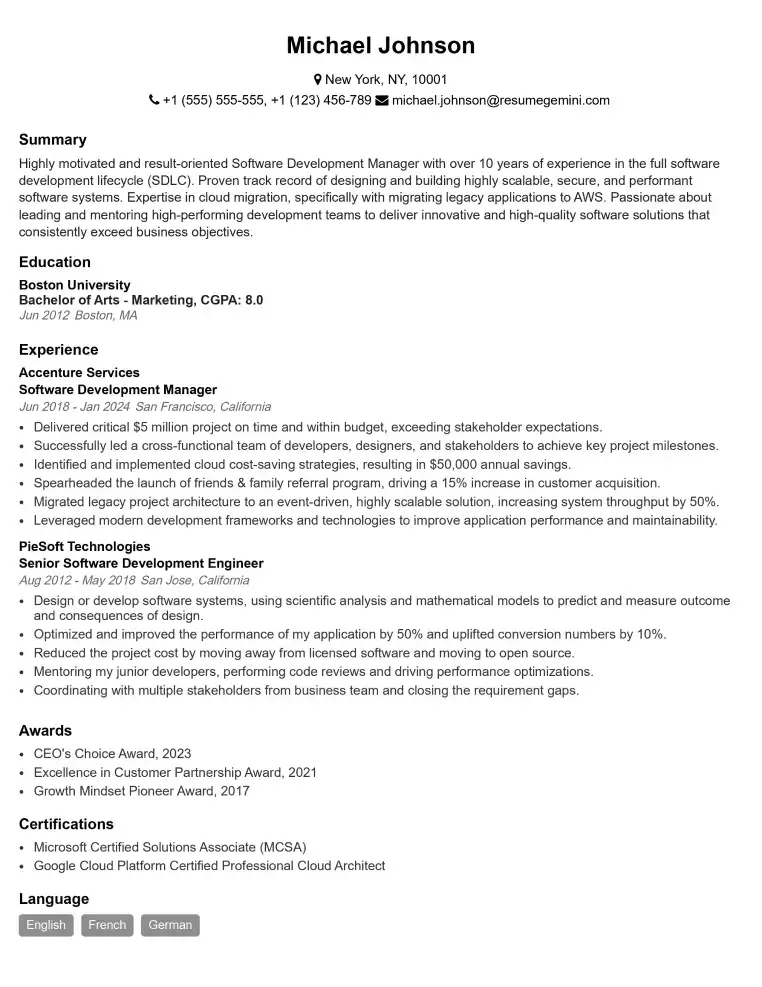
Elevate your job search with our premium resume templates. Here is an amazing resume template that can be used to build a professional and elegant resume. You can build a resume from scratch or revamp your existing resume. Impress hiring managers and secure your next opportunity.
- Top 50 Most Common Interview Questions
- The Psychology of a Great Resume: Hacks to Impress Recruiters
- What Mistakes to Avoid When Writing a Resume: A Comprehensive Guide
- Elevate Your Career with Expert Resume Building: Introducing ResumeGemini
- How to Write a Resume Using Google Gemini: Step-by-Step Guide