





In today’s competitive job market, having a resume that stands out is crucial. With Applicant Tracking Systems (ATS) scanning countless resumes, it’s essential to optimize your resume for both ATS and human readers.
Follow these 10 easy steps to craft a resume that will showcase your value, highlight your skills, and land you your dream job in 2026 and beyond.
Headline: Craft the Perfect Hook
Your resume headline is the first thing recruiters and ATS will see. It’s your chance to make a strong first impression and entice them to read further. Keep your headline concise, attention-grabbing, and tailored to the specific job you’re applying for.
- Start with a strong action verb that highlights your skills and experience.
- Quantify your accomplishments whenever possible.
- Include keywords from the job description to optimize for ATS.
Experience: Quantify and Highlight Impact
Your work experience section is the core of your resume. Focus on highlighting your accomplishments, quantifying your results, and using action verbs to describe your responsibilities.
- Start each bullet point with an action verb that describes your role.
- Use numbers and metrics to demonstrate the impact of your work.
- Focus on transferable skills that are relevant to the job you’re applying for.
Skills: Showcase Your Value
Your skills section is a concise summary of your abilities and competencies. List both hard skills (technical skills) and soft skills (interpersonal skills) that are relevant to the job you’re applying for.
- Use a mix of soft and hard skills to showcase your versatility.
- Quantify your skills whenever possible, e.g., “Proficient in Microsoft Office Suite with 5+ years of experience.”
- Tailor your skills section to the specific job you’re applying for.
Education: Emphasize Relevant Credentials
In the Education section, list your educational background in reverse chronological order. Include the name of your degree, the institution you attended, your graduation date, and your GPA (if it’s 3.5 or higher).
- Highlight coursework or projects that are relevant to the job you’re applying for.
- Include relevant extracurricular activities or leadership roles.
- If you have any continuing education or certifications, list them separately.
Certifications: Demonstrate Your Commitment
Certifications can demonstrate your commitment to professional development and enhance your credibility. Include any relevant certifications, including the name of the certification, the issuing organization, and the date of certification.
Layout: Visual Appeal for ATS and Humans
Your resume’s layout should be visually appealing and easy to read for both humans and ATS. Consider using:
- Clear and concise font styles and sizes.
- Appropriate white space and margins.
- Formatting elements like bullet points, headers, and bolding.
- Consistent design throughout the resume.
Keywords: Optimize for Applicant Tracking Systems
ATS use keywords to screen resumes and identify potential candidates. Make sure to include relevant keywords throughout your resume, especially in your headline, summary, skills section, and work experience descriptions.
- Review the job description carefully and identify the key skills and qualifications required.
- Incorporate these keywords naturally into your resume.
- Avoid keyword stuffing and focus on providing valuable information.
Proofreading: Polish for Perfection
Proofreading your resume is crucial to ensure that it is free of errors and typos. Carefully check for mistakes in grammar, spelling, and formatting.
- Read your resume aloud to identify any awkward phrasing or errors.
- Ask a friend, family member, or career counselor to review your resume.
- Use online tools like Grammarly or Hemingway Editor to enhance clarity and readability.
Customizing: Tailor to Each Job Application
Tailoring your resume to each job you apply for is essential to increase your chances of success. Take the time to customize your:
- Headline: Align it with the job title and highlight relevant skills.
- Experience: Emphasize experiences that are most relevant to the job.
- Skills: Highlight skills that are specifically required for the job.
- Keywords: Include keywords that match the job description.
Professional Feedback: Seek External Validation
Getting feedback from others can provide valuable insights and help you improve your resume. Consider:
- Asking a career counselor or resume writer to review your resume.
- Joining online resume critique forums or platforms.
- Having a friend or family member who works in the same industry review your resume.
By following these 10 steps, you can create a resume that will stand out from the crowd and give you a competitive edge in the job market. Remember to tailor your resume to each job you apply for, proofread carefully, and seek feedback to ensure that your resume is the best it can be. ResumeGemini offers pre-built resume samples and premium resume templates that can help you jumpstart your resume-writing process.
Career Expert Tips:
- Select the ideal resume template to showcase your professional experience effectively.
- Master the art of resume writing to highlight your unique qualifications and achievements.
- Checkout the resume writing tips for guidance and best practices.
- Make your 2025 brighter with a new job. Build a powerful resume with ResumeGemini and save big, enjoy exclusive discounts on premium templates.
Frequently Asked Questions (FAQ’s)
How do I write a resume that stands out in 2026?
Crafting an impactful resume in 2026 requires embracing the latest trends and best practices. Here are some key strategies to help you create a standout resume that will captivate recruiters:
- Quantify your accomplishments: Use specific metrics and numbers to demonstrate the tangible impact of your contributions.
- Showcase relevant skills: Tailor your resume to each job you apply for, highlighting the specific skills and experiences that align with the role.
- Use action verbs: Begin your bullet points with strong action verbs that convey your accomplishments and responsibilities.
- Keep it concise: A resume should be concise and easy to read, typically limited to one page.
- Proofread carefully: Ensure your resume is free of errors in grammar, spelling, and formatting.
What are the key elements of a successful resume?
A successful resume should include the following key elements:
- Header: Includes your name, contact information, and professional title.
- Summary: A brief statement highlighting your skills, experience, and career goals.
- Experience: List your relevant work experience in reverse chronological order, emphasizing your accomplishments and responsibilities.
- Education: Include your educational background, including degrees, certifications, and relevant coursework.
- Skills: List your technical and soft skills that are relevant to the job you are applying for.
- Awards and Honors: Highlight any awards, honors, or recognition you have received.
- References: Include a statement that references are available upon request.
How can I optimize my resume for Applicant Tracking Systems (ATS)?
To optimize your resume for Applicant Tracking Systems (ATS), consider the following:
- Use keywords: Include relevant keywords from the job description throughout your resume.
- Use a standard font: Use a professional and easy-to-read font, such as Times New Roman, Arial, or Calibri.
- Use a PDF format: Save your resume in PDF format to ensure that it remains formatted correctly when viewed by ATS.
- Avoid using images or graphics: ATS cannot read images or graphics, so stick to text-based content.
- Keep it concise: ATS typically have character limits, so keep your resume concise and focused on the most relevant information.
What common mistakes should I avoid when writing my resume?
To avoid common pitfalls when writing your resume, keep the following in mind:
- Including irrelevant information: Only include information that is relevant to the job you are applying for.
- Using unprofessional language: Maintain a professional tone throughout your resume, avoiding slang or informal language.
- Making it too long: Keep your resume concise and focused, typically limited to one page.
- Not proofreading carefully: Ensure your resume is free of errors in grammar, spelling, and formatting.
- Using a generic template: Customize your resume to each job you apply for, highlighting the specific skills and experiences that align with the role.
How can I make sure my resume is visually appealing and easy to read?
To enhance the visual appeal and readability of your resume, consider the following:
- Use a clean and modern design: Choose a resume template that is visually appealing and easy to navigate.
- Use white space: Leave sufficient white space around the text to improve readability.
- Use headings and subheadings: Structure your resume using clear headings and subheadings to guide the reader.
- Use bullet points: Present your experience and skills using bullet points to make them easy to scan.
- Use consistent formatting: Maintain consistency in font, font size, and section headings throughout your resume.
How can I get feedback on my resume before applying for jobs?
To obtain valuable feedback on your resume before submitting it for job applications, consider the following options:
- Ask a friend or family member: Request a trusted friend or family member to review your resume and provide feedback on its clarity, flow, and overall impact.
- Use a resume review service: Professional resume review services can provide detailed feedback on your resume’s content, structure, and style.
- Attend a resume workshop: Participate in a resume workshop or webinar to learn best practices and receive guidance from experts.
- Utilize online resume builders: Online resume builders, such as ResumeGemini, offer resume templates and provide feedback on your resume’s structure and content.
- Connect with recruiters: Reach out to recruiters on LinkedIn or other professional networking platforms and ask for feedback on your resume.
What resources are available to help me create a professional resume?
Numerous resources are available to assist you in creating a professional resume:
- Online resume builders: Websites like ResumeGemini provide user-friendly templates, writing guides, and feedback to help you craft a standout resume.
- Resume templates: Search for free or premium resume templates online to get started quickly and easily.
- Resume writing books: Refer to books dedicated to resume writing for comprehensive guidance and tips.
- Online articles and blogs: Explore reputable websites and blogs that offer valuable insights and advice on resume writing.
- Career counseling services: Consult with a career counselor who can provide tailored guidance and support in developing a professional resume.
- University career centers: If you are a current or recent student, utilize the resources and services offered by your university’s career center.
How long should my resume be?
The optimal length of your resume depends on your experience and career level. As a general guideline:
- Entry-level or recent graduates: 1 page
- Mid-level professionals: 1-2 pages
- Senior-level professionals: 2-3 pages
What font and size should I use for my resume?
For a professional and easy-to-read resume, consider the following font and size recommendations:
- Font: Use a professional and legible font such as Times New Roman, Arial, Calibri, or Georgia.
- Size: Use a font size between 11 and 12 points. This size is large enough to be easily readable while maintaining a clean and compact appearance.
What are the latest trends in resume writing
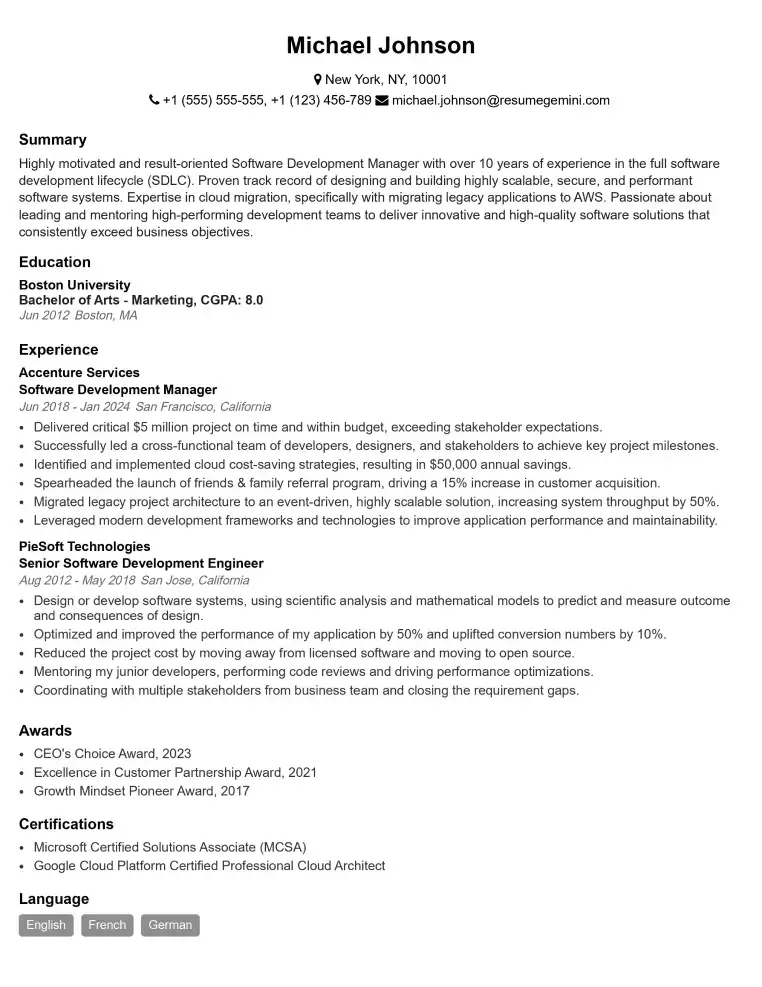
Elevate your job search with our premium resume templates. Here is an amazing resume template that can be used to build a professional and elegant resume. You can build a resume from scratch or revamp your existing resume. Impress hiring managers and secure your next opportunity.
- Top 50 Most Common Interview Questions
- The Psychology of a Great Resume: Hacks to Impress Recruiters
- What Mistakes to Avoid When Writing a Resume: A Comprehensive Guide
- Elevate Your Career with Expert Resume Building: Introducing ResumeGemini
- How to Write a Resume Using Google Gemini: Step-by-Step Guide