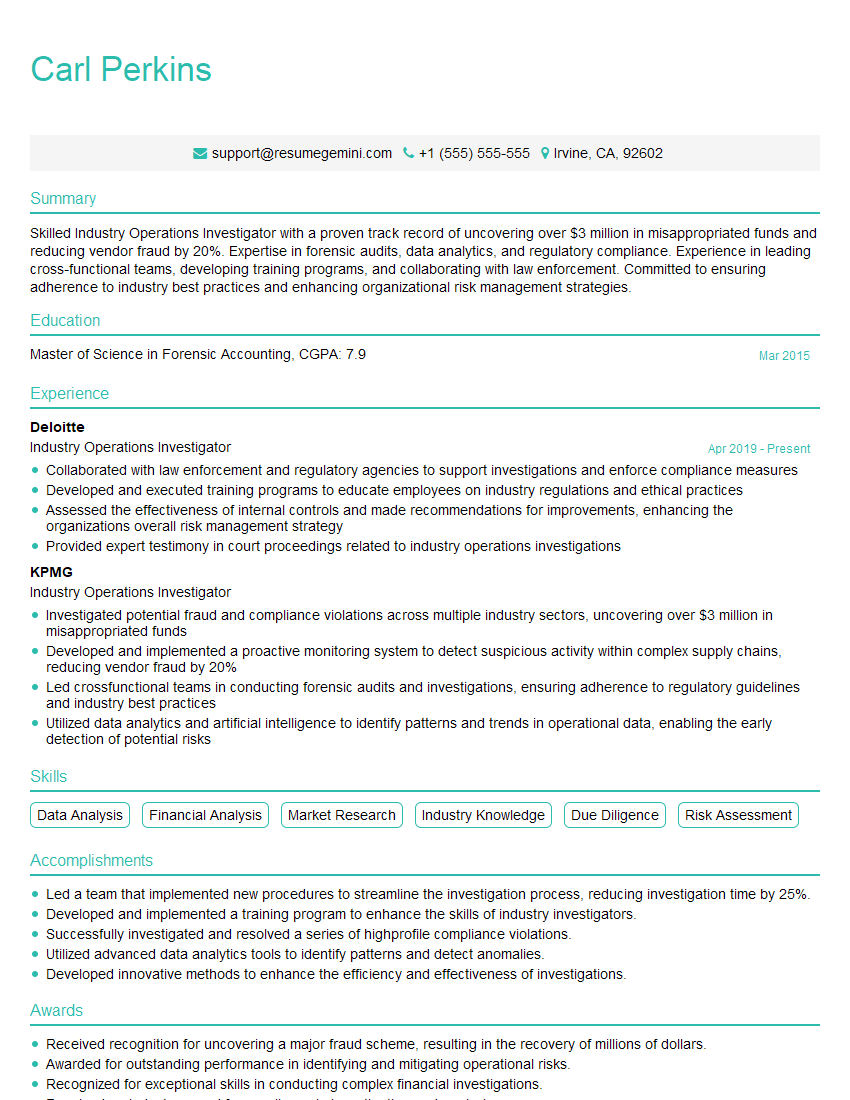
Are you gearing up for an interview for a Industry Operations Investigator position? Whether you’re a seasoned professional or just stepping into the role, understanding what’s expected can make all the difference. In this blog, we dive deep into the essential interview questions for Industry Operations Investigator and break down the key responsibilities of the role. By exploring these insights, you’ll gain a clearer picture of what employers are looking for and how you can stand out. Read on to equip yourself with the knowledge and confidence needed to ace your next interview and land your dream job!
Acing the interview is crucial, but landing one requires a compelling resume that gets you noticed. Crafting a professional document that highlights your skills and experience is the first step toward interview success. ResumeGemini can help you build a standout resume that gets you called in for that dream job.






Essential Interview Questions For Industry Operations Investigator
1. How do you approach investigating industry operations?
To investigate industry operations effectively, I follow a comprehensive approach that involves the following steps:
- Planning: Define the scope and objectives of the investigation, gathering background information, and developing a detailed plan.
- Data Collection: Collect relevant data from various sources, including interviews, document reviews, and observations.
- Analysis: Analyze the collected data to identify patterns, trends, and any potential issues or areas of concern.
- Evaluation: Draw conclusions based on the analysis, assess the impact of the findings, and recommend actions to address any identified issues.
- Reporting: Prepare a comprehensive report that documents the findings, analysis, and recommendations, ensuring clarity and accuracy.
2. What techniques do you employ to gather evidence during an investigation?
Interviewing
- Conduct structured and open-ended interviews with key individuals.
- Utilize active listening skills and probe for relevant information.
- Maintain a professional and unbiased demeanor throughout the process.
Document Review
- Examine company records, financial statements, and other relevant documents.
- Analyze data and identify potential red flags or inconsistencies.
- Ensure confidentiality and maintain proper handling of sensitive information.
Observations
- Observe processes and activities within the industry to gather firsthand insights.
- Note any deviations from established procedures or potential areas of concern.
- Document observations accurately and objectively.
3. How do you ensure the confidentiality and integrity of sensitive information during an investigation?
Maintaining confidentiality and integrity is paramount in our investigations. We employ the following measures:
- Confidentiality Agreements: Obtain written confidentiality agreements from all individuals involved in the investigation.
- Secure Storage: Store sensitive information in secure locations with limited access.
- Encryption: Encrypt electronic data and use secure communication channels.
- Limited Distribution: Restrict access to sensitive information only to authorized personnel who have a need to know.
- Ethical Guidelines: Adhere to ethical guidelines and industry best practices regarding data handling.
4. What are the common challenges you face in investigating industry operations?
Some common challenges in industry operations investigations include:
- Limited Access to Information: Businesses may be reluctant to provide access to sensitive data or documentation.
- Bias and Resistance: Individuals may have vested interests and resist providing accurate information.
- Complexities of the Industry: Industries can be highly specialized, requiring deep knowledge and expertise to effectively investigate operations.
- Time Constraints: Investigations often have strict deadlines, creating pressure to gather and analyze information efficiently.
- Ethical Dilemmas: Investigators may encounter situations where ethical considerations and legal obligations conflict.
5. How do you stay up-to-date with industry trends and best practices?
To stay informed, I engage in continuous learning and development through the following:
- Industry Research: Read industry publications, attend conferences, and network with professionals.
- Continuing Education: Pursue professional development courses and certifications to enhance knowledge and skills.
- Online Learning Platforms: Utilize online resources and platforms to access the latest industry insights and best practices.
- Mentorship and Collaboration: Seek guidance from experienced professionals and participate in industry working groups.
- Technology Updates: Stay abreast of technological advancements and their impact on industry operations.
6. Describe a situation where you successfully resolved a complex industry operations issue.
In a recent investigation, I encountered a complex issue involving allegations of fraudulent accounting practices within a manufacturing company. Through a combination of rigorous document review, interviews with key personnel, and industry expertise, I was able to uncover evidence of manipulated financial statements. My findings led to the prosecution of the individuals responsible and the implementation of new internal controls to prevent similar incidents in the future.
7. What methods do you use to present your findings and recommendations to stakeholders?
I present my findings and recommendations clearly and effectively through the following methods:
- Written Reports: Prepare comprehensive written reports that detail the investigation process, findings, and recommendations.
- Oral Presentations: Deliver verbal presentations to stakeholders, using visual aids to illustrate key findings and recommendations.
- Executive Summaries: Provide concise executive summaries for senior management, highlighting the most important aspects of the investigation.
- Interactive Workshops: Facilitate interactive workshops to engage stakeholders in the findings and discuss potential solutions.
- Follow-Up Communication: Maintain ongoing communication to address any questions or concerns and ensure that recommendations are implemented effectively.
8. How do you prioritize tasks and manage your time effectively during an investigation?
Effective time management is crucial. I prioritize tasks based on urgency, importance, and potential impact. I use the following strategies:
- Task Management Tools: Utilize project management tools to organize and track tasks, deadlines, and dependencies.
- Prioritization Matrix: Categorize tasks using a prioritization matrix to focus on the most critical ones.
- Delegation: Delegate tasks to team members when appropriate to maximize productivity.
- Time Blocking: Allocate specific time slots for different tasks to minimize distractions and maintain focus.
- Contingency Planning: Develop contingency plans to address unexpected delays or challenges.
9. How do you handle situations when your findings are met with resistance or opposition?
When encountering resistance, I remain professional and objective. I approach the situation with the following strategies:
- Clear Communication: Reiterate the findings clearly and provide supporting evidence to justify conclusions.
- Stakeholder Engagement: Involve stakeholders in the process to address their concerns and build consensus.
- Active Listening: Listen attentively to opposing viewpoints and seek to understand the reasons behind the resistance.
- Collaboration: Explore areas for collaboration and compromise to find mutually acceptable solutions.
- Ethical Considerations: Maintain ethical standards and avoid any actions that could compromise the integrity of the investigation.
10. What are your strengths and weaknesses as an Industry Operations Investigator?
Strengths
- Exceptional analytical and problem-solving abilities
- Strong knowledge of industry operations and best practices
- Highly ethical and integrity-driven
- Excellent communication and interpersonal skills
- Ability to work independently and as part of a team
Weaknesses
- Limited experience in certain specialized industry segments
- Working under tight deadlines can sometimes be challenging
- Can be overly detail-oriented at times
However, I actively seek opportunities to address my weaknesses through continuous learning and professional development.
Interviewers often ask about specific skills and experiences. With ResumeGemini‘s customizable templates, you can tailor your resume to showcase the skills most relevant to the position, making a powerful first impression. Also check out Resume Template specially tailored for Industry Operations Investigator.
Career Expert Tips:
- Ace those interviews! Prepare effectively by reviewing the Top 50 Most Common Interview Questions on ResumeGemini.
- Navigate your job search with confidence! Explore a wide range of Career Tips on ResumeGemini. Learn about common challenges and recommendations to overcome them.
- Craft the perfect resume! Master the Art of Resume Writing with ResumeGemini’s guide. Showcase your unique qualifications and achievements effectively.
- Great Savings With New Year Deals and Discounts! In 2025, boost your job search and build your dream resume with ResumeGemini’s ATS optimized templates.
Researching the company and tailoring your answers is essential. Once you have a clear understanding of the Industry Operations Investigator‘s requirements, you can use ResumeGemini to adjust your resume to perfectly match the job description.
Key Job Responsibilities
Industry Operations Investigators play a critical role in ensuring the safety and integrity of industrial operations. Their responsibilities encompass various aspects, including:
1. Compliance Audits and Inspections
Conducting thorough audits and inspections to assess compliance with industry regulations, safety protocols, and environmental standards.
2. Incident Investigations
Investigating incidents, accidents, and near misses to determine root causes, identify contributing factors, and recommend corrective actions.
3. Risk Assessment
Identifying and evaluating potential risks and hazards associated with industrial operations and implementing measures to mitigate them.
4. Regulatory Reporting and Analysis
Keeping abreast of industry regulations and standards, and preparing and submitting reports to relevant authorities.
Interview Tips
To ace an interview for the role of Industry Operations Investigator, it is essential to prepare effectively:
1. Research the Industry and Company
Familiarize yourself with the industry’s regulatory landscape, common hazards, and the specific operations of the company you are interviewing for.
2. Highlight Your Skills and Experience
Emphasize your expertise in conducting audits, investigations, risk assessments, and regulatory reporting. Quantify your accomplishments and provide specific examples.
3. Demonstrate Analytical and Problem-Solving Abilities
Share instances where you have effectively analyzed data, identified root causes, and developed solutions to complex problems.
4. Show Passion for Safety and Compliance
Express your commitment to ensuring workplace safety and maintaining adherence to industry regulations. Explain how you have proactively promoted a culture of compliance in previous roles.
Next Step:
Now that you’re armed with the knowledge of Industry Operations Investigator interview questions and responsibilities, it’s time to take the next step. Build or refine your resume to highlight your skills and experiences that align with this role. Don’t be afraid to tailor your resume to each specific job application. Finally, start applying for Industry Operations Investigator positions with confidence. Remember, preparation is key, and with the right approach, you’ll be well on your way to landing your dream job. Build an amazing resume with ResumeGemini