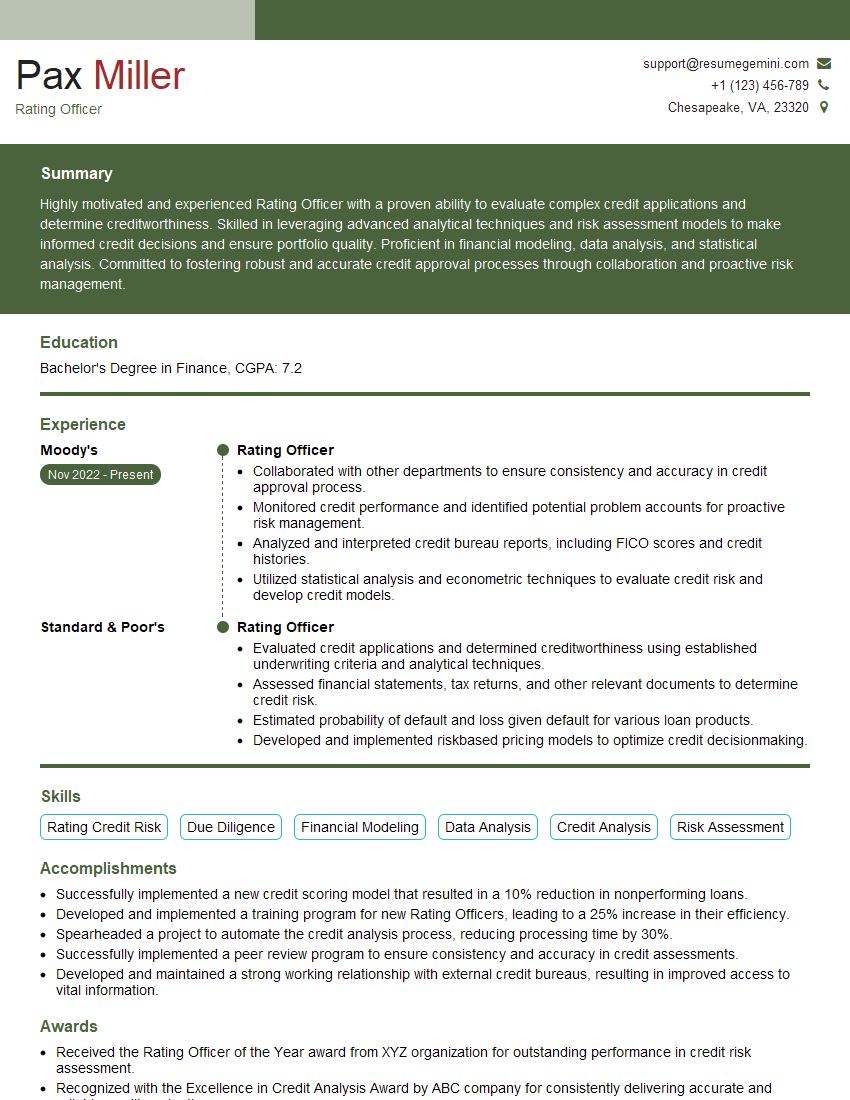
Ever felt underprepared for that crucial job interview? Or perhaps you’ve landed the interview but struggled to articulate your skills and experiences effectively? Fear not! We’ve got you covered. In this blog post, we’re diving deep into the Rating Officer interview questions that you’re most likely to encounter. But that’s not all. We’ll also provide expert insights into the key responsibilities of a Rating Officer so you can tailor your answers to impress potential employers.
Acing the interview is crucial, but landing one requires a compelling resume that gets you noticed. Crafting a professional document that highlights your skills and experience is the first step toward interview success. ResumeGemini can help you build a standout resume that gets you called in for that dream job.






Essential Interview Questions For Rating Officer
1. Explain the process of rating a vessel’s hull and machinery?
The process of rating a vessel’s hull and machinery involves several steps:
- Initial Inspection: Conduct a thorough visual inspection of the vessel’s hull, machinery, and related components to assess their condition and identify any potential issues.
- Documentation Review: Examine the vessel’s history, survey reports, maintenance records, and other relevant documentation to gather information about its past performance and current status.
- Detailed Analysis: Analyze the gathered information, including the results of the inspection and documentation review, to determine the overall condition of the vessel’s hull and machinery.
- Assessment and Classification: Based on the analysis, assign a rating to the vessel’s hull and machinery, which reflects their condition and level of risk. This rating is typically expressed as a class or grade.
- Issuance of Certificate: Issue a certificate or report that documents the vessel’s rating, along with any recommendations or requirements for maintenance or repairs.
2. What are the key factors that you consider when rating a vessel’s hull?
Hull Condition
- Structural Integrity: Assess the overall structural integrity of the hull, including the condition of plates, frames, bulkheads, and other structural components.
- Corrosion and Wear: Inspect for any signs of corrosion, pitting, or excessive wear on the hull’s surfaces.
- Damage: Note any visible damage, such as dents, cracks, or punctures, and evaluate their severity.
Equipment and Systems
- Machinery and Propulsion: Inspect the condition and performance of the vessel’s engines, propulsion systems, and associated components.
- Electrical Systems: Evaluate the condition of the electrical wiring, switchboards, generators, and other electrical equipment.
- Bilge and Ballast Systems: Assess the functionality of the vessel’s bilge and ballast systems to ensure proper drainage and stability.
3. What are the common challenges you face in rating vessels in poor condition?
- Incomplete or Inaccurate Documentation: Lack of detailed maintenance records or survey reports can make it difficult to assess the vessel’s past performance and current condition.
- Hidden Damage: Extensive corrosion or damage may not be readily visible during the initial inspection, requiring further investigation and testing to determine the true extent of the issue.
- Repair History: Previous repairs or modifications may have compromised the integrity of the vessel’s hull or machinery, requiring careful evaluation to ensure their effectiveness.
- Time Constraints: Rating a vessel in poor condition often requires additional time and resources for thorough inspection and analysis.
4. Describe the different types of hull materials and their advantages and disadvantages?
- Steel: Strong and durable, but prone to corrosion and requires regular maintenance.
- Aluminum: Lightweight and corrosion-resistant, but more expensive and less impact-resistant than steel.
- Fiberglass: Lightweight, durable, and corrosion-resistant, but can be more expensive and susceptible to damage from impact.
- Wood: Traditional material, but requires regular maintenance and protection from rot and decay.
- Composite Materials: Combinations of different materials, offering advantages such as high strength-to-weight ratio and corrosion resistance.
5. What are the key principles of risk management in vessel rating?
- Hazard Identification: Identifying potential hazards and risks associated with the vessel’s hull and machinery.
- Risk Assessment: Evaluating the likelihood and severity of identified risks, considering factors such as vessel age, operating conditions, and maintenance history.
- Risk Control: Developing and implementing measures to mitigate or eliminate identified risks, such as regular inspections, repairs, and safety precautions.
- Monitoring and Review: Continuously monitoring the effectiveness of risk control measures and reviewing risk assessments as new information becomes available.
6. Explain the role of technology in enhancing the accuracy and efficiency of vessel ratings?
- Non-Destructive Testing (NDT): Techniques such as ultrasonic testing and radiography can help detect hidden damage or corrosion without causing harm to the vessel’s structure.
- Computer-Aided Inspection: Software and mobile apps assist inspectors with data collection, analysis, and reporting, improving consistency and reducing errors.
- Remote Sensing: Drones and other unmanned vehicles can access hard-to-reach areas for inspection and data collection.
- Artificial Intelligence (AI): Algorithms can analyze vast amounts of data to identify patterns and predict potential issues, enhancing risk assessment.
7. Describe the importance of collaboration between rating officers and other stakeholders in the shipping industry?
- Naval Architects and Engineers: Provide technical expertise and guidance on vessel design, construction, and maintenance.
- Vessel Owners and Operators: Share operating experience, maintenance practices, and incident history, which inform risk assessments.
- Classification Societies: Establish standards and provide guidance on vessel safety and classification.
- Government Regulators: Ensure compliance with safety regulations and environmental standards.
8. How do you stay up-to-date with the latest industry best practices and regulations in vessel rating?
- Attend Conferences and Workshops: Participate in industry events to learn about new technologies, research findings, and regulatory updates.
- Read Industry Publications: Stay informed through trade journals, magazines, and online resources specializing in vessel rating and safety.
- Network with Professionals: Engage with other rating officers, naval architects, and industry experts to exchange knowledge and insights.
- Seek Certifications and Training: Pursue professional certifications and training programs to enhance skills and stay abreast of industry standards.
9. What measures do you take to ensure the confidentiality and integrity of the rating process?
- Adhere to Ethical Guidelines: Follow professional codes of conduct and maintain strict confidentiality of vessel information.
- Secure Data Handling: Utilize secure systems and protocols to protect sensitive data and prevent unauthorized access.
- Independent Assessments: Conduct ratings independently to avoid conflicts of interest or bias.
- Regular Audits: Subject rating processes to internal and external audits to ensure compliance with standards and best practices.
10. How do you handle situations where there is a disagreement with the vessel’s owner or operator regarding the rating?
- Open Communication: Engage in clear and respectful dialogue to understand their concerns and perspectives.
- Review and Reassess: Thoroughly re-examine the rating criteria and supporting evidence to determine if any revisions or adjustments are warranted.
- Seek External Input: Consult with industry experts, naval architects, or classification societies for additional opinions and guidance.
- Document Decisions: Clearly document the rationale behind any changes or adjustments made to the rating, ensuring transparency and accountability.
Interviewers often ask about specific skills and experiences. With ResumeGemini‘s customizable templates, you can tailor your resume to showcase the skills most relevant to the position, making a powerful first impression. Also check out Resume Template specially tailored for Rating Officer.
Career Expert Tips:
- Ace those interviews! Prepare effectively by reviewing the Top 50 Most Common Interview Questions on ResumeGemini.
- Navigate your job search with confidence! Explore a wide range of Career Tips on ResumeGemini. Learn about common challenges and recommendations to overcome them.
- Craft the perfect resume! Master the Art of Resume Writing with ResumeGemini’s guide. Showcase your unique qualifications and achievements effectively.
- Great Savings With New Year Deals and Discounts! In 2025, boost your job search and build your dream resume with ResumeGemini’s ATS optimized templates.
Researching the company and tailoring your answers is essential. Once you have a clear understanding of the Rating Officer‘s requirements, you can use ResumeGemini to adjust your resume to perfectly match the job description.
Key Job Responsibilities
Rating Officers play a crucial role in the credit risk management process, evaluating the creditworthiness of borrowers and determining their risk profile. Their key job responsibilities include:
1. Credit Analysis and Rating Assignments
Thoroughly analyze financial statements, industry trends, and economic data to assess the creditworthiness of borrowers.
- Evaluate factors such as income, assets, debt obligations, and cash flow to determine the borrower’s ability to repay the loan.
- Assign credit ratings based on the analysis, categorizing borrowers into different risk levels.
2. Credit Monitoring and Review
Continuously monitor the financial performance and credit behavior of rated borrowers.
- Review updated financial statements and industry information to identify any changes in the borrower’s risk profile.
- Revise credit ratings and make recommendations for adjustments to loan terms or credit limits based on the monitoring results.
3. Risk Management and Reporting
Identify and manage credit risks associated with the loan portfolio.
- Develop and implement risk mitigation strategies to minimize potential losses.
- Prepare and disseminate credit risk reports to senior management and stakeholders.
4. Compliance and Regulatory Requirements
Ensure compliance with relevant laws, regulations, and industry standards.
- Adhere to internal policies and procedures to maintain the integrity of the rating process.
- Stay updated on regulatory changes and incorporate them into credit rating practices.
Interview Tips
Preparing thoroughly for a Rating Officer interview can significantly increase your chances of success. Here are some tips to help you ace the interview:
1. Research the Company and Role
Learn about the financial institution’s credit rating process, products, and industry reputation.
- Read their website, annual reports, and recent news articles to understand their business operations and credit risk management philosophy.
- Research the specific job responsibilities and qualifications outlined in the job description.
2. Quantify Your Experience and Accomplishments
Highlight your relevant credit analysis, risk management, and industry knowledge.
- Provide specific examples of how you have successfully analyzed credit risks and made sound rating decisions.
- Quantify your accomplishments, using metrics such as the number of loans rated, default rates, or risk mitigation strategies implemented.
3. Demonstrate Your Analytical and Technical Skills
Emphasize your proficiency in financial analysis, modeling, and risk assessment techniques.
- Discuss your experience with using financial modeling software and statistical analysis tools.
- Highlight your understanding of industry-specific credit rating methodologies.
4. Showcase Your Communication and Interpersonal Skills
Effective communication is essential for Rating Officers.
- Provide examples of how you have clearly conveyed complex credit analysis findings to clients, senior management, and stakeholders.
- Demonstrate your ability to build rapport with borrowers and address their concerns professionally.
Next Step:
Armed with this knowledge, you’re now well-equipped to tackle the Rating Officer interview with confidence. Remember, a well-crafted resume is your first impression. Take the time to tailor your resume to highlight your relevant skills and experiences. And don’t forget to practice your answers to common interview questions. With a little preparation, you’ll be on your way to landing your dream job. So what are you waiting for? Start building your resume and start applying! Build an amazing resume with ResumeGemini.