Feeling lost in a sea of interview questions? Landed that dream interview for Reimbursement Specialist but worried you might not have the answers? You’re not alone! This blog is your guide for interview success. We’ll break down the most common Reimbursement Specialist interview questions, providing insightful answers and tips to leave a lasting impression. Plus, we’ll delve into the key responsibilities of this exciting role, so you can walk into your interview feeling confident and prepared.
Acing the interview is crucial, but landing one requires a compelling resume that gets you noticed. Crafting a professional document that highlights your skills and experience is the first step toward interview success. ResumeGemini can help you build a standout resume that gets you called in for that dream job.






Essential Interview Questions For Reimbursement Specialist
1. Which steps do you take to maximize reimbursement for patients?
To maximize reimbursement for patients, I typically take these steps:
- Verify patient eligibility and benefits thoroughly.
- Code claims accurately and completely using appropriate ICD-10 and CPT codes.
- Gather all necessary documentation to support the claim, including medical records, prescriptions, and diagnostic reports.
- Negotiate with insurance carriers when necessary to ensure proper reimbursement.
- Stay up-to-date on insurance regulations and billing guidelines.
2. How do you handle appeals and denials?
Reviewing the denial
- Analyze the reason for denial and identify any errors or omissions.
- Gather additional documentation or information to support the claim.
Submitting the appeal
- Write a clear and concise appeal letter outlining the reasons for the appeal and any supporting evidence.
- Submit the appeal within the specified time frame.
- Follow up with the insurance carrier regularly to check on the status of the appeal.
3. What strategies do you use to reduce claim rejections?
- Ensure accuracy in patient information, diagnosis codes, and procedure codes.
- Submit claims electronically to reduce errors and delays.
- Regularly review claims for completeness and accuracy before submission.
- Stay updated on changes in insurance regulations and billing guidelines.
- Collaborate with providers to obtain necessary documentation and information.
4. How do you maintain compliance with HIPAA regulations?
- Safeguard patient information and protect against unauthorized access or disclosure.
- Use secure electronic communication methods for transmitting sensitive information.
- Train staff on HIPAA privacy and security protocols.
- Regularly review and update privacy policies and procedures.
- Report any HIPAA violations promptly to the appropriate authorities.
5. What experience do you have with reimbursement software?
I have extensive experience using various reimbursement software applications, including:
- MEDHOST
- Epic
- Cerner
- NextGen
- Kareo
I am proficient in using these software programs to process claims, manage patient accounts, and track reimbursements.
6. How do you stay up-to-date on changes in reimbursement policies and regulations?
- Attend industry conferences and webinars.
- Read industry publications and online resources.
- Subscribe to email updates and newsletters from insurance carriers.
- Network with other reimbursement professionals.
- Participate in continuing education courses and workshops.
7. What is your experience with Medicare and Medicaid reimbursement?
- Processed and submitted Medicare and Medicaid claims.
- Understands Medicare and Medicaid billing guidelines and regulations.
- Appealed denied claims and negotiated reimbursement rates.
- Worked closely with providers to gather necessary documentation.
- Assisted patients with understanding their Medicare and Medicaid benefits.
8. How do you handle complex reimbursement cases?
- Analyze the case thoroughly to identify the underlying issues.
- Research applicable regulations and guidelines.
- Consult with experts or colleagues for additional insights.
- Develop a comprehensive plan to address the issues and maximize reimbursement.
- Communicate effectively with all stakeholders involved, including patients, providers, and insurance carriers.
9. What are the key challenges you have faced as a Reimbursement Specialist?
- Keeping up with the ever-changing reimbursement landscape.
- Navigating complex insurance regulations and policies.
- Denial management and successful appeals.
- Ensuring accurate and timely claim submission.
- Balancing patient care and financial considerations.
10. How do you prioritize tasks and manage your workload?
- Use a task management system to track and prioritize tasks.
- Delegate tasks to team members when appropriate.
- Set deadlines and stick to them.
- Stay organized and keep a clean workspace.
- Take breaks when needed to avoid burnout.
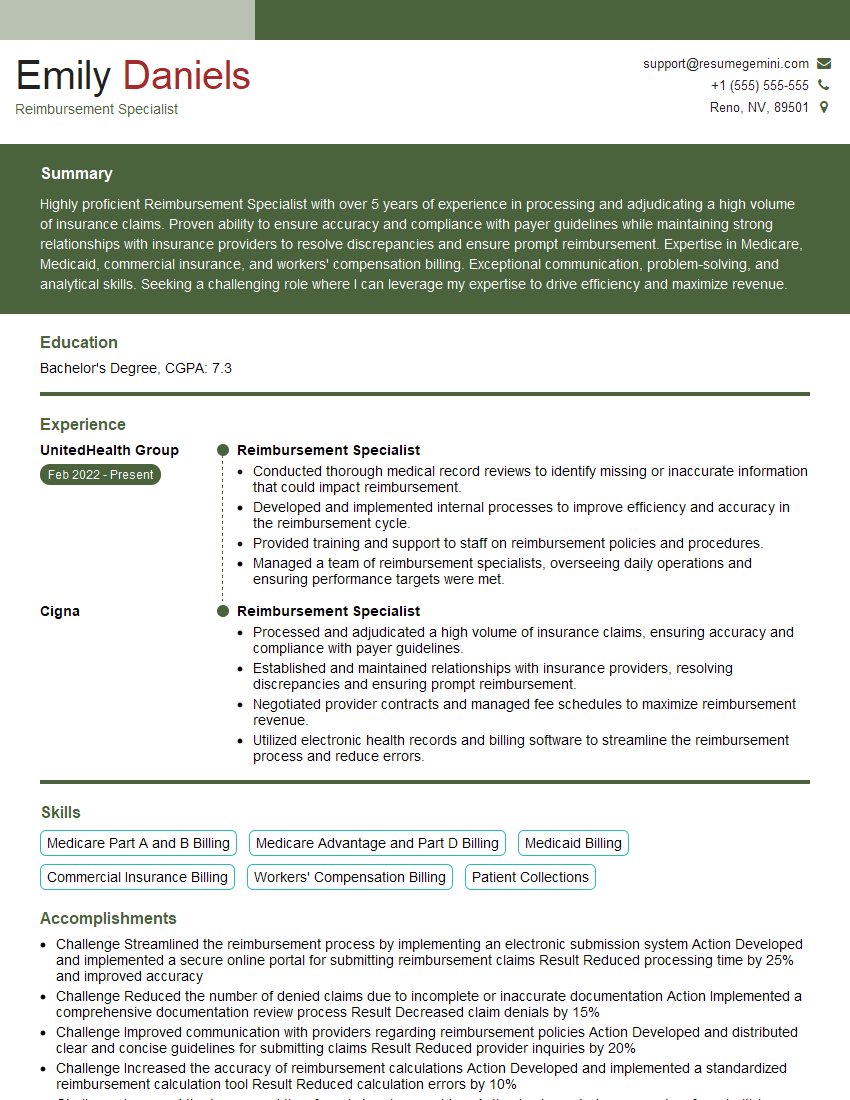
Interviewers often ask about specific skills and experiences. With ResumeGemini‘s customizable templates, you can tailor your resume to showcase the skills most relevant to the position, making a powerful first impression. Also check out Resume Template specially tailored for Reimbursement Specialist.
Career Expert Tips:
- Ace those interviews! Prepare effectively by reviewing the Top 50 Most Common Interview Questions on ResumeGemini.
- Navigate your job search with confidence! Explore a wide range of Career Tips on ResumeGemini. Learn about common challenges and recommendations to overcome them.
- Craft the perfect resume! Master the Art of Resume Writing with ResumeGemini’s guide. Showcase your unique qualifications and achievements effectively.
- Great Savings With New Year Deals and Discounts! In 2025, boost your job search and build your dream resume with ResumeGemini’s ATS optimized templates.
Researching the company and tailoring your answers is essential. Once you have a clear understanding of the Reimbursement Specialist‘s requirements, you can use ResumeGemini to adjust your resume to perfectly match the job description.
Key Job Responsibilities
Reimbursement Specialists play a crucial role in the healthcare industry by ensuring accurate and efficient reimbursement for healthcare services. Here are their key responsibilities:
1. Process Reimbursement Claims
Validate and review patient medical records, bills, and other supporting documentation to prepare reimbursement claims.
- Verify patient eligibility, benefits, and coverage.
- Calculate accurate reimbursement amounts based on regulations and guidelines.
2. Submit and Track Claims
Electronically or manually submit reimbursement claims to insurers.
- Monitor claims status and follow up on outstanding payments.
- Resolve denials and appeals with insurance companies.
3. Manage Provider Relationships
Maintain positive relationships with healthcare providers and insurance companies.
- Provide guidance and support to providers on reimbursement processes.
- Negotiate contracts and resolve disputes with insurance companies.
4. Maintain Compliance
Stay updated on industry regulations and ensure compliance with federal and state laws.
- Implement and maintain internal controls to prevent fraud and abuse.
- Conduct audits and investigations as needed.
Interview Tips
To ace your interview for a Reimbursement Specialist position, consider the following tips:
1. Research the Company and Role
Thoroughly research the healthcare organization and the specific Reimbursement Specialist role to understand their needs and expectations.
- Visit the company website, read industry articles, and connect with employees on LinkedIn.
- Pay attention to the job description and identify the key responsibilities and qualifications.
2. Highlight Your Skills and Experience
Showcase your relevant skills and experience in your resume and during the interview.
- Emphasize your knowledge of reimbursement regulations, claims processing, and provider relationship management.
- Quantify your accomplishments with specific examples of how you have improved reimbursement rates or reduced claim denials.
3. Prepare for Technical Questions
Be prepared to answer technical questions related to reimbursement processes, claim submission, and compliance.
- Review common regulations and coding practices in the healthcare industry.
- Practice explaining complex reimbursement concepts and resolving hypothetical claim denials.
4. Demonstrate Communication and Interpersonal Skills
Reimbursement Specialists need strong communication and interpersonal skills to interact effectively with providers, insurance companies, and colleagues.
- Highlight your ability to build and maintain relationships, resolve conflicts, and effectively communicate complex information.
- Share examples of how you have successfully negotiated with insurance companies or resolved issues with providers.
5. Show Your Passion for the Industry
Express your enthusiasm for the healthcare industry and your desire to make a positive impact on patient care.
- Share your experiences or volunteer work in the healthcare field.
- Explain how you believe your skills and passion can contribute to the organization’s mission.
Next Step:
Now that you’re armed with interview-winning answers and a deeper understanding of the Reimbursement Specialist role, it’s time to take action! Does your resume accurately reflect your skills and experience for this position? If not, head over to ResumeGemini. Here, you’ll find all the tools and tips to craft a resume that gets noticed. Don’t let a weak resume hold you back from landing your dream job. Polish your resume, hit the “Build Your Resume” button, and watch your career take off! Remember, preparation is key, and ResumeGemini is your partner in interview success.