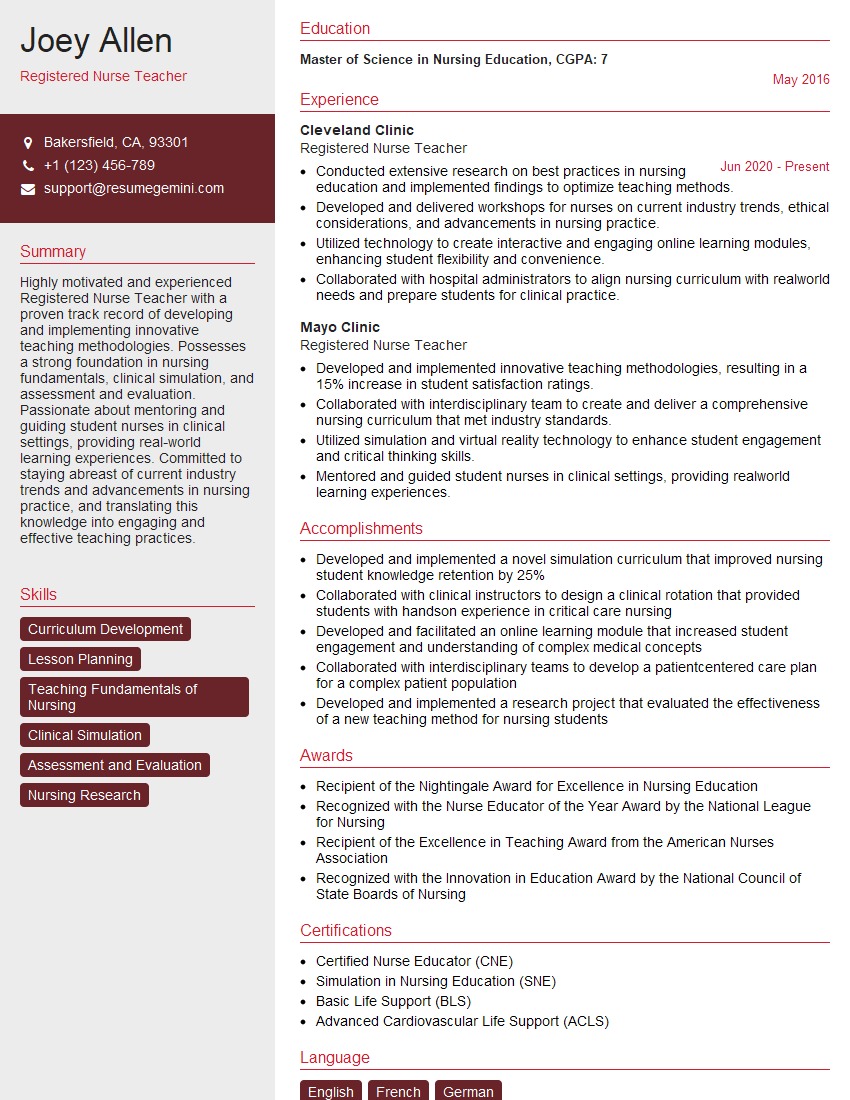
Are you gearing up for a career shift or aiming to ace your next interview? Look no further! We’ve curated a comprehensive guide to help you crack the interview for the coveted Registered Nurse Teacher position. From understanding the key responsibilities to mastering the most commonly asked questions, this blog has you covered. So, buckle up and let’s embark on this journey together
Acing the interview is crucial, but landing one requires a compelling resume that gets you noticed. Crafting a professional document that highlights your skills and experience is the first step toward interview success. ResumeGemini can help you build a standout resume that gets you called in for that dream job.






Essential Interview Questions For Registered Nurse Teacher
1. What strategies do you employ to create an inclusive and supportive learning environment for nursing students with diverse backgrounds and learning styles?
- Emphasize active learning and student-centered approaches.
- Provide differentiated instruction to cater to individual needs.
- Establish clear expectations and provide ongoing feedback.
- Create a welcoming and respectful classroom atmosphere.
- Facilitate peer-to-peer learning and group discussions.
2. How do you assess student learning in both theory and clinical settings?
Cognitive and Affective Domains
- Written assignments, quizzes, and exams.
- Clinical simulations and case studies.
- Objective structured clinical examinations (OSCEs).
- Verbal questioning and student presentations.
- Reflective journals and self-assessments.
Psychomotor Skills
- Direct observation of clinical skills.
- Skills checklists and performance evaluations.
- Peer and instructor feedback.
- Video recordings of clinical procedures.
3. Describe your approach to incorporating evidence-based practice into your nursing curriculum.
- Regularly review and update course content based on current research.
- Assign readings and assignments that emphasize evidence-informed decision-making.
- Collaborate with clinical experts and researchers to develop curriculum materials.
- Facilitate discussions on the importance and application of evidence-based practice.
- Encourage students to participate in research projects and conferences.
4. How do you utilize technology to enhance student learning and engagement in the classroom and clinical settings?
- Incorporate online learning platforms for content delivery and assignments.
- Use simulation software and virtual reality for clinical practice.
- Implement mobile apps for patient education and medication tracking.
- Facilitate online discussions and forums for student collaboration.
- Provide access to online libraries and databases for research.
5. Describe your strategies for collaborating with interdisciplinary healthcare professionals to provide a comprehensive learning experience for students.
- Invite guest speakers from various healthcare disciplines.
- Organize interprofessional simulation experiences.
- Collaborate on research projects that involve students from different disciplines.
- Facilitate interprofessional case discussions.
- Establish partnerships with clinical agencies that provide opportunities for interdisciplinary collaboration.
6. How do you maintain your own professional development as a nursing educator?
- Attend conferences and workshops.
- Engage in research and scholarly activities.
- Collaborate with other educators and professionals.
- Seek feedback from students and colleagues.
- Stay updated on advancements in nursing practice and education.
7. What are your thoughts on the use of standardized patients in nursing education?
- Benefits:
- Provides realistic and consistent clinical experiences.
- Allows for controlled and objective assessments.
- Can be used to simulate a variety of patient scenarios.
- Challenges:
- May not fully capture the complexities of real-world patient interactions.
- Can be costly and time-consuming to implement.
8. Describe your experience with using simulation in nursing education.
- Types of simulations used:
- Patient simulators
- Virtual reality simulations
- Benefits of using simulation:
- Provides a safe and controlled environment for students to practice.
- Allows for repetition and feedback.
- Can be used to simulate complex clinical scenarios.
- Challenges of using simulation:
- May not fully replicate real-world patient interactions.
- Can be costly and time-consuming to implement.
9. How do you integrate cultural sensitivity into your teaching?
- Incorporate content on cultural diversity and health disparities.
- Invite guest speakers from diverse backgrounds to share their perspectives.
- Provide opportunities for students to interact with patients from different cultures.
- Encourage students to reflect on their own cultural biases and assumptions.
- Create a classroom environment that is welcoming and respectful of all cultures.
10. How do you handle challenging students in the classroom or clinical setting?
- Address the issue privately and respectfully.
- Identify the root cause of the behavior.
- Develop a plan to address the behavior with clear expectations and consequences.
- Maintain open communication and provide ongoing support.
- Seek support from colleagues or supervisors if necessary.
Interviewers often ask about specific skills and experiences. With ResumeGemini‘s customizable templates, you can tailor your resume to showcase the skills most relevant to the position, making a powerful first impression. Also check out Resume Template specially tailored for Registered Nurse Teacher.
Career Expert Tips:
- Ace those interviews! Prepare effectively by reviewing the Top 50 Most Common Interview Questions on ResumeGemini.
- Navigate your job search with confidence! Explore a wide range of Career Tips on ResumeGemini. Learn about common challenges and recommendations to overcome them.
- Craft the perfect resume! Master the Art of Resume Writing with ResumeGemini’s guide. Showcase your unique qualifications and achievements effectively.
- Great Savings With New Year Deals and Discounts! In 2025, boost your job search and build your dream resume with ResumeGemini’s ATS optimized templates.
Researching the company and tailoring your answers is essential. Once you have a clear understanding of the Registered Nurse Teacher‘s requirements, you can use ResumeGemini to adjust your resume to perfectly match the job description.
Key Job Responsibilities
Registered Nurse Teachers play a pivotal role in the healthcare industry by educating and preparing future nurses. Their key responsibilities include:
1. Curriculum Development and Delivery
Developing, implementing, and evaluating nursing curriculum to ensure it aligns with industry standards and accreditation requirements.
- Designing course materials, including lectures, simulations, and clinical experiences.
- Using innovative teaching methodologies to engage students and promote active learning.
2. Student Assessment and Evaluation
Assessing student progress through various methods such as exams, assignments, and clinical evaluations.
- Providing constructive feedback to students to help them improve their knowledge and skills.
- Collaborating with other faculty members to ensure fair and consistent grading practices.
3. Clinical Supervision
Supervising students during clinical rotations to ensure their safety and provide guidance in patient care.
- Evaluating student performance and providing constructive feedback to enhance their clinical skills.
- Mentoring and supporting students as they transition from classroom to real-world nursing practice.
4. Research and Scholarly Activity
Conducting research and engaging in scholarly activities to advance the field of nursing education.
- Presenting findings at conferences and publishing in peer-reviewed journals.
- Collaborating with colleagues to develop innovative teaching strategies and improve student outcomes.
Interview Tips
To ace the interview for a Registered Nurse Teacher position, it’s crucial to prepare thoroughly and demonstrate your qualifications effectively. Here are some interview tips:
1. Research the Institution and Position
Familiarize yourself with the institution’s mission, values, and nursing program curriculum. Research the specific role you’re applying for and its responsibilities.
- This knowledge will help you tailor your answers to the interviewer’s questions and show that you’re genuinely interested in the position.
2. Highlight Your Teaching Philosophy and Skills
Emphasize your teaching philosophy and demonstrate how you effectively engage students and promote learning. Share examples of innovative teaching methods you’ve used.
- Highlight your ability to create a supportive and challenging learning environment.
3. Articulate Your Clinical Expertise
Showcase your clinical nursing experience and how it informs your teaching. Discuss your expertise in specific nursing specialties and how you incorporate this knowledge into your curriculum.
- Explain how your clinical experience enables you to prepare students for real-world nursing practice.
4. Showcase Your Research and Scholarly Activities
If you have conducted research or engaged in scholarly activities, highlight these experiences. Explain how they have contributed to your knowledge of nursing education and your ability to advance the field.
- Emphasize your commitment to ongoing professional development and staying abreast of best practices in nursing education.
5. Prepare Questions for the Interviewer
Asking thoughtful questions during the interview shows your engagement and interest in the position. Prepare a few questions about the program, faculty, and institution to clarify your understanding and demonstrate your enthusiasm.
- This will also give you an opportunity to assess if the institution is a good fit for your career goals.
Next Step:
Now that you’re armed with interview-winning answers and a deeper understanding of the Registered Nurse Teacher role, it’s time to take action! Does your resume accurately reflect your skills and experience for this position? If not, head over to ResumeGemini. Here, you’ll find all the tools and tips to craft a resume that gets noticed. Don’t let a weak resume hold you back from landing your dream job. Polish your resume, hit the “Build Your Resume” button, and watch your career take off! Remember, preparation is key, and ResumeGemini is your partner in interview success.