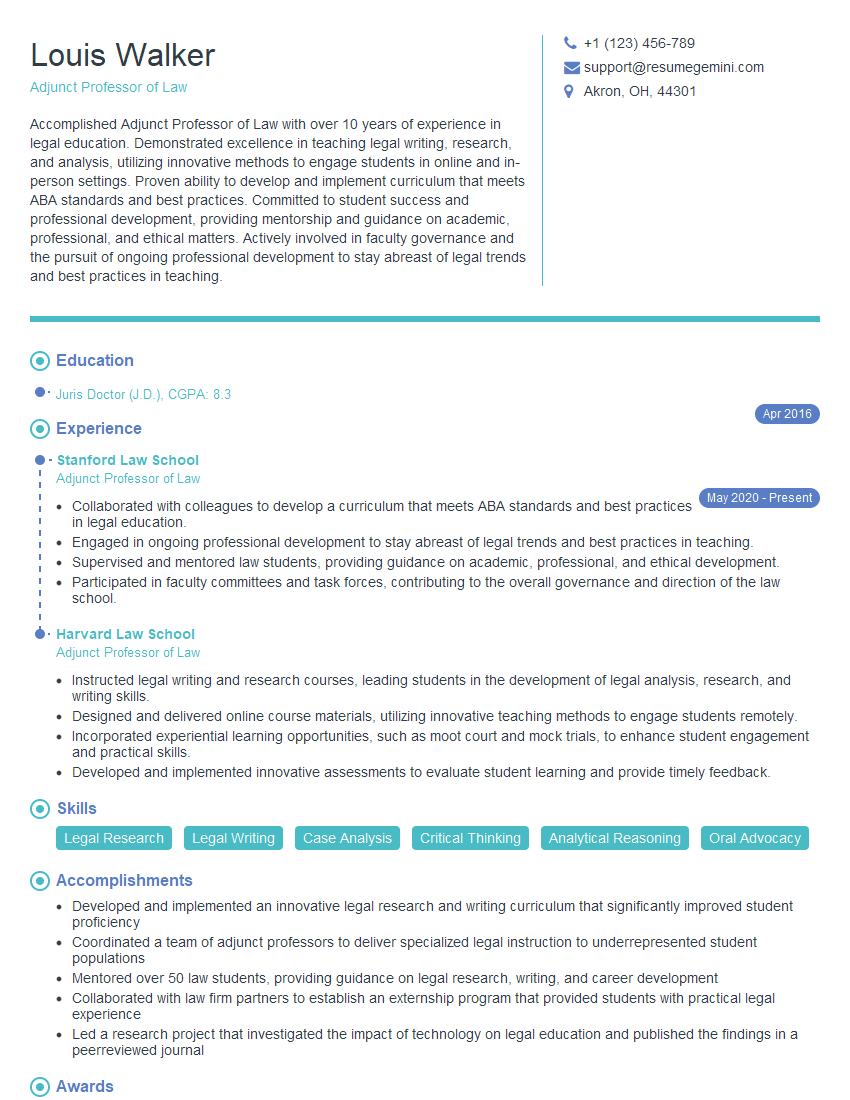
Ever felt underprepared for that crucial job interview? Or perhaps you’ve landed the interview but struggled to articulate your skills and experiences effectively? Fear not! We’ve got you covered. In this blog post, we’re diving deep into the Adjunct Professor of Law interview questions that you’re most likely to encounter. But that’s not all. We’ll also provide expert insights into the key responsibilities of a Adjunct Professor of Law so you can tailor your answers to impress potential employers.
Acing the interview is crucial, but landing one requires a compelling resume that gets you noticed. Crafting a professional document that highlights your skills and experience is the first step toward interview success. ResumeGemini can help you build a standout resume that gets you called in for that dream job.






Essential Interview Questions For Adjunct Professor of Law
1. Describe your approach to teaching law to students from diverse backgrounds?
- Accommodating different learning styles and cultural perspectives.
- Creating an inclusive and supportive classroom environment.
- Tailoring teaching materials and assessments to meet the needs of diverse learners.
2. How do you assess student learning effectively, both formally and informally?
Formal Assessments
- Exams: essay, multiple-choice, short answer.
- Projects: research papers, case briefs, legal memos.
- Presentations: oral arguments, class discussion participation.
Informal Assessments
- Class participation: questions, comments, and engagement.
- Quizzes: short knowledge checks.
- Feedback: written and oral feedback on assignments and presentations.
3. What are your thoughts on using technology in the law classroom?
- Enhancing engagement and interaction.
- Providing students with access to legal research databases and resources.
- Facilitating online discussions and collaboration.
4. How do you stay up-to-date with the latest developments in law?
- Reading legal journals and articles.
- Attending conferences and workshops.
- Participating in online forums and discussion groups.
5. What are your research interests?
- Describe your current or planned research projects.
- Explain how your research relates to your teaching interests.
6. How do you manage a large class size and ensure that all students have the opportunity to participate?
- Dividing the class into smaller groups.
- Using technology to facilitate collaboration.
- Setting clear expectations for student participation.
7. How do you handle difficult students or disruptions in the classroom?
- Addressing the issue directly and respectfully.
- Establishing clear boundaries and expectations.
- Referring students to appropriate resources if necessary.
8. What is your philosophy on grading?
- Grading should be fair and objective.
- Grading should provide students with feedback on their progress.
- Grading should encourage students to learn and improve.
9. What are your strengths and weaknesses as a law professor?
Strengths
- Excellent communication and teaching skills.
- Strong knowledge of the law and current legal issues.
- Passion for teaching and a commitment to student success.
Weaknesses
- Limited experience with online teaching.
- Difficulty in managing large class sizes.
10. Why are you interested in this adjunct professorship?
- Interest in teaching the specific course or subject area.
- Desire to contribute to the legal education of students.
- Opportunity to share legal knowledge and experience.
11. What is your understanding of the role and responsibilities of an adjunct professor?
- Teaching courses as assigned.
- Developing and delivering course materials.
- Grading student work.
- Participating in departmental meetings and activities.
12. How do you plan to contribute to the law school community beyond teaching?
- Serving on committees.
- Participating in student organizations.
- Mentoring students.
13. What are your salary expectations for this position? What is your availability?
- Research industry benchmarks for adjunct professor salaries.
- Consider your own experience and qualifications.
- Be prepared to negotiate within a reasonable range.
- State your availability for teaching and other responsibilities.
14. Do you have any questions for us about the position or the law school?
- Ask informed questions about the course load, student demographics, or law school resources.
- Show interest in the law school’s mission and values.
- Demonstrate enthusiasm for the opportunity.
15. Can you describe your highest graded course and what do you think contributed to your success?
- Identify the highest graded course.
- Analyze the factors that contributed to your success.
- Explain how you applied those factors to achieve high grades.
Interviewers often ask about specific skills and experiences. With ResumeGemini‘s customizable templates, you can tailor your resume to showcase the skills most relevant to the position, making a powerful first impression. Also check out Resume Template specially tailored for Adjunct Professor of Law.
Career Expert Tips:
- Ace those interviews! Prepare effectively by reviewing the Top 50 Most Common Interview Questions on ResumeGemini.
- Navigate your job search with confidence! Explore a wide range of Career Tips on ResumeGemini. Learn about common challenges and recommendations to overcome them.
- Craft the perfect resume! Master the Art of Resume Writing with ResumeGemini’s guide. Showcase your unique qualifications and achievements effectively.
- Great Savings With New Year Deals and Discounts! In 2025, boost your job search and build your dream resume with ResumeGemini’s ATS optimized templates.
Researching the company and tailoring your answers is essential. Once you have a clear understanding of the Adjunct Professor of Law‘s requirements, you can use ResumeGemini to adjust your resume to perfectly match the job description.
Key Job Responsibilities
Adjunct Professors of Law play a crucial role in legal education by providing instruction and guidance to law students while conducting research and contributing to legal scholarship.
1. Teaching and Instruction
Impart knowledge of legal concepts to students through lectures, class discussions, and other teaching methods.
- Prepare and deliver course materials, including syllabi, lecture notes, and assignments.
- Evaluate student performance through exams, papers, and other assessments.
2. Research and Scholarship
Conduct original legal research and publish findings in academic journals and other scholarly outlets. This may involve:
- Developing research questions and designing methodologies.
- Analyzing legal materials, conducting empirical studies, and writing research papers.
3. Service and Outreach
Participate in departmental and university committees, advise student organizations, and engage in outreach activities.
- Attend faculty meetings and participate in curriculum development.
- Mentor law students and provide career guidance.
- Collaborate with practitioners and participate in professional development activities.
4. Adherence to Ethical Standards
Maintain the highest ethical standards in teaching, research, and professional conduct.
- Follow university policies and procedures regarding academic integrity.
- Avoid conflicts of interest and maintain confidentiality.
Interview Preparation Tips
Preparing for an Adjunct Professor of Law interview requires a combination of research, self-reflection, and practice. Here are some tips to help you ace the interview:
1. Research the Institution and Position
Thoroughly research the law school, including its mission, faculty, curriculum, and student body.
- Visit the law school’s website and social media pages.
- Read recent news articles and publications about the school.
- Identify the specific course(s) you are applying to teach and become familiar with the course content.
2. Prepare Your Responses
Anticipate common interview questions and prepare thoughtful and concise answers.
- Explain your teaching philosophy and how it aligns with the law school’s pedagogical approach.
- Discuss your research interests and how they contribute to the field of law.
- Highlight your experience in legal practice or other relevant areas that demonstrate your expertise.
3. Professionalism and Communication
Dress professionally and arrive on time for the interview.
- Maintain eye contact, speak clearly, and be respectful of the interviewers.
- Ask thoughtful questions to demonstrate your interest and engagement.
- Follow up with a thank-you note after the interview.
4. Enquire About the School and Position
Use the interview as an opportunity to learn more about the law school and the position.
- Ask about the school’s curriculum, faculty, and students.
- Inquire about the specific course(s) you are applying to teach and the expectations for the role.
- Seek information about opportunities for professional development and research support.
5. Be Enthusiastic and Confident
Show your passion for teaching and legal scholarship.
- Convey your enthusiasm for the opportunity to teach at the law school.
- Express your confidence in your ability to contribute to the school’s mission.
- Demonstrate your commitment to providing a high-quality educational experience for students.
Next Step:
Armed with this knowledge, you’re now well-equipped to tackle the Adjunct Professor of Law interview with confidence. Remember, preparation is key. So, start crafting your resume, highlighting your relevant skills and experiences. Don’t be afraid to tailor your application to each specific job posting. With the right approach and a bit of practice, you’ll be well on your way to landing your dream job. Build your resume now from scratch or optimize your existing resume with ResumeGemini. Wish you luck in your career journey!