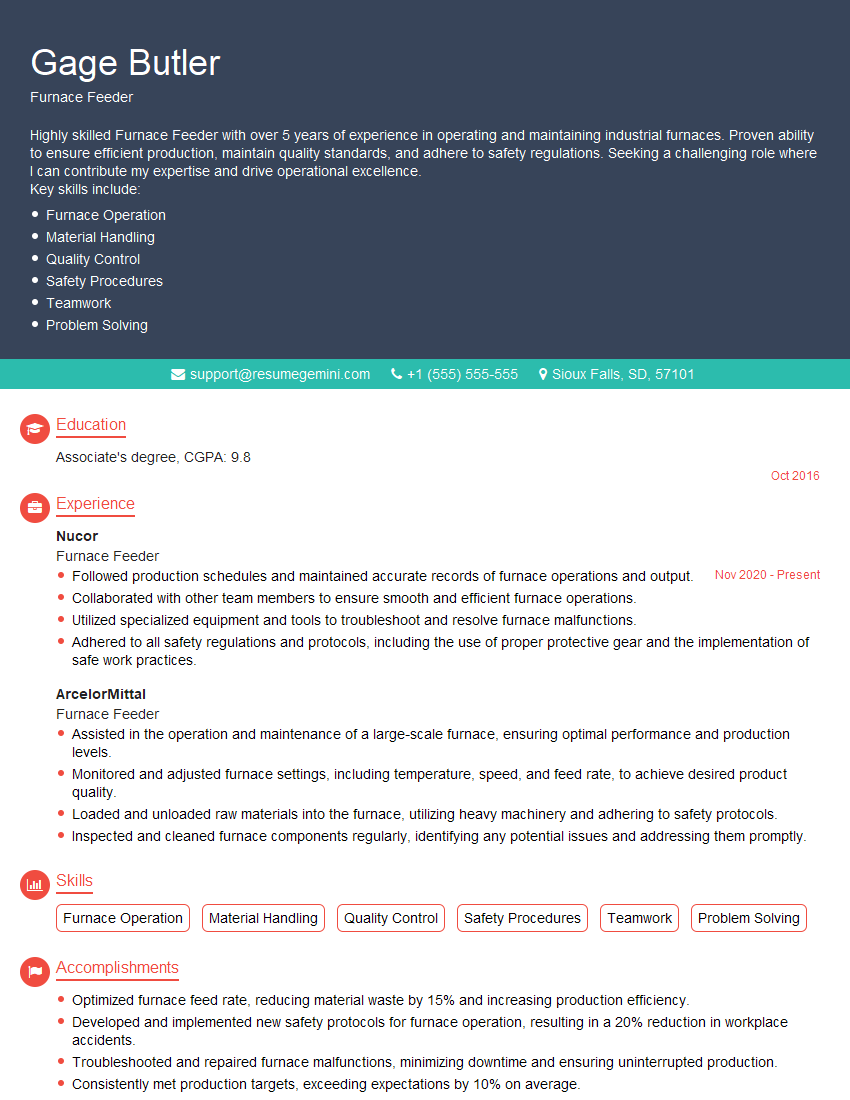
Are you gearing up for a career shift or aiming to ace your next interview? Look no further! We’ve curated a comprehensive guide to help you crack the interview for the coveted Furnace Feeder position. From understanding the key responsibilities to mastering the most commonly asked questions, this blog has you covered. So, buckle up and let’s embark on this journey together
Acing the interview is crucial, but landing one requires a compelling resume that gets you noticed. Crafting a professional document that highlights your skills and experience is the first step toward interview success. ResumeGemini can help you build a standout resume that gets you called in for that dream job.






Essential Interview Questions For Furnace Feeder
1. What are the primary responsibilities of a Furnace Feeder?
- Loading and unloading materials into and out of the furnace
- Monitoring the furnace temperature and making adjustments as needed
- Maintaining the cleanliness of the furnace area
- Following safety regulations and procedures
2. What are the safety precautions that you should take when working with a furnace?
Personal Protective Equipment (PPE)
- Wear appropriate PPE, including safety glasses, gloves, and a fire-resistant apron
Work Area
- Keep the work area clean and free of debris
- Ensure proper ventilation to prevent exposure to harmful fumes
Furnace Operation
- Never open the furnace door while it is operating
- Use long-handled tools to reach into the furnace
- Be aware of the location of emergency stop buttons
3. What are the different types of furnaces and their uses?
- Electric furnaces: Used for melting and hardening metals
- Gas furnaces: Used for heating and annealing metals
- Oil furnaces: Used for heating and melting metals
- Induction furnaces: Used for melting and heating metals
4. What are the common problems that can occur with furnaces and how can they be resolved?
- Furnace overheating: Check temperature controls, clean heating elements, and ensure proper ventilation
- Uneven heating: Adjust burner settings, clean heating elements, and check for blockages
- Furnace not heating: Check power supply, heating elements, and ignition system
5. What are the maintenance procedures for furnaces?
- Regularly clean the furnace and its components
- Inspect heating elements, burners, and safety devices
- Calibrate temperature controls
- Lubricate moving parts
6. What are the different types of materials that can be processed in a furnace?
- Metals: Steel, aluminum, copper, brass
- Ceramics: Glass, porcelain, tiles
- Plastics: Polyethylene, polypropylene, PVC
7. What are the quality control procedures for furnace operations?
- Monitor furnace temperature and material quality
- Inspect materials before and after processing
- Document furnace operating parameters
8. What are the different hazards associated with furnace operations and how can they be mitigated?
- Burns: Use PPE, follow proper operating procedures, and ensure adequate ventilation
- Fumes and gases: Use proper ventilation, wear respirators, and monitor air quality
- Electrical hazards: Follow electrical safety guidelines, use insulated tools, and regularly inspect wiring
9. What is the role of a Furnace Feeder in a manufacturing process?
- Ensuring a continuous supply of materials to the furnace
- Monitoring furnace performance and making adjustments as needed
- Maintaining a safe and clean work environment
- Working closely with other team members to ensure efficient production
10. What are the qualities and skills required to be a successful Furnace Feeder?
- Technical skills: Knowledge of furnace equipment, processes, and safety procedures
- Physical skills: Ability to lift and move heavy materials
- Attention to detail: Must be able to follow instructions carefully and monitor furnace operations
- Problem-solving skills: Must be able to identify and resolve issues that may arise
- Teamwork skills: Must be able to work effectively with others in a fast-paced environment
Interviewers often ask about specific skills and experiences. With ResumeGemini‘s customizable templates, you can tailor your resume to showcase the skills most relevant to the position, making a powerful first impression. Also check out Resume Template specially tailored for Furnace Feeder.
Career Expert Tips:
- Ace those interviews! Prepare effectively by reviewing the Top 50 Most Common Interview Questions on ResumeGemini.
- Navigate your job search with confidence! Explore a wide range of Career Tips on ResumeGemini. Learn about common challenges and recommendations to overcome them.
- Craft the perfect resume! Master the Art of Resume Writing with ResumeGemini’s guide. Showcase your unique qualifications and achievements effectively.
- Great Savings With New Year Deals and Discounts! In 2025, boost your job search and build your dream resume with ResumeGemini’s ATS optimized templates.
Researching the company and tailoring your answers is essential. Once you have a clear understanding of the Furnace Feeder‘s requirements, you can use ResumeGemini to adjust your resume to perfectly match the job description.
Key Job Responsibilities
A Furnace Feeder is responsible for operating and maintaining furnaces used in industrial processes, such as melting, smelting, and heat treating. Key job responsibilities include:
1. Furnace Operation
Operate furnaces according to established procedures and safety guidelines.
- Monitor furnace temperatures, pressure, and other operating parameters.
- Adjust furnace settings to ensure optimal performance and product quality.
- Load and unload materials into and out of the furnace.
2. Furnace Maintenance
Perform routine maintenance and repairs on furnaces.
- Inspect furnaces for any signs of wear or damage.
- Replace or repair worn or damaged components.
- Lubricate and clean furnaces to ensure proper operation.
3. Quality Control
Monitor the quality of materials produced by the furnace.
- Take samples of materials for testing.
- Analyze test results to ensure that materials meet specifications.
- Make adjustments to furnace settings or operating procedures as needed to improve product quality.
4. Safety
Follow all safety procedures and regulations.
- Wear appropriate personal protective equipment (PPE).
- Handle materials in a safe manner.
- Report any unsafe conditions or practices to supervisors.
Interview Tips
To ace an interview for a Furnace Feeder position, it’s important to highlight your relevant skills and experience, as well as your commitment to safety and quality.
1. Research the Company and Position
Before the interview, take some time to research the company and the specific position you’re applying for. This will help you better understand the company’s culture, values, and goals, as well as the specific requirements of the role.
- Visit the company’s website.
- Read industry news and articles.
- Network with people who work in the industry.
2. Practice Your Answers
Take some time to practice answering common interview questions. This will help you feel more confident and prepared during the interview itself.
- Some common interview questions for Furnace Feeders include:
- “Tell me about your experience operating and maintaining furnaces.”
- “What are your safety procedures when working with furnaces?”
- “How do you ensure the quality of materials produced by the furnace?”
3. Be Enthusiastic and Professional
During the interview, be enthusiastic and professional. Show the interviewer that you’re interested in the position and that you’re eager to learn more about the company.
- Dress appropriately.
- Arrive on time for the interview.
- Be polite and respectful to everyone you meet.
4. Follow Up
After the interview, send a thank-you note to the interviewer. This is a great way to reiterate your interest in the position and to thank the interviewer for their time.
- In your thank-you note, be sure to:
- Thank the interviewer for their time.
- Reiterate your interest in the position.
- Highlight any specific skills or experiences that you have that would make you a valuable asset to the company.
Next Step:
Armed with this knowledge, you’re now well-equipped to tackle the Furnace Feeder interview with confidence. Remember, preparation is key. So, start crafting your resume, highlighting your relevant skills and experiences. Don’t be afraid to tailor your application to each specific job posting. With the right approach and a bit of practice, you’ll be well on your way to landing your dream job. Build your resume now from scratch or optimize your existing resume with ResumeGemini. Wish you luck in your career journey!