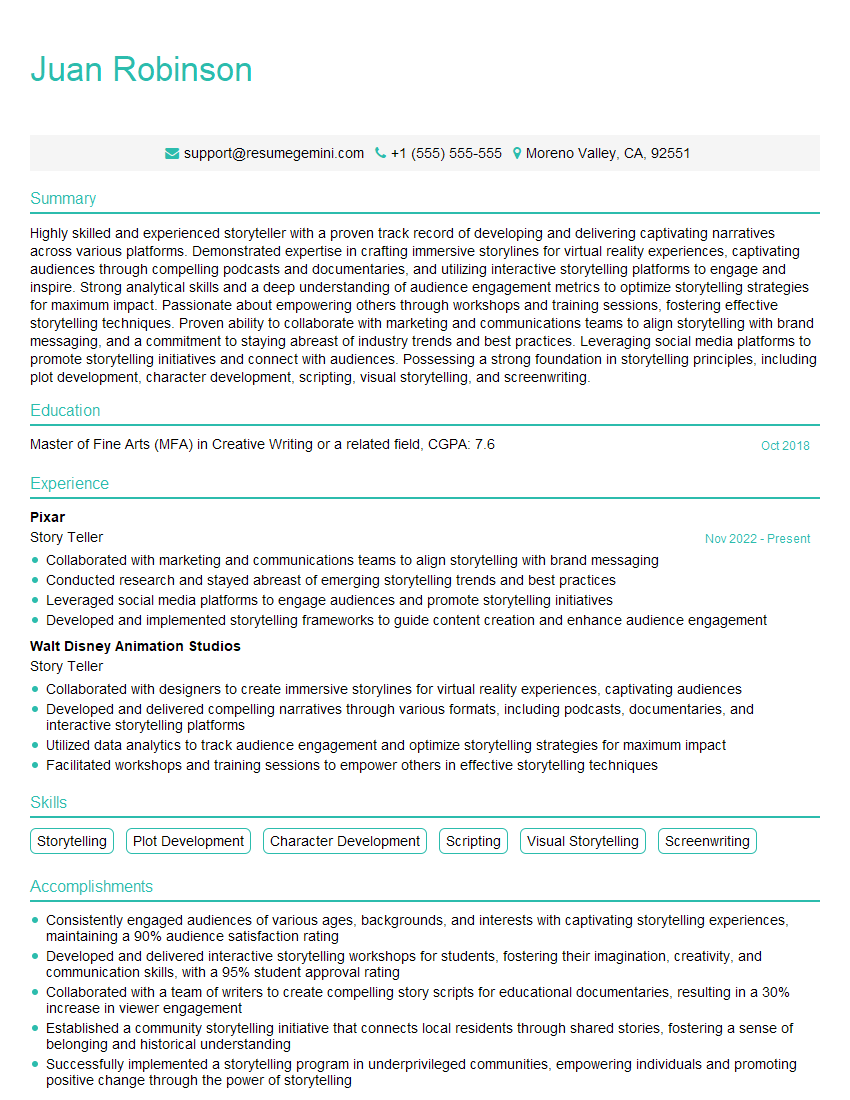
Are you gearing up for a career shift or aiming to ace your next interview? Look no further! We’ve curated a comprehensive guide to help you crack the interview for the coveted Story Teller position. From understanding the key responsibilities to mastering the most commonly asked questions, this blog has you covered. So, buckle up and let’s embark on this journey together
Acing the interview is crucial, but landing one requires a compelling resume that gets you noticed. Crafting a professional document that highlights your skills and experience is the first step toward interview success. ResumeGemini can help you build a standout resume that gets you called in for that dream job.






Essential Interview Questions For Story Teller
1. What are the key elements of a compelling story?
To craft captivating stories, various elements come into play, such as:
- Character Development: Creating well-rounded characters with relatable motivations, flaws, and arcs.
- Plot Structure: Designing a compelling sequence of events that drives the narrative forward, featuring a clear conflict and resolution.
- Sensory Details: Engaging the readers’ senses through vivid descriptions, making the story tangible and immersive.
- Emotional Resonance: Evoking strong emotions in the readers by exploring universal themes, creating empathy and connection.
- Unique Voice and Perspective: Distinguishing the story with a distinct style, point of view, and narrative voice.
2. Describe your approach to storytelling.
Character-Driven
- Prioritize character development as the cornerstone of the story.
- Craft characters with depth, complexity, and relatable struggles.
Plot-Driven
- Focus on creating a compelling plot with twists, turns, and a satisfying resolution.
- Use action, suspense, and conflict to drive the narrative forward.
Theme-Driven
- Explore universal themes and messages through the story.
- Use the narrative to convey insights and provoke thought.
3. How do you ensure that your stories have a lasting impact on readers?
- Provide Emotional Depth: Connect with readers on an emotional level, making them invested in the characters and their journey.
- Explore Timeless Themes: Tackle universal themes that resonate with readers across time and cultures.
- Use Memorable Imagery: Create vivid descriptions and imagery that stay in the readers’ minds long after they finish the story.
- Encourage Reader Reflection: Pose thought-provoking questions or leave open-ended conclusions to encourage readers to engage with the story on a deeper level.
- Foster a Sense of Wonder and Curiosity: Spark the readers’ imagination and leave them with a desire to learn more or explore the world in new ways.
4. How do you balance creativity and structure in your storytelling?
- Set Boundaries to Fuel Creativity: Establish a basic structure and outline, but allow for flexibility and exploration within those parameters.
- Embrace Unexpected Turns: While adhering to the core narrative, remain open to unexpected twists and deviations that add depth and intrigue.
- Experiment with Forms and Techniques: Explore different storytelling formats and techniques to enhance creativity and keep readers engaged.
- Seek Feedback and Iterate: Share your work with trusted sources for feedback and be willing to revise and refine to achieve the desired balance.
5. How do you research and gather inspiration for your stories?
- Experience: Draw upon personal experiences and observations to create authentic and relatable characters and situations.
- Read Extensively: Immerse yourself in works of literature, both fiction and non-fiction, to expand your knowledge and find inspiration.
- Travel and Explore: Experience different cultures, environments, and perspectives to broaden your understanding of the world and find inspiration for your stories.
- Engage with Others: Connect with people from diverse backgrounds to gain insights into their experiences and perspectives.
- Observe and Reflect: Pay attention to the world around you, noticing details and patterns that can spark story ideas.
6. How do you handle constructive criticism of your work?
- Receive Feedback with an Open Mind: Approach feedback with a willingness to receive insights and identify areas for improvement.
- Evaluate and Analyze: Take time to carefully consider the critique, identifying valid points and separating them from personal opinions.
- Seek Clarification: Ask for specific examples or explanations to better understand the feedback.
- Consider the Source: Assess the credibility and experience of the person providing the feedback to weigh its validity.
- Apply Constructive Changes: Implement changes that align with the valid criticism to enhance your work while retaining your creative vision.
7. How do you stay updated with the latest trends and best practices in storytelling?
- Attend Industry Events: Participate in conferences, workshops, and literary events to connect with fellow storytellers and learn about industry trends.
- Read Industry Publications: Subscribe to magazines, journals, and online platforms dedicated to storytelling to stay informed about new techniques and approaches.
- Engage with Online Communities: Join online forums, groups, and social media platforms where storytellers share insights and exchange ideas.
- Experiment and Innovate: Be open to trying new formats, technologies, and storytelling methods to stay ahead of the curve.
8. How do you manage multiple projects and deadlines simultaneously?
- Prioritize Tasks: Establish clear priorities and allocate your time and resources accordingly, focusing on the most critical tasks first.
- Create a Schedule: Develop a realistic schedule that allows for dedicated time to work on each project, ensuring you meet deadlines.
- Delegate Responsibilities: If feasible, delegate certain tasks to reliable individuals to free up your time for more complex or time-sensitive responsibilities.
- Take Breaks: Schedule regular breaks throughout the day to avoid burnout and maintain productivity.
- Evaluate and Adjust: Monitor your progress and make adjustments to your schedule or priorities as needed to ensure timely project completion.
9. How do you measure the success of your storytelling?
- Reader Engagement: Track metrics such as page views, dwell time, and social media shares to assess how readers interact with your stories.
- Reviews and Feedback: Collect feedback from readers, reviewers, and industry professionals to gain insights into the impact of your storytelling.
- Awards and Recognition: Consider awards and recognition in the field as indicators of the quality and impact of your work.
- Personal Fulfillment: Ultimately, measure success based on your personal satisfaction and the extent to which you achieved your intended goals for the story.
10. How do you collaborate effectively with others on storytelling projects?
- Communicate Clearly: Establish clear communication channels and update team members regularly on project progress and any changes.
- Define Roles and Responsibilities: Assign specific roles and responsibilities to each team member to ensure everyone understands their contributions.
- Value Diversity: Embrace diverse perspectives and ideas from team members to enhance the storytelling process.
- Resolve Conflicts Constructively: Address conflicts professionally and seek solutions that benefit the project as a whole.
- Celebrate Successes: Recognize the contributions of all team members and celebrate shared successes to foster a positive and collaborative work environment.
Interviewers often ask about specific skills and experiences. With ResumeGemini‘s customizable templates, you can tailor your resume to showcase the skills most relevant to the position, making a powerful first impression. Also check out Resume Template specially tailored for Story Teller.
Career Expert Tips:
- Ace those interviews! Prepare effectively by reviewing the Top 50 Most Common Interview Questions on ResumeGemini.
- Navigate your job search with confidence! Explore a wide range of Career Tips on ResumeGemini. Learn about common challenges and recommendations to overcome them.
- Craft the perfect resume! Master the Art of Resume Writing with ResumeGemini’s guide. Showcase your unique qualifications and achievements effectively.
- Great Savings With New Year Deals and Discounts! In 2025, boost your job search and build your dream resume with ResumeGemini’s ATS optimized templates.
Researching the company and tailoring your answers is essential. Once you have a clear understanding of the Story Teller‘s requirements, you can use ResumeGemini to adjust your resume to perfectly match the job description.
Key Job Responsibilities
Storytellers are responsible for weaving captivating narratives that engage, inspire, and persuade audiences. They craft stories that convey ideas, experiences, and emotions, and use a variety of storytelling techniques to connect with their listeners. Key responsibilities include:
1. Develop and Write Stories
Storytellers create original stories that are tailored to specific audiences and purposes. They research, gather information, and develop compelling plots and characters that resonate with their listeners.
- Identify target audience and define storytelling objectives
- Research and gather information to inform story development
- Brainstorm ideas, develop plots, and create relatable characters
2. Deliver Engaging Performances
Storytellers deliver their stories in a captivating and engaging manner. They use vocal techniques, body language, and gestures to convey emotions and create immersive experiences for their listeners.
- Practice and rehearse storytelling techniques
- Use vocal variety, intonation, and pacing to engage audience
- Employ body language and gestures to enhance storytelling
3. Collaborate with Others
Storytellers often work with other professionals, such as writers, editors, and producers, to create and deliver stories. They collaborate effectively to ensure that the storytelling is consistent, engaging, and meets the desired objectives.
- Participate in brainstorming sessions and provide creative input
- Collaborate with writers, editors, and producers to refine stories
- Provide feedback and support to team members
4. Evaluate and Refine Storytelling
Storytellers continuously evaluate their storytelling and seek ways to improve. They gather feedback from audiences, experiment with different techniques, and refine their craft over time.
- Seek feedback from audiences and analyze performance
- Experiment with different storytelling techniques and approaches
- Attend workshops and training sessions to develop skills
Interview Preparation Tips
Preparing thoroughly for a job interview can greatly increase your chances of success. Here are some tips specifically tailored to storytelling positions:
1. Research the Company and Position
Take the time to research the company’s background, values, and the specific role you are applying for. This will help you understand the company’s culture, storytelling style, and the expectations for the position.
- Visit the company’s website to learn about their mission, values, and storytelling approach
- Read industry publications and articles to stay up-to-date on storytelling trends and best practices
2. Prepare a Strong Portfolio
Create a portfolio that showcases your best storytelling work. This could include examples of written stories, audio recordings of performances, or video presentations. Make sure your portfolio is tailored to the specific job requirements and demonstrates your skills and experience.
- Select samples that highlight your storytelling abilities, such as creativity, emotional impact, and audience engagement
- Provide context for each piece, explaining the purpose, audience, and results
3. Practice Your Storytelling Skills
Practice your storytelling skills by rehearsing in front of a mirror, recording yourself, or presenting to a small group of friends or family. This will help you become more comfortable with delivering your stories and refine your techniques.
- Experiment with different storytelling styles and approaches to see what works best for you
- Focus on your delivery, including vocal variety, pacing, and body language
4. Be Enthusiastic and Passionate
Storytelling is a passion-driven profession. Show the interviewer that you are genuinely enthusiastic about storytelling and have a deep appreciation for the power of stories. Your passion will translate into effective storytelling and will make you stand out from other candidates.
- Share your motivations for pursuing a storytelling career and your storytelling aspirations
- Discuss your favorite stories and what makes them so compelling
Next Step:
Armed with this knowledge, you’re now well-equipped to tackle the Story Teller interview with confidence. Remember, a well-crafted resume is your first impression. Take the time to tailor your resume to highlight your relevant skills and experiences. And don’t forget to practice your answers to common interview questions. With a little preparation, you’ll be on your way to landing your dream job. So what are you waiting for? Start building your resume and start applying! Build an amazing resume with ResumeGemini.