





Are you considering a career change? Whether you’re looking to break into a new industry, advance your career, or pursue your passion, crafting a compelling resume is crucial. A well-written resume can showcase your transferable skills, highlight your passion for the new field, and ultimately increase your chances of landing your dream job. Here, we’ll explore the art of writing a career-changing resume and provide you with real-life examples that have helped job seekers successfully transition into new careers.
The Art of Writing a Resume for a Career Change
Writing a resume for a career change requires a strategic approach. Here are some key considerations:
- Tailor your resume to each job application: Research the specific job you’re applying for and highlight the skills and experience that align with the role. Use keywords from the job description and tailor your resume’s content accordingly.
- Showcase transferable skills: Identify the skills you’ve developed in your previous roles that are relevant to the new career you’re pursuing. Transferable skills can include communication, problem-solving, leadership, and teamwork.
- Quantify your accomplishments: When possible, provide specific metrics and data to quantify your accomplishments. This will help employers understand the impact of your work and your value to their organization.
- Use strong action verbs: Action verbs convey your skills and experience in a dynamic and impactful way. Use verbs that demonstrate your abilities, such as “led,” “managed,” “developed,” and “implemented.”
Highlighting Transferable Skills for a Career Change
Transferable skills are essential for career changers as they demonstrate your adaptability and ability to apply your existing skills to new roles. Here’s how to highlight your transferable skills:
- Review your previous job descriptions: Identify the skills you’ve used in your past roles that are relevant to the career you’re pursuing. These skills may include technical abilities, soft skills, or industry-specific knowledge.
- Identify the skills required for the new career: Research the job market and the skills required for the roles you’re interested in. This will help you determine which transferable skills to emphasize on your resume.
- Quantify your accomplishments: When describing your transferable skills, provide specific examples and quantify your accomplishments whenever possible. This will demonstrate your proficiency and impact.
- Highlight your adaptability and eagerness to learn: Emphasize your willingness to learn new skills and adapt to new challenges. This will show employers that you’re a motivated and flexible individual.
Crafting a Resume That Shows Your Passion for a New Field
Your resume should convey your passion for the new career you’re pursuing. Here are some tips:
- Write a strong objective statement: Your objective statement should clearly articulate your career goals and why you’re pursuing the specific role. Highlight your passion for the new field and how your skills and experience align with the company’s needs.
- Use industry-specific keywords: Research the industry you’re transitioning into and identify the keywords that employers use to describe the skills and experience they’re looking for.
- Include relevant projects and experiences: If you have any experience or projects that demonstrate your interest in the new field, include them on your resume. This could include volunteer work, personal projects, or coursework.
- Network and seek informational interviews: Attend industry events, connect with professionals in your target field, and request informational interviews. This will help you gain insights into the industry and demonstrate your commitment to pursuing the career.
Overcoming Common Challenges in Writing a Resume for a Career Change
Writing a resume for a career change can present some challenges. Here are some common obstacles and how to overcome them:
- Lack of direct experience: If you don’t have direct experience in the new field you’re pursuing, focus on your transferable skills and relevant projects or coursework. Highlight how your existing experience has prepared you for the new role.
- Skills gap: Identify the skill gaps you have for the new field and take steps to address them. This could involve taking courses, attending workshops, or seeking mentorship opportunities.
- Negative perceptions: Employers may have preconceived notions about career changers. Address these perceptions head-on in your resume. Explain why you’re passionate about the new field and why you’re confident in your ability to succeed.
- Length of resume: Avoid submitting a lengthy resume. Keep your resume concise and focused on the most relevant information for the job you’re applying for.
Success Stories: Resumes That Landed Career-Changing Jobs
Here are three real-life examples of resumes that helped job seekers successfully transition into new careers:
- John Smith – From Marketing to Software Engineering: John had a successful career in marketing but always had a passion for software engineering. He took online courses, built a portfolio of personal projects, and networked with professionals in the tech industry. John’s resume highlighted his transferable skills, such as problem-solving, analytical thinking, and attention to detail. He also included a section showcasing his personal projects, which demonstrated his proficiency in software development.
- Mary Jones – From Teaching to Healthcare Administration: Mary was a dedicated teacher for over a decade but decided to pursue her passion for healthcare administration. She enrolled in a part-time MBA program, volunteered at a local hospital, and obtained her healthcare administration certification. Mary’s resume emphasized her transferable skills, such as leadership, communication, and organizational abilities. She also highlighted her experience in managing complex projects and working with diverse teams.
- David Wilson – From Finance to Non-Profit Management: David had a successful career in finance but felt unfulfilled. He decided to pursue his passion for non-profit management and volunteered at various organizations. David’s resume showcased his transferable skills, such as financial management, budgeting, and strategic planning. He also included a section highlighting his volunteer experience, which demonstrated his commitment to social impact.
These success stories demonstrate the power of a well-crafted resume in facilitating career change. By tailoring your resume to each job application, highlighting your transferable skills, and showcasing your passion for the new field, you can increase your chances of landing the job you’ve always wanted.
If you’re considering a career change, consider using ResumeGemini to create a professional and impactful resume. Our platform offers a wide range of templates, pre-built resume samples, and writing tips to guide you through the process.
Remember, a career change is a journey, not a destination. With a compelling resume, a positive attitude, and the willingness to learn and adapt, you can successfully transition into a new field and find fulfillment in your professional life.
Career Expert Tips:
- Select the ideal resume template to showcase your professional experience effectively.
- Master the art of resume writing to highlight your unique qualifications and achievements.
- Checkout the resume writing tips for guidance and best practices.
- Make your 2025 brighter with a new job. Build a powerful resume with ResumeGemini and save big, enjoy exclusive discounts on premium templates.
Frequently Asked Questions (FAQs)
How do I write a resume for a career change?
Writing a resume for a career change can be challenging, but with careful planning and execution, you can create a document that will highlight your transferable skills and make you an attractive candidate for your new target role. Here are a few tips:
- Tailor your resume to each job you apply for. Take the time to read the job description and identify the key skills and qualifications that the employer is looking for. Then, tailor your resume to highlight how your skills and experience match those requirements.
- Emphasize transferable skills. Transferable skills are skills that can be applied to a variety of jobs, regardless of industry or job title. When writing your resume, focus on highlighting the transferable skills that you have that are relevant to your target role.
- Use keywords. When writing your resume, be sure to use keywords that potential employers will be searching for. This will help your resume get noticed by applicant tracking systems (ATSs) and make it more likely to be seen by hiring managers.
- Get feedback. Once you have written a draft of your resume, ask a friend, family member, or career counselor to review it and provide feedback. This can help you identify any areas that need improvement.
How do I highlight transferable skills for a career change?
Highlighting transferable skills for a career change is essential for making your resume stand out. Here are a few tips:
- Start by identifying your transferable skills. What skills do you have that can be applied to a variety of jobs? Consider your hard skills, such as technical skills and certifications, as well as your soft skills, such as communication and interpersonal skills.
- Quantify your skills. When possible, quantify your skills to make them more impressive to potential employers. For example, instead of saying “I have excellent communication skills,” say “I have 5 years of experience managing a team of 10 people and have successfully negotiated several major contracts.”
- Use keywords. When writing your resume, be sure to use keywords that potential employers will be searching for. This will help your resume get noticed by applicant tracking systems (ATSs) and make it more likely to be seen by hiring managers.
- Tailor your resume to each job you apply for. Take the time to read the job description and identify the key skills and qualifications that the employer is looking for. Then, tailor your resume to highlight how your transferable skills match those requirements.
How do I craft a resume that shows my passion for a new field?
Crafting a resume that shows your passion for a new field can be a great way to make yourself stand out from other candidates. Here are a few tips:
- Highlight your transferable skills. What skills do you have that are relevant to your new target field? Even if you don’t have direct experience in the field, you may have transferable skills that can be applied, such as communication, problem-solving, or teamwork.
- Showcase your knowledge of the field. In your resume, be sure to mention any relevant coursework, certifications, or experience that you have in your new target field. This will show potential employers that you are serious about making a career change and that you have the knowledge and skills to be successful.
- Use keywords. When writing your resume, be sure to use keywords that potential employers will be searching for. This will help your resume get noticed by applicant tracking systems (ATSs) and make it more likely to be seen by hiring managers.
- Tailor your resume to each job you apply for. Take the time to read the job description and identify the key skills and qualifications that the employer is looking for. Then, tailor your resume to highlight how your skills and experience match those requirements.
What are the common challenges in writing a resume for a career change?
Writing a resume for a career change can be challenging, but it is definitely possible to do it successfully. Here are a few of the most common challenges that you may face:
- Lack of direct experience. If you are making a career change to a field that you have no direct experience in, you may be worried that you will not be qualified for the jobs that you are applying for. However, there are ways to overcome this challenge, such as highlighting your transferable skills and showcasing your knowledge of the field.
- Gaps in employment. If you have taken a break from your career, you may be worried about how to explain the gaps in your employment on your resume. There are a few ways to do this, such as explaining that you were taking care of family responsibilities or pursuing further education.
- Age discrimination. Age discrimination is illegal, but it can still be a factor in the job market. If you are over 40, you may be worried that you will be passed over for jobs in favor of younger candidates. However, there are things that you can do to overcome this challenge, such as highlighting your experience and skills and using a professional resume format.
Can you share success stories of resumes that landed career-changing jobs?
Yes, here are a few success stories of resumes that landed career-changing jobs:
- A former teacher who became a software engineer. This individual had a passion for technology and coding, so they decided to make a career change. They took some online courses and built a portfolio of projects to showcase their skills. They then used ResumeGemini to create a professional resume that highlighted their transferable skills and knowledge of the field. They were able to land a job as a software engineer at a startup company.
- A former accountant who became a marketing manager. This individual had always been interested in marketing, but they had spent the last 10 years working in accounting. They decided to make a career change and took some online courses in marketing. They also volunteered their time to help out with marketing events. They then used ResumeGemini to create a resume that highlighted their transferable skills, such as communication, problem-solving, and project management. They were able to land a job as a marketing manager at a small business.
- A former stay-at-home mom who became a web developer. This individual had always been interested in technology, but they had taken a break from their career to raise their children. When her children were older, she decided to go back to school to get a degree in web development. She used ResumeGemini to create a resume that highlighted her transferable skills and her knowledge of web development. She was able to land a job as a web developer at a large corporation.
What is ResumeGemini and how can it help me write a career-changing resume?
ResumeGemini is a professional resume builder website that can help you create a resume that will make you stand out from the crowd. With ResumeGemini, you can choose from a variety of templates and designs, and you can customize your resume to fit your individual needs. ResumeGemini also offers a number of helpful features, such as a resume builder wizard, a resume critique service, and a cover letter builder. If you are looking to make a career change, ResumeGemini can help you create a resume that will highlight your transferable skills and make you an attractive candidate for your new target role.
Next Step:
Now that you know how to write a resume for a career change, it’s time to take action. Visit ResumeGemini today and start building your new resume. With ResumeGemini, you can create a professional resume that will help you land your dream job.
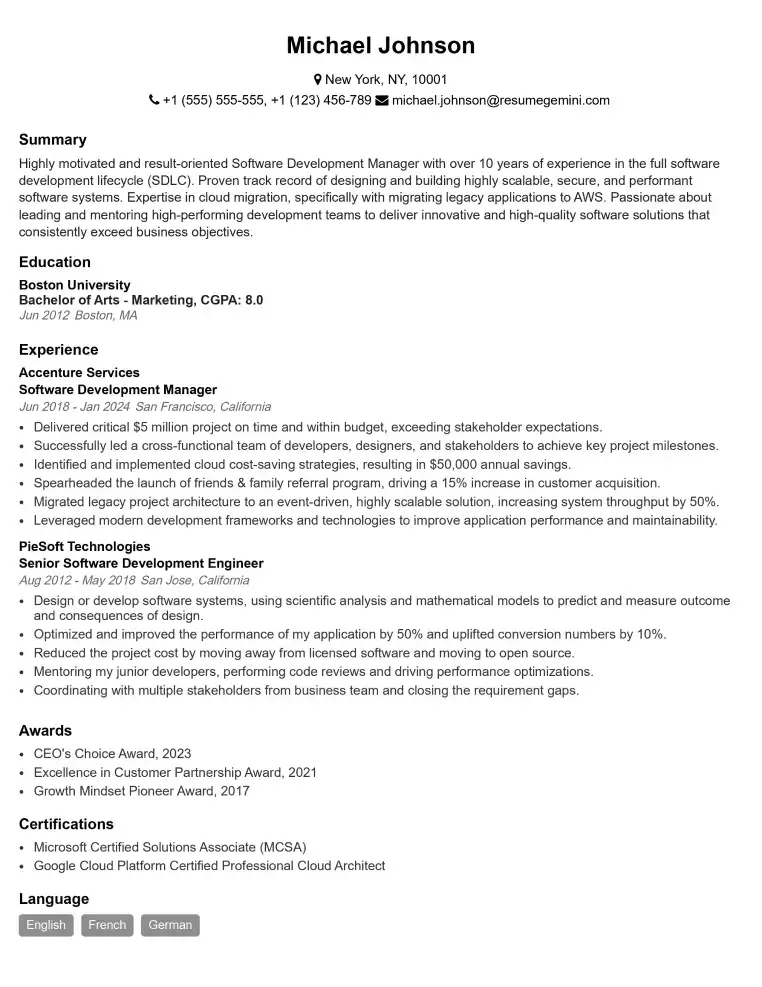
Elevate your job search with our premium resume templates. Here is an amazing resume template that can be used to build a professional and elegant resume. You can build a resume from scratch or revamp your existing resume. Impress hiring managers and secure your next opportunity.
- Top 50 Most Common Interview Questions
- The Psychology of a Great Resume: Hacks to Impress Recruiters
- What Mistakes to Avoid When Writing a Resume: A Comprehensive Guide
- Elevate Your Career with Expert Resume Building: Introducing ResumeGemini
- How to Write a Resume Using Google Gemini: Step-by-Step Guide