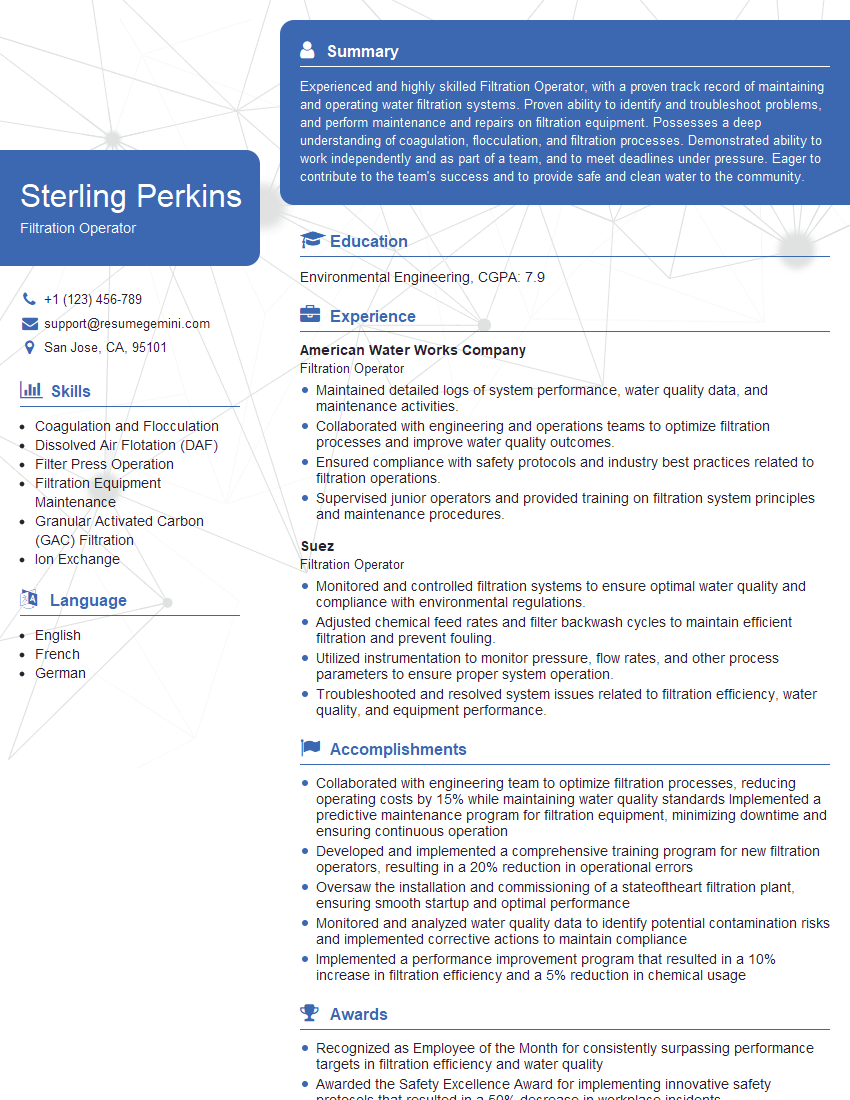
Are you gearing up for an interview for a Filtration Operator position? Whether you’re a seasoned professional or just stepping into the role, understanding what’s expected can make all the difference. In this blog, we dive deep into the essential interview questions for Filtration Operator and break down the key responsibilities of the role. By exploring these insights, you’ll gain a clearer picture of what employers are looking for and how you can stand out. Read on to equip yourself with the knowledge and confidence needed to ace your next interview and land your dream job!
Acing the interview is crucial, but landing one requires a compelling resume that gets you noticed. Crafting a professional document that highlights your skills and experience is the first step toward interview success. ResumeGemini can help you build a standout resume that gets you called in for that dream job.






Essential Interview Questions For Filtration Operator
1. Describe the key responsibilities of a Filtration Operator?
As a Filtration Operator, my primary responsibilities include:
- Monitoring and controlling the filtration system to ensure that it meets water quality standards.
- Performing routine maintenance and repairs on the filtration equipment, including backwashing filters and replacing filter media.
- Collecting and analyzing water samples to ensure compliance with regulatory requirements.
- Operating and maintaining pumps and other equipment used in the filtration process.
- Following all plant safety procedures and regulations.
2. Explain the different types of filters used in a water filtration plant?
There are several types of filters used in a water filtration plant, each with its own advantages and applications:
Gravity Filters
- Use gravity to pass water through a bed of filter media, typically sand and gravel.
- Remove particles by physical straining and biological processes.
Pressure Filters
- Use pressure to force water through a filter media, typically sand or anthracite.
- Can achieve higher flow rates than gravity filters.
Membrane Filters
- Use a semi-permeable membrane to separate contaminants from water.
- Can remove a wider range of contaminants than conventional filters.
3. Discuss the importance of backwashing filters?
Backwashing filters is a crucial maintenance procedure to ensure their optimal performance:
- Removes accumulated impurities and debris from the filter media.
- Prevents clogging, which can reduce flow rates and water quality.
- Rejuvenates the filter media, extending its lifespan.
- Helps maintain consistent water quality by removing contaminants effectively.
4. How do you prioritize tasks when multiple tasks need to be completed simultaneously?
When faced with multiple tasks, I prioritize them based on the following criteria:
- Urgency: I assess the immediate need and potential consequences of each task.
- Impact: I consider the impact of each task on the overall operation and water quality.
- Dependencies: I identify any dependencies between tasks and ensure that they are completed in the correct order.
- Time sensitivity: I allocate tasks based on their deadlines and time constraints.
- Resource availability: I consider the availability of resources, such as equipment and personnel, to determine the feasibility of completing each task.
5. Describe a situation where you had to troubleshoot a problem with the filtration system?
In one instance, I encountered an issue where the filtration system was not producing water that met quality standards. I followed these steps to troubleshoot the problem:
- Collected and analyzed water samples to identify the specific contaminants causing the issue.
- Inspected the filter media and equipment for any signs of damage or wear.
- Checked the system’s operating parameters, such as flow rates and pressures, to ensure they were within acceptable ranges.
- Consulted with colleagues and reviewed technical documentation to gather additional insights.
- Determined that a faulty valve was allowing untreated water to bypass the filters.
6. How do you ensure that the filtration system is operating efficiently and meeting regulatory requirements?
I employ the following measures to ensure the efficient operation and regulatory compliance of the filtration system:
- Regularly monitor and analyze water quality data to assess system performance.
- Perform preventative maintenance on all equipment, adhering to manufacturer’s recommendations and industry best practices.
- Review and update operating procedures to optimize efficiency and ensure compliance.
- Collaborate with colleagues and regulatory agencies to stay informed about changes in regulations and best practices.
- Participate in training and professional development opportunities to enhance my knowledge and skills.
7. How do you handle emergency situations related to the filtration system?
In the event of an emergency situation related to the filtration system, I follow these steps:
- Assess the situation and identify the immediate threat to safety or water quality.
- Take immediate action to isolate the affected area and prevent further contamination.
- Notify supervisors and relevant authorities promptly.
- Follow established emergency response protocols and procedures.
- Coordinate with other departments and external resources as needed.
8. Describe your experience in analyzing water samples?
I have extensive experience in analyzing water samples to ensure compliance with regulatory requirements and maintain water quality. My responsibilities include:
- Collecting water samples from various locations within the filtration system.
- Performing chemical, physical, and biological analyses using standardized methods and equipment.
- Interpreting results and identifying any deviations from acceptable limits.
- Reporting findings to supervisors and regulatory agencies.
- Taking corrective actions based on the analysis results to maintain water quality.
9. How do you stay up-to-date with advancements in water filtration technology?
To stay abreast of advancements in water filtration technology, I engage in the following activities:
- Attend conferences, workshops, and training sessions.
- Read industry publications and technical journals.
- Participate in online forums and discussion groups.
- Network with professionals in the field.
- Collaborate with equipment manufacturers and vendors to learn about new products and solutions.
10. What are your strengths and weaknesses as a Filtration Operator?
Strengths:
- Strong knowledge of water filtration principles and practices.
- Proficient in operating and maintaining filtration equipment.
- Excellent analytical and problem-solving skills.
- Detail-oriented and committed to maintaining water quality standards.
- Effective communication and interpersonal skills.
Weaknesses:
- Limited experience with certain types of specialized filtration technologies.
- Need to further develop my supervisory and management skills.
Interviewers often ask about specific skills and experiences. With ResumeGemini‘s customizable templates, you can tailor your resume to showcase the skills most relevant to the position, making a powerful first impression. Also check out Resume Template specially tailored for Filtration Operator.
Career Expert Tips:
- Ace those interviews! Prepare effectively by reviewing the Top 50 Most Common Interview Questions on ResumeGemini.
- Navigate your job search with confidence! Explore a wide range of Career Tips on ResumeGemini. Learn about common challenges and recommendations to overcome them.
- Craft the perfect resume! Master the Art of Resume Writing with ResumeGemini’s guide. Showcase your unique qualifications and achievements effectively.
- Great Savings With New Year Deals and Discounts! In 2025, boost your job search and build your dream resume with ResumeGemini’s ATS optimized templates.
Researching the company and tailoring your answers is essential. Once you have a clear understanding of the Filtration Operator‘s requirements, you can use ResumeGemini to adjust your resume to perfectly match the job description.
Key Job Responsibilities
Filtration Operators play a crucial role in the water treatment process. Their responsibilities include operating and maintaining filtration systems, ensuring the quality and safety of water for consumption.
1. System Operation and Maintenance
Operators monitor and control filtration systems, adjusting parameters and performing maintenance tasks to keep them running efficiently.
- Start, stop, and adjust filtration systems.
- Monitor pressure, flow rates, and other system parameters.
- Clean and maintain filters, pumps, and other equipment.
2. Water Quality Control
Operators conduct tests and monitor water quality to ensure it meets regulatory standards.
- Perform water quality tests for contaminants.
- Interpret test results and take corrective actions.
- Maintain records of water quality measurements.
3. Emergency Response
Operators respond to emergencies related to filtration systems and water quality.
- Handle equipment failures and water quality issues.
- Follow emergency protocols and communicate with supervisors.
- Protect public health and ensure water safety.
4. Continuous Improvement
Operators contribute to continuous improvement initiatives, enhancing system efficiency and water quality.
- Identify areas for improvement in filtration systems.
- Suggest and implement process improvements.
- Participate in training and professional development.
Interview Tips
To prepare effectively for a Filtration Operator interview, candidates should consider the following tips:
1. Research the Company and Position
Familiarize yourself with the water treatment facility, its processes, and the specific requirements of the Filtration Operator role.
- Visit the company website and read about their mission, services, and water treatment plant.
- Review the job description thoroughly and identify key skills and responsibilities.
2. Highlight Relevant Skills and Experience
Emphasize your knowledge and experience in filtration system operation, water quality control, and emergency response.
- Describe specific instances where you managed filtration systems, conducted water quality tests, or handled emergencies.
- Quantify your accomplishments whenever possible, using metrics such as efficiency improvements, water quality compliance, or emergency response times.
3. Demonstrate Problem-Solving Abilities
Interviewers seek candidates who can quickly identify and resolve problems in filtration systems and water quality.
- Provide examples of problems you encountered and how you diagnosed and resolved them.
- Explain your analytical and troubleshooting skills, emphasizing your ability to analyze data, identify root causes, and implement solutions.
4. Showcase Commitment to Safety
Water treatment is a safety-critical industry. Highlight your commitment to safety and your understanding of safety protocols.
- Describe your experience with safety procedures, including personal protective equipment, hazardous materials handling, and emergency response.
- Emphasize your attention to detail and your ability to follow instructions precisely.
5. Prepare for Common Interview Questions
Brush up on common interview questions and prepare thoughtful answers that demonstrate your skills and qualifications.
- Why are you interested in this Filtration Operator position?
- Describe your experience in operating and maintaining filtration systems.
- How do you ensure water quality compliance?
- Tell us about a time you handled an emergency related to water filtration or water quality.
- What are your goals for this role and your career in the water treatment industry?
Next Step:
Armed with this knowledge, you’re now well-equipped to tackle the Filtration Operator interview with confidence. Remember, a well-crafted resume is your first impression. Take the time to tailor your resume to highlight your relevant skills and experiences. And don’t forget to practice your answers to common interview questions. With a little preparation, you’ll be on your way to landing your dream job. So what are you waiting for? Start building your resume and start applying! Build an amazing resume with ResumeGemini.