Ever felt underprepared for that crucial job interview? Or perhaps you’ve landed the interview but struggled to articulate your skills and experiences effectively? Fear not! We’ve got you covered. In this blog post, we’re diving deep into the Rubber Mixer interview questions that you’re most likely to encounter. But that’s not all. We’ll also provide expert insights into the key responsibilities of a Rubber Mixer so you can tailor your answers to impress potential employers.
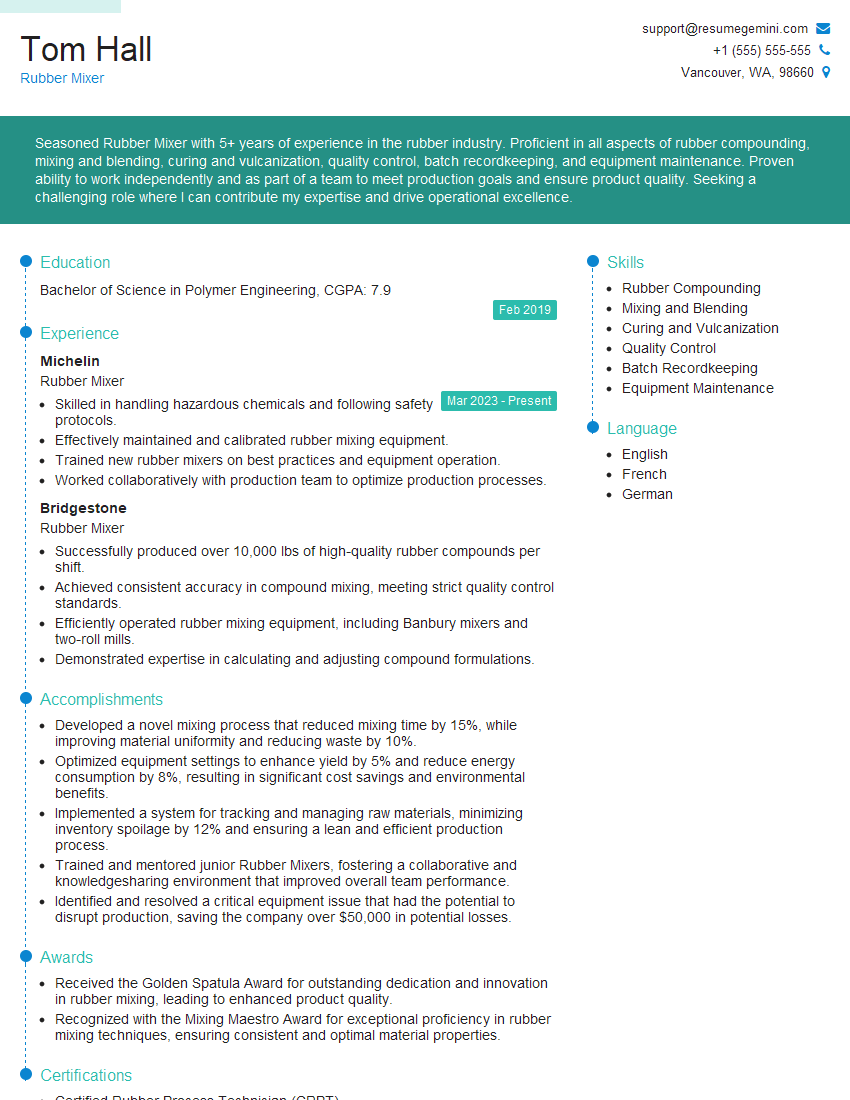
Acing the interview is crucial, but landing one requires a compelling resume that gets you noticed. Crafting a professional document that highlights your skills and experience is the first step toward interview success. ResumeGemini can help you build a standout resume that gets you called in for that dream job.






Essential Interview Questions For Rubber Mixer
1. Briefly explain the process of rubber mixing.
The rubber mixing process involves combining various ingredients to achieve desired properties for specific rubber products. Here’s a general overview:
- Raw rubber (natural or synthetic) is loaded into a mixing chamber.
- Fillers, such as carbon black or silica, are added to enhance strength and other characteristics.
- Additives like antioxidants, accelerators, and anti-ozonants are incorporated to improve durability and resistance to aging.
- The ingredients are mixed thoroughly using a rotating blade or impeller.
- The temperature and mixing time are controlled to ensure proper dispersion and bonding.
- The resulting rubber compound is then discharged from the mixing chamber.
2. What are the key factors that determine the quality of a rubber compound?
Material composition
- Type and grade of raw rubber
- Selection of fillers and additives
- Balance and compatibility of ingredients
Mixing process
- Mixing temperature
- Mixing time
- Mixing speed and intensity
Equipment and maintenance
- Proper functioning of mixing machine
- Regular calibration and maintenance
- Cleanliness and hygiene
3. Describe the different types of mixing equipment used in rubber processing.
- Banbury mixer: High-intensity mixer used for intensive mixing and mastication of rubber.
- Internal mixer: Closed chamber mixer with rotating blades or rotors for thorough mixing.
- Two-roll mill: Consists of two heated rolls rotating at different speeds for mixing and sheeting.
- Kneader: Continuous mixer with rotating blades that knead and extrude the rubber compound.
- Ribbon blender: Used for dry mixing of rubber ingredients before they are fed into other mixers.
4. Explain the role of carbon black in rubber compounds.
- Reinforcement: Improves strength, stiffness, and tear resistance.
- Conductivity: Imparts electrical conductivity for anti-static applications.
- UV protection: Absorbs ultraviolet radiation, preventing degradation.
- Coloration: Provides black color to rubber products.
- Filler: Bulking agent to reduce the cost of the compound.
5. How do you troubleshoot common problems encountered during rubber mixing?
- Scorching: Overheating during mixing. Reduce mixing time and temperature.
- Poor dispersion: Ingredients not mixing evenly. Adjust mixing speed, time, or blade design.
- Viscosity problems: Too thick or thin compound. Adjust the amount of plasticizer or filler.
- Contamination: Foreign materials in the compound. Clean mixing equipment and inspect raw materials.
- Equipment malfunction: Inspect mixing machine for mechanical issues.
6. What are the safety precautions that should be observed when operating rubber mixing equipment?
- Wear appropriate protective gear (gloves, eye protection, respirator).
- Follow specified operating procedures and training.
- Never enter the mixing chamber while it is in operation.
- Keep the work area clean and free of debris.
- Report any equipment issues or safety concerns promptly.
7. How do you ensure consistency and quality control in rubber mixing operations?
- Standard operating procedures (SOPs): Establish clear guidelines for mixing processes.
- Raw material inspection: Check incoming materials for quality and compliance.
- Equipment calibration and maintenance: Ensure proper functioning of mixing machines.
- Process monitoring: Track mixing parameters (temperature, time, speed) and make adjustments as needed.
- Quality testing: Perform physical and chemical tests on rubber compounds to ensure they meet specifications.
8. Describe the different types of rubber products manufactured and their applications.
- Tires: Automotive, truck, and aircraft tires (natural and synthetic rubber)
- Hoses and belts: Industrial, automotive, and hydraulic applications (synthetic rubber)
- Seals and gaskets: Automotive, plumbing, and aerospace applications (fluoroelastomers, EPDM)
- Medical devices: Gloves, catheters, and tubing (silicone, nitrile rubber)
- Footwear: Shoes, boots, and sandals (natural rubber, synthetic rubber)
9. What are the emerging trends in rubber mixing technology?
- Automation and digitalization: Automated mixing processes and data analysis for improved efficiency.
- Sustainable materials: Use of bio-based and recycled materials in rubber compounds.
- Advanced fillers and additives: Development of new fillers to enhance performance and reduce costs.
- Nanocomposites: Incorporation of nanoparticles for improved mechanical and electrical properties.
10. How do you stay updated with the latest advancements in the rubber industry?
- Attend industry conferences and exhibitions.
- Read technical journals and publications.
- Connect with rubber industry professionals on LinkedIn and other platforms.
- Participate in research and development projects.
- Seek training and certification opportunities.
Interviewers often ask about specific skills and experiences. With ResumeGemini‘s customizable templates, you can tailor your resume to showcase the skills most relevant to the position, making a powerful first impression. Also check out Resume Template specially tailored for Rubber Mixer.
Career Expert Tips:
- Ace those interviews! Prepare effectively by reviewing the Top 50 Most Common Interview Questions on ResumeGemini.
- Navigate your job search with confidence! Explore a wide range of Career Tips on ResumeGemini. Learn about common challenges and recommendations to overcome them.
- Craft the perfect resume! Master the Art of Resume Writing with ResumeGemini’s guide. Showcase your unique qualifications and achievements effectively.
- Great Savings With New Year Deals and Discounts! In 2025, boost your job search and build your dream resume with ResumeGemini’s ATS optimized templates.
Researching the company and tailoring your answers is essential. Once you have a clear understanding of the Rubber Mixer‘s requirements, you can use ResumeGemini to adjust your resume to perfectly match the job description.
Key Job Responsibilities
Rubber Mixers play a crucial role in the rubber manufacturing process. They are responsible for mixing various raw materials, such as rubber, fillers, and additives, to create rubber compounds with specific properties.
1. Mixing and Compounding
The primary responsibility of a Rubber Mixer is to operate mixing machines to blend raw materials and create rubber compounds. They ensure accurate weighing and mixing of ingredients, according to predefined formulations.
- Operate and monitor mixing machines, including Banbury mixers and internal mixers.
- Measure and add precise amounts of raw materials, including rubber, fillers, and additives.
2. Quality Control
Rubber Mixers are responsible for maintaining the quality of rubber compounds. They conduct tests to ensure that the compounds meet the desired specifications.
- Perform quality control tests, such as Mooney viscosity and scorch time tests.
- Monitor and adjust mixing parameters to achieve the desired properties of the rubber compound.
3. Troubleshooting and Maintenance
Rubber Mixers are expected to troubleshoot and resolve issues related to mixing equipment. They also perform routine maintenance to ensure that the machines are operating efficiently.
- Identify and resolve problems with mixing machines, ensuring smooth operation.
- Perform routine maintenance, such as cleaning and lubricating mixing equipment.
4. Safety and Compliance
Rubber Mixers are required to adhere to safety regulations and industry standards. They prioritize the safety of themselves and others while working with potentially hazardous materials.
- Follow all safety protocols and wear appropriate protective gear.
- Maintain a clean and organized work area to prevent accidents.
Interview Tips
Preparing for a Rubber Mixer interview requires a combination of knowledge, research, and confidence. Here are some tips to help candidates ace their interview:
1. Research the Company and Position
Before the interview, it is essential to thoroughly research the company and the specific Rubber Mixer position you are applying for. This will help you understand the company’s culture, values, and the key requirements of the role.
- Visit the company’s website, LinkedIn page, and industry publications to gather information.
- Read the job description carefully and identify the specific skills and experience the company is seeking.
2. Highlight Your Mixing Experience
In your interview, emphasize your experience and expertise in rubber mixing. Describe your involvement in different aspects of the mixing process, such as compound formulation, quality control, and troubleshooting.
- Provide specific examples of your accomplishments and how you contributed to the success of your previous role.
- Quantify your results whenever possible to demonstrate the impact of your work.
3. Demonstrate Your Technical Skills
Rubber Mixers are expected to have a strong understanding of rubber mixing technology. During the interview, be prepared to discuss your technical skills and knowledge.
- Explain your understanding of different mixing machines and their applications.
- Discuss the principles of rubber compounding and the factors that affect the properties of rubber compounds.
4. Emphasize Your Problem-Solving Abilities
Rubber Mixers often encounter problems during the mixing process. In your interview, highlight your problem-solving abilities and how you approach challenges.
- Share examples of situations where you successfully identified and resolved mixing issues.
- Explain your analytical and critical thinking skills, and how you use them to find solutions.
5. Prepare Questions for the Interviewer
Asking thoughtful questions at the end of the interview demonstrates your interest in the position and the company. Prepare a few questions that show you are engaged and eager to learn more.
- Ask about the company’s growth plans and how the Rubber Mixer role fits into those plans.
- Inquire about opportunities for professional development and advancement.
Next Step:
Now that you’re armed with the knowledge of Rubber Mixer interview questions and responsibilities, it’s time to take the next step. Build or refine your resume to highlight your skills and experiences that align with this role. Don’t be afraid to tailor your resume to each specific job application. Finally, start applying for Rubber Mixer positions with confidence. Remember, preparation is key, and with the right approach, you’ll be well on your way to landing your dream job. Build an amazing resume with ResumeGemini