





In the ever-evolving landscape of electrical engineering, professionals must equip themselves with the latest skills and knowledge to stay competitive. This blog provides a comprehensive guide to the 10 must-have electrical engineer resume skills for 2026, empowering you to create a compelling resume that stands out from the crowd.
Core Engineering Skills
The foundation of electrical engineering lies in a solid understanding of circuit analysis and electrical theory. These skills enable you to analyze and design electrical systems, troubleshoot problems, and optimize their performance. Circuit analysis involves applying mathematical principles to determine the behavior of electrical circuits, while electrical theory provides the conceptual framework for understanding electrical phenomena.
Design and Simulation Tools
To bring electrical designs to life, engineers rely on powerful design and simulation tools. AutoCAD, MATLAB, and Simulink are industry-standard software for creating detailed electrical schematics, simulating circuit behavior, and optimizing system performance. Proficiency in these tools demonstrates your ability to design and analyze complex electrical systems in a virtual environment.
Power Systems
Electrical engineers play a crucial role in the generation, distribution, and transmission of electrical power. Understanding power systems encompasses knowledge of power plants, transformers, transmission lines, and distribution networks. These skills are essential for designing, operating, and maintaining reliable and efficient power systems.
Control Systems
Control systems are the brains behind electrical systems, regulating their behavior and ensuring stability. Electrical engineers must have a strong grasp of feedback control, automation, and robotics. These skills enable them to design and implement control systems for various applications, from industrial automation to autonomous vehicles.
Machine Learning and AI
The integration of machine learning and artificial intelligence (AI) in electrical engineering is transforming the field. Electrical engineers with expertise in data analytics and predictive maintenance can use these technologies to monitor electrical systems, detect anomalies, and optimize their performance. This skillset is becoming increasingly valuable in the era of smart grids and intelligent machines.
Project Management
Electrical engineering projects often involve complex teams and timelines. Project management skills are essential for coordinating resources, managing budgets, and ensuring project success. Agile Scrum and Waterfall Methodology are widely used project management approaches, providing frameworks for efficient collaboration and delivery.
Communication and Presentation Skills
Electrical engineers need to be able to communicate effectively with technical and non-technical audiences. Strong communication and presentation skills enable you to convey complex technical concepts, present project results, and build relationships with stakeholders. These skills are vital for success in client-facing roles and leadership positions.
Industry-Specific Certifications
Industry-specific certifications, such as the Professional Engineer (PE) license or certifications from IEEE, demonstrate your commitment to professional development and adherence to industry standards. These certifications enhance your credibility and demonstrate your expertise to potential employers.
Emerging Technologies
Electrical engineering is a rapidly evolving field, and staying abreast of emerging technologies is essential. Renewable energy, the Internet of Things (IoT), and smart grids are shaping the future of the industry. Engineers who embrace these technologies will be well-positioned for success in the coming years.
Soft Skills
In addition to technical skills, soft skills are equally important for electrical engineers. Teamwork, problem-solving, and attention to detail are crucial for success in collaborative work environments. Electrical engineers often work in teams to design, implement, and maintain complex systems, requiring excellent communication and interpersonal skills.
By incorporating these 10 essential skills into your resume, you can significantly enhance its effectiveness and stand out as a highly qualified electrical engineer in the competitive job market of 2026. ResumeGemini provides a comprehensive suite of resume-building tools and resources to help you create a professional and ATS-friendly resume that showcases your skills and experience to potential employers.
Career Expert Tips:
- Select the ideal resume template to showcase your professional experience effectively.
- Master the art of resume writing to highlight your unique qualifications and achievements.
- Checkout the resume writing tips for guidance and best practices.
- Make your 2025 brighter with a new job. Build a powerful resume with ResumeGemini and save big, enjoy exclusive discounts on premium templates.
Frequently Asked Questions (FAQ’s)
Question_1: What are the most in-demand electrical engineer skills in 2026?
Answer: The most in-demand electrical engineer skills for 2026 include: – Power Electronics: Design, analysis, and simulation of power electronic systems. – Control Systems: Design and implementation of control systems for various applications. – Renewable Energy: Expertise in renewable energy technologies, such as solar and wind energy. – Embedded Systems: Design and development of embedded systems for industrial automation and Internet of Things (IoT). – RF/Microwave Engineering: Design, analysis, and testing of RF/Microwave circuits and systems. – Signal Processing: Analysis, processing, and interpretation of electrical signals. – Computer-Aided Design (CAD): Proficiency in electrical engineering CAD software for schematic capture and PCB design. – Project Management: Ability to manage electrical engineering projects effectively. – Communication Skills: Excellent written and verbal communication skills for technical documentation and presentations. – Continuous Professional Development: Commitment to staying updated with the latest advancements in electrical engineering.Question_2: How can I highlight my electrical engineering skills on my resume?
Answer: To highlight your electrical engineering skills on your resume, follow these tips: – Quantify your accomplishments: Use specific numbers and metrics to demonstrate the impact of your work. – Use industry-specific keywords: Include keywords that potential employers in the electrical engineering field will be looking for. – Showcase your projects: Highlight relevant electrical engineering projects you’ve worked on, emphasizing the skills you used. – Emphasize your software proficiency: List the electrical engineering software you’re proficient in, such as MATLAB, Simulink, and AutoCAD. – Tailor your resume to each job application: Customize your resume to match the specific requirements of each job you apply for.Question_3: What are some common mistakes to avoid when writing an electrical engineer resume?
Answer: Common mistakes to avoid when writing an electrical engineer resume include: – Lack of specificity: Providing vague or general statements instead of specific details about your skills and experience. – Excessive technical jargon: Using highly technical terms that may not be understood by non-engineers. – Overuse of passive language: Using passive voice instead of active voice, which can weaken your resume. – Lack of tailoring: Not customizing your resume to each job application, addressing the specific requirements of the role. – Typos and grammatical errors: Submitting a resume with errors, which can create a negative impression.Question_4: How can I use keywords to optimize my electrical engineer resume for ATS?
Answer: To optimize your electrical engineer resume for Applicant Tracking Systems (ATS), consider the following: – Identify relevant keywords: Research job descriptions and industry trends to identify keywords that employers are looking for. – Incorporate keywords throughout: Use keywords in your resume summary, skills section, and project descriptions. – Avoid keyword stuffing: Use keywords naturally, avoiding excessive or repetitive use that can trigger ATS filters. – Use industry-specific terms: Include technical terms and acronyms commonly used in the electrical engineering field. – Proofread carefully: Ensure that all keywords are spelled correctly and used in context.Question_5: What are some innovative electrical engineering technologies that I should know about?
Answer: Innovative electrical engineering technologies to consider include: – Artificial Intelligence (AI) in Power Systems: AI algorithms for grid optimization, predictive maintenance, and renewable energy integration. – Wide Bandgap Semiconductors: Advanced materials for high-power electronics with improved efficiency and reduced size. – Wireless Power Transfer: Contactless charging technologies for electric vehicles and IoT devices. – 3D Printing in Electrical Engineering: Rapid prototyping and fabrication of complex electrical components. – Quantum Computing for Electrical Engineering: Potential applications in cryptography, optimization, and materials science.Question_6: How important is project management experience for electrical engineers?
Answer: Project management experience is becoming increasingly important for electrical engineers due to the following reasons: – Complex Projects: Electrical engineering projects often involve multiple stakeholders, tight deadlines, and technical challenges. – Collaboration and Communication: Project management skills facilitate effective communication and collaboration among team members. – Budget and Resource Management: Electrical engineers need to manage project budgets and resources to ensure timely and cost-effective execution. – Risk Management: Project management frameworks help identify and mitigate potential risks in electrical engineering projects. – Career Advancement: Project management experience can enhance an electrical engineer’s leadership and business acumen, opening up opportunities for career advancement.Question_7: What are some effective ways to showcase my communication skills on my resume?
Answer: Effective ways to showcase your communication skills on your resume include: – Highlight Technical Presentations: Mention presentations you’ve given at conferences or industry events. – Emphasize Written Reports: Showcase your ability to write clear and concise technical reports. – Provide Communication Examples: In your project descriptions, include specific examples of how you communicated technical information effectively. – Use Strong Action Verbs: Use action verbs that convey your communication abilities, such as “presented,” “communicated,” and “facilitated.” – Seek Feedback: Ask colleagues or supervisors to provide feedback on your communication skills and use it to improve your resume.Question_8: How can I demonstrate my commitment to continuous professional development in my resume?
Answer: To demonstrate your commitment to continuous professional development, consider the following strategies: – List Certifications: Include any electrical engineering certifications you have obtained. – Highlight Training and Workshops: Mention relevant training programs or workshops you’ve attended. – Showcase Industry Involvement: Participate in professional organizations or attend industry conferences to stay updated. – Emphasize Independent Learning: Describe any self-directed learning or research projects you’ve undertaken. – Quantify Your Development: If possible, quantify the impact of your continuous professional development on your work performance or contributions to projects.Next Step:
With ResumeGemini, you can create a professional, ATS-friendly resume that highlights your electrical engineer skills and sets you apart from the competition. Our comprehensive resume builder provides customizable templates, industry-specific content examples, and expert guidance to help you craft a compelling resume in minutes. Take the first step towards your dream electrical engineering job and create your resume with ResumeGemini today!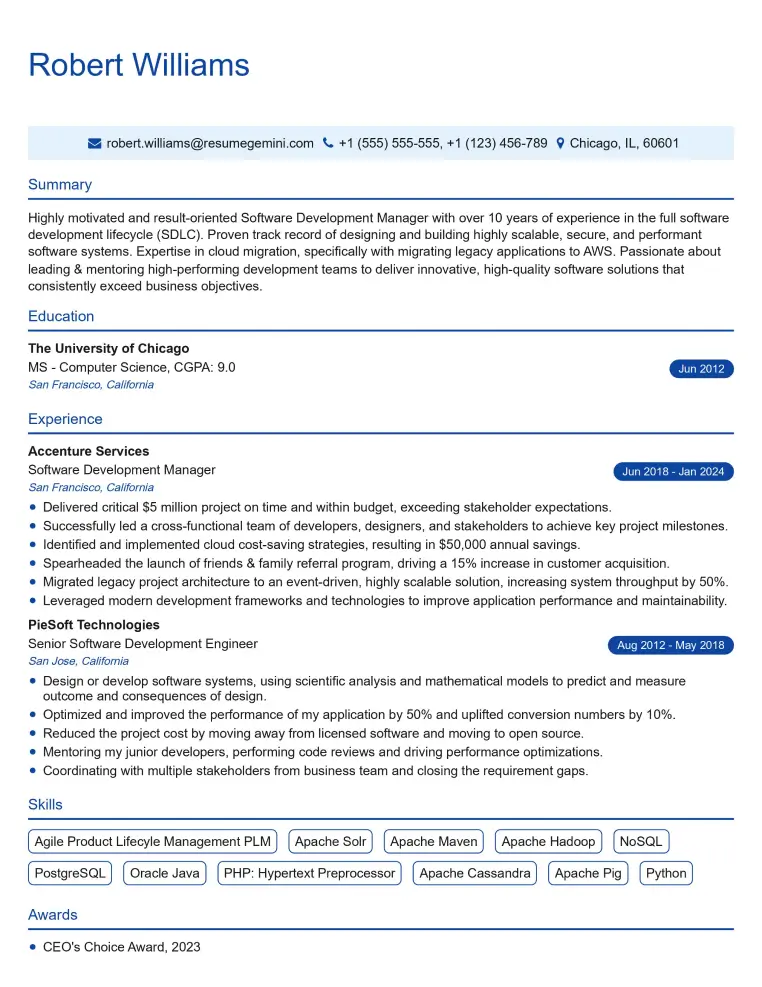
Elevate your job search with our premium resume templates. Here is an amazing resume template that can be used to build a professional and elegant resume. You can build a resume from scratch or revamp your existing resume. Impress hiring managers and secure your next opportunity.
- Top 50 Most Common Interview Questions
- The Psychology of a Great Resume: Hacks to Impress Recruiters
- What Mistakes to Avoid When Writing a Resume: A Comprehensive Guide
- Elevate Your Career with Expert Resume Building: Introducing ResumeGemini
- Crafting Your First Impression: How To Make Free Resume Online For Freshers