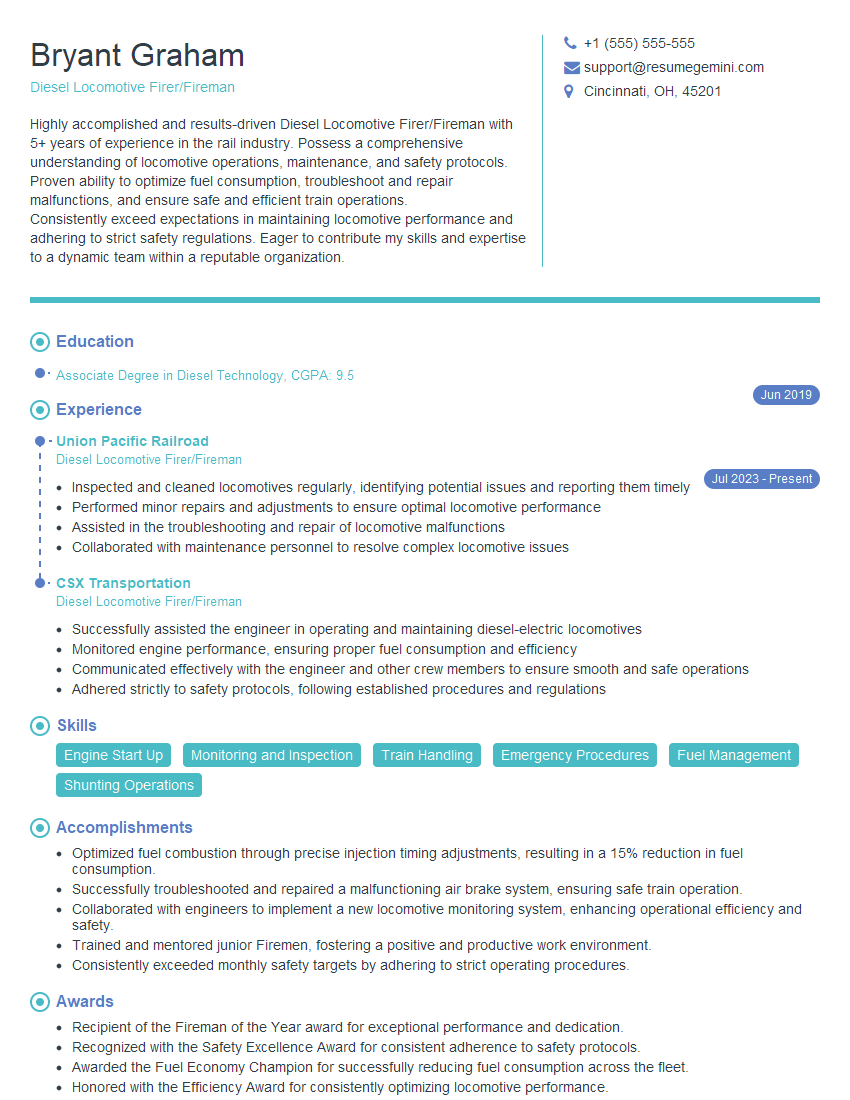
Are you gearing up for an interview for a Diesel Locomotive Firer/Fireman position? Whether you’re a seasoned professional or just stepping into the role, understanding what’s expected can make all the difference. In this blog, we dive deep into the essential interview questions for Diesel Locomotive Firer/Fireman and break down the key responsibilities of the role. By exploring these insights, you’ll gain a clearer picture of what employers are looking for and how you can stand out. Read on to equip yourself with the knowledge and confidence needed to ace your next interview and land your dream job!
Acing the interview is crucial, but landing one requires a compelling resume that gets you noticed. Crafting a professional document that highlights your skills and experience is the first step toward interview success. ResumeGemini can help you build a standout resume that gets you called in for that dream job.






Essential Interview Questions For Diesel Locomotive Firer/Fireman
1. What are the responsibilities of a Diesel Locomotive Firer/Fireman?
- Monitoring and maintaining boiler water levels and pressure.
- Shoveling coal or operating other fuel-feeding devices.
- Cleaning and maintaining locomotive firebox and tubes.
- Assisting the engineer in train operation and maintenance.
- Following safety regulations and procedures.
2. Describe the proper procedures for starting and stopping a diesel locomotive.
Starting Procedure
- Check engine oil level and coolant level.
- Open fuel valve and turn on battery switch.
- Engage starter and crank engine.
- Monitor engine temperature and pressure gauges.
- Release starter when engine starts.
Stopping Procedure
- Reduce engine speed and apply brakes.
- Turn off fuel valve and battery switch.
- Allow engine to cool down.
- Check for any leaks or unusual noises.
- Report any issues to supervisor.
3. How do you troubleshoot common problems encountered in diesel locomotives?
- Engine overheating: Check coolant levels, radiator fan, and water pump.
- Loss of power: Check fuel filters, injectors, and turbocharger.
- Air brake problems: Check air compressor, reservoirs, and brake lines.
- Electrical issues: Check batteries, alternator, and wiring.
- Follow manufacturer’s troubleshooting guidelines and consult with supervisor.
4. What safety precautions should be taken when working on diesel locomotives?
- Wear appropriate personal protective equipment (PPE).
- Follow lockout/tagout procedures when working on electrical components.
- Be aware of moving parts and hot surfaces.
- Never work under a locomotive without proper support.
- Report any unsafe conditions or practices to supervisor immediately.
5. How do you communicate effectively with other members of the train crew?
- Use clear and concise language.
- Maintain eye contact and body language.
- Listen attentively and ask questions for clarification.
- Use hand signals and radio communication as appropriate.
- Follow established communication protocols and procedures.
6. Describe the different types of diesel locomotive fuel systems.
- Mechanical fuel injection: Uses a pump to inject fuel into cylinders.
- Electronic fuel injection: Uses sensors and electronic controls to inject fuel.
- Common rail fuel injection: Stores fuel in a common rail and injects it into cylinders.
- Fuel efficiency and emissions vary depending on the type of fuel system.
7. How do you maintain and troubleshoot diesel locomotive electrical systems?
- Check batteries, alternators, and wiring for damage or loose connections.
- Use a multimeter to test voltage and continuity.
- Follow electrical schematics and diagrams.
- Perform regular maintenance tasks such as cleaning and tightening connections.
- Report any electrical problems to supervisor immediately.
8. What is the role of a turbocharger in a diesel locomotive?
- Increases engine power and efficiency.
- Uses exhaust gases to spin a turbine, which drives a compressor.
- Compressor forces more air into cylinders, resulting in more fuel combustion.
- Regular maintenance and monitoring of turbochargers are essential.
9. How do you ensure the proper lubrication of diesel locomotive components?
- Check oil levels and change oil regularly.
- Inspect oil filters and replace as needed.
- Grease moving parts such as bearings and gears.
- Monitor oil pressure and temperature gauges.
- Follow lubrication schedules and manufacturer’s recommendations.
10. What are the key indicators of a well-maintained diesel locomotive?
- Smooth and efficient engine operation.
- Optimal fuel consumption.
- Minimal smoke or exhaust emissions.
- Reliable electrical and pneumatic systems.
- Clean and well-lubricated components.
Interviewers often ask about specific skills and experiences. With ResumeGemini‘s customizable templates, you can tailor your resume to showcase the skills most relevant to the position, making a powerful first impression. Also check out Resume Template specially tailored for Diesel Locomotive Firer/Fireman.
Career Expert Tips:
- Ace those interviews! Prepare effectively by reviewing the Top 50 Most Common Interview Questions on ResumeGemini.
- Navigate your job search with confidence! Explore a wide range of Career Tips on ResumeGemini. Learn about common challenges and recommendations to overcome them.
- Craft the perfect resume! Master the Art of Resume Writing with ResumeGemini’s guide. Showcase your unique qualifications and achievements effectively.
- Great Savings With New Year Deals and Discounts! In 2025, boost your job search and build your dream resume with ResumeGemini’s ATS optimized templates.
Researching the company and tailoring your answers is essential. Once you have a clear understanding of the Diesel Locomotive Firer/Fireman‘s requirements, you can use ResumeGemini to adjust your resume to perfectly match the job description.
Key Job Responsibilities
A Diesel Locomotive Firer/Fireman is responsible for ensuring the proper operation and maintenance of diesel-powered locomotives.
1. Operating and Monitoring Locomotive Systems
Monitors and operates locomotive systems, including engine, fuel, cooling, electrical, and braking systems.
- Starts and stops the locomotive engine.
- Maintains proper engine speed and loads.
2. Fueling and Maintenance
Refuels and performs basic maintenance and troubleshooting on locomotives.
- Inspects and replaces fuel filters.
- Checks and replenishes oil and coolant levels.
3. Communication and Safety
Communicates with engineers, conductors, and other personnel to ensure safe and efficient operations.
- Follows established safety regulations.
- Reports any malfunctions or safety concerns.
4. Troubleshooting and Repairs
Troubleshoots and repairs minor locomotive malfunctions under the guidance of a supervisor.
- Identifies and replaces faulty components.
- Performs basic electrical and mechanical repairs.
Interview Tips
Preparing for an interview for a Diesel Locomotive Firer/Fireman position is crucial to showcasing your skills and increasing your chances of success.
1. Research the Company and Role
Thoroughly research the company and the specific role you are applying for. This will help you understand the company’s culture, values, and the specific responsibilities of the position.
- Visit the company’s website and social media pages.
- Read industry publications to gain insights into the company’s operations.
2. Highlight Relevant Skills and Experience
Emphasize your relevant skills and experience in your resume and during the interview.
- Quantify your accomplishments using specific examples.
- Use keywords from the job description in your responses.
3. Demonstrate Safety Awareness
Safety is of utmost importance in this role. Highlight your understanding of safety regulations and your commitment to safe work practices.
- Provide examples of your adherence to safety protocols in previous roles.
- Explain how you prioritize safety in your daily work.
4. Practice Common Interview Questions
Prepare for common interview questions by practicing your answers. This will boost your confidence and help you articulate your strengths effectively.
- Research common interview questions for this role.
- Prepare clear and concise answers that demonstrate your skills and experience.
Next Step:
Armed with this knowledge, you’re now well-equipped to tackle the Diesel Locomotive Firer/Fireman interview with confidence. Remember, preparation is key. So, start crafting your resume, highlighting your relevant skills and experiences. Don’t be afraid to tailor your application to each specific job posting. With the right approach and a bit of practice, you’ll be well on your way to landing your dream job. Build your resume now from scratch or optimize your existing resume with ResumeGemini. Wish you luck in your career journey!