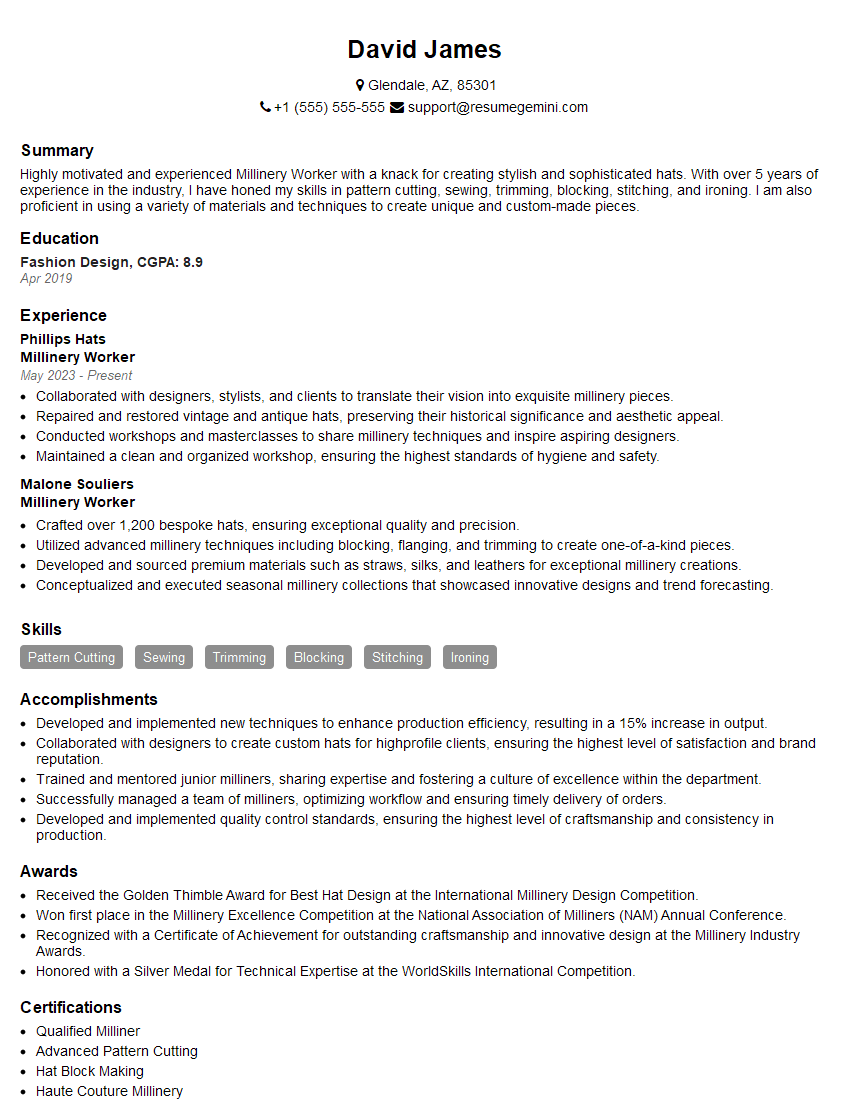
Feeling lost in a sea of interview questions? Landed that dream interview for Millinery Worker but worried you might not have the answers? You’re not alone! This blog is your guide for interview success. We’ll break down the most common Millinery Worker interview questions, providing insightful answers and tips to leave a lasting impression. Plus, we’ll delve into the key responsibilities of this exciting role, so you can walk into your interview feeling confident and prepared.
Acing the interview is crucial, but landing one requires a compelling resume that gets you noticed. Crafting a professional document that highlights your skills and experience is the first step toward interview success. ResumeGemini can help you build a standout resume that gets you called in for that dream job.






Essential Interview Questions For Millinery Worker
1. What techniques do you use to create custom-shaped millinery pieces?
To create custom-shaped millinery pieces, I employ various techniques, including:
- Blocking: Using a mold or form to shape the material into the desired shape.
- Manipulation: Manually shaping and manipulating the material using tools and techniques like pleating, folding, and gathering.
- Stitching: Using hand or machine stitching to secure and reinforce the shaped material.
- Trimming: Adding embellishments and finishing touches to enhance the design.
2. How do you ensure the durability and longevity of your millinery creations?
Selection of Materials:
- Choosing high-quality, durable materials that can withstand wear and tear.
- Considering factors such as weather resistance, fade resistance, and tear strength.
Construction Techniques:
- Properly securing and reinforcing seams to prevent unraveling or tearing.
- Using durable stitching techniques to ensure the piece can withstand handling and use.
- Adding reinforcements where necessary, such as interfacing or boning for support.
3. Describe your experience in creating millinery pieces for different occasions and purposes.
Throughout my career, I have created millinery pieces for a wide range of occasions and purposes, including:
- Formal Events: Hats, fascinators, and headpieces for weddings, galas, and other special occasions.
- Everyday Wear: Beanies, scarves, and other accessories designed for comfort and style.
- Costumes: Collaborating with costume designers to create unique and elaborate headwear for stage productions and films.
- Millinery Collections: Designing and producing complete collections of hats and accessories for fashion shows and retail.
4. How do you keep up with the latest trends and innovations in millinery design?
To stay abreast of the latest trends and innovations in millinery design, I employ various strategies:
- Attend Industry Events: Participating in fashion shows, trade fairs, and workshops to network with designers and learn about new techniques.
- Study Fashion Magazines and Publications: Reading industry-leading publications to stay informed about emerging trends and inspiring designs.
- Engage in Online Research: Exploring online platforms, blogs, and social media to discover new ideas and connect with other milliners.
- Experimentation and Exploration: Continuously experimenting with different materials, techniques, and design concepts to develop innovative creations.
5. How do you handle customer requests for custom millinery pieces?
When handling customer requests for custom millinery pieces, I follow a comprehensive process:
- Consultation: Meeting with the customer to discuss their vision, style preferences, and budget.
- Design and Sketching: Presenting sketches and design concepts to the customer for feedback and refinement.
- Material Selection: Collaborating with the customer to choose materials that meet their specific needs and aesthetic.
- Construction: Meticulously crafting the piece according to the agreed-upon design.
- Fitting and Adjustments: Ensuring the piece fits comfortably and meets the customer’s satisfaction.
6. Describe your experience in working with different types of millinery materials and trims.
Throughout my career, I have had the opportunity to work with a wide range of millinery materials and trims, including:
- Natural Fibers: Straw, felt, wool, silk, and cotton
- Synthetic Materials: Buckram, nylon, polyester, and acrylic
- Embellishments: Feathers, beads, sequins, ribbons, and flowers
- Trimmings: Lace, veiling, and braids
- Other Materials: Leather, plastic, and metal
7. How do you ensure the quality and consistency of your millinery work?
To ensure the quality and consistency of my millinery work, I adhere to the following practices:
- Attention to Detail: Meticulously paying attention to every aspect of the piece, from material selection to construction techniques.
- Regular Inspections: Conducting thorough inspections throughout the creation process to identify and correct any inconsistencies or defects.
- Use of High-Quality Materials: Sourcing and using premium materials that meet industry standards.
- Continuous Improvement: Regularly seeking feedback and striving to enhance my skills and knowledge.
- Documentation: Maintaining detailed records of my work, including sketches, material specifications, and construction notes.
8. How do you manage your time and prioritize tasks when working on multiple millinery projects simultaneously?
To manage my time and prioritize tasks effectively when working on multiple millinery projects simultaneously, I employ the following strategies:
- Project Planning: Creating a detailed plan for each project, including timelines, material requirements, and key milestones.
- Prioritization: Identifying the most critical tasks and allocating time accordingly to ensure timely completion.
- Time Blocking: Scheduling specific time slots for different tasks to maintain focus and avoid distractions.
- Delegation: When necessary, delegating certain tasks to assistants or collaborators to streamline the process.
- Regular Reviews: Conducting regular progress reviews to assess my progress and make adjustments as needed.
9. How do you stay organized and keep track of materials, tools, and projects?
To stay organized and keep track of materials, tools, and projects, I follow these practices:
- Designated Workspace: Maintaining a dedicated workspace where all materials, tools, and projects are organized and easily accessible.
- Inventory System: Implementing a system for tracking materials and tools, including stock levels and usage.
- Project Files: Creating digital or physical files for each project, containing sketches, material specifications, and progress updates.
- Regular Cleaning: Establishing a regular cleaning schedule to keep the workspace tidy and free from clutter.
- Digital Tools: Utilizing digital tools, such as task management apps and inventory management software, to enhance organization.
10. How do you handle customer feedback, both positive and negative?
When handling customer feedback, both positive and negative, I prioritize the following approaches:
Positive Feedback:
- Gratitude: Expressing appreciation for the feedback and acknowledging the customer’s satisfaction.
- Follow-up: Following up with the customer to ensure their continued satisfaction and build a positive relationship.
Negative Feedback:
- Active Listening: Actively listening to the feedback and trying to understand the customer’s perspective.
- Empathy: Displaying empathy and understanding towards the customer’s concerns.
- Resolution: Working with the customer to find a mutually acceptable solution or resolution.
- Improvement: Using the feedback as an opportunity to identify areas for improvement in my work.
Interviewers often ask about specific skills and experiences. With ResumeGemini‘s customizable templates, you can tailor your resume to showcase the skills most relevant to the position, making a powerful first impression. Also check out Resume Template specially tailored for Millinery Worker.
Career Expert Tips:
- Ace those interviews! Prepare effectively by reviewing the Top 50 Most Common Interview Questions on ResumeGemini.
- Navigate your job search with confidence! Explore a wide range of Career Tips on ResumeGemini. Learn about common challenges and recommendations to overcome them.
- Craft the perfect resume! Master the Art of Resume Writing with ResumeGemini’s guide. Showcase your unique qualifications and achievements effectively.
- Great Savings With New Year Deals and Discounts! In 2025, boost your job search and build your dream resume with ResumeGemini’s ATS optimized templates.
Researching the company and tailoring your answers is essential. Once you have a clear understanding of the Millinery Worker‘s requirements, you can use ResumeGemini to adjust your resume to perfectly match the job description.
Key Job Responsibilities
Millinery workers are responsible for the creation and maintenance of hats. They may work in a variety of settings, such as hat shops, department stores, or manufacturing facilities. Their duties may include:1. Creating hats
- Choose and cut materials such as fabric, leather, straw, or felt.
- Sew or glue materials together to create the hat body.
- Add embellishments such as feathers, beads, ribbons, or flowers.
2. Maintaining hats
- Clean and repair hats.
- Reshape hats to fit customers’ heads.
- Provide customers with information on how to care for their hats.
3. Selling hats
- Assist customers in selecting hats that are right for them.
- Process payments and answer customer questions.
- Keep the sales area clean and organized.
4. Other duties
- May design hats or work with designers to create new styles.
- May train new employees.
- May work with other departments, such as marketing or sales, to promote hats.
Interview Tips
Preparing for an interview for a millinery worker position can be daunting, but with the right preparation, you can increase your chances of success.
1. Research the company
Before you go to your interview, take some time to research the company. This will help you understand the company’s culture, values, and products. You can also learn about the specific position you are applying for and the company’s expectations for the role.
2. Practice your answers to common interview questions
There are a number of common interview questions that you are likely to be asked, such as “Tell me about yourself” and “Why are you interested in this position?”. It is helpful to practice your answers to these questions in advance so that you can deliver them confidently and concisely.
3. Dress appropriately
The way you dress for your interview can make a big impression on the interviewer. For a millinery worker position, it is important to dress professionally and conservatively. You should also make sure that your clothes are clean and pressed.
4. Be prepared to show your portfolio
If you have a portfolio of your work, be sure to bring it to your interview. This will give the interviewer a chance to see your skills and experience firsthand.
5. Be yourself
The most important thing is to be yourself during your interview. The interviewer wants to get to know the real you, so don’t try to be someone you’re not. Just be yourself and let your personality shine through.
Next Step:
Now that you’re armed with the knowledge of Millinery Worker interview questions and responsibilities, it’s time to take the next step. Build or refine your resume to highlight your skills and experiences that align with this role. Don’t be afraid to tailor your resume to each specific job application. Finally, start applying for Millinery Worker positions with confidence. Remember, preparation is key, and with the right approach, you’ll be well on your way to landing your dream job. Build an amazing resume with ResumeGemini