Are you gearing up for an interview for a Parts Cataloger position? Whether you’re a seasoned professional or just stepping into the role, understanding what’s expected can make all the difference. In this blog, we dive deep into the essential interview questions for Parts Cataloger and break down the key responsibilities of the role. By exploring these insights, you’ll gain a clearer picture of what employers are looking for and how you can stand out. Read on to equip yourself with the knowledge and confidence needed to ace your next interview and land your dream job!
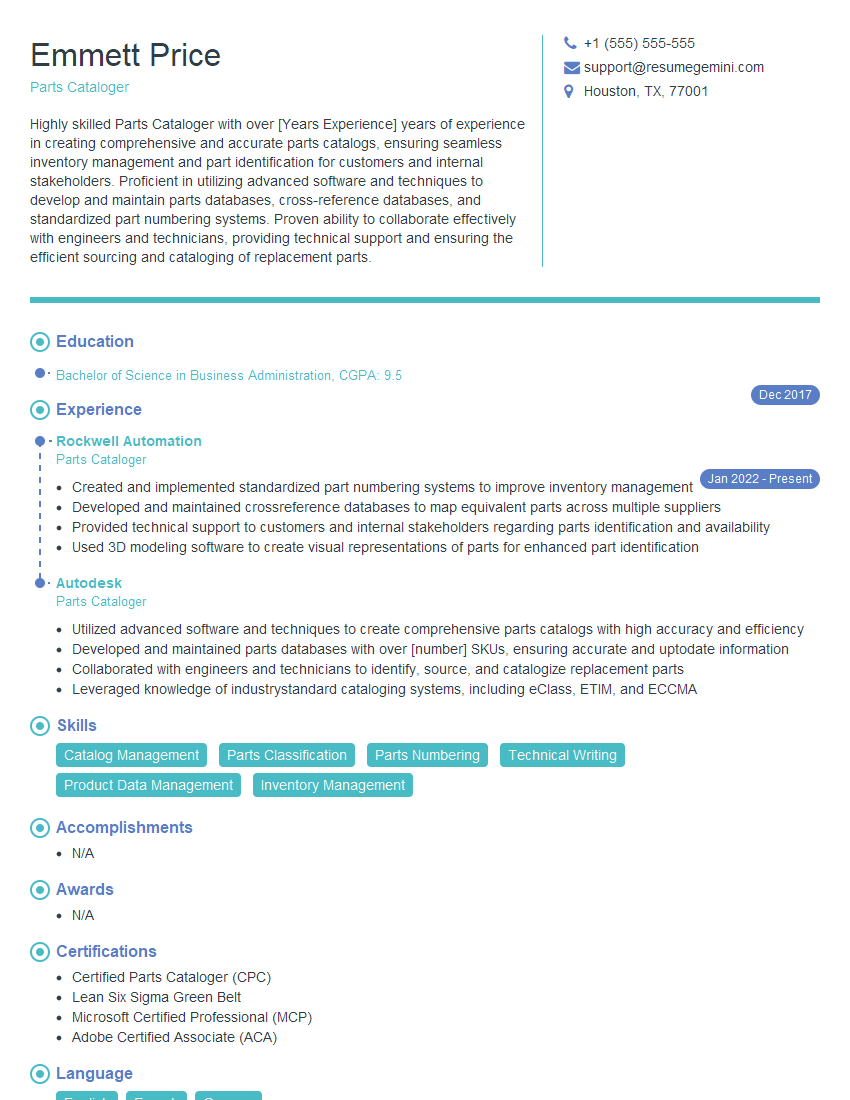
Acing the interview is crucial, but landing one requires a compelling resume that gets you noticed. Crafting a professional document that highlights your skills and experience is the first step toward interview success. ResumeGemini can help you build a standout resume that gets you called in for that dream job.






Essential Interview Questions For Parts Cataloger
1. What are the key responsibilities of a Parts Cataloger?
- Creating and maintaining accurate and up-to-date parts catalogs
- Researching and identifying parts and their compatibility
- Classifying and organizing parts using various systems
- Assigning part numbers and cross-referencing them
- Working with engineers and suppliers to ensure accuracy and completeness
2. What software applications are you proficient in for parts cataloging?
Database Management Systems
- Access
- SQL Server
Parts Cataloging Software
- Inventor
- SAP
3. Describe your experience in using classification systems for parts cataloging.
I have experience using both the UNSPSC and eCl@ss classification systems. I am familiar with the different levels of each system and can effectively classify and organize parts accordingly.
4. How do you ensure the accuracy and quality of your parts catalogs?
- Thorough research and verification of part information
- Collaboration with engineers and suppliers to validate data
- Use of quality control processes, such as reviewing and editing
- Regular updates and maintenance to keep the catalogs current
5. Can you describe a complex project that you worked on as a Parts Cataloger?
I worked on a project to create a comprehensive parts catalog for a new product line. The project involved researching and identifying hundreds of parts, classifying them, and assigning part numbers. I also worked with engineers and suppliers to ensure the accuracy and completeness of the catalog. The project was successfully completed, and the catalog is now used by the company’s customers and suppliers.
6. What are the challenges you have faced as a Parts Cataloger?
- Dealing with incomplete or inaccurate part information
- Keeping up with changes in product lines and industry standards
- Ensuring the compatibility of parts from different suppliers
- Meeting deadlines and managing workload
7. How do you stay up-to-date on the latest developments in parts cataloging?
- Attending industry conferences and workshops
- Reading trade publications and articles
- Networking with other parts catalogers
- Taking online courses and certifications
8. What are your strengths as a Parts Cataloger?
- Attention to detail and accuracy
- Strong research and analytical skills
- Ability to work independently and as part of a team
- Excellent communication and interpersonal skills
- Understanding of industry standards and best practices
9. What are your weaknesses as a Parts Cataloger?
- I can be a bit of a perfectionist, so I sometimes spend too much time on details
- I am not always the best at delegating tasks
- I can be a bit shy when it comes to networking
10. Why are you interested in working as a Parts Cataloger for our company?
I am interested in working as a Parts Cataloger for your company because I am passionate about the industry and I believe that my skills and experience would be a valuable asset to your team. I am confident that I can contribute to the success of your company by creating and maintaining accurate and up-to-date parts catalogs.
Interviewers often ask about specific skills and experiences. With ResumeGemini‘s customizable templates, you can tailor your resume to showcase the skills most relevant to the position, making a powerful first impression. Also check out Resume Template specially tailored for Parts Cataloger.
Career Expert Tips:
- Ace those interviews! Prepare effectively by reviewing the Top 50 Most Common Interview Questions on ResumeGemini.
- Navigate your job search with confidence! Explore a wide range of Career Tips on ResumeGemini. Learn about common challenges and recommendations to overcome them.
- Craft the perfect resume! Master the Art of Resume Writing with ResumeGemini’s guide. Showcase your unique qualifications and achievements effectively.
- Great Savings With New Year Deals and Discounts! In 2025, boost your job search and build your dream resume with ResumeGemini’s ATS optimized templates.
Researching the company and tailoring your answers is essential. Once you have a clear understanding of the Parts Cataloger‘s requirements, you can use ResumeGemini to adjust your resume to perfectly match the job description.
Key Job Responsibilities
A Parts Cataloger is responsible for creating and maintaining catalogs with detailed information about the components and spare parts used in a particular product or system. They work closely with engineers, manufacturers, and other stakeholders to incorporate technical data, drawings, and images into the catalog. The key responsibilities of a Parts Cataloger include:
1. Catalog Creation and Management
Preparing and updating electronic and physical catalogs of parts, components, and assemblies
- Designing catalog layouts and organizing content for easy navigation
- Assigning part numbers and managing inventory data
2. Data Collection and Analysis
Gathering and analyzing data from various sources, including engineering drawings, technical specifications, and supplier information
- Identifying and classifying parts based on their characteristics and applications
- Creating cross-reference lists and compatibility charts
3. Quality Assurance
Ensuring the accuracy and completeness of catalog information
- Verifying data against engineering specifications and supplier documentation
- Proofreading catalogs and correcting any errors before publication
4. Customer Support
Providing technical support to customers regarding parts availability, compatibility, and pricing
- Assisting customers in finding the right parts for their needs
- Responding to inquiries and resolving any issues related to the catalog
Interview Tips
To effectively prepare for an interview for a Parts Cataloger position, it’s essential to not only highlight your technical skills but also demonstrate your ability to manage complex data and provide excellent customer support. Here are some key tips to help you ace your interview:
1. Research the Company and Position
Familiarize yourself with the company’s products, services, and industry standing. This information will help you tailor your answers to the specific needs of the organization. Additionally, carefully review the job description to identify key responsibilities and qualifications.
2. Highlight Your Technical Expertise
Emphasize your proficiency in using cataloging software, data management tools, and engineering databases. Showcase your ability to interpret technical drawings and specifications, and ensure data accuracy and completeness.
3. Demonstrate Data Management Skills
Discuss your experience in organizing and managing large volumes of data effectively. Explain how you ensure data integrity, security, and accessibility.
4. Emphasize Customer Service Orientation
Highlight your strong customer service skills and ability to effectively communicate with both technical and non-technical stakeholders. Describe situations where you provided exceptional support to customers and resolved their issues.
5. Prepare for Common Interview Questions
Research common interview questions for Parts Catalogers, such as:
- “Describe your experience in using cataloging software and managing large datasets.”
- “How do you stay up-to-date with the latest industry standards and best practices in cataloging?”
- “What techniques do you use to ensure the accuracy and completeness of catalog information?”
6. Practice Your Answers
Rehearse your responses to potential interview questions to build confidence and fluency. Seek feedback from a friend, family member, or career counselor to improve your delivery and make a positive impression.
7. Dress Professionally and Arrive on Time
Make a good first impression by dressing professionally and arriving on time for your interview. Your appearance and punctuality convey respect and attention to detail, which are essential qualities for a Parts Cataloger.
Next Step:
Armed with this knowledge, you’re now well-equipped to tackle the Parts Cataloger interview with confidence. Remember, preparation is key. So, start crafting your resume, highlighting your relevant skills and experiences. Don’t be afraid to tailor your application to each specific job posting. With the right approach and a bit of practice, you’ll be well on your way to landing your dream job. Build your resume now from scratch or optimize your existing resume with ResumeGemini. Wish you luck in your career journey!