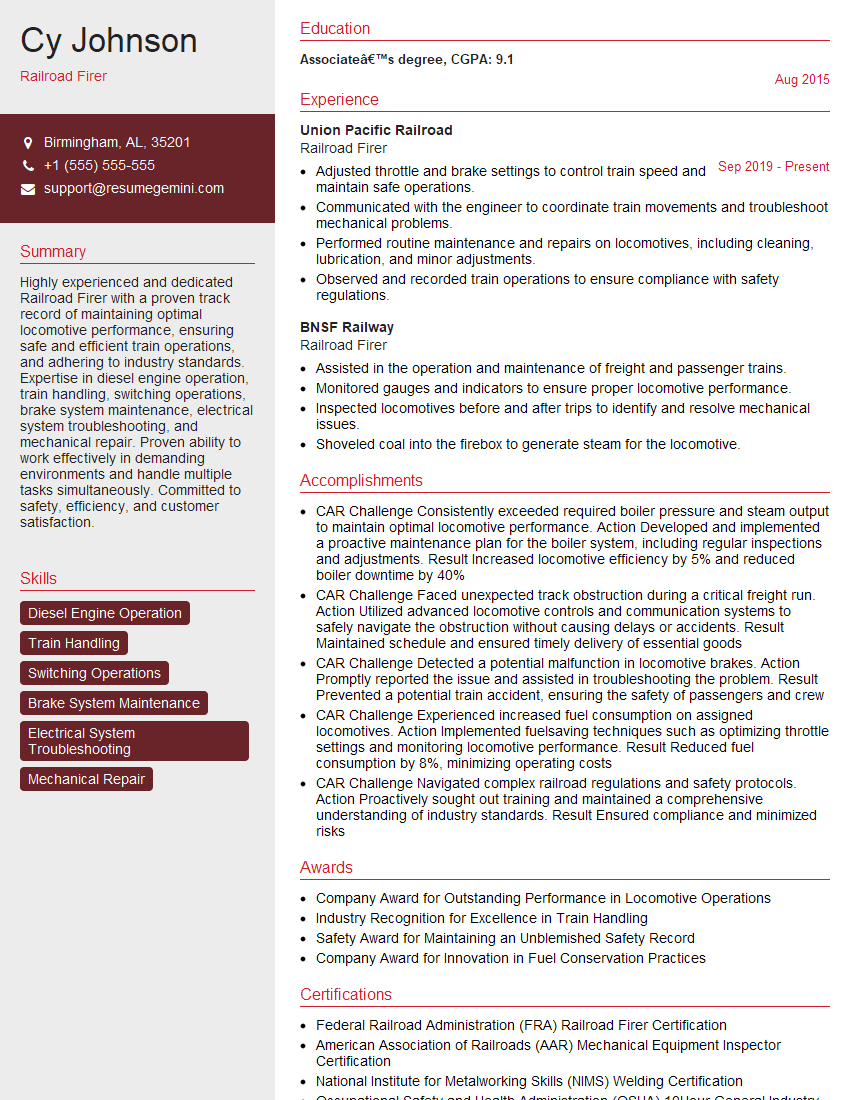
Are you gearing up for a career in Railroad Firer? Feeling nervous about the interview questions that might come your way? Don’t worry, you’re in the right place. In this blog post, we’ll dive deep into the most common interview questions for Railroad Firer and provide you with expert-backed answers. We’ll also explore the key responsibilities of this role so you can tailor your responses to showcase your perfect fit.
Acing the interview is crucial, but landing one requires a compelling resume that gets you noticed. Crafting a professional document that highlights your skills and experience is the first step toward interview success. ResumeGemini can help you build a standout resume that gets you called in for that dream job.






Essential Interview Questions For Railroad Firer
1. What is the primary responsibility of a Railroad Firer?
The primary responsibility of a Railroad Firer is to assist the locomotive engineer in operating and maintaining a locomotive engine. This includes:
- Monitoring and adjusting the engine’s water level, fuel supply, and lubrication.
- Assisting the engineer with the operation of the engine, including starting, stopping, and shifting gears.
- Performing routine maintenance and repairs on the engine, such as cleaning and inspecting components.
- Ensuring the engine is operating safely and efficiently, and reporting any problems to the engineer.
2. What are the different types of locomotives that Railroad Firers may work on?
Diesel-electric locomotives
- Most common type of locomotive in use today
- Powered by a diesel engine that generates electricity
- Electricity powers the traction motors that drive the wheels
Electric locomotives
- Powered by electricity from an external source
- Do not have a diesel engine or generator
- More efficient than diesel-electric locomotives, but require electrified track
Steam locomotives
- Powered by steam generated by burning coal or oil
- Steam drives the pistons that turn the wheels
- No longer in common use, but still used on some heritage railways
3. What safety precautions should Railroad Firers take when working on or around locomotives?
Railroad Firers should take the following safety precautions when working on or around locomotives:
- Wear appropriate personal protective equipment, such as gloves, safety glasses, and a hard hat.
- Be aware of the location of all moving parts and avoid contact with them.
- Keep clear of the track when trains are passing.
- Only enter the engine after the engineer has given permission.
- Report any unsafe conditions or potential hazards to the engineer immediately.
4. What are the different types of fuel that can be used to power locomotives?
- Diesel fuel
- Electricity
- Coal
- Oil
5. What is the role of a Railroad Firer in the event of a locomotive breakdown or emergency?
In the event of a locomotive breakdown or emergency, the Railroad Firer should:
- Assist the engineer in diagnosing the problem.
- Help the engineer to make repairs or take other necessary actions.
- Report the incident to the dispatcher as soon as possible.
- Follow the engineer’s instructions and remain calm under pressure.
6. What is the importance of teamwork in the role of a Railroad Firer?
Teamwork is essential for Railroad Firers, as they work closely with locomotive engineers and other railroad personnel to ensure the safe and efficient operation of trains. Effective teamwork allows for:
- Enhanced communication and coordination between crew members.
- Problem-solving and decision-making through collaborative efforts.
- Efficient task allocation and workload management.
- Improved situational awareness and response to changing conditions.
- Overall safety and productivity in train operations.
7. How do Railroad Firers contribute to the safety of train operations?
Railroad Firers play a crucial role in ensuring the safety of train operations through:
- Monitoring and maintaining locomotive systems, including fuel, water, and lubrication levels.
- Assisting locomotive engineers in operating the engine and responding to emergencies.
- Performing routine inspections and maintenance to identify and address potential issues.
- Adhering to safety protocols, regulations, and company guidelines.
- Reporting any unsafe conditions or potential hazards to the engineer.
8. What are the physical demands of being a Railroad Firer?
Being a Railroad Firer involves various physical demands, including:
- Prolonged periods of standing and walking.
- Lifting and moving heavy objects.
- Climbing and descending from locomotives.
- Working in confined spaces.
- Exposure to extreme temperatures, noise, and vibration.
9. What are the educational and experience requirements for becoming a Railroad Firer?
The educational and experience requirements to become a Railroad Firer may vary depending on the company and the specific job description, but generally include:
- High school diploma or equivalent.
- Completion of a locomotive firer training program or apprenticeship.
- Experience in a related field, such as diesel mechanics or power plant operations.
- Physical ability to perform the job’s tasks.
10. What are the career advancement opportunities for Railroad Firers?
With experience and qualifications, Railroad Firers may advance to higher positions within the railroad industry, such as:
- Locomotive Engineer
- Trainmaster
- Superintendent of Operations
- General Manager
- Management or administrative roles in the railroad industry
Interviewers often ask about specific skills and experiences. With ResumeGemini‘s customizable templates, you can tailor your resume to showcase the skills most relevant to the position, making a powerful first impression. Also check out Resume Template specially tailored for Railroad Firer.
Career Expert Tips:
- Ace those interviews! Prepare effectively by reviewing the Top 50 Most Common Interview Questions on ResumeGemini.
- Navigate your job search with confidence! Explore a wide range of Career Tips on ResumeGemini. Learn about common challenges and recommendations to overcome them.
- Craft the perfect resume! Master the Art of Resume Writing with ResumeGemini’s guide. Showcase your unique qualifications and achievements effectively.
- Great Savings With New Year Deals and Discounts! In 2025, boost your job search and build your dream resume with ResumeGemini’s ATS optimized templates.
Researching the company and tailoring your answers is essential. Once you have a clear understanding of the Railroad Firer‘s requirements, you can use ResumeGemini to adjust your resume to perfectly match the job description.
Key Job Responsibilities
Railroad Firers play a crucial role in ensuring the safe and efficient operation of trains. Their primary responsibilities include:
1. Fuel and Water Management
Railroad Firers are responsible for managing the fuel and water supply on the locomotive.
- Load and unload coal into the locomotive’s tender.
- Monitor the water level in the locomotive’s boiler and refill it as needed.
2. Fire Control
Railroad Firers regulate the locomotive’s fire to maintain the desired steam pressure and ensure that the engine runs smoothly.
- Shovel coal into the firebox and adjust the amount of coal to control the fire’s intensity.
- Operate dampers and blowers to regulate the airflow and maintain the appropriate fire conditions.
3. Locomotive Inspections
Railroad Firers perform regular inspections of the locomotive to ensure its safe operation.
- Check for leaks, loose bolts, and other potential hazards.
- Lubricate moving parts and perform minor repairs as needed.
4. Safety and Compliance
Railroad Firers are responsible for adhering to all safety regulations and operating procedures.
- Follow established safety protocols and wear appropriate protective gear.
- Stay alert and communicate with the engineer to ensure a safe working environment.
Interview Tips
To ace an interview for the position of Railroad Firer, it’s essential to prepare thoroughly. Here are some tips to help you succeed:
1. Research the Company and Position
Before the interview, gather information about the railroad company and the role of a Railroad Firer within their organization.
- Visit the company’s website to learn about their history, operations, and safety protocols.
- Read online job descriptions and articles about the responsibilities of Railroad Firers.
2. Highlight Your Skills and Experience
Emphasize your relevant skills and experience during the interview.
- Provide specific examples of your ability to manage fuel and water, control fires, and perform inspections.
- Discuss your experience in maintaining a safe and compliant working environment.
3. Show Your Passion for Railroads
Demonstrate your enthusiasm and passion for working in the railroad industry.
- Explain your interest in the role of a Railroad Firer and why you’re eager to contribute to the company’s operations.
- Share any knowledge or experience you have in the industry, such as model railroading or train spotting.
4. Prepare for Common Interview Questions
Research common interview questions and prepare your answers accordingly.
- Practice answering questions about your experience, skills, safety practices, and work ethic.
- Be prepared to discuss your availability, willingness to work flexible hours, and understanding of the physical demands of the job.
Next Step:
Armed with this knowledge, you’re now well-equipped to tackle the Railroad Firer interview with confidence. Remember, preparation is key. So, start crafting your resume, highlighting your relevant skills and experiences. Don’t be afraid to tailor your application to each specific job posting. With the right approach and a bit of practice, you’ll be well on your way to landing your dream job. Build your resume now from scratch or optimize your existing resume with ResumeGemini. Wish you luck in your career journey!