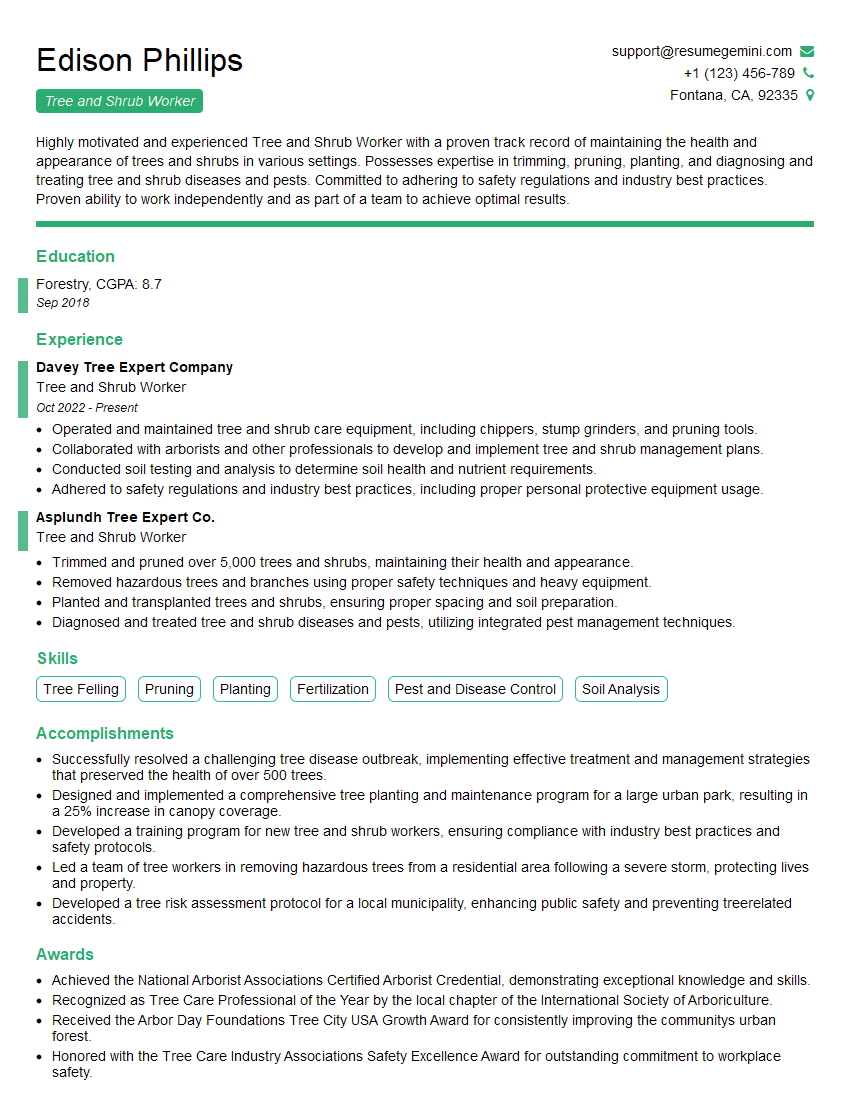
Ever felt underprepared for that crucial job interview? Or perhaps you’ve landed the interview but struggled to articulate your skills and experiences effectively? Fear not! We’ve got you covered. In this blog post, we’re diving deep into the Tree and Shrub Worker interview questions that you’re most likely to encounter. But that’s not all. We’ll also provide expert insights into the key responsibilities of a Tree and Shrub Worker so you can tailor your answers to impress potential employers.
Acing the interview is crucial, but landing one requires a compelling resume that gets you noticed. Crafting a professional document that highlights your skills and experience is the first step toward interview success. ResumeGemini can help you build a standout resume that gets you called in for that dream job.






Essential Interview Questions For Tree and Shrub Worker
1. What are the most common types of trees and shrubs that you have experience working with?
- Deciduous trees: such as oak, maple, and birch.
- Coniferous trees: such as pine, spruce, and fir.
- Broadleaf shrubs: such as rhododendron, azalea, and holly.
- Needleleaf shrubs: such as boxwood, juniper, and yew.
2. What are the different pruning techniques you use for different types of trees and shrubs?
Pruning techniques for deciduous trees
- Crown thinning: removing branches from the interior of the tree to improve air circulation and light penetration.
- Crown raising: removing lower branches to create clearance for vehicles or pedestrians.
- Deadwooding: removing dead or diseased branches to improve the tree’s health and appearance.
Pruning techniques for coniferous trees
- Shearing: cutting back the tips of branches to create a dense, compact shape.
- Tipping: cutting back the leader (topmost branch) to control the tree’s height.
- Thinning: removing branches from the interior of the tree to improve air circulation and light penetration.
3. What are the different types of planting techniques you use for trees and shrubs?
- Bare-root planting: planting trees and shrubs with their roots exposed.
- Balled-and-burlapped planting: planting trees and shrubs with their roots wrapped in burlap and twine.
- Container planting: planting trees and shrubs in containers.
4. What are the different types of soil amendments you use to improve soil conditions for trees and shrubs?
- Compost: organic matter that has been decomposed by microorganisms.
- Mulch: organic matter that is spread around the base of trees and shrubs to retain moisture and suppress weeds.
- Fertilizer: a substance that provides nutrients to trees and shrubs.
5. What are the different types of pests and diseases that you can identify and treat in trees and shrubs?
- Insects: such as aphids, scale, and borers.
- Diseases: such as powdery mildew, leaf spot, and canker.
6. What are the different types of equipment you use to care for trees and shrubs?
- Pruning saws: for cutting branches.
- Loppers: for cutting small branches.
- Hedge trimmers: for trimming hedges.
- Chainsaws: for cutting large branches or felling trees.
- Tractors: for transporting equipment and materials.
7. What are the different types of safety precautions you take when working with trees and shrubs?
- Wearing appropriate clothing and equipment, such as hard hats, gloves, and safety glasses.
- Using proper pruning techniques to avoid injury.
- Working with a partner or team to ensure safety.
- Being aware of the weather conditions and working accordingly.
8. What are the different types of tree and shrub care services you offer?
- Pruning: removing dead, diseased, or damaged branches, as well as shaping and trimming trees and shrubs.
- Planting: planting new trees and shrubs, as well as transplanting existing ones.
- Fertilization: providing nutrients to trees and shrubs to promote healthy growth.
- Pest and disease control: identifying and treating pests and diseases that can damage trees and shrubs.
- Mulching: spreading organic matter around the base of trees and shrubs to retain moisture and suppress weeds.
9. What are the different types of continuing education and professional development opportunities you have taken advantage of to stay up-to-date on the latest tree and shrub care techniques?
- Attending workshops and seminars.
- Reading articles and books.
- Completing online courses.
10. What are your career goals for the next five years?
- To become a certified arborist.
- To start my own tree and shrub care business.
- To continue to learn and grow in the field of tree and shrub care.
Interviewers often ask about specific skills and experiences. With ResumeGemini‘s customizable templates, you can tailor your resume to showcase the skills most relevant to the position, making a powerful first impression. Also check out Resume Template specially tailored for Tree and Shrub Worker.
Career Expert Tips:
- Ace those interviews! Prepare effectively by reviewing the Top 50 Most Common Interview Questions on ResumeGemini.
- Navigate your job search with confidence! Explore a wide range of Career Tips on ResumeGemini. Learn about common challenges and recommendations to overcome them.
- Craft the perfect resume! Master the Art of Resume Writing with ResumeGemini’s guide. Showcase your unique qualifications and achievements effectively.
- Great Savings With New Year Deals and Discounts! In 2025, boost your job search and build your dream resume with ResumeGemini’s ATS optimized templates.
Researching the company and tailoring your answers is essential. Once you have a clear understanding of the Tree and Shrub Worker‘s requirements, you can use ResumeGemini to adjust your resume to perfectly match the job description.
Key Job Responsibilities of a Tree and Shrub Worker
Tree and Shrub Workers are responsible for planting, cultivating, and maintaining trees, shrubs, and other plants in various settings, such as parks, gardens, and residential properties. Key job responsibilities include:
1. Planting and Cultivating Trees and Shrubs
Preparing planting sites, digging holes, and planting trees and shrubs.
Watering, fertilizing, and mulching plants to ensure their establishment and growth.
- Pruning and shaping trees and shrubs to promote healthy growth and appearance
- Treating plants for pests and diseases using appropriate methods and techniques
2. Landscape Maintenance
Mowing lawns, trimming hedges, and weeding garden beds to maintain a clean and attractive landscape
Raking leaves, clearing debris, and removing snow from walkways and driveways to ensure safety and aesthetics
- Installing and maintaining irrigation systems to provide water to plants during dry periods
- Operating lawn mowers, tractors, and other equipment safely and efficiently
3. Tree Removal and Stump Grinding
Assessing the safety and feasibility of removing trees that are diseased, damaged, or posing a hazard
Using proper techniques and equipment to safely and effectively remove trees and grind stumps
- Cleaning up debris and disposing of it in an environmentally responsible manner
- Replanting trees or shrubs to replace those that have been removed
4. Customer Service and Communication
Communicating with clients, understanding their needs and preferences, and providing excellent customer service
Collaborating with other landscaping professionals to ensure a cohesive and well-maintained landscape
- Maintaining detailed records of work performed, materials used, and client interactions
- Adhering to all safety regulations and using personal protective equipment when necessary
Interview Preparation Tips for Tree and Shrub Workers
To ace an interview for a Tree and Shrub Worker position, candidates should prepare thoroughly and present themselves professionally. Here are some key tips:
1. Research the Company and Role
Research the company’s history, values, and current projects. This demonstrates your interest in the organization and its work.
Thoroughly review the job description and identify the key skills and responsibilities required for the role.
2. Highlight Relevant Experience and Skills
Focus on highlighting your experience in tree and shrub planting, cultivation, and maintenance.
Quantify your accomplishments whenever possible, using specific metrics to demonstrate your impact.
- Example: “Increased tree survival rates by 20% through improved planting techniques and root care.”
3. Prepare for Common Interview Questions
Practice answering common interview questions related to the job responsibilities, such as:
- Why are you interested in working as a Tree and Shrub Worker?
- What is your experience in tree and shrub planting and maintenance?
- How do you handle working outdoors in all types of weather conditions?
4. Demonstrate Safety Knowledge
Emphasize your understanding of safety regulations and practices in tree and shrub work.
Highlight your experience using personal protective equipment (PPE) and operating heavy equipment.
5. Show Enthusiasm and Passion
Convey your enthusiasm for working with trees and shrubs and your commitment to providing excellent customer service.
Share examples of projects you have enjoyed working on and the positive impact you have made on landscapes.
Next Step:
Now that you’re armed with the knowledge of Tree and Shrub Worker interview questions and responsibilities, it’s time to take the next step. Build or refine your resume to highlight your skills and experiences that align with this role. Don’t be afraid to tailor your resume to each specific job application. Finally, start applying for Tree and Shrub Worker positions with confidence. Remember, preparation is key, and with the right approach, you’ll be well on your way to landing your dream job. Build an amazing resume with ResumeGemini