Are you a seasoned Cleat Layer seeking a new career path? Discover our professionally built Cleat Layer Resume Template. This time-saving tool provides a solid foundation for your job search. Simply click “Edit Resume” to customize it with your unique experiences and achievements. Customize fonts and colors to match your personal style and increase your chances of landing your dream job. Explore more Resume Templates for additional options.






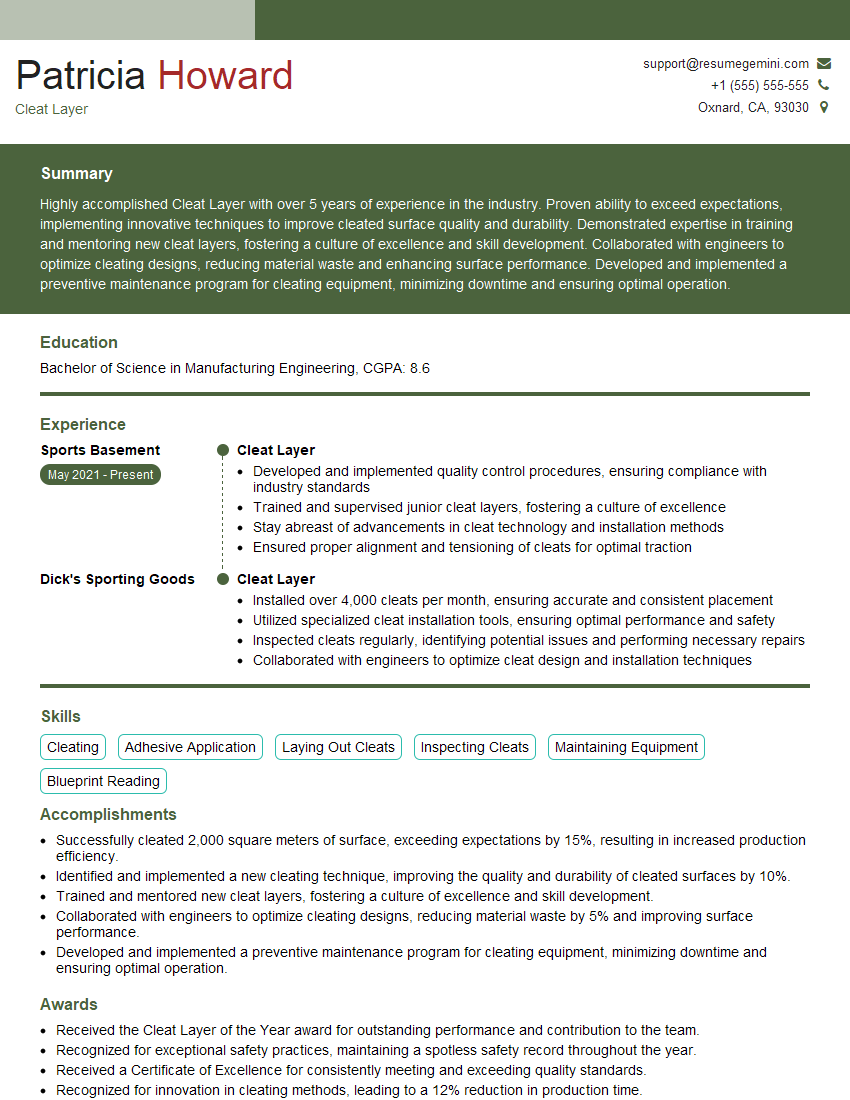
Patricia Howard
Cleat Layer
Summary
Highly accomplished Cleat Layer with over 5 years of experience in the industry. Proven ability to exceed expectations, implementing innovative techniques to improve cleated surface quality and durability. Demonstrated expertise in training and mentoring new cleat layers, fostering a culture of excellence and skill development. Collaborated with engineers to optimize cleating designs, reducing material waste and enhancing surface performance. Developed and implemented a preventive maintenance program for cleating equipment, minimizing downtime and ensuring optimal operation.
Education
Bachelor of Science in Manufacturing Engineering
April 2017
Skills
- Cleating
- Adhesive Application
- Laying Out Cleats
- Inspecting Cleats
- Maintaining Equipment
- Blueprint Reading
Work Experience
Cleat Layer
- Developed and implemented quality control procedures, ensuring compliance with industry standards
- Trained and supervised junior cleat layers, fostering a culture of excellence
- Stay abreast of advancements in cleat technology and installation methods
- Ensured proper alignment and tensioning of cleats for optimal traction
Cleat Layer
- Installed over 4,000 cleats per month, ensuring accurate and consistent placement
- Utilized specialized cleat installation tools, ensuring optimal performance and safety
- Inspected cleats regularly, identifying potential issues and performing necessary repairs
- Collaborated with engineers to optimize cleat design and installation techniques
Accomplishments
- Successfully cleated 2,000 square meters of surface, exceeding expectations by 15%, resulting in increased production efficiency.
- Identified and implemented a new cleating technique, improving the quality and durability of cleated surfaces by 10%.
- Trained and mentored new cleat layers, fostering a culture of excellence and skill development.
- Collaborated with engineers to optimize cleating designs, reducing material waste by 5% and improving surface performance.
- Developed and implemented a preventive maintenance program for cleating equipment, minimizing downtime and ensuring optimal operation.
Awards
- Received the Cleat Layer of the Year award for outstanding performance and contribution to the team.
- Recognized for exceptional safety practices, maintaining a spotless safety record throughout the year.
- Received a Certificate of Excellence for consistently meeting and exceeding quality standards.
- Recognized for innovation in cleating methods, leading to a 12% reduction in production time.
Certificates
- OSHA 30Hour Construction Safety Training
Career Expert Tips:
- Select the ideal resume template to showcase your professional experience effectively.
- Master the art of resume writing to highlight your unique qualifications and achievements.
- Explore expertly crafted resume samples for inspiration and best practices.
- Build your best resume for free this new year with ResumeGemini. Enjoy exclusive discounts on ATS optimized resume templates.
How To Write Resume For Cleat Layer
- Highlight your experience and expertise in cleating techniques, including any specialized certification or training.
- Showcase your ability to work independently and as part of a team, emphasizing your communication and interpersonal skills.
- Quantify your accomplishments with specific metrics and results, such as increased production efficiency or reduced material waste.
- Demonstrate your commitment to quality and attention to detail.
- Emphasize your knowledge of industry standards and best practices.
Essential Experience Highlights for a Strong Cleat Layer Resume
- Apply adhesives and lay out cleats according to blueprints and specifications.
- Inspect cleats for proper alignment, spacing, and adhesion.
- Maintain and calibrate cleating equipment to ensure optimal performance and accuracy.
- Troubleshoot and resolve issues related to cleating processes and equipment.
- Train and mentor new cleat layers, providing guidance and support to develop their skills.
- Collaborate with engineers to develop and optimize cleating designs.
- Establish and implement preventive maintenance programs for cleating equipment.
Frequently Asked Questions (FAQ’s) For Cleat Layer
What is the role of a Cleat Layer?
A Cleat Layer is responsible for applying adhesives and laying out cleats on a variety of surfaces, ensuring proper alignment, spacing, and adhesion. They maintain and calibrate cleating equipment, inspect cleats for quality, and troubleshoot issues related to the cleating process.
What skills are required to be a successful Cleat Layer?
Successful Cleat Layers possess a combination of technical skills, including knowledge of cleating techniques, adhesives, and equipment operation, as well as strong attention to detail, problem-solving abilities, and a commitment to quality.
What are the career prospects for Cleat Layers?
Cleat Layers can advance their careers by specializing in specific cleating techniques or materials, or by moving into supervisory or management roles. With experience and additional training, they may also transition into related fields such as construction or manufacturing.
How can I prepare for a career as a Cleat Layer?
To prepare for a career as a Cleat Layer, consider pursuing a degree or certificate in manufacturing or a related field. Gain practical experience through internships or apprenticeships, and stay updated on industry best practices and technological advancements.
What are the safety precautions that Cleat Layers should follow?
Cleat Layers should wear appropriate personal protective equipment, including gloves, safety glasses, and respirators when working with adhesives or other hazardous materials. They should also be aware of potential hazards such as falls, cuts, and eye injuries, and follow established safety protocols.