Feeling lost in a sea of interview questions? Landed that dream interview for Longshoreman but worried you might not have the answers? You’re not alone! This blog is your guide for interview success. We’ll break down the most common Longshoreman interview questions, providing insightful answers and tips to leave a lasting impression. Plus, we’ll delve into the key responsibilities of this exciting role, so you can walk into your interview feeling confident and prepared.
Acing the interview is crucial, but landing one requires a compelling resume that gets you noticed. Crafting a professional document that highlights your skills and experience is the first step toward interview success. ResumeGemini can help you build a standout resume that gets you called in for that dream job.






Essential Interview Questions For Longshoreman
1. Tell me about your experience as a Longshoreman?
In my previous role as a Longshoreman, I was responsible for loading and unloading cargo from ships. My duties included:
- Operating heavy machinery, such as cranes and forklifts
- Inspecting cargo for damage and discrepancies
- Securing cargo to prevent damage during transport
- Working in all weather conditions
2. What are the safety precautions you take when working as a Longshoreman?
Adhering to Regulations
- Complying with all safety regulations set by the Occupational Safety and Health Administration (OSHA)
- Wearing proper personal protective equipment (PPE), including hard hats, safety glasses, and gloves
Hazard Identification and Risk Assessment
- Identifying potential hazards in the work area, such as slippery surfaces, overhead obstructions, and moving machinery
- Assessing the risks associated with each hazard and taking appropriate precautions
Safe Work Practices
- Following established work procedures and guidelines
- Using equipment correctly and avoiding unsafe practices
- Communicating effectively with coworkers and supervisors to ensure everyone’s safety
3. How do you handle heavy loads safely?
When handling heavy loads, I prioritize safety by adhering to the following principles:
- Assessing the weight and size of the load and determining the appropriate equipment and techniques
- Wearing proper personal protective equipment (PPE), including back support and gloves
- Using proper lifting techniques, such as bending my knees and keeping my back straight
- Avoiding twisting or sudden movements while lifting or carrying heavy objects
- Seeking assistance from coworkers or using mechanical aids when necessary
4. What are the different types of cargo you have experience handling?
Throughout my career as a Longshoreman, I have gained experience handling a diverse range of cargo, including:
- Containers and pallets
- Bulk materials (e.g., grain, coal, ore)
- Vehicles and machinery
- Perishable goods (e.g., fruits, vegetables, meat)
- Hazardous materials (e.g., chemicals, explosives)
5. How do you ensure the proper storage and handling of hazardous materials?
- Understanding the specific hazards associated with each type of hazardous material
- Following established safety protocols for handling and storage
- Wearing appropriate personal protective equipment (PPE)
- Storing hazardous materials in designated, well-ventilated areas
- Labeling and marking hazardous materials clearly
- Training coworkers on the proper handling and storage procedures
6. Describe a time when you had to work under pressure in a fast-paced environment?
In the fast-paced and demanding environment of a shipping terminal, I recall a particular instance where I had to perform under significant pressure:
- A large cargo ship was due to depart within a tight deadline, and I was responsible for overseeing the loading of several heavy containers.
- Multiple cranes and forklifts were operating simultaneously, and I had to coordinate the movements of the crew efficiently.
- Despite the time constraints, I remained calm and focused, ensuring that each container was loaded safely and securely.
- Through effective communication and teamwork, we successfully completed the loading process on time, allowing the ship to depart as scheduled.
7. How do you stay up-to-date on the latest industry regulations and safety protocols?
- Regularly attending industry conferences and workshops
- Reading trade publications and online resources
- Participating in online training and certification programs
- Maintaining open communication with supervisors and colleagues to stay informed about updates
8. What are your strengths and weaknesses as a Longshoreman?
Strengths:
- Physical strength and endurance
- Attention to detail and accuracy
- Ability to work independently and as part of a team
- Excellent communication and interpersonal skills
- Commitment to safety and compliance
Weaknesses:
- Limited experience with certain types of specialized cargo
- Working in extreme weather conditions can be challenging at times
9. Why are you interested in working as a Longshoreman for our company?
- Your company’s reputation for safety and professionalism
- The opportunity to contribute to the efficient flow of goods through your terminals
- The potential for career growth and development within your organization
- The competitive benefits package and work environment
10. Do you have any questions for me about the position or our company?
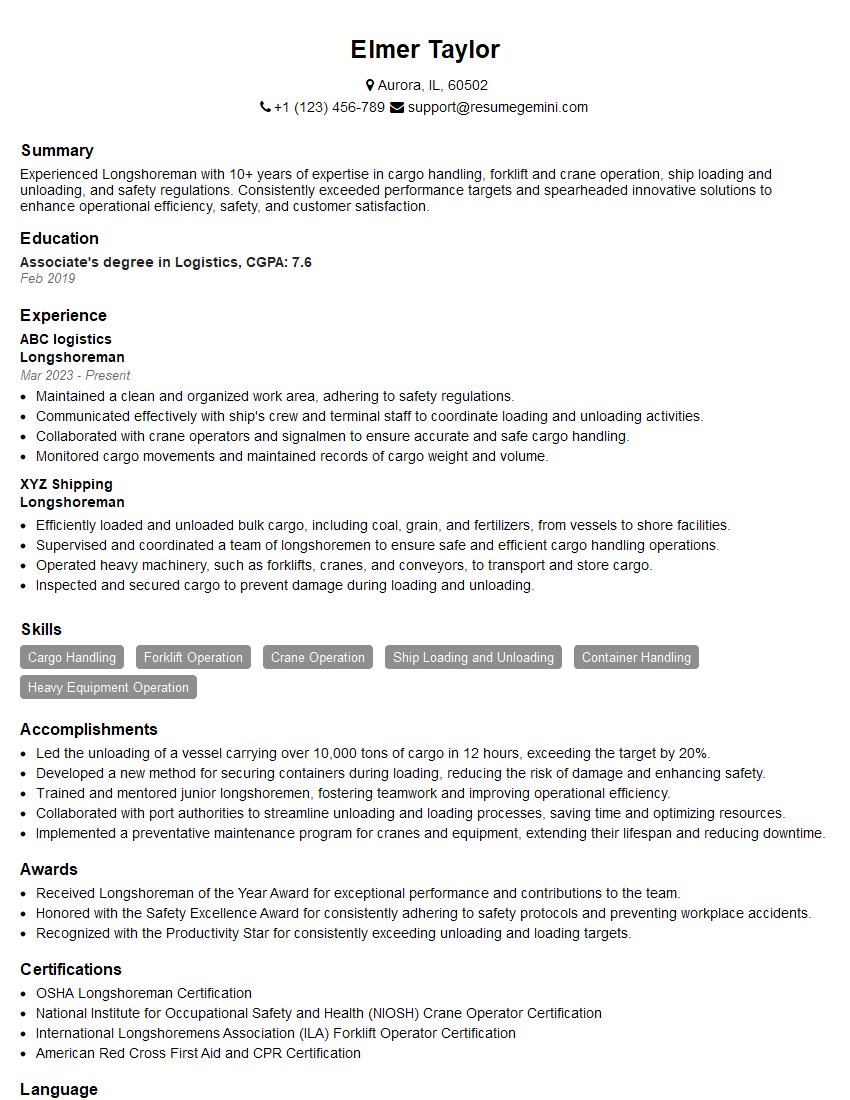
Interviewers often ask about specific skills and experiences. With ResumeGemini‘s customizable templates, you can tailor your resume to showcase the skills most relevant to the position, making a powerful first impression. Also check out Resume Template specially tailored for Longshoreman.
Career Expert Tips:
- Ace those interviews! Prepare effectively by reviewing the Top 50 Most Common Interview Questions on ResumeGemini.
- Navigate your job search with confidence! Explore a wide range of Career Tips on ResumeGemini. Learn about common challenges and recommendations to overcome them.
- Craft the perfect resume! Master the Art of Resume Writing with ResumeGemini’s guide. Showcase your unique qualifications and achievements effectively.
- Great Savings With New Year Deals and Discounts! In 2025, boost your job search and build your dream resume with ResumeGemini’s ATS optimized templates.
Researching the company and tailoring your answers is essential. Once you have a clear understanding of the Longshoreman‘s requirements, you can use ResumeGemini to adjust your resume to perfectly match the job description.
Key Job Responsibilities
Longshoremen are responsible for the safe and efficient loading and unloading of ships in ports around the world. Their duties can vary depending on the size and type of ship, as well as the cargo being handled, but some of their key responsibilities include:
1. Preparing for Loading or Unloading
Before loading or unloading begins, longshoremen must prepare the ship and the dock area. This may involve:
- Inspecting the ship’s hatches and cargo holds to ensure they are safe for loading or unloading.
- Setting up safety equipment, such as barricades and warning signs.
- Cleaning the dock area and making sure it is clear of debris.
2. Loading and Unloading Cargo
The primary responsibility of longshoremen is to load and unload cargo from ships. This can be done manually or with the help of machinery, depending on the type of cargo.
- Manually loading or unloading cargo involves using hand trucks, forklifts, and other equipment to move cargo from the ship to the dock or vice versa.
- When using machinery, longshoremen must be able to operate the equipment safely and efficiently.
3. Securing Cargo
Once cargo has been loaded or unloaded, it must be secured to prevent it from moving or falling during the ship’s voyage. Longshoremen use a variety of methods to secure cargo, including:
- Using straps, chains, and other devices to tie down cargo.
- Building wooden or metal structures to support cargo.
- Filling empty spaces with dunnage, such as straw or wood chips.
4. Operating and Maintaining Equipment
Longshoremen often use a variety of equipment to load and unload cargo, including forklifts, cranes, and conveyor belts. They must be able to operate and maintain this equipment safely and efficiently.
- Operating equipment involves following the manufacturer’s instructions and using proper safety procedures.
- Maintaining equipment involves cleaning, inspecting, and repairing equipment as needed.
5. Ensuring Safety and Security
Longshoremen work in a hazardous environment, so safety is a top priority. They must be aware of the potential hazards associated with their work and take steps to avoid accidents.
- Following safety regulations, such as wearing personal protective equipment and using proper lifting techniques.
- Identifying and reporting any unsafe conditions or practices.
Interview Tips
Preparing for a Longshoreman interview can help you make a good impression and increase your chances of getting the job. Here are a few tips to help you prepare:
1. Research the Company and the Position
Take some time to learn about the company you’re applying to and the specific position you’re interested in. This will help you tailor your answers to the interviewer’s questions and show that you’re genuinely interested in the job.
2. Practice Answering Common Interview Questions
There are a few common interview questions that you’re likely to be asked, such as “Tell me about yourself” and “Why are you interested in this job?” Practice answering these questions in advance so that you can deliver your responses confidently and clearly.
3. Highlight Your Relevant Skills and Experience
In your interview, be sure to highlight your relevant skills and experience. This includes any experience you have in loading and unloading cargo, operating machinery, or working in a safety-sensitive environment. If you don’t have any direct experience, you can still highlight your transferable skills, such as your strength, endurance, and ability to work well in a team.
4. Be Prepared to Talk About Your Safety Awareness
Safety is a top priority for longshoremen, so be prepared to talk about your safety awareness in your interview. Describe the steps you take to stay safe on the job and how you would handle any safety concerns that you might encounter.
5. Dress Professionally and Arrive on Time
First impressions matter, so be sure to dress professionally for your interview. Also, arrive on time so that you can show the interviewer that you’re respectful of their time.
Next Step:
Now that you’re armed with interview-winning answers and a deeper understanding of the Longshoreman role, it’s time to take action! Does your resume accurately reflect your skills and experience for this position? If not, head over to ResumeGemini. Here, you’ll find all the tools and tips to craft a resume that gets noticed. Don’t let a weak resume hold you back from landing your dream job. Polish your resume, hit the “Build Your Resume” button, and watch your career take off! Remember, preparation is key, and ResumeGemini is your partner in interview success.