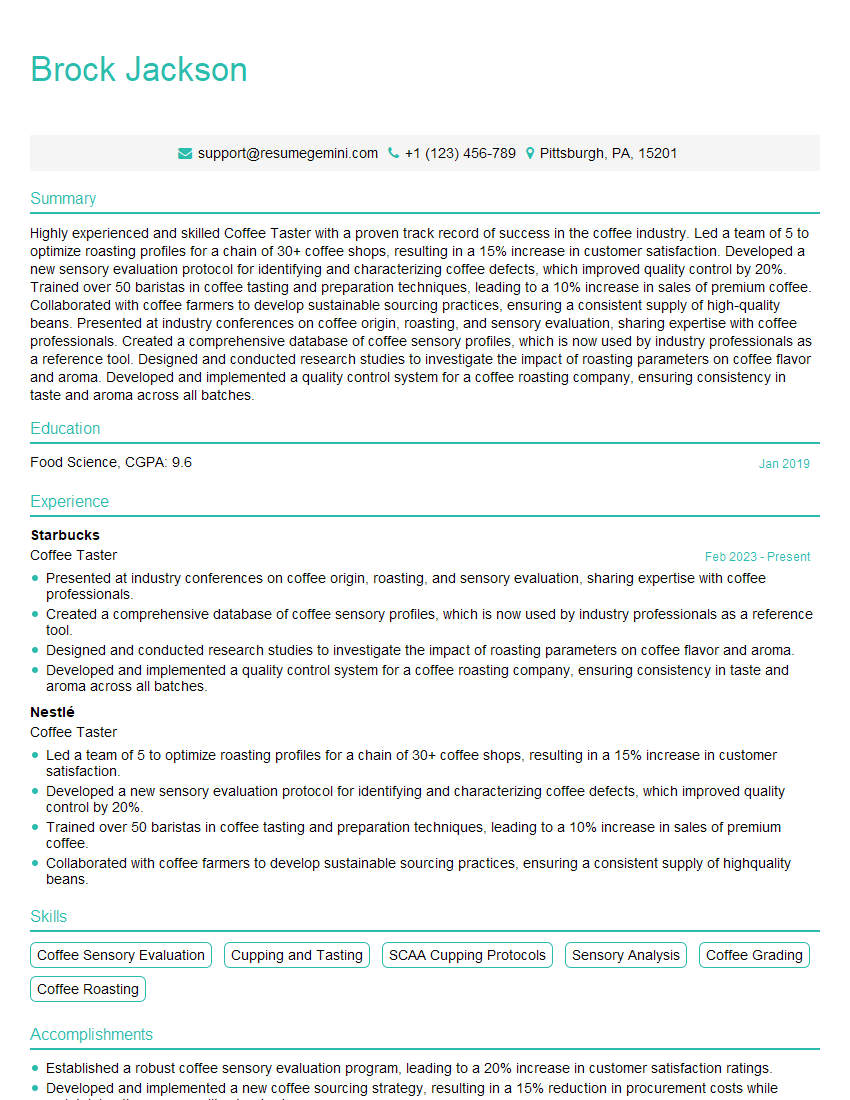
Are you gearing up for a career in Coffee Taster? Feeling nervous about the interview questions that might come your way? Don’t worry, you’re in the right place. In this blog post, we’ll dive deep into the most common interview questions for Coffee Taster and provide you with expert-backed answers. We’ll also explore the key responsibilities of this role so you can tailor your responses to showcase your perfect fit.
Acing the interview is crucial, but landing one requires a compelling resume that gets you noticed. Crafting a professional document that highlights your skills and experience is the first step toward interview success. ResumeGemini can help you build a standout resume that gets you called in for that dream job.






Essential Interview Questions For Coffee Taster
1. Describe the key characteristics that you look for when evaluating the aroma of coffee?
- Intensity: The strength and volume of the aroma.
- Complexity: The range and balance of different aromas, such as floral, fruity, nutty, or spicy.
- Cleanliness: The absence of any off-flavors or taints.
- Roast level: The degree to which the coffee has been roasted, which can impact the aroma profile.
- Origin: The region or country where the coffee was grown, which can influence the aroma characteristics.
2. How do you differentiate between acidity and bitterness in coffee?
Acidity
- Characterized by a bright, refreshing sensation in the mouth.
- Can enhance the fruitiness and complexity of coffee.
- Excessive acidity can result in a sour or astringent taste.
Bitterness
- Perceived as a drying sensation on the tongue.
- May indicate over-extraction or a dark roast level.
- Can balance out acidity in coffee, but excessive bitterness can be unpleasant.
3. What role does body play in the overall taste of coffee?
- Refers to the weight and viscosity of the coffee in the mouth.
- Can range from light and watery to full-bodied and thick.
- Influenced by the coffee’s origin, roast level, and brewing method.
- A good body can enhance the flavor and aroma of coffee, while a thin body can make it seem weak or watery.
4. How do you communicate the flavor profile of a coffee to others?
- Use specific and descriptive language to convey the aromas, flavors, and characteristics.
- Compare and contrast different coffees to highlight their unique attributes.
- Consider using a standardized tasting wheel or lexicon to ensure clarity and consistency.
- Provide a balance of technical and relatable terms to make the description accessible to both experts and consumers.
- Seek feedback from others to refine and improve the communication process.
5. What are some of the common defects or off-flavors that you encounter in coffee and how do you identify them?
- Stale: Lacking freshness, with flat aromas and flavors.
- Sour: Caused by under-extraction or over-fermentation.
- Bitter: Resulting from over-extraction or a dark roast level.
- Smoky: Imparted by the roasting process, can be desirable in some coffees.
- Medicinal: Unpleasant, often caused by contaminants or spoilage.
6. How do you stay up-to-date on the latest trends and developments in coffee tasting?
- Attend industry events, workshops, and conferences.
- Read coffee publications and online resources.
- Participate in coffee tasting panels and competitions.
- Experiment with different coffees and brewing methods.
- Collaborate with other coffee professionals and enthusiasts.
7. What is your approach to sensory analysis and how do you ensure consistency in your evaluations?
- Use standardized tasting protocols and tasting environments.
- Calibrate the palate regularly to minimize bias.
- Seek multiple evaluations from different tasters to ensure consistency.
- Provide detailed tasting notes and use objective scales for evaluation.
- Participate in inter-laboratory testing to compare results with other professionals.
8. How do you handle challenging situations when evaluating coffee, such as when there are subtle differences or inconsistencies?
- Retaste the coffee multiple times to confirm impressions.
- Compare it to reference samples or known standards.
- Consult with other tasters or seek expert opinions.
- Consider the context and factors that may have influenced the coffee’s quality.
- Document the observations carefully and clearly.
9. What are the ethical considerations involved in coffee tasting and how do you ensure fairness and transparency?
- Respect the work of coffee farmers and producers.
- Maintain impartiality and avoid conflicts of interest.
- Disclose any relationships or affiliations that may influence evaluations.
- Use clear and objective language in tasting notes.
- Participate in industry initiatives to promote ethical and sustainable practices.
10. How do you balance the subjective and objective aspects of coffee tasting?
- Use a combination of sensory analysis and technical knowledge.
- Acknowledge personal preferences while striving for objective evaluations.
- Consider the context and purpose of the tasting.
- Seek consensus from multiple tasters to minimize subjectivity.
- Obtain feedback from consumers and professionals to validate evaluations.
11. How do you stay motivated and maintain your passion for coffee tasting?
- Continuously explore new coffees and flavors.
- Share knowledge and connect with other coffee enthusiasts.
- Seek out opportunities for professional development.
- Appreciate the artistry and craftsmanship involved in coffee production.
- Find joy in the sensory experience and the ability to convey it to others.
12. How do you handle the pressure and expectations of being a coffee taster?
- Maintain a high level of professionalism and integrity.
- Trust in my abilities and experience.
- Seek support from colleagues and mentors when necessary.
- Focus on providing accurate and unbiased evaluations.
- Embrace the opportunity to contribute to the coffee industry and enhance the consumer experience.
13. What is your favorite aspect of coffee tasting?
- Discovering the nuances and complexities of different coffees.
- Developing an appreciation for the skill and dedication of coffee producers.
- Connecting with coffee enthusiasts and sharing my knowledge.
- Contributing to the industry’s understanding and appreciation of coffee quality.
- Experiencing the joy and fulfillment that comes from savoring a perfectly brewed cup.
14. How do you see the future of coffee tasting evolving?
- Advancements in technology and data analysis.
- Greater focus on sustainability and ethical practices.
- Increased collaboration among coffee professionals worldwide.
- Growing consumer demand for transparency and traceability.
- Continued exploration of new flavor profiles and brewing methods.
15. What advice would you give to someone who is aspiring to become a coffee taster?
- Develop a deep appreciation for coffee and its complexities.
- Train your palate by tasting a wide range of coffees.
- Seek formal training and certification programs.
- Attend industry events and connect with coffee professionals.
- Be patient and persistent in developing your skills.
Interviewers often ask about specific skills and experiences. With ResumeGemini‘s customizable templates, you can tailor your resume to showcase the skills most relevant to the position, making a powerful first impression. Also check out Resume Template specially tailored for Coffee Taster.
Career Expert Tips:
- Ace those interviews! Prepare effectively by reviewing the Top 50 Most Common Interview Questions on ResumeGemini.
- Navigate your job search with confidence! Explore a wide range of Career Tips on ResumeGemini. Learn about common challenges and recommendations to overcome them.
- Craft the perfect resume! Master the Art of Resume Writing with ResumeGemini’s guide. Showcase your unique qualifications and achievements effectively.
- Great Savings With New Year Deals and Discounts! In 2025, boost your job search and build your dream resume with ResumeGemini’s ATS optimized templates.
Researching the company and tailoring your answers is essential. Once you have a clear understanding of the Coffee Taster‘s requirements, you can use ResumeGemini to adjust your resume to perfectly match the job description.
Key Job Responsibilities
Coffee Tasters are responsible for evaluating the quality of coffee and ensuring that it meets the standards of the company they work for. They may also be involved in developing new coffee blends and flavors.
1. Sensory Evaluation
Coffee Tasters must have a highly developed sense of taste and smell. They use these senses to evaluate the aroma, body, acidity, and flavor of coffee. They may also evaluate the coffee’s finish, or the aftertaste that it leaves.
- Evaluate the aroma, body, acidity, and flavor of coffee
- Identify and describe different coffee flavors
- Assess the quality of coffee and determine if it meets the company’s standards
2. Blending and Flavor Development
Some Coffee Tasters are also involved in developing new coffee blends and flavors. They work with other members of the coffee team to create new products that will appeal to consumers. Coffee tasters are responsible for making sure that the new blends and flavors are balanced and flavorful.
- Work with other members of the coffee team to develop new coffee blends and flavors
- Create new coffee blends and flavors that will appeal to consumers
- Ensure that the new blends and flavors are balanced and flavorful
3. Quality Control
Quality control is one of the most critical responsibilities of Coffee Tasters. They work with the coffee production team to ensure that the quality of the coffee is consistent. Coffee Tasters also work with the packaging and shipping teams to ensure that the coffee is packaged and shipped properly.
- Work with the coffee production team to ensure that the quality of the coffee is consistent
- Work with the packaging and shipping teams to ensure that the coffee is packaged and shipped properly
- Monitor the quality of the coffee throughout the production process
4. Customer Service
Some Coffee Tasters are also involved in customer service. They may answer questions from customers about the company’s coffee products. They may also provide training to customers on how to brew and taste coffee.
- Answer questions from customers about the company’s coffee products
- Provide training to customers on how to brew and taste coffee
- Help customers to find the right coffee for their needs
Interview Tips
Interviewing for a Coffee Taster position can be a daunting task, but there are a few tips that can help you to ace your interview.
1. Research the Company and the Position
Before you go on your interview, take some time to research the company and the position that you are applying for. This will help you to understand the company’s culture and the specific requirements of the job.
- Visit the company’s website
- Read articles about the company
- Talk to people who work for the company
2. Practice Your Tasting Skills
If you are asked to taste coffee during your interview, be sure to practice your tasting skills beforehand. This will help you to identify and describe the different flavors of coffee.
- Taste different coffees and try to identify the different flavors
- Take notes on the flavors that you taste
- Practice describing the flavors of coffee to someone else
3. Prepare Questions to Ask
Asking questions at the end of your interview shows that you are interested in the position and that you have done your research. Be sure to prepare a few questions to ask the interviewer.
- What is the company culture like?
- What are the specific requirements of the job?
- What are the opportunities for advancement?
4. Dress Professionally
First impressions matter, so be sure to dress professionally for your interview. This means wearing clean, pressed clothes and shoes. You should also avoid wearing strong perfumes or colognes.
- Wear clean, pressed clothes and shoes
- Avoid wearing strong perfumes or colognes
- Arrive on time for your interview
Next Step:
Armed with this knowledge, you’re now well-equipped to tackle the Coffee Taster interview with confidence. Remember, preparation is key. So, start crafting your resume, highlighting your relevant skills and experiences. Don’t be afraid to tailor your application to each specific job posting. With the right approach and a bit of practice, you’ll be well on your way to landing your dream job. Build your resume now from scratch or optimize your existing resume with ResumeGemini. Wish you luck in your career journey!