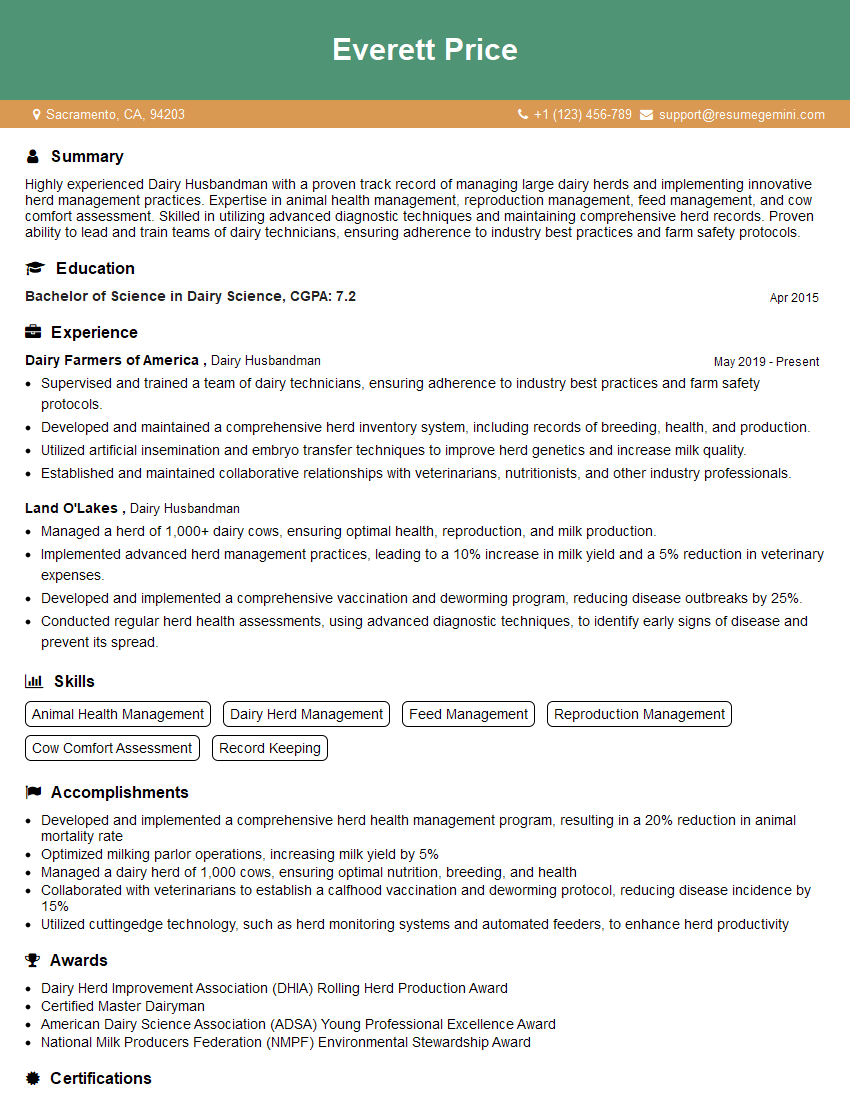
Feeling lost in a sea of interview questions? Landed that dream interview for Dairy Husbandman but worried you might not have the answers? You’re not alone! This blog is your guide for interview success. We’ll break down the most common Dairy Husbandman interview questions, providing insightful answers and tips to leave a lasting impression. Plus, we’ll delve into the key responsibilities of this exciting role, so you can walk into your interview feeling confident and prepared.
Acing the interview is crucial, but landing one requires a compelling resume that gets you noticed. Crafting a professional document that highlights your skills and experience is the first step toward interview success. ResumeGemini can help you build a standout resume that gets you called in for that dream job.






Essential Interview Questions For Dairy Husbandman
1. Describe the key aspects of a successful dairy herd management program?
A successful dairy herd management program encompasses several key aspects:
- Proper Nutrition: Ensuring cows receive a balanced diet that meets their nutritional requirements for optimal milk production and health.
- Health Management: Implementing proactive measures to prevent and treat diseases, including vaccination programs, regular herd health screenings, and prompt veterinary care.
2. How do you monitor and evaluate the performance of a dairy herd?
Monitoring Herd Health
- Regularly monitoring herd health parameters, including milk somatic cell counts, reproductive performance, and disease incidence.
- Early detection of health issues through regular herd observations and timely veterinary consultations.
Evaluating Production Efficiency
- Tracking milk production per cow and analyzing factors affecting yield, such as nutrition, genetics, and environmental conditions.
- Evaluating feed efficiency by comparing feed intake to milk production, identifying areas for improvement.
3. Explain the role of genetics in dairy herd management?
Genetics plays a crucial role in dairy herd management by influencing various traits that impact herd performance:
- Milk Production: Selecting bulls with high genetic potential for milk yield and quality traits.
- Health and Fertility: Identifying animals with favorable genetic traits related to disease resistance and reproductive performance.
4. How do you implement reproductive management strategies to optimize herd productivity?
Reproductive management strategies are essential for optimizing herd productivity:
- Estrous Detection: Accurately detecting cows in heat using various methods, such as visual observation and activity monitoring devices.
- Artificial Insemination (AI): Using semen from selected sires with desirable genetic traits to improve herd quality and productivity.
5. Describe the importance of record keeping in dairy herd management?
Record keeping is vital for dairy herd management as it provides a valuable tool for:
- Tracking Herd Performance: Collecting data on milk production, health events, breeding records, and other relevant parameters.
- Identifying Areas for Improvement: Analyzing recorded data to identify trends, patterns, and areas where management practices can be optimized.
6. How do you manage pasture-based dairy systems?
Managing pasture-based dairy systems requires specific practices:
- Pasture Management: Establishing and maintaining high-quality pastures, including fertilization, irrigation, and grazing strategies.
- Supplementary Feeding: Providing additional feed supplements, such as hay or concentrates, to meet nutritional requirements during pasture shortages.
7. What are the common challenges you have faced in dairy herd management, and how did you overcome them?
Challenges commonly faced in dairy herd management include:
- Disease Outbreaks: Implementing strict biosecurity measures, consulting with veterinarians, and following established disease prevention and control protocols.
- Nutritional Deficiencies: Conducting regular feed analysis, adjusting diets accordingly, and providing appropriate mineral supplements to ensure optimal nutrition.
8. Describe the ethical considerations in dairy farming, and how do you ensure animal welfare?
Ethical considerations in dairy farming are of utmost importance:
- Proper Housing and Handling: Providing adequate shelter, ventilation, and space for cows, as well as humane handling practices.
- Disease Prevention and Treatment: Implementing measures to prevent and control diseases, ensuring timely access to veterinary care, and minimizing pain and suffering.
9. How do you stay updated with the latest advancements in dairy herd management practices?
To stay informed about the latest advancements, I regularly engage in:
- Professional Development: Attending conferences, workshops, and training programs related to dairy herd management.
- Research and Literature Review: Keeping up with scientific literature, industry publications, and online resources to acquire knowledge about emerging trends and best practices.
10. What is your experience in managing a dairy operation with a focus on sustainability?
In my previous role, I implemented sustainable practices that focused on:
- Environmental Stewardship: Utilizing manure management systems to minimize environmental impact and promote soil health.
- Resource Conservation: Implementing water conservation measures and utilizing renewable energy sources to reduce the farm’s environmental footprint.
Interviewers often ask about specific skills and experiences. With ResumeGemini‘s customizable templates, you can tailor your resume to showcase the skills most relevant to the position, making a powerful first impression. Also check out Resume Template specially tailored for Dairy Husbandman.
Career Expert Tips:
- Ace those interviews! Prepare effectively by reviewing the Top 50 Most Common Interview Questions on ResumeGemini.
- Navigate your job search with confidence! Explore a wide range of Career Tips on ResumeGemini. Learn about common challenges and recommendations to overcome them.
- Craft the perfect resume! Master the Art of Resume Writing with ResumeGemini’s guide. Showcase your unique qualifications and achievements effectively.
- Great Savings With New Year Deals and Discounts! In 2025, boost your job search and build your dream resume with ResumeGemini’s ATS optimized templates.
Researching the company and tailoring your answers is essential. Once you have a clear understanding of the Dairy Husbandman‘s requirements, you can use ResumeGemini to adjust your resume to perfectly match the job description.
Key Job Responsibilities
Dairy Husbandmen are responsible for the care and management of dairy animals. They ensure the animals are healthy, productive, and comfortable, while also maintaining the cleanliness and safety of the dairy farm. Their main responsibilities include:
1. Animal Husbandry
Dairy Husbandmen oversee the daily care and feeding of dairy cows, ensuring their health and well-being. They monitor the cows’ health, administer vaccinations and medications, and keep records of their health and milk production.
2. Breeding and Genetics
Dairy Husbandmen are responsible for improving the genetics of their herd by selecting bulls for breeding and implementing artificial insemination techniques. They also manage the herd’s breeding program to ensure the production of high-quality milk.
3. Milk Production
Dairy Husbandmen monitor the milk production of each cow and make adjustments to feeding and milking practices to optimize milk yield and quality. They also maintain the milking equipment and ensure the proper handling and storage of milk.
4. Farm Management
Dairy Husbandmen oversee the overall management of the dairy farm, including budgeting, staffing, and maintenance of facilities. They may also be involved in marketing and sales of dairy products.
Interview Tips
Preparing for an interview can be daunting, but with the right tips and strategies, you can increase your chances of success. Here are some interview preparation tips for Dairy Husbandmen:
1. Research the Company and Position
Before the interview, take the time to research the dairy farm and the specific position you are applying for. This will help you understand the company’s culture, values, and goals. It will also give you a better understanding of the role and the responsibilities you will be expected to fulfill.
2. Practice Your Answers
Take some time to practice answering common interview questions. Think about your experiences and qualifications, and how they relate to the job requirements. Prepare specific examples that demonstrate your skills and abilities.
3. Dress Professionally
First impressions matter, so make sure to dress professionally for your interview. This means wearing clean, pressed clothes that are appropriate for an office setting.
4. Be Punctual
Punctuality is a sign of respect and professionalism. Arrive at your interview on time, or even a few minutes early. This shows that you value the interviewer’s time and that you are serious about the position.
5. Be Enthusiastic and Confident
Interviews are a two-way street. You are not only trying to impress the interviewer, but you are also trying to learn more about the company and the position. Be enthusiastic about the opportunity and confident in your abilities. This will make you more likeable and memorable.
6. Ask Questions
At the end of the interview, be sure to ask the interviewer any questions you have about the position or the company. This shows that you are engaged and interested in the opportunity.
Next Step:
Now that you’re armed with a solid understanding of what it takes to succeed as a Dairy Husbandman, it’s time to turn that knowledge into action. Take a moment to revisit your resume, ensuring it highlights your relevant skills and experiences. Tailor it to reflect the insights you’ve gained from this blog and make it shine with your unique qualifications. Don’t wait for opportunities to come to you—start applying for Dairy Husbandman positions today and take the first step towards your next career milestone. Your dream job is within reach, and with a polished resume and targeted applications, you’ll be well on your way to achieving your career goals! Build your resume now with ResumeGemini.