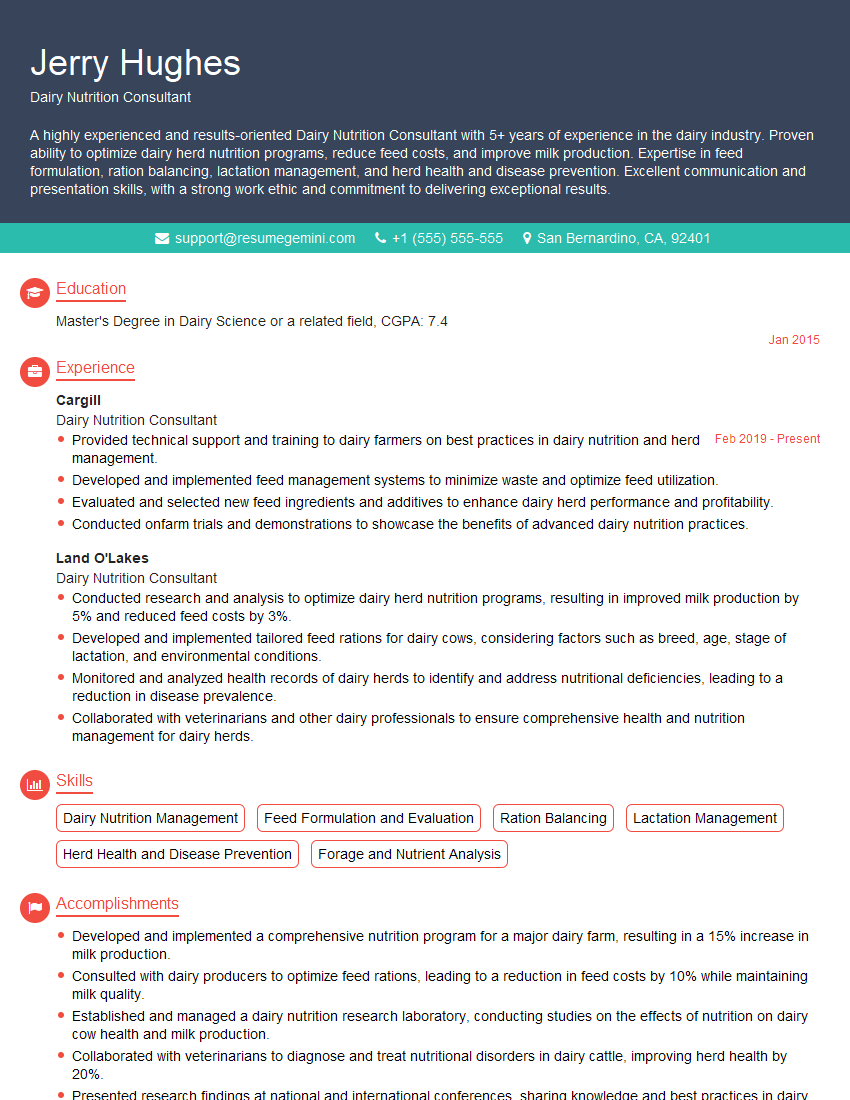
Ever felt underprepared for that crucial job interview? Or perhaps you’ve landed the interview but struggled to articulate your skills and experiences effectively? Fear not! We’ve got you covered. In this blog post, we’re diving deep into the Dairy Nutrition Consultant interview questions that you’re most likely to encounter. But that’s not all. We’ll also provide expert insights into the key responsibilities of a Dairy Nutrition Consultant so you can tailor your answers to impress potential employers.
Acing the interview is crucial, but landing one requires a compelling resume that gets you noticed. Crafting a professional document that highlights your skills and experience is the first step toward interview success. ResumeGemini can help you build a standout resume that gets you called in for that dream job.






Essential Interview Questions For Dairy Nutrition Consultant
1. Describe the key nutritional components of dairy products and their importance in human health.
Dairy products are a rich source of essential nutrients, including:
- Protein: High-quality, complete protein that supports muscle growth and repair.
- Calcium: Essential for strong bones and teeth, reducing osteoporosis risk.
- Potassium: Regulates blood pressure, supports heart health.
- Vitamin D: Aids calcium absorption, promotes bone health.
- Riboflavin (Vitamin B2): Supports energy production, red blood cell formation.
- Vitamin B12: Essential for nerve function, blood cell production.
2. Discuss the role of dairy in promoting bone health.
Importance of Calcium:
- Calcium is the primary mineral in bones, providing strength and density.
- Dairy products are a rich source of bioavailable calcium, easily absorbed by the body.
Role of Vitamin D:
- Vitamin D enhances calcium absorption in the intestines.
- Dairy products are often fortified with vitamin D, further promoting bone health.
Dairy Consumption and Osteoporosis Prevention:
- Adequate dairy intake throughout life supports peak bone mass acquisition.
- Regular dairy consumption can reduce the risk of osteoporosis, fractures, and skeletal fragility.
3. Explain the impact of dairy consumption on cardiovascular health.
Dairy consumption has been linked to both positive and negative effects on cardiovascular health, depending on the type and amount consumed:
- Saturated Fat: Full-fat dairy products contain saturated fat, which can raise LDL (bad) cholesterol.
- Calcium and Potassium: Dairy also contains calcium and potassium, which have beneficial effects on blood pressure and arterial health.
- Fermented Dairy Products: Yogurt and kefir contain probiotics that support a healthy gut microbiome, potentially reducing inflammation and improving heart health.
- Overall: Moderate consumption of low-fat or non-fat dairy products may have a neutral or potentially beneficial effect on cardiovascular health.
4. Describe the different ways dairy can be incorporated into a balanced diet for various age groups.
Dairy can be incorporated into a balanced diet for different age groups as follows:
- Infants and Toddlers: Breast milk or formula provides all the necessary nutrients, supplemented with whole milk or fortified plant-based milk after 1 year.
- Children and Adolescents: 2-3 servings of dairy daily, including milk, yogurt, cheese, or fortified plant-based alternatives.
- Adults: 2-3 servings of dairy daily, including low-fat or non-fat options.
- Older Adults: 3 or more servings of dairy daily, emphasizing vitamin D-rich sources to support bone health.
- Individuals with Lactose Intolerance: Lactose-free dairy products or fortified plant-based alternatives can provide similar nutritional benefits.
5. Discuss the ethical and environmental implications of dairy production and consumption.
Ethical Considerations:
- Animal Welfare: Concerns about the treatment and living conditions of dairy cows.
- Antibiotic Use: Antibiotics are often used in dairy farming to prevent and treat infections.
Environmental Impact:
- Greenhouse Gas Emissions: Dairy cows produce methane, a potent greenhouse gas.
- Water Usage: Dairy production requires significant amounts of water.
- Land Use: Dairy farming requires large areas of land for grazing and feed production.
Sustainable Practices:
- Supporting farmers who prioritize animal welfare and sustainable farming practices.
- Opting for organic or ethically sourced dairy products.
6. Describe the latest research and advancements in dairy nutrition.
Recent advancements in dairy nutrition include:
- Protein Fractions: Research on the specific benefits of different protein fractions in dairy, such as whey and casein.
- Probiotics and Prebiotics: Investigations into the role of probiotics and prebiotics in dairy products to enhance gut health.
- Dairy and Inflammation: Studies examining the potential anti-inflammatory properties of dairy components.
- Sustainability: Innovations in dairy farming to reduce environmental impact, such as methane reduction technologies.
7. Explain the role of dairy nutrition in managing chronic diseases, such as osteoporosis, obesity, and diabetes.
- Osteoporosis: Dairy provides calcium and vitamin D, essential for bone health and osteoporosis prevention.
- Obesity: Dairy can promote satiety and support weight management due to its high protein content.
- Diabetes: Some studies suggest that dairy consumption may be associated with a reduced risk of type 2 diabetes, possibly due to its calcium and vitamin D content.
8. Discuss the potential allergens and intolerances associated with dairy products.
- Lactose Intolerance: An inability to digest lactose, a sugar found in dairy, leading to symptoms like bloating and diarrhea.
- Milk Protein Allergy: An allergic reaction to the proteins in milk, causing symptoms such as hives, wheezing, and vomiting.
- Dairy Sensitivity: An intolerance to certain components in dairy that may cause digestive issues or other symptoms, despite not being an allergy.
Management:
- Avoiding or limiting dairy products for those with allergies or intolerances.
- Choosing lactose-free or hypoallergenic dairy alternatives.
- Consulting with a healthcare professional for proper diagnosis and dietary guidance.
9. Describe the key regulations and guidelines related to dairy nutrition and labeling.
- FDA Labeling Regulations: Specify labeling requirements for dairy products, including nutrition facts and ingredient lists.
- USDA Grades: Grading standards for dairy products based on quality and composition.
- Dietary Guidelines for Americans: Provide recommendations for dairy consumption as part of a healthy diet.
- International Standards: Codex Alimentarius sets global standards for dairy products, including nutritional labeling.
10. Explain the importance of ongoing research and education in dairy nutrition.
- Continued Innovation: Ongoing research drives advancements in dairy nutrition and product development.
- Consumer Awareness: Education helps consumers make informed choices about dairy consumption.
- Health and Wellness: Research provides evidence-based recommendations for dairy’s role in maintaining health and preventing chronic diseases.
- Addressing Challenges: Research helps address challenges such as lactose intolerance and sustainability in dairy production.
Interviewers often ask about specific skills and experiences. With ResumeGemini‘s customizable templates, you can tailor your resume to showcase the skills most relevant to the position, making a powerful first impression. Also check out Resume Template specially tailored for Dairy Nutrition Consultant.
Career Expert Tips:
- Ace those interviews! Prepare effectively by reviewing the Top 50 Most Common Interview Questions on ResumeGemini.
- Navigate your job search with confidence! Explore a wide range of Career Tips on ResumeGemini. Learn about common challenges and recommendations to overcome them.
- Craft the perfect resume! Master the Art of Resume Writing with ResumeGemini’s guide. Showcase your unique qualifications and achievements effectively.
- Great Savings With New Year Deals and Discounts! In 2025, boost your job search and build your dream resume with ResumeGemini’s ATS optimized templates.
Researching the company and tailoring your answers is essential. Once you have a clear understanding of the Dairy Nutrition Consultant‘s requirements, you can use ResumeGemini to adjust your resume to perfectly match the job description.
Key Job Responsibilities
Dairy Nutrition Consultants play a pivotal role in the dairy industry, serving as expert advisors on matters pertaining to animal nutrition and well-being. These highly specialized professionals possess a deep understanding of dairy cattle nutrition and apply their knowledge to optimize animal health, productivity, and profitability.
1. Nutritional Assessment and Planning
Conduct thorough nutritional assessments of dairy herds, evaluating feedstuffs, body condition scoring, and milk production data. Develop customized nutritional plans tailored to meet the specific needs of each herd based on factors such as breed, lactation stage, and environmental conditions.
2. Feed Management and Optimization
Provide guidance on selecting, formulating, and managing feed rations to ensure optimal nutrient intake and minimize feed costs. Collaborate with farmers to implement feeding strategies that promote animal growth, milk production, and reproductive performance.
3. Health and Disease Prevention
Monitor herd health status and identify potential nutritional imbalances that may contribute to disease or production problems. Develop and implement nutritional interventions to prevent and mitigate health issues related to improper nutrition.
4. Record Keeping and Analysis
Maintain accurate records of nutritional plans, feed intake, and animal performance data. Analyze data to identify trends, assess the effectiveness of nutritional interventions, and make data-driven recommendations for ongoing herd management.
Interview Tips
Preparing thoroughly for an interview is crucial in making a positive impression and demonstrating your qualifications for the role of Dairy Nutrition Consultant. Here are some key tips to help you ace the interview:
1. Research the Company and Role
Familiarize yourself with the dairy company you are applying to, its values, and the specific requirements of the Dairy Nutrition Consultant position. This knowledge will help you tailor your answers and demonstrate your understanding of the company’s goals and objectives.
2. Showcase Your Technical Expertise
Emphasize your in-depth knowledge of dairy cattle nutrition, feed management, and herd health. Provide specific examples of your work in nutritional assessment, feed formulation, and disease prevention. Quantify your accomplishments whenever possible to demonstrate the impact of your contributions.
3. Highlight Your Communication and Interpersonal Skills
Consultants need to be effective communicators and have strong interpersonal skills. Highlight your ability to convey complex technical information clearly and concisely to farmers, veterinarians, and other stakeholders. Showcase your experience in building relationships and working collaboratively with clients.
4. Prepare for Common Interview Questions
Research typical interview questions for this role and prepare thoughtful answers that demonstrate your qualifications. Common questions may include:
- Tell me about your experience in nutritional assessment and planning for dairy herds.
- Describe your approach to feed management and optimization.
- How do you identify and address nutritional imbalances that contribute to health issues in dairy cattle?
- How do you stay updated on the latest advancements in dairy nutrition?
- Provide an example of a successful nutritional intervention you have implemented.
5. Ask Informed Questions
Prepare thoughtful questions to ask the interviewer, demonstrating your engagement and interest in the role and company. Questions could focus on the company’s goals for herd nutrition, their approach to sustainability, or opportunities for professional development.
Next Step:
Armed with this knowledge, you’re now well-equipped to tackle the Dairy Nutrition Consultant interview with confidence. Remember, preparation is key. So, start crafting your resume, highlighting your relevant skills and experiences. Don’t be afraid to tailor your application to each specific job posting. With the right approach and a bit of practice, you’ll be well on your way to landing your dream job. Build your resume now from scratch or optimize your existing resume with ResumeGemini. Wish you luck in your career journey!