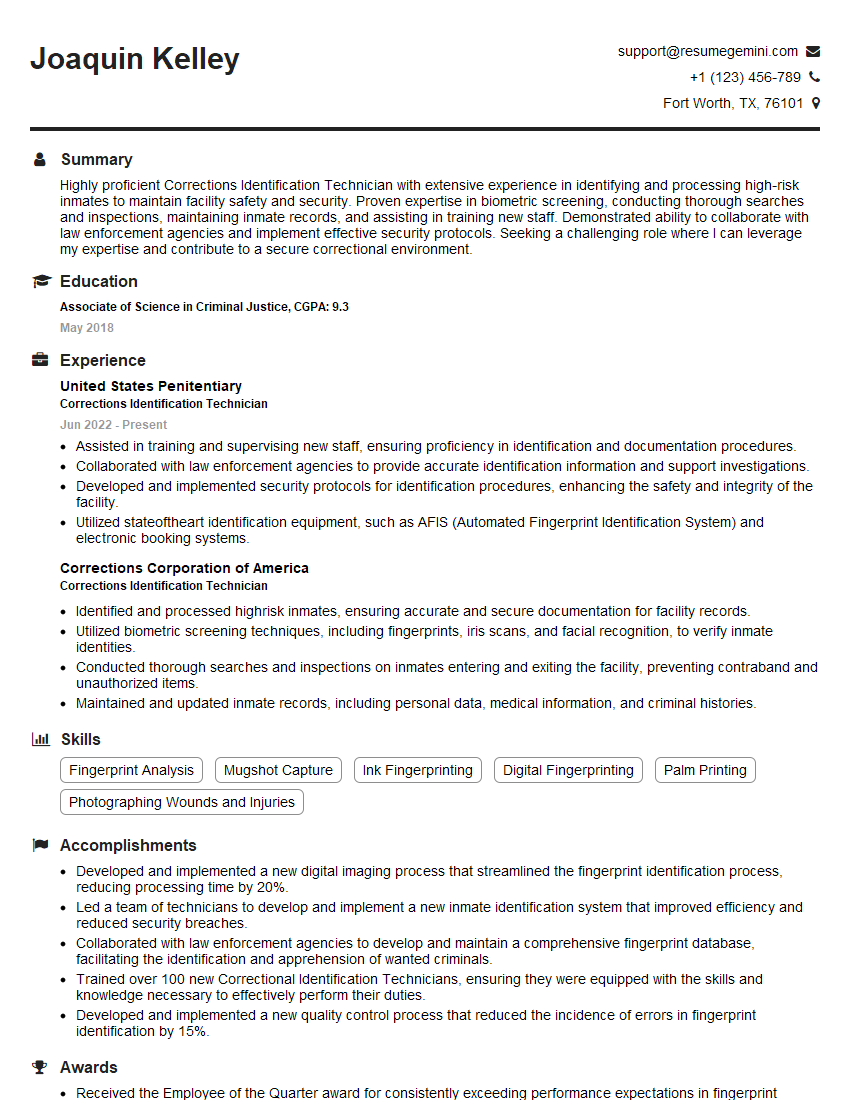
Are you gearing up for an interview for a Corrections Identification Technician position? Whether you’re a seasoned professional or just stepping into the role, understanding what’s expected can make all the difference. In this blog, we dive deep into the essential interview questions for Corrections Identification Technician and break down the key responsibilities of the role. By exploring these insights, you’ll gain a clearer picture of what employers are looking for and how you can stand out. Read on to equip yourself with the knowledge and confidence needed to ace your next interview and land your dream job!
Acing the interview is crucial, but landing one requires a compelling resume that gets you noticed. Crafting a professional document that highlights your skills and experience is the first step toward interview success. ResumeGemini can help you build a standout resume that gets you called in for that dream job.






Essential Interview Questions For Corrections Identification Technician
1. What are the key principles of identification and documentation for inmates?
Key Principles of Inmate Identification and Documentation:
- Accuracy: Ensuring that the data collected is correct and matches the individual being identified.
- Reliability: Using methods and procedures that provide consistent and dependable results.
- Timeliness: Collecting and processing information promptly to support decision-making and ensure up-to-date records.
- Integrity: Protecting the data from unauthorized access, modification, or loss.
- Confidentiality: Maintaining the privacy and security of sensitive information collected.
2. Explain the steps involved in conducting a proper inmate intake process.
Inmate Intake Process Steps:
Registration and Recording
- Receive and record the inmate’s identifying information.
- Capture biometric data (photographs, fingerprints).
- Search and inventory personal belongings.
Medical Screening
- Assess inmate’s health and medical needs.
- Document any injuries or illnesses.
Classification and Placement
- Determine the inmate’s security level and housing assignment.
- Assign the inmate to appropriate programs and services.
3. Describe the different identification systems used in correctional facilities.
Identification Systems in Correctional Facilities:
- Photographs: Standard mugshots for visual identification.
- Fingerprints: Biometric data for unique identification.
- Iris Scans: High-accuracy biometric method for increased security.
- DNA Mapping: Used for positive identification in complex cases.
- Inmate ID Cards: Issued with identifying information and photo for quick recognition.
4. What are the ethical considerations for collecting and maintaining inmate identification data?
- Respect for Privacy: Balancing the need for identification with the right to privacy.
- Data Security: Protecting inmate data from unauthorized access or misuse.
- Fair and Equitable Treatment: Ensuring that identification procedures do not discriminate or stigmatize inmates.
- Confidentiality: Maintaining the privacy of sensitive information, such as medical history or mental health records.
- Data Integrity: Preserving the accuracy and reliability of inmate identification records.
5. What techniques do you use to ensure the accuracy of identification and documentation?
- Multiple Identification Methods: Employing a combination of photographs, fingerprints, and other unique identifiers.
- Verification and Cross-Referencing: Checking data against existing records and using multiple information sources.
- Training and Quality Control: Providing staff with thorough training on identification procedures and maintaining high standards of accuracy.
- Technology and Automation: Utilizing biometric systems, databases, and software to enhance accuracy and efficiency.
- Independent Verification: Seeking confirmation or verification from supervisors or other trusted sources.
6. How do you handle cases where an inmate’s identity is uncertain or disputed?
- Thorough Investigation: Conducting a comprehensive investigation to gather all available evidence.
- Consult with Experts: Collaborating with forensic specialists, such as fingerprint examiners or DNA analysts.
- Review External Records: Checking external databases, such as law enforcement records or social media, for additional information.
- Consult with Legal Counsel: Seeking legal guidance to determine appropriate actions and ensure compliance with legal requirements.
- Document and Report: Maintaining a detailed record of the investigation and reporting the findings to the appropriate authorities.
7. What is the role of technology in modern identification and documentation processes?
- Biometrics: Using advanced technology, such as iris scans or facial recognition, for highly accurate identification.
- Databases and Software: Centralizing and managing inmate data, enabling efficient searching and cross-referencing.
- Automated Identification Systems: Automating the identification process to reduce errors and improve response time.
- Mobile Technology: Utilizing handheld devices for on-site data capture and verification.
- Data Analytics: Analyzing data to identify trends, patterns, and potential security risks.
8. How do you stay up-to-date with advancements and best practices in identification and documentation?
- Professional Development: Attending conferences, workshops, and training programs.
- Research and Reading: Keeping informed about new technologies, techniques, and case studies.
- Collaboration: Networking with industry experts and sharing best practices.
- Regulatory Compliance: Monitoring and adhering to changes in laws, regulations, and accreditation standards.
- Innovation and Adaptability: Embracing emerging technologies and exploring new methods to enhance identification processes.
9. Tell me about a time when you successfully resolved an identification-related issue.
[Share a specific example of a challenging situation where you effectively used your skills to resolve an identification issue.]
10. How do you handle working with challenging or uncooperative inmates during the identification process?
- Professionalism and De-escalation: Maintaining composure and using de-escalation techniques to calm inmates.
- Clear Communication: Explaining the process and expectations clearly, providing opportunities for questions and understanding.
- Empathy and Respect: Treating inmates with respect, even in difficult situations, to foster cooperation.
- Collaboration and Support: Seeking assistance from colleagues or supervisors when necessary to ensure safety and maintain control.
- Documentation and Reporting: Recording incidents and reporting any resistance or uncooperative behavior for appropriate follow-up.
Interviewers often ask about specific skills and experiences. With ResumeGemini‘s customizable templates, you can tailor your resume to showcase the skills most relevant to the position, making a powerful first impression. Also check out Resume Template specially tailored for Corrections Identification Technician.
Career Expert Tips:
- Ace those interviews! Prepare effectively by reviewing the Top 50 Most Common Interview Questions on ResumeGemini.
- Navigate your job search with confidence! Explore a wide range of Career Tips on ResumeGemini. Learn about common challenges and recommendations to overcome them.
- Craft the perfect resume! Master the Art of Resume Writing with ResumeGemini’s guide. Showcase your unique qualifications and achievements effectively.
- Great Savings With New Year Deals and Discounts! In 2025, boost your job search and build your dream resume with ResumeGemini’s ATS optimized templates.
Researching the company and tailoring your answers is essential. Once you have a clear understanding of the Corrections Identification Technician‘s requirements, you can use ResumeGemini to adjust your resume to perfectly match the job description.
Key Job Responsibilities
Corrections Identification Technicians are responsible for the safe, secure, and efficient identification and processing of inmates within correctional facilities. Their primary duties include:
1. Data Management and Record Keeping
Maintain accurate and up-to-date inmate records, including personal information, medical history, criminal history, and other relevant data.
- Conduct thorough background investigations and verify inmate identities.
- Create and update inmate profiles using various digital systems.
2. Identification Procedures
Perform comprehensive identification procedures, including fingerprinting, photographing, and searching for tattoos or other identifying marks.
- Operate biometric and facial recognition equipment.
- Collect and analyze fingerprints using AFIS (Automated Fingerprint Identification System).
3. Personal Searches and Inspections
Conduct thorough searches of inmates and their belongings to detect contraband, weapons, or other security threats.
- Follow established security protocols and maintain a high level of vigilance.
- Use metal detectors and other tools to search for concealed items.
4. Maintenance and Inventory Control
Maintain and inventory personal property and contraband, ensuring its safekeeping and proper disposal.
- Ensure the security and integrity of evidence and other sensitive materials.
- Maintain inventory records and track inmate property.
Interview Tips
To ace an interview for a Corrections Identification Technician position, candidates should:
1. Research the Facility and Position
Research the specific correctional facility and the role of the Identification Technician within their organization. This will demonstrate your interest and understanding of the institution.
- Visit the facility website or contact the hiring manager for more information.
- Identify the specific responsibilities and expectations of the position.
2. Highlight Relevant Skills and Experience
Emphasize your experience and skills that are directly relevant to the job requirements. Quantify your achievements and provide specific examples whenever possible.
- Describe your experience in conducting background investigations, fingerprinting, and searching for contraband.
- Mention any certifications or training related to identification procedures or security.
3. Demonstrate Attention to Detail and Accuracy
Corrections Identification Technicians must be meticulously accurate in their work. Provide examples that showcase your attention to detail, organizational skills, and ability to follow established protocols.
- Explain how you ensure the accuracy of inmate records and maintain a secure environment.
- Discuss your experience in handling sensitive information and adhering to security regulations.
4. Prepare for Common Interview Questions
Prepare for common interview questions specific to the field. Practice your answers to demonstrate your knowledge and enthusiasm for this role.
- “Why are you interested in becoming a Corrections Identification Technician?”
- “Describe a situation where you successfully identified and apprehended an individual.”
- “How do you manage the ethical and legal considerations involved in this role?”
Next Step:
Now that you’re armed with a solid understanding of what it takes to succeed as a Corrections Identification Technician, it’s time to turn that knowledge into action. Take a moment to revisit your resume, ensuring it highlights your relevant skills and experiences. Tailor it to reflect the insights you’ve gained from this blog and make it shine with your unique qualifications. Don’t wait for opportunities to come to you—start applying for Corrections Identification Technician positions today and take the first step towards your next career milestone. Your dream job is within reach, and with a polished resume and targeted applications, you’ll be well on your way to achieving your career goals! Build your resume now with ResumeGemini.