





In today’s competitive job market, crafting a compelling cover letter is paramount to securing an interview and landing your dream job. This comprehensive guide from ResumeGemini provides you with expert advice and practical tips to elevate your cover letter, leaving a lasting impression on hiring managers.
The Perfect Opening: Crafting an Attention-Grabbing Introduction
Your cover letter should begin with a captivating introduction that immediately grabs the attention of the reader. Start with a strong hook, such as a compelling statistic, an intriguing question, or a brief anecdote that demonstrates your passion for the position and company.
- Example: “As an experienced marketing professional with a proven track record of exceeding sales targets, I am eager to contribute my expertise to your dynamic team at [Company Name].”
- Example: “With my deep-seated passion for sustainable development, I am drawn to your organization’s commitment to environmental stewardship. I am confident that my skills in project management and impact measurement would be invaluable to your mission.”
Highlighting Your Skills: Showcasing Your Value Proposition
In the body of your cover letter, focus on highlighting the skills and experience that most closely align with the requirements of the position you are applying for. Quantify your accomplishments whenever possible, providing specific metrics and data points to demonstrate your impact.
- Example: “In my previous role at [Previous Company], I spearheaded a marketing campaign that resulted in a 20% increase in sales revenue.”
- Example: “As project manager for a major infrastructure project, I successfully managed a team of 10 engineers, delivering the project on time and within budget.”
Quantifying Your Accomplishments: Making Your Impact Measurable
Adding quantifiable metrics to your cover letter not only demonstrates your accomplishments but also provides concrete evidence of your value to potential employers. Use numbers, percentages, and specific outcomes to showcase the impact of your work.
- Example: “Developed and implemented a social media strategy that increased website traffic by 30% and generated over 1000 qualified leads.”
- Example: “Reduced operational costs by 15% through the implementation of process improvements and automation.”
Tailoring Your Letter: Aligning with the Job Description
Tailoring your cover letter to each specific job application shows that you have taken the time to thoroughly research the position and the company. Highlight the skills and experience that are most relevant to the job description and demonstrate how your qualifications align with the company’s needs.
- Example: “My experience in managing cross-functional teams and developing innovative marketing campaigns makes me an ideal candidate for the Marketing Manager role at [Company Name].”
- Example: “As a software engineer with a specialization in cloud computing, I am confident that I can contribute to the development of your cutting-edge technology products.”
Proofreading Perfection: Ensuring a Polished and Error-Free Presentation
Before submitting your cover letter, it is essential to proofread it carefully to ensure that it is polished and error-free. Pay attention to spelling, grammar, punctuation, and formatting. Ask a friend, colleague, or career counselor to review your letter and provide feedback.
Additional Tips:
- Keep it concise: Your cover letter should be no longer than one page, so focus on providing the most relevant and impactful information.
- Use strong action verbs: Use active and specific verbs to convey your accomplishments and make your writing more engaging.
- Proofread carefully: Even the smallest error can detract from your professionalism, so proofread your cover letter meticulously before submitting it.
- Customize for each application: Avoid using a generic cover letter; tailor it to each specific job application to show that you have taken the time to learn about the company and the position.
- Get feedback: Ask a friend, mentor, or career counselor to review your cover letter and provide constructive feedback to help you improve it.
Conclusion:
By following these tips and using ResumeGemini’s comprehensive suite of tools and resources, you can craft a compelling cover letter that will showcase your skills, experience, and value to potential employers. A well-written cover letter is an essential element of any successful job application, so take the time to invest in writing a document that will set you apart from the competition and help you secure your dream job.
Career Expert Tips:
- Select the ideal resume template to showcase your professional experience effectively.
- Master the art of resume writing to highlight your unique qualifications and achievements.
- Checkout the resume writing tips for guidance and best practices.
- Make your 2025 brighter with a new job. Build a powerful resume with ResumeGemini and save big, enjoy exclusive discounts on premium templates.
Frequently Asked Questions (FAQ’s)
What is the purpose of a cover letter?
A cover letter is a formal letter that introduces you and your application for a job. It complements your resume by providing additional information about your skills, experience, and qualifications. A compelling cover letter can make a positive first impression on a hiring manager and convince them to read your resume in detail.
How long should a cover letter be?
Ideally, a cover letter should be concise and to the point. Aim for around 3-4 paragraphs or approximately 250-400 words. This length allows you to provide key information without overwhelming the hiring manager.
What should I include in a cover letter?
A well-written cover letter should include the following sections:
- Salutation: Start with a professional salutation, such as “Dear [Hiring Manager’s Name]” or “To whom it may concern.”
- Introduction: In the first paragraph, introduce yourself and express your interest in the specific job you are applying for. Briefly state why you are a suitable candidate and mention any relevant skills or experience.
- Body Paragraph: In the body paragraph, expand on your qualifications and how they align with the job requirements. Use specific examples and quantify your accomplishments whenever possible. Highlight your unique skills, abilities, and experience that make you a valuable candidate.
- Call to Action: Conclude the cover letter with a call to action. Politely request an interview or express your eagerness to further discuss your application. Thank the hiring manager for their time and consideration.
- Closing: End the cover letter with a closing remark, such as “Sincerely” or “Best regards,” followed by your name.
How do I write a cover letter for a job I’m not fully qualified for?
Even if you don’t meet all the job requirements, you can still write a compelling cover letter that highlights your transferable skills and enthusiasm for the position.
- Focus on transferable skills: Emphasize skills that are relevant to the job, even if you gained them in a different industry or role.
- Show your passion: Express your genuine interest in the company and the position. Explain why you are eager to join the team and contribute your skills.
- Highlight potential: Demonstrate your eagerness to learn and grow. Mention your willingness to take on additional training or responsibilities to fill in any knowledge gaps.
What are common cover letter mistakes?
To avoid common pitfalls, pay attention to the following mistakes:
- Generic content: Avoid using generic language or phrases that don’t highlight your unique qualifications.
- Typos and errors: Proofread carefully for any grammatical errors, typos, or formatting issues as they can create a negative impression.
- Excessive length: Keep your cover letter concise and focused. Avoid unnecessary details or rambling.
How do I format my cover letter?
Follow these formatting guidelines for a professional cover letter:
- Font: Use a standard and easy-to-read font, such as Arial, Calibri, or Times New Roman.
- Font size: Use a font size of 11-12 points for the body text and slightly larger for the heading and your name.
- Margins: Set 1-inch margins on all sides of the page.
- Spacing: Use single line spacing and leave a space between each paragraph.
- Alignment: Left-align the text and use a right-aligned date at the top or bottom of the letter.
Can I use a cover letter template?
Using a cover letter template can save time and ensure a professional presentation. However, avoid relying solely on templates. Customize the template to reflect your unique qualifications and tailor it to the specific job you are applying for.
Next Step:
With these essential tips, you can now craft a compelling cover letter that will effectively complement your resume. To create a polished and professional cover letter, consider using ResumeGemini, a leading resume builder website. ResumeGemini offers a range of premium, ATS-friendly templates and pre-built cover letter samples. With ResumeGemini, you can easily create a customized cover letter that showcases your skills and qualifications, increasing your chances of securing that dream job.
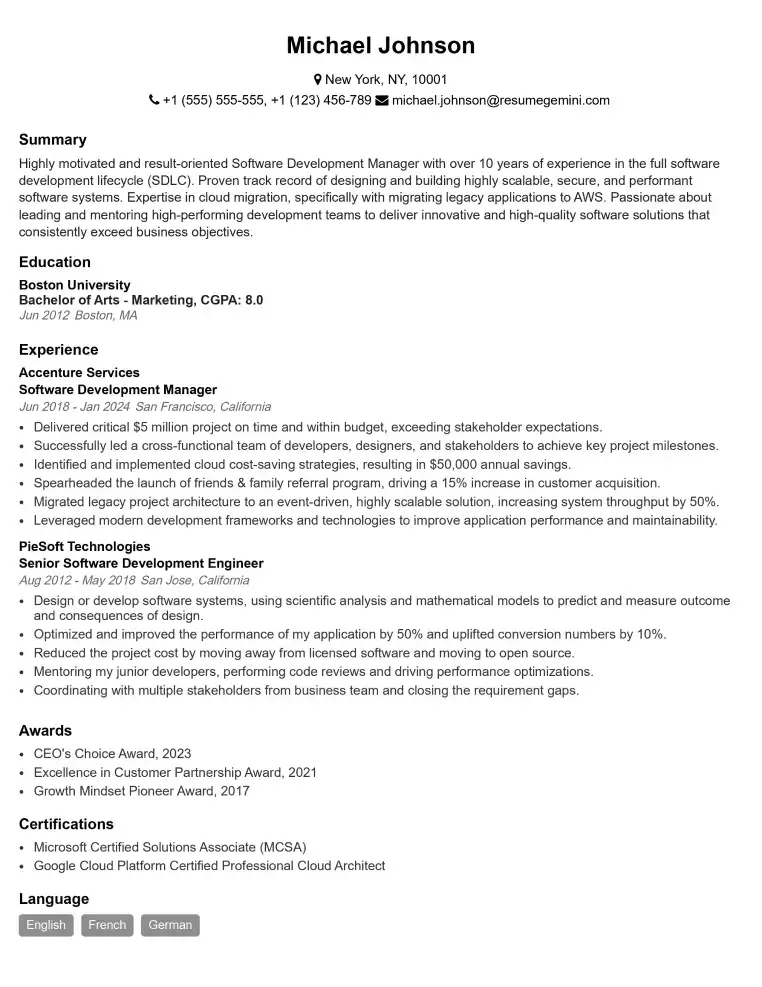
Elevate your job search with our premium resume templates. Here is an amazing resume template that can be used to build a professional and elegant resume. You can build a resume from scratch or revamp your existing resume. Impress hiring managers and secure your next opportunity.
- Top 50 Most Common Interview Questions
- The Psychology of a Great Resume: Hacks to Impress Recruiters
- What Mistakes to Avoid When Writing a Resume: A Comprehensive Guide
- Elevate Your Career with Expert Resume Building: Introducing ResumeGemini
- How to Write a Resume Using Google Gemini: Step-by-Step Guide