





In today’s competitive job market, a well-crafted cover letter is essential for making a strong first impression on potential employers. It’s your chance to highlight your most relevant skills and experience, demonstrate your enthusiasm for the role, and show why you’re the perfect fit for the company. Here are 10 killer tips to help you write a cover letter that will supercharge your job applications in 2026:
1. Craft a compelling opening paragraph that grabs attention
Your opening paragraph is your chance to make a strong first impression, so make it count! Start with a hook that grabs the reader’s attention, such as a relevant quote, a personal anecdote, or a compelling statistic. Then, introduce yourself and state the position you’re applying for. Keep your opening paragraph brief and to the point, and make sure it sets the stage for the rest of your letter.
2. Highlight your most relevant skills and experience
The body of your cover letter should focus on highlighting your most relevant skills and experience for the job you’re applying for. Use specific examples to demonstrate how your skills and experience have helped you achieve success in previous roles. Quantify your accomplishments whenever possible, and use action verbs to make your writing more dynamic. Research the company and tailor your letter accordingly
3. Research the company and tailor your letter accordingly
It’s clear that you’ve taken the time to learn about the company and the position you’re applying for. In your cover letter, be sure to highlight how your skills and experience match the company’s needs. You can also mention specific projects or initiatives that you’re excited to contribute to. Tailoring your letter to each job you apply for shows that you’re genuinely interested in the position and that you’ve put in the effort to learn about the company.
4. Quantify your accomplishments when possible
Using specific numbers to quantify your accomplishments can make your cover letter more impactful. For example, instead of saying “I increased sales,” you could say “I increased sales by 15% over a six-month period.” Quantifying your accomplishments gives potential employers a concrete sense of your achievements and makes your cover letter more memorable.
5. Proofread carefully for any errors
Before you submit your cover letter, proofread it carefully for any errors in grammar, spelling, or punctuation. A sloppy cover letter can reflect poorly on you and make it less likely that you’ll get an interview. Take the time to proofread your letter carefully, and ask a friend or family member to review it as well.
6. Keep it concise and to the point
Hiring managers are busy people, so they don’t have time to read long, rambling cover letters. Keep your cover letter concise and to the point, and focus on highlighting your most relevant skills and experience. A good rule of thumb is to keep your cover letter to one page, or two pages at most. Long cover letters are more likely to be skimmed or ignored, so keep it brief and to the point.
7. Use strong action verbs
Action verbs are powerful words that can make your cover letter more dynamic and engaging. Instead of using passive verbs like “I was responsible for,” use strong action verbs like “I managed,” “I led,” or “I achieved.” Action verbs make your writing more concise and to the point, and they help to highlight your skills and accomplishments.
8. Avoid clichés and jargon
Clichés and jargon are overused phrases that can make your cover letter sound generic and unoriginal. Instead of using clichés like “I’m a hard worker” or “I’m a team player,” use more specific and descriptive language to highlight your skills and experience. Jargon is also a turnoff for many hiring managers, so avoid using industry-specific terms or acronyms that the reader may not be familiar with.
9. Close with a strong call to action
Your closing paragraph is your chance to leave a lasting impression on the hiring manager. Restate your interest in the position, and let the hiring manager know what you’re hoping for next. You could ask for an interview, invite the hiring manager to contact you for further discussion, or request additional information about the position. A strong call to action shows that you’re confident in your abilities and that you’re eager to move forward in the hiring process.
By following these tips, you can write a cover letter that will help you stand out from the competition and land the job you want. For more tips and resources on writing a great resume and cover letter, visit ResumeGemini.
Please share your tips and experiences in the comments section below. Good luck with your job search!
Career Expert Tips:
- Select the ideal resume template to showcase your professional experience effectively.
- Master the art of resume writing to highlight your unique qualifications and achievements.
- Checkout the resume writing tips for guidance and best practices.
- Make your 2025 brighter with a new job. Build a powerful resume with ResumeGemini and save big, enjoy exclusive discounts on premium templates.
Frequently Asked Questions (FAQ’s)
What are the most common mistakes to avoid in a cover letter?
Avoid these pitfalls to make your cover letter stand out:
- Grammatical errors and typos
- Generic language and clichés
- Lack of focus on the specific job
- Excessive length
- Irrelevant or unnecessary information
How can I make my cover letter stand out from the competition?
Differentiate your cover letter by following these tips:
- Research the company and position thoroughly
- Tailor your letter to the specific requirements
- Use strong action verbs and quantify your achievements
- Highlight relevant skills and experience
- Proofread carefully for any errors
What are the key elements to include in a cover letter?
Ensure your cover letter includes these essential elements:
- Your contact information
- The date
- The company and hiring manager’s name (if available)
- A strong opening paragraph that grabs attention
- 2-3 body paragraphs that highlight your qualifications
- A closing paragraph that reiterates your interest and calls to action
How do I tailor my cover letter to a specific job?
Customize your cover letter for each job application by:
- Reading the job description thoroughly
- Identifying the key skills and qualifications required
- Highlighting your relevant experience and accomplishments
- Using specific examples to demonstrate your fit for the role
- Addressing the company’s needs and how you can contribute
What’s the best way to handle gaps in employment in a cover letter?
Address gaps in employment in your cover letter with transparency and honesty:
- Briefly explain the gap, such as pursuing further education, caring for family, or taking time off
- Highlight any relevant skills or experience gained during the gap
- Emphasize your eagerness to return to work and how the position aligns with your career goals
- Avoid making excuses or giving unnecessary details
Should I include a personal statement in my cover letter?
Including a personal statement in your cover letter is generally not recommended unless:
- The job description specifically asks for one
- You have a compelling story or unique perspective to share
- You want to highlight a specific aspect of your background that is not evident in your resume
How do I close a cover letter strongly?
End your cover letter on a positive note with these tips:
- Reiterate your interest in the position
- Summarize your key qualifications
- Express your enthusiasm for the opportunity
- Thank the hiring manager for their time and consideration
- Use a professional closing, such as “Sincerely” or “Best regards”
What are the best ways to follow up after submitting my cover letter?
Follow up on your cover letter to demonstrate your interest and professionalism:
- Send a brief email a week or two after submitting your application
- Thank the hiring manager for their time and reiterate your interest
- Inquire about the status of your application
- Avoid being pushy or demanding
Next Step:
Enhance your job applications with a killer cover letter. ResumeGemini offers a range of professional templates and expert writing tips to help you craft a stand-out cover letter that will get you noticed by employers.
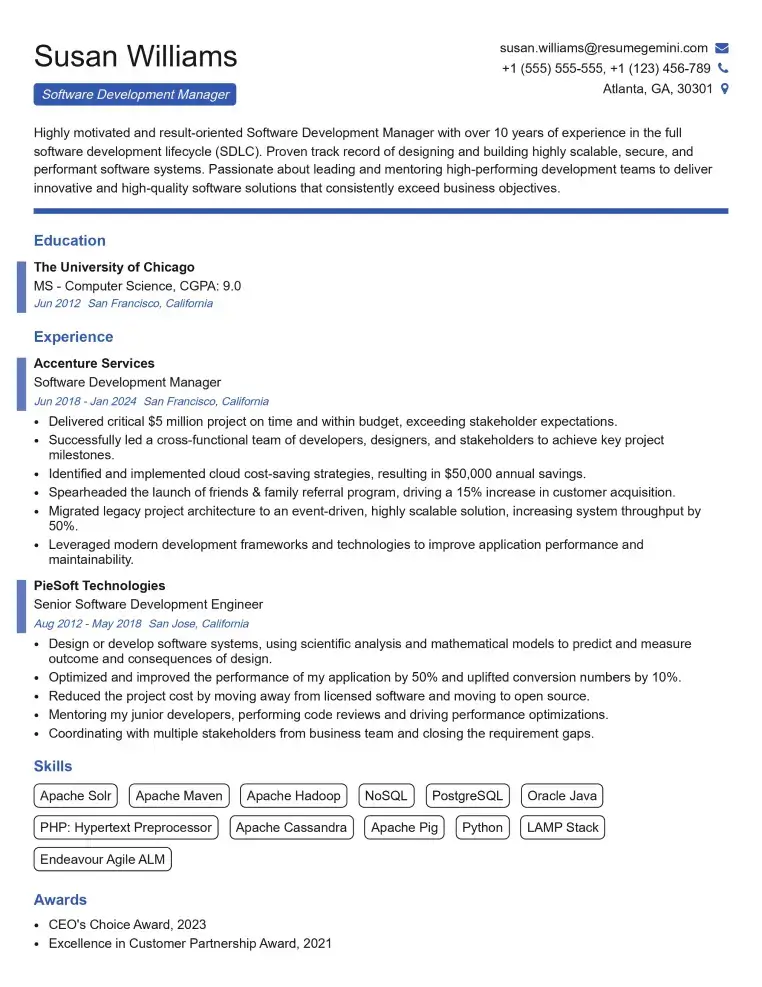
Elevate your job search with our premium resume templates. Here is an amazing resume template that can be used to build a professional and elegant resume. You can build a resume from scratch or revamp your existing resume. Impress hiring managers and secure your next opportunity.
- Top 50 Most Common Interview Questions
- The Psychology of a Great Resume: Hacks to Impress Recruiters
- What Mistakes to Avoid When Writing a Resume: A Comprehensive Guide
- Elevate Your Career with Expert Resume Building: Introducing ResumeGemini
- How to Write a Resume Using Google Gemini: Step-by-Step Guide