





Navigating the job market as a recent graduate can evoke a mix of excitement and trepidation. With a fresh slate and boundless aspirations, you’re eager to embark on your career journey. Crafting an impactful resume is the key that unlocks the gateway to your dream job. But don’t fret; ResumeGemini has got your back with this comprehensive guide to creating three game-changing resumes that will make you stand out from the crowd.
The Graduate Resume Landscape: Navigating a Competitive Job Market
In today’s competitive job market, a well-crafted resume is not just an option but a necessity. Employers receive countless applications for each open position, and they often rely on Applicant Tracking Systems (ATS) to screen resumes. To ensure your resume reaches the right hands, you need to optimize it for ATS by using relevant keywords and formatting it in a way that is easy for the system to scan.
Tailoring Your Resume: Showcase Your Skills and Experience
Your resume is not a one-size-fits-all document. It should be tailored to each specific job you apply for. Take the time to research the company and the position you are interested in, and highlight the skills and experience that are most relevant to the role. Use action verbs to describe your accomplishments, and quantify your results whenever possible.
Highlighting Education: Framing Your Academic Achievements
As a recent graduate, your education is one of your most important assets. In the Education section of your resume, list your degrees, diplomas, and certifications. Include the institution’s name, the dates you attended, and your GPA if it is high. If you have any academic honors or awards, be sure to mention those as well.
Projects and Research: Beyond the Classroom
In addition to your coursework, make sure to highlight any projects, research, or presentations you completed during your time in school. These experiences demonstrate your skills and abilities outside of the classroom and can make you a more attractive candidate for jobs.
Experience Beyond the Classroom: Internships, Projects, and Extra Curriculars
Even if you don’t have a lot of traditional work experience, there are likely many other ways you have gained valuable skills and knowledge. Internships, part-time jobs, volunteering, and extracurricular activities can all provide you with experiences that you can highlight on your resume. Be sure to focus on the skills you gained in these experiences, and how they relate to the jobs you are applying for.
Skills and Abilities: Demonstrating Your Value to Employers
In the Skills section of your resume, list your hard and soft skills. Hard skills are specific, technical skills that you have learned through education or training. Soft skills are more general, transferable skills, such as communication, teamwork, and problem-solving. Make sure to tailor your list of skills to each job you apply for, highlighting the skills that are most relevant to the role.
Crafting a Standout Objective: Articulating Your Career Goals
The Objective section of your resume is an opportunity to summarize your skills and experience, and to state your career goals. Keep it brief and to the point, and tailor it to each job you apply for. In your objective, you should state what you are looking for in a job, and why you are a good fit for the position.
Reference Management: Building a Strong Network of Supporters
The References section of your resume is not something to be filled out at the last minute. Start building a strong network of references early on in your college career. Ask professors, advisors, and employers to write letters of recommendation for you. These letters can provide valuable insights into your skills and abilities, and they can help you to stand out from the competition.
Cover Letter Optimization: Complementing Your Resume for Success
Your cover letter is an opportunity to introduce yourself to the hiring manager and to expand on the information in your resume. In your cover letter, you should highlight your most relevant skills and experience, and explain why you are the best person for the job. Keep your cover letter concise and to the point, and make sure it is tailored to each job you apply for.
Job Search Strategies: Maximizing Your Chances of Landing Your Dream Job
Once you have created a great resume and cover letter, it’s time to start your job search. There are many different ways to find jobs, so it’s important to use a variety of strategies. Attend career fairs, network with people in your field, and search for jobs online. Don’t be afraid to reach out to companies directly, even if they don’t have any openings listed. And don’t give up if you don’t get a job offer right away. Keep applying for jobs, and eventually you will find the perfect fit.
Interview Preparation: Mastering the Art of Interviewing
Once you’ve landed an interview, it’s important to prepare so that you can make a great impression. Research the company and the position you are interviewing for. Practice answering common interview questions, and come prepared with questions of your own to ask the interviewer. Dress professionally, arrive on time for your interview, and be confident. With the right preparation, you can ace your interview and land your dream job.
Additional Resources: ResumeGemini’s Graduate Resume Templates
Creating a great resume can be a challenge, but it’s a lot easier with the right tools. ResumeGemini offers a variety of resume templates specifically designed for recent graduates. These templates are ATS-friendly, customizable, and easy to use. With ResumeGemini, you can create a professional, eye-catching resume in minutes.
Kickstart your career with a resume that will make you stand out from the crowd. Try ResumeGemini today and land your dream job.
Career Expert Tips:
- Select the ideal resume template to showcase your professional experience effectively.
- Master the art of resume writing to highlight your unique qualifications and achievements.
- Checkout the resume writing tips for guidance and best practices.
- Make your 2025 brighter with a new job. Build a powerful resume with ResumeGemini and save big, enjoy exclusive discounts on premium templates.
Frequently Asked Questions (FAQ’s)
What are the key elements of a strong graduate resume?
As a fresh graduate entering the job market, crafting a compelling resume is crucial. Your resume should effectively showcase your education, skills, and experiences to potential employers. Here are some key elements to consider when building a strong graduate resume:
- Contact Information: Ensure that your name, email address, phone number, and LinkedIn profile URL are clearly displayed at the top of your resume.
- Education: Highlight your academic achievements, including your degree, major, university, graduation date, and GPA (if it’s impressive).
- Skills: List your relevant hard and soft skills, both technical and transferable. Quantify your skills whenever possible to demonstrate their impact.
- Experience: Include any relevant work experience, internships, volunteer work, or projects that showcase your abilities and work ethic.
- Awards and Recognition: Highlight any awards, honors, or scholarships you have received during your academic career.
- Extracurricular Activities: If you have been actively involved in extracurricular activities, clubs, or organizations, mention them briefly to demonstrate your leadership skills and commitment.
- Objective Statement: A well-crafted objective statement can effectively introduce your resume and highlight your career goals.
- References: Include a statement indicating that references are available upon request. You can also provide a separate reference page if necessary.
How can I highlight my education and experience on my resume?
To effectively highlight your education and experience on your resume, consider the following tips:
- Education: List your degree, major, university, and graduation date in reverse chronological order. If your GPA is impressive (typically 3.5 or higher), include it as well.
- Experience: Start with your most recent experience and work backward in reverse chronological order. For each experience, include the company name, your job title, the dates you worked there, and a brief description of your responsibilities and achievements.
- Quantify Your Accomplishments: Whenever possible, use numbers and metrics to quantify your accomplishments and demonstrate your impact. For example, instead of saying “Managed a team of employees,” say “Managed a team of 10 employees, resulting in a 15% increase in productivity.”
- Use Action Verbs: Use strong action verbs to describe your responsibilities and achievements. Avoid passive language and focus on what you did rather than what was done.
- Tailor Your Resume: Customize your resume for each job application by highlighting the skills and experiences that are most relevant to the position you are applying for.
What are some tips for showcasing skills and abilities on a resume?
To effectively showcase your skills and abilities on your resume, consider the following tips:
- Identify Relevant Skills: Start by identifying the skills that are most relevant to the job you are applying for. Research the job description and industry requirements to determine which skills are in high demand.
- Quantify Your Skills: Whenever possible, quantify your skills to demonstrate their impact. For example, instead of saying “Proficient in Microsoft Office,” say “Proficient in Microsoft Office Suite, with 5 years of experience using Excel for data analysis and reporting.”
- Use Keywords: Incorporate relevant keywords throughout your resume, especially in the skills section. This will help your resume get noticed by applicant tracking systems (ATS) and recruiters.
- Create a Skills Summary: Consider adding a skills summary section to your resume, where you can list your key skills and abilities in a concise and organized manner.
- Provide Examples: Provide specific examples of how you have used your skills and abilities to achieve positive results. This could be through work experience, projects, or volunteer work.
How do I write an effective resume objective statement?
An effective resume objective statement should be a concise and tailored statement that introduces your resume and highlights your career goals. Here are some tips for writing a strong objective statement:
- Keep it Brief: Your objective statement should be no more than two or three sentences long.
- Tailor it to the Job: Customize your objective statement for each job application by highlighting the skills and experiences that are most relevant to the position you are applying for.
- Quantify Your Accomplishments: If possible, include a quantifiable accomplishment in your objective statement. For example, instead of saying “Seeking a position in marketing,” say “Seeking a position in marketing with a proven track record of increasing brand awareness by 20%.”
- Use Action Verbs: Use strong action verbs to describe your goals and aspirations. Avoid passive language and focus on what you want to achieve.
- Proofread Carefully: Before submitting your resume, proofread your objective statement carefully for any errors in grammar or spelling.
Why is reference management important for graduates?
Reference management is an essential aspect of job searching, especially for graduates. Here’s why:
- Credibility: Potential employers often request references to verify your skills, work ethic, and character. Having a list of professional references who can attest to your abilities can enhance your credibility and make you a more attractive candidate.
- Networking: Reference management can help you expand your professional network. When you ask someone to be a reference, you are essentially building a relationship with them. This can lead to valuable connections and opportunities in the future.
- Due Diligence: Employers may contact your references to gather more information about you. By providing a list of references, you demonstrate that you are open to scrutiny and willing to have your work ethic and character verified.
How can I optimize my cover letter to complement my resume?
An effective cover letter can complement your resume and significantly improve your chances of getting noticed by potential employers. Here are some tips for optimizing your cover letter:
- Tailor it to the Job: Customize your cover letter for each job application by highlighting the skills and experiences that are most relevant to the position you are applying for.
- Keep it Concise: Your cover letter should be no more than one page long. Focus on providing the most important information in a clear and concise manner.
- Highlight Your Skills: Use your cover letter to highlight your key skills and abilities. Provide specific examples of how you have used these skills to achieve positive results.
- Explain Your Motivation: Briefly explain why you are interested in the position and the company. Show the employer that you have done your research and that you are genuinely interested in their organization.
- Proofread Carefully: Before submitting your cover letter, proofread it carefully for any errors in grammar or spelling. A well-written cover letter can make a great impression on potential employers.
Next Step:
Kickstart your job search with confidence! Utilize ResumeGemini’s suite of tools to craft a compelling resume and land your dream job. Our comprehensive resume builder, professionally designed templates, and expert guidance will help you create a resume that stands out from the crowd and makes a lasting impression on potential employers.
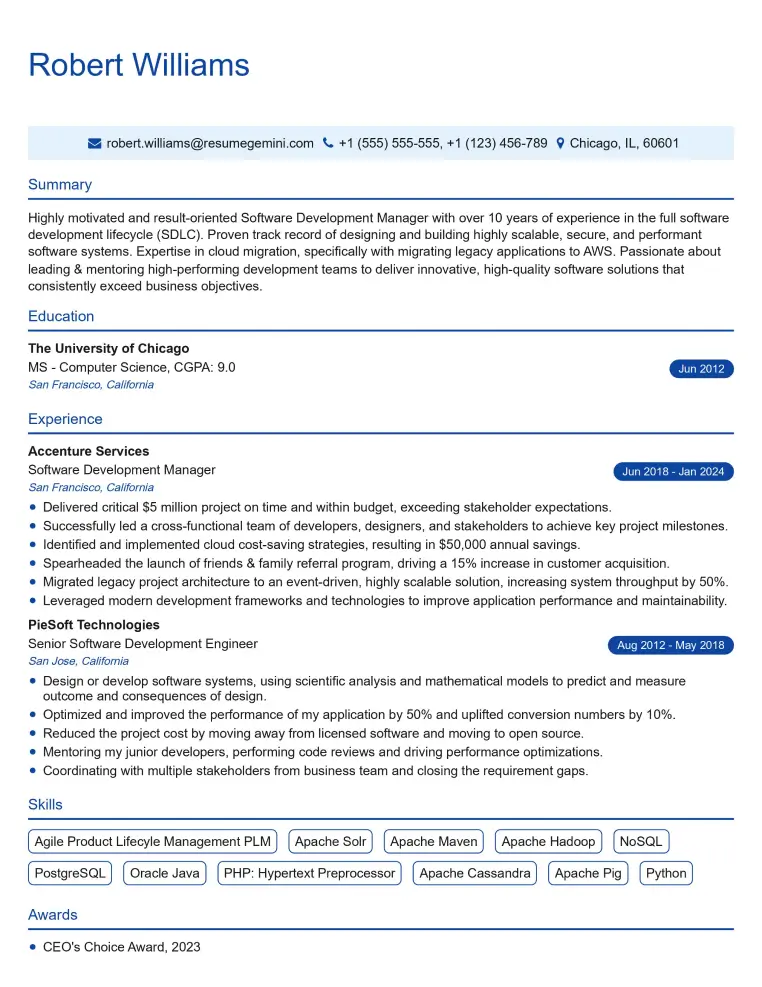
Elevate your job search with our premium resume templates. Here is an amazing resume template that can be used to build a professional and elegant resume. You can build a resume from scratch or revamp your existing resume. Impress hiring managers and secure your next opportunity.
- Top 50 Most Common Interview Questions
- The Psychology of a Great Resume: Hacks to Impress Recruiters
- What Mistakes to Avoid When Writing a Resume: A Comprehensive Guide
- Elevate Your Career with Expert Resume Building: Introducing ResumeGemini
- How to Write a Resume Using Google Gemini: Step-by-Step Guide