





Embarking on a career switch is an exciting yet challenging endeavor. Navigating the uncharted waters of a new industry requires a well-crafted resume that showcases your adaptability and transferable skills. In this comprehensive guide, we will delve into five killer strategies to revolutionize your resume and maximize your chances of success as a career switcher.
Tapping into Transferable Skills and Emphasizing Relevance
Identify and highlight the transferable skills you’ve acquired throughout your previous experiences. These include both hard skills (technical abilities) and soft skills (interpersonal and communication skills). Quantify your accomplishments whenever possible to demonstrate the impact of your contributions. For instance, instead of simply stating “Managed projects,” quantify your success by saying “Successfully managed projects with budgets exceeding $1 million.”
Tailor your resume to each specific job application by emphasizing the skills and experiences that are most relevant to the target position. Research industry-specific keywords and incorporate them into your resume to make it stand out to potential employers.
Crafting a Targeted Resume That Speaks to Your Desired Industry
Avoid using a one-size-fits-all approach to your resume. Instead, create a targeted resume for each job application. Carefully review the job description and identify the key requirements. Highlight your skills and experiences that align with these requirements, even if they are not directly related to your previous industry.
Use industry-specific terminology and buzzwords to demonstrate your understanding of the target field. Showcase your knowledge of industry trends and best practices. This shows potential employers that you have taken the time to research and understand their industry.
Showcasing Your Adaptability and Eagerness to Learn
Highlight your ability to quickly adapt to new environments and embrace new challenges. Emphasize your willingness to learn new skills and expand your knowledge base. This eagerness to learn demonstrates your commitment to continuous improvement and your potential for success in a new industry.
Consider including a section on your resume that showcases your professional development activities, such as online courses, workshops, or certifications. This section provides tangible evidence of your commitment to continuous learning.
Leveraging ResumeGemini’s Expertise in Cross-Industry Resume Writing
ResumeGemini offers a comprehensive suite of tools and resources specifically designed for career switchers. Utilize our pre-built resume samples for different job titles to see how transferable skills can be effectively showcased.
Take advantage of ResumeGemini’s library of 3.6 million content examples to find industry-specific keywords and phrases that will resonate with potential employers. Our resume builder guides you through each section of your resume, providing expert tips and suggestions along the way.
Networking and Seeking Mentorship to Enhance Your Job Search
Expand your professional network by attending industry events, joining LinkedIn groups, and connecting with professionals in your target industry. These connections can provide valuable insights, job leads, and mentorship opportunities.
Identify a mentor who has successfully transitioned into your desired industry. A mentor can provide guidance, advice, and support throughout your transition journey. They can also help you navigate the hidden job market and make valuable connections.
Customizing Your Resume for Each Job Application
Tailor your resume to each specific job application by highlighting the skills and experiences that are most relevant to the target position. Research industry-specific keywords and incorporate them into your resume to make it stand out to potential employers.
Use industry-specific terminology and buzzwords to demonstrate your understanding of the target field. Showcase your knowledge of industry trends and best practices. This shows potential employers that you have taken the time to research and understand their industry.
Highlighting Volunteer Experience and Industry Certifications
Volunteer experience in your target industry can provide valuable hands-on experience and demonstrate your commitment to the field. Highlight your volunteer activities on your resume, including the skills and knowledge you gained.
Industry certifications are another way to demonstrate your commitment to your new career path. Obtain certifications that are relevant to your target industry and highlight them on your resume. This shows potential employers that you have invested in your professional development and are serious about your career transition.
Using Keywords to Optimize Your Resume for Search Engines
Incorporate industry-specific keywords throughout your resume to make it more visible to potential employers who are searching online. Use keywords in your resume title, summary, and throughout the body of your resume.
Use a keyword research tool to identify the most relevant keywords for your target industry. This will help you optimize your resume for search engines and increase your chances of being found by potential employers.
Adapting Your Resume to Different Job Boards and Company Websites
Different job boards and company websites have different resume formatting requirements. Make sure to tailor your resume to meet the specific requirements of each platform.
For example, some job boards may require you to upload your resume in a specific file format, such as PDF or Word. Other job boards may have a built-in resume builder that allows you to create a resume directly on their platform.
Proofreading and Editing Your Resume with Precision
Carefully proofread and edit your resume before submitting it to potential employers. Make sure there are no errors in grammar, spelling, or formatting. A well-proofread resume will make a positive impression on potential employers and demonstrate your attention to detail.
Consider asking a friend, family member, or professional resume writer to review your resume and provide feedback. A fresh pair of eyes can help you identify any areas that need improvement.
Career Expert Tips:
- Select the ideal resume template to showcase your professional experience effectively.
- Master the art of resume writing to highlight your unique qualifications and achievements.
- Checkout the resume writing tips for guidance and best practices.
- Make your 2025 brighter with a new job. Build a powerful resume with ResumeGemini and save big, enjoy exclusive discounts on premium templates.
Frequently Asked Questions (FAQ’s)
How do I identify my transferable skills for a career switch?
Identifying transferable skills is crucial for career switchers. To do so, introspect and list your:
- Soft skills: Communication, teamwork, problem-solving, adaptability
- Hard skills: Technical abilities like software proficiency, data analysis
- Experience: Analyze your past roles and identify responsibilities that are relevant to your target industry
- Education: Highlight degrees, certifications, or coursework that showcase transferable knowledge and abilities
What are the most important elements to include in a resume for a career changer?
A career changer’s resume should emphasize:
- A strong objective statement: Tailor it to the target industry, highlighting your transferable skills and career goals
- Relevant experience: Focus on experiences that showcase transferable skills and demonstrate your ability to adapt
- Quantified accomplishments: Use numbers and metrics to demonstrate the impact of your previous work
- Education and certifications: Highlight relevant degrees, certifications, or coursework that support your career transition
- Keywords: Include industry-specific keywords to optimize your resume for applicant tracking systems (ATS)
How do I show my adaptability and eagerness to learn on my resume?
To demonstrate adaptability and eagerness to learn on your resume:
- Highlight your soft skills: Emphasize your adaptability, communication, and problem-solving abilities
- Describe experiences that showcase learning: Mention instances where you took initiative to acquire new skills or knowledge
- Quantify your learning: Use numbers to demonstrate the extent of your learning, such as “Completed 10+ online courses in data analytics”
- Include a dedicated “Skills” or “Professional Development” section: List relevant skills you’ve acquired through workshops, certifications, or personal projects
What is the best way to highlight my volunteer experience on my resume?
To effectively showcase volunteer experience on your resume:
- Quantify your impact: Use numbers to illustrate the scope and results of your volunteer work
- Use action verbs: Describe your responsibilities using strong verbs that highlight your skills and accomplishments
- Provide context: Briefly explain the organization’s mission and how your volunteer role contributed to its goals
- Include relevant skills: Highlight skills gained through volunteering that are transferable to your target industry
How can I optimize my resume for different job boards and company websites?
To optimize your resume for different platforms:
- Research job boards and company websites: Identify the specific requirements and keywords relevant to the industries and roles you’re targeting
- Customize your resume: Tailor your resume to each job or company by incorporating relevant keywords and highlighting transferable skills
- Use ATS-friendly formatting: Ensure your resume is scannable by applicant tracking systems (ATS) by using clear headings, bullet points, and standard fonts
- Consider using a professional resume builder: Tools like ResumeGemini can help you create ATS-optimized resumes
What are the most common mistakes to avoid when writing a resume for a career switch?
Common mistakes to avoid when writing a career switch resume:
- Overemphasizing irrelevant experience: Focus on experiences that showcase transferable skills and align with your career goals
- Using generic language: Avoid using vague or generic statements; instead, use specific examples and quantify accomplishments
- Ignoring keywords: Neglecting to include industry-specific keywords reduces your resume’s visibility to potential employers
- Lack of tailoring: Failing to customize your resume for each job or industry can limit its effectiveness
- Typos and grammatical errors: Proofread your resume carefully to eliminate errors that could negatively impact your credibility
How can ResumeGemini help me create a resume that stands out in a different industry?
ResumeGemini offers several features to help career switchers:
- Industry-specific templates: Choose from a range of industry-tailored templates that highlight relevant skills and keywords
- Transferable skills identifier: The platform analyzes your skills and identifies transferable skills relevant to your target industry
- Keyword optimization: ResumeGemini suggests industry-specific keywords to enhance your resume’s visibility to recruiters
- Professional resume writing: Access professional resume writing services to create a tailored resume that effectively communicates your career transition
What are the key differences between a resume for a career switcher and a traditional resume?
Key differences between a career switcher’s resume and a traditional resume include:
- Focus on transferable skills: Career switchers emphasize transferable skills that are relevant to their target industry
- Less emphasis on chronological experience: Career switchers may prioritize transferable skills and accomplishments over traditional chronological experience
- Inclusion of a career objective statement: A strong objective statement is essential to articulate career goals and highlight transferable skills
- Use of keywords: Career switchers optimize their resumes with industry-specific keywords to increase visibility
How can I use keywords to make my resume more visible to potential employers?
To make your resume more visible to potential employers, incorporate industry-specific keywords throughout:
- Identify relevant keywords: Research job descriptions, industry articles, and LinkedIn profiles to identify frequently used keywords
- Incorporate keywords naturally: Integrate keywords into your resume’s content without sounding forced or unnatural
- Use variations and synonyms: Include variations and synonyms of keywords to increase your resume’s reach
- Use a keyword analyzer: Utilize tools like ResumeScanner to analyze your resume and identify areas for keyword optimization
What are the best ways to proofread and edit my resume?
To ensure your resume is error-free and polished:
- Take a break: Step away from your resume for some time before proofreading to gain a fresh perspective
- Read aloud: Reading your resume aloud helps you identify errors in grammar, flow, and sentence structure
- Use a spell checker: Utilize spell checker tools, but don’t rely solely on them as they may miss certain errors
- Ask for feedback: Seek feedback from a trusted friend, family member, or career counselor to identify areas for improvement
- Proofread for specific errors: Pay attention to grammar, punctuation, spelling, and formatting errors
Next Step:
Unlock a successful career transition with ResumeGemini. Create a
Elevate your job search with our premium resume templates. Here is an amazing resume template that can be used to build a professional and elegant resume. You can build a resume from scratch or revamp your existing resume. Impress hiring managers and secure your next opportunity.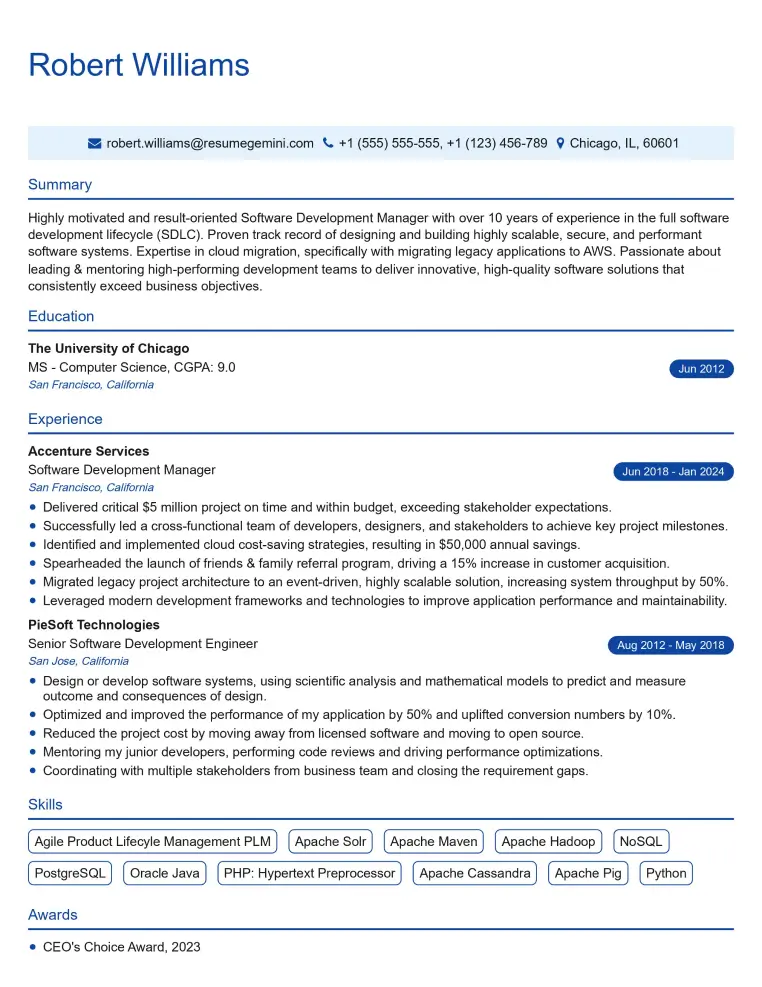
- Top 50 Most Common Interview Questions
- The Psychology of a Great Resume: Hacks to Impress Recruiters
- What Mistakes to Avoid When Writing a Resume: A Comprehensive Guide
- Elevate Your Career with Expert Resume Building: Introducing ResumeGemini
- How to Write a Resume Using Google Gemini: Step-by-Step Guide