





Embarking on a mid-career transformation can be an exciting and daunting journey, but with the right tools and strategies, you can successfully navigate this transition and secure your dream role. One essential aspect of a successful career pivot is crafting a resume that effectively showcases your skills, experience, and aspirations. Our comprehensive library of 50+ resume templates is designed to empower mid-career professionals like you to make a lasting impression on hiring managers and land your ideal job.
Revamping Your Resume for a Career Pivot
- Identify your transferable skills: Take stock of your existing skills and experiences that are relevant to your target industry or role. Highlight these skills prominently on your resume to demonstrate your adaptability and value.
- Quantify your accomplishments: Use specific metrics and numbers to quantify your achievements, demonstrating the tangible impact of your work. This helps employers visualize your contributions and assess your potential.
- Tailor your resume to each job application: Customize your resume for each specific job you apply for, highlighting the skills and experiences most relevant to the requirements of that particular role.
Adapting Your Resume to Different Industries
When transitioning to a new industry, it’s important to tailor your resume to the specific industry’s norms and expectations. Research the industry’s common resume formats, keywords, and language to ensure your resume aligns with industry standards.
Highlighting Transferable Skills and Relevant Experiences
- Identify your transferable skills: Determine which of your existing skills can be applied to your target industry or role. These may include soft skills such as communication, problem-solving, and teamwork, as well as technical skills that are adaptable to different industries.
- Showcase relevant experiences: Highlight experiences from your previous roles that demonstrate your transferable skills and abilities, even if they are not directly related to your target industry. Focus on transferable skills that are in high demand in your target field.
Crafting a Professional Summary that Captivates Employers
Your resume’s professional summary is your chance to make a strong first impression and entice employers to delve deeper into your qualifications. Craft a compelling summary that succinctly highlights your key skills, experiences, and career aspirations, and demonstrates your enthusiasm for your target industry or role.
Using ResumeGemini’s Features to Customize Your Resume
ResumeGemini offers a range of features to help you customize your resume and make it stand out from the crowd.- Choose from 50+ professionally designed templates: Explore our extensive library of templates, each designed to cater to specific industries and job roles, ensuring a polished and professional presentation.
- Select from various fonts and color themes: Personalize your resume with a wide range of fonts and color themes, creating a visually appealing and engaging document that reflects your professional style.
- Add relevant sections to showcase your skills: Enhance your resume by including additional sections such as Awards, Certifications, Languages, Accomplishments, Extra Curricular, and References, to provide a comprehensive overview of your qualifications and experiences.
Leveraging Keywords to Optimize Your Resume for ATS
- Research industry-specific keywords: Identify the keywords and phrases that employers in your target industry commonly use in job descriptions. Incorporate these keywords throughout your resume to increase its visibility to Applicant Tracking Systems (ATS).
- Use keywords naturally: Avoid keyword stuffing, as ATS can penalize resumes that are overly saturated with keywords. Instead, integrate keywords seamlessly into your resume’s content, ensuring it remains readable and informative.
Strategies for Marketing Your Resume and Networking Effectively
- Utilize online job boards and social media: Post your resume on reputable job boards and leverage social media platforms like LinkedIn to connect with potential employers and recruiters.
- Attend industry events and conferences: Network with professionals in your target industry at events, conferences, and meet-ups to expand your connections and learn about potential job opportunities.
- Reach out to your personal and professional network: Inform your network about your career transition and ask for referrals or introductions to potential employers.
Career Expert Tips:
- Select the ideal resume template to showcase your professional experience effectively.
- Master the art of resume writing to highlight your unique qualifications and achievements.
- Checkout the resume writing tips for guidance and best practices.
- Make your 2025 brighter with a new job. Build a powerful resume with ResumeGemini and save big, enjoy exclusive discounts on premium templates.
Frequently Asked Questions (FAQ’s)
How do I create a resume that effectively communicates my skills for a career change?
When you’re making a career change, it’s important to tailor your resume to the specific industry and role you’re targeting. Start by researching the industry and identifying the skills and experience that are most in demand. Then, highlight those skills and experience in your resume, using specific examples to demonstrate how you’ve used them in your previous roles.
- For example, if you’re transitioning from a sales role to a marketing role, you might highlight your experience in developing and executing marketing campaigns, as well as your ability to generate leads and close deals.
- Quantify your accomplishments whenever possible to provide concrete evidence of your success. For example, instead of saying “Managed a team of sales representatives,” you could say “Managed a team of sales representatives and increased sales by 15% in one year.”
What techniques can I use to quantify my accomplishments and demonstrate my value?
There are several ways to quantify your accomplishments and demonstrate your value on your resume.
- Use specific numbers and metrics to show the results of your work. For example, instead of saying “Improved customer satisfaction,” you could say “Improved customer satisfaction by 20% through a new customer service initiative.”
- Use action verbs that describe your accomplishments in a positive and specific way. For example, instead of saying “Worked on a team,” you could say “Collaborated with a team to develop and implement a new marketing campaign that increased sales by 15%.”
- Highlight your skills and experience in a way that shows how they benefited your previous employer. For example, instead of saying “Managed a team of sales representatives,” you could say “Managed a team of sales representatives and increased sales by 15% in one year, resulting in a significant increase in revenue for the company.”
How do I tailor my resume to different industries when I have limited experience in the target field?
If you have limited experience in the industry you’re targeting, it’s important to highlight the transferable skills that you do have. Transferable skills are skills that can be used in a variety of different roles and industries. They include skills such as communication, problem-solving, teamwork, and leadership.
- When tailoring your resume to a new industry, focus on highlighting the transferable skills that you have that are relevant to the role you’re targeting. For example, if you’re transitioning from a sales role to a marketing role, you might highlight your experience in developing and executing marketing campaigns, as well as your ability to generate leads and close deals.
- You can also use your resume to show how your skills and experience can be applied to the new industry. For example, if you’re transitioning from a sales role to a marketing role, you might highlight your experience in understanding customer needs and developing marketing campaigns that meet those needs.
What is the best way to highlight transferable skills that may not be directly related to my previous role?
There are several ways to highlight transferable skills on your resume, even if they’re not directly related to your previous role.
- One way is to use keywords in your resume that are relevant to the role you’re targeting. For example, if you’re transitioning from a sales role to a marketing role, you might include keywords such as “marketing campaign,” “lead generation,” and “customer acquisition.”
- Another way to highlight transferable skills is to use examples in your resume that demonstrate how you’ve used them in your previous roles. For example, if you’re transitioning from a sales role to a marketing role, you might include an example of a time when you developed and executed a successful marketing campaign that generated leads and closed deals.
How can I write a compelling professional summary that showcases my strengths and career goals?
Your professional summary is one of the most important parts of your resume. It’s your chance to make a strong first impression and convince the reader that you’re the right person for the job.
- When writing your professional summary, start by identifying your key strengths and skills. What are you good at? What makes you unique?
- Once you’ve identified your key strengths, use them to write a concise and compelling summary that highlights your value proposition. For example, you might say something like “Seasoned sales professional with 10+ years of experience in developing and executing marketing campaigns that generate leads and close deals. Proven track record of exceeding sales targets and building strong customer relationships.”
- Be sure to tailor your professional summary to the specific role you’re targeting. Highlight the skills and experience that are most relevant to the job, and use keywords that are relevant to the industry.
What features does ResumeGemini offer to help mid-career professionals create effective resumes?
ResumeGemini offers a number of features that can help mid-career professionals create effective resumes. These features include:
- A library of 50+ resume templates designed specifically for mid-career professionals
- A resume builder that makes it easy to create a professional resume in minutes
- A resume critique service that provides feedback on your resume
- A cover letter builder that helps you create a professional cover letter
- A job search engine that helps you find jobs that are a good fit for your skills and experience
How can I optimize my resume for Applicant Tracking Systems (ATS)?
Applicant Tracking Systems (ATS) are used by many companies to screen resumes. To optimize your resume for ATS, it’s important to use keywords that are relevant to the role you’re targeting. You can find keywords by researching the industry and the specific role you’re applying for.
- Once you’ve identified relevant keywords, use them in your resume throughout your resume, including in your professional summary, skills section, and work experience section.
- Avoid using overly complex language or jargon in your resume. ATS may not be able to parse complex language, and you want your resume to be easy for the ATS to read and understand.
- Use a standard resume format. ATS may have difficulty parsing resumes that are not in a standard format.
Next Step:
If you’re a mid-career professional who is looking to make a career change, ResumeGemini can help you create a resume that will get you noticed by employers. With our library of 50+ resume templates designed specifically for mid-career professionals, our easy-to-use resume builder, and our resume critique service, we can help you create a resume that will help you land your dream job.
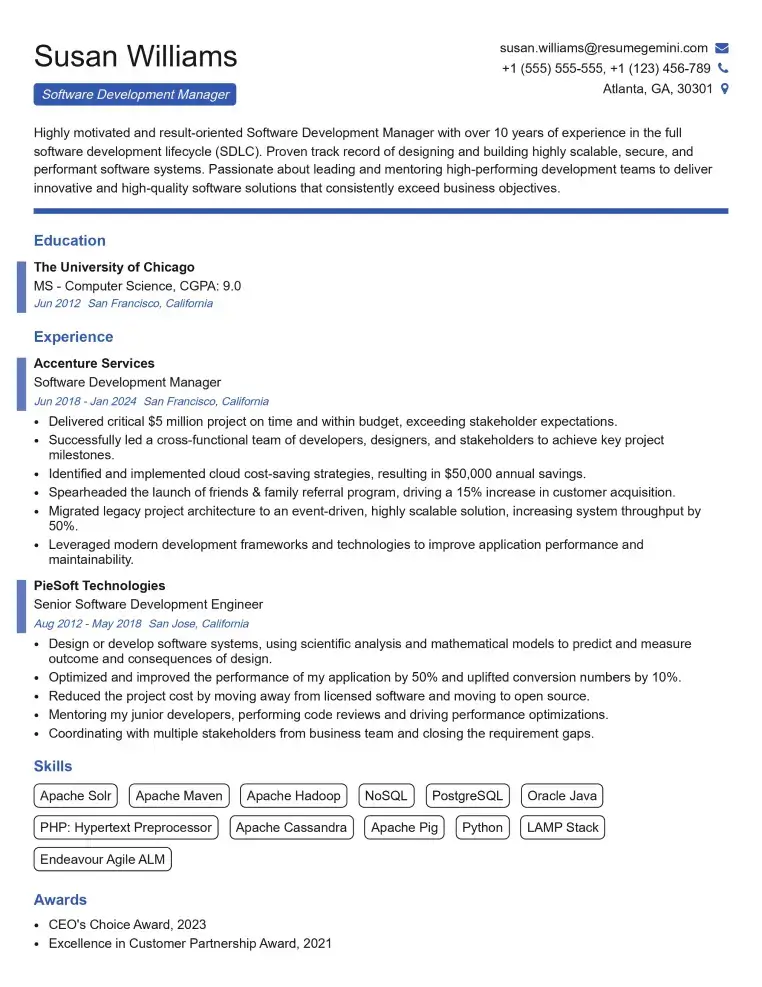
Elevate your job search with our premium resume templates. Here is an amazing resume template that can be used to build a professional and elegant resume. You can build a resume from scratch or revamp your existing resume. Impress hiring managers and secure your next opportunity.
- Top 50 Most Common Interview Questions
- The Psychology of a Great Resume: Hacks to Impress Recruiters
- What Mistakes to Avoid When Writing a Resume: A Comprehensive Guide
- Elevate Your Career with Expert Resume Building: Introducing ResumeGemini
- Crafting Your First Impression: How To Make Free Resume Online For Freshers