





Embark on a journey of career transformation, where the traditional rules of resume writing are meant to be broken. Welcome to the ultimate guide for career switchers, where we’ll unveil unconventional strategies to craft a compelling resume that will shatter the barriers and propel you towards your dream job.
Rule #1: Ditch the Chronological Resume
Break free from the confines of the chronological resume and embrace a more dynamic approach. A functional resume allows you to showcase your relevant skills and experiences in a way that aligns with the specific requirements of your target job, highlighting your transferable abilities and obscuring any gaps or lack of direct experience.
- Emphasize your transferable skills and how they translate to the new field.
- Quantify your accomplishments using metrics to demonstrate the impact of your work.
Rule #2: Showcase Non-Traditional Experience
Don’t limit yourself to your “official” work experience. Consider including volunteer work, freelance projects, personal projects, or any other experiences that demonstrate your relevant skills and abilities. These experiences can provide valuable insights into your work ethic, creativity, and problem-solving abilities.
- Highlight relevant volunteer work or internships that showcase your key skills.
- Include personal projects or entrepreneurial ventures that demonstrate your initiative and passion
Rule #3: Highlight Your Passion for the New Field
Let your passion shine through in your resume. Explain why you’re drawn to the new field and how your previous experience has equipped you with the skills and knowledge to succeed. Your enthusiasm will be infectious and will make you stand out from other candidates.
- Include a personal statement or objective that clearly states your interest and qualifications.
- Weave your enthusiasm for the new field throughout your resume by using relevant keywords.
Rule #4: Capitalize on Networking and Referrals
Networking is crucial for career switchers. Attend industry events, connect with professionals in your target field on LinkedIn, and reach out to your existing network for referrals. Building relationships and leveraging your connections can open doors to opportunities that may not be advertised.
- Join professional organizations and attend industry meetups to connect with potential employers.
- Ask for referrals from colleagues, mentors, or anyone who can vouch for your skills and work ethic.
Rule #5: Leverage ResumeGemini’s Sample Resumes
Stuck for inspiration? ResumeGemini offers an extensive library of 45,000+ pre-built resume samples tailored to various job titles. Explore these samples to get a better understanding of how to present your skills and experience effectively for different industries and positions.
- Use ResumeGemini’s resume builder to create a professional resume in minutes.
- Customize pre-written resume content tailored to your specific career goals.
Rule #6: Quantify Your Accomplishments Using Metrics
Don’t just list your responsibilities—quantify your accomplishments using specific metrics to demonstrate the impact of your work. Use numbers, percentages, or other quantifiable data to showcase the value you bring to the table.
- Instead of saying “Managed sales team,” write “Led a sales team of 10 to achieve a 20% increase in revenue.”
- Highlight your contributions using specific numbers and quantifiable results.
Rule #7: Incorporate Relevant Keywords
Take the time to research job descriptions and identify the keywords that hiring managers are looking for. Incorporate these keywords throughout your resume, but do so naturally. Avoid keyword stuffing, as it can make your resume appear spammy and unprofessional.
- Use a keyword research tool to find relevant keywords for your target industry.
- Include keywords in your resume summary, skills section, and work experience descriptions.
Career Expert Tips:
- Select the ideal resume template to showcase your professional experience effectively.
- Master the art of resume writing to highlight your unique qualifications and achievements.
- Checkout the resume writing tips for guidance and best practices.
- Make your 2025 brighter with a new job. Build a powerful resume with ResumeGemini and save big, enjoy exclusive discounts on premium templates.
Frequently Asked Questions (FAQ’s)
How can I make my resume stand out when switching careers?
Making a career switch can be an exciting yet challenging endeavor. To make your resume stand out, consider these strategies:
- Highlight transferable skills: Emphasize the skills and abilities you’ve developed in previous roles that are relevant to your new career.
- Quantify your accomplishments: Use specific numbers and metrics to demonstrate the impact of your work.
- Tailor your resume to each job application: Customize your resume to match the specific requirements of each job you apply for.
- Get feedback from professionals: Ask a career counselor, recruiter, or mentor to review your resume and provide constructive feedback.
What are the most important sections to include on my resume?
Your resume should include the following essential sections:
- Contact information: Name, address, phone number, email address, LinkedIn profile URL.
- Summary statement: A brief overview of your skills, experience, and career goals.
- Work experience: A chronological list of your previous jobs, with descriptions of your responsibilities and accomplishments.
- Skills: A list of your hard and soft skills, including any certifications or licenses.
- Education: A list of your degrees, diplomas, and certificates, including the institutions you attended and the dates of completion.
- Awards and honors: A list of any awards or honors you have received.
- Publications: A list of any articles, books, or other publications you have written or contributed to.
- Volunteer experience: A list of any volunteer experience you have, highlighting transferable skills.
Should I include my previous work experience, even if it’s not directly related to my new career?
Yes, it’s generally a good idea to include all relevant work experience on your resume, even if it’s not directly related to your new career. This demonstrates your overall work ethic, skills, and experience.
Focus on highlighting transferable skills that are relevant to your new career. For example, if you’re transitioning from a role in sales to a role in marketing, you might emphasize your communication, persuasion, and customer relationship management skills.
How can I highlight my transferable skills and abilities?
To highlight your transferable skills and abilities on your resume:
- Identify relevant skills: Make a list of skills that are transferable to your new career.
- Use action verbs: Use strong action verbs to describe your skills and accomplishments.
- Quantify your results: Use numbers and metrics to demonstrate the impact of your work.
- Include keywords: Use industry-specific keywords throughout your resume to make it easier for potential employers to find you.
What are some common mistakes to avoid when writing a resume for a career change?
Avoid these common mistakes when writing a resume for a career change:
- Using a generic resume: Tailor your resume to each job application and highlight relevant skills and experience.
- Including irrelevant information: Focus on including information that is relevant to your new career goals.
- Making it too long: Keep your resume concise and easy to read, typically around one page.
- Using unprofessional language: Use professional language and avoid slang or jargon.
- Having errors: Proofread your resume carefully for any errors in grammar, spelling, or formatting.
Can I use ResumeGemini to create a resume that is tailored to a specific industry or job title?
Yes, ResumeGemini offers a variety of resume templates and samples that are tailored to specific industries and job titles. You can choose from over 45,000+ pre-built resume samples, edit them, and download them as PDF files.
ResumeGemini also provides a step-by-step resume builder that guides you through the process of creating a professional and ATS-friendly resume. You can customize your resume with various templates, fonts, and color themes to make it stand out.
How can I get my resume noticed by potential employers in my new field?
To get your resume noticed by potential employers in your new field:
- Use keywords: Include relevant keywords throughout your resume to make it easier for potential employers to find you.
- Network: Attend industry events, meet with professionals in your field, and connect with people on LinkedIn.
- Apply online: Apply for jobs online through job boards and company websites.
- Use a professional resume writing service: Consider using a professional resume writing service to help you create a polished and effective resume.
What are some tips for networking and building connections in a new industry?
To network and build connections in a new industry:
- Attend industry events: Attend conferences, meetups, and other industry events to connect with professionals in your field.
- Join professional organizations: Join professional organizations related to your new career to meet people and learn about industry trends.
- Volunteer: Volunteer your time to organizations related to your new career to gain experience and make connections.
- Use social media: Use social media platforms like LinkedIn to connect with professionals in your field and share your expertise.
Next Step:
If you’re looking to make a career switch, it’s important to tailor your resume to highlight your transferable skills and experience. ResumeGemini can help you create a professional and ATS-friendly resume that will get you noticed by potential employers. With our easy-to-use resume builder and library of pre-built resume samples, you can create a resume that will help you land your dream job. Visit ResumeGemini today and start building your new career.
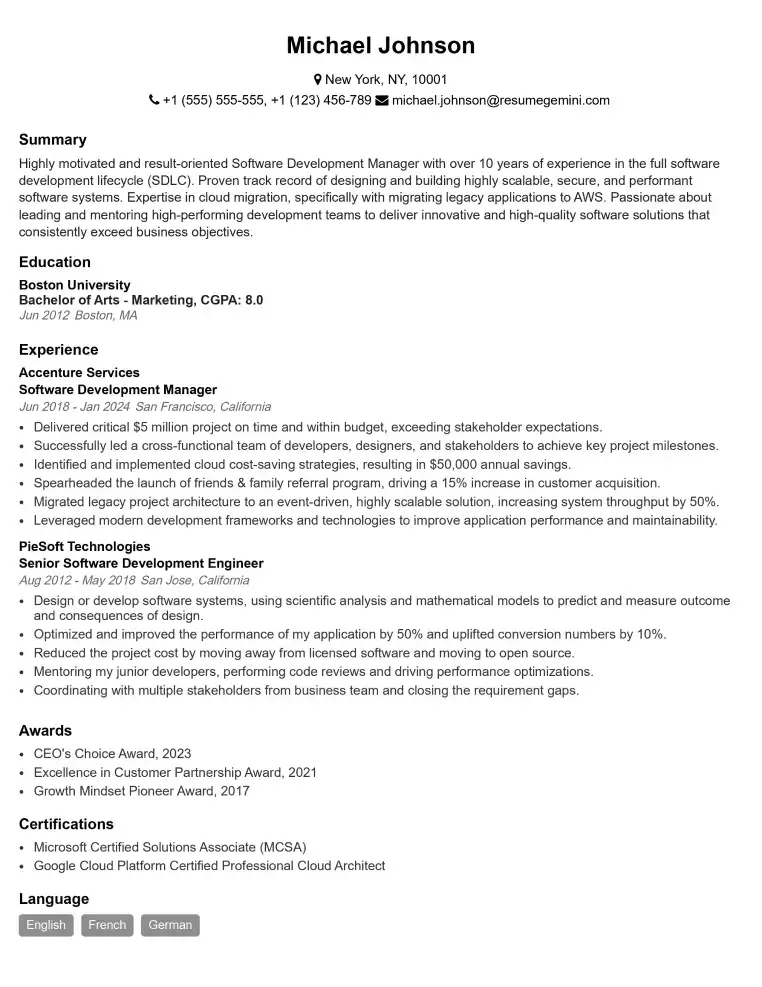
Elevate your job search with our premium resume templates. Here is an amazing resume template that can be used to build a professional and elegant resume. You can build a resume from scratch or revamp your existing resume. Impress hiring managers and secure your next opportunity.
- Top 50 Most Common Interview Questions
- The Psychology of a Great Resume: Hacks to Impress Recruiters
- What Mistakes to Avoid When Writing a Resume: A Comprehensive Guide
- Elevate Your Career with Expert Resume Building: Introducing ResumeGemini
- How to Write a Resume Using Google Gemini: Step-by-Step Guide