





Well, that’s not entirely true! With the right preparation and a dash of confidence, you can master the art of job interviews and leave a lasting impression on potential employers. Our top 10 tips will guide you through the interview process like a pro, helping you ace that dream job!
1. Research the Company and Position Thoroughly
Before you step into the interview room, it’s essential to do your homework. Research the company’s website, LinkedIn page, and recent news articles to gain insights into their culture, values, and current projects. Additionally, study the job description carefully, identifying the key responsibilities and skills required for the position. This knowledge will demonstrate your genuine interest in the company and the role, setting you apart as a well-prepared candidate.
2. Practice Your Answers to Common Interview Questions
Anticipate potential interview questions by practicing your answers beforehand. Research common questions and prepare concise, engaging responses that highlight your skills and experience. Use the STAR method (Situation, Task, Action, Result) to structure your answers effectively, providing specific examples of your accomplishments. Practice speaking clearly and confidently, making eye contact and maintaining a positive body language.
3. Prepare Thoughtful Questions for the Interviewer
Asking insightful questions at the end of the interview is an excellent way to show your interest and engagement. Prepare questions that demonstrate your curiosity about the company, the team, and the role’s responsibilities. Avoid generic questions that could be easily answered by reading the company’s website. Instead, ask questions that reflect your genuine interest and eagerness to learn more about the opportunity.
4. Dress Professionally and Arrive on Time
First impressions matter! Dress professionally and appropriately for the company culture and the industry you’re interviewing for. Ensure your attire is clean, pressed, and fits well. Punctuality is equally important. Arrive on time for your interview, demonstrating your respect for the interviewer’s schedule and your organizational skills.
5. Be Confident and Enthusiastic
Confidence is key in an interview. Believe in your abilities and the value you bring to the table. Maintain a positive and enthusiastic attitude throughout the conversation, demonstrating your passion for the role and your eagerness to contribute to the company. Remember to smile, make eye contact, and convey your interest verbally and nonverbally.
6. Follow Up Promptly After the Interview
After the interview, send a thank-you note to the interviewer within 24 hours. Express your appreciation for their time and reiterate your interest in the position. Briefly summarize key points discussed during the interview, and use the opportunity to highlight any additional skills or experiences that may have been overlooked. A prompt follow-up shows your professionalism and eagerness to pursue the opportunity further.
7. Use Storytelling to Captivate the Interviewer
When answering interview questions, use storytelling techniques to make your responses more engaging and memorable. Share real-life examples that illustrate your skills and accomplishments, using vivid language and specific details. Paint a picture for the interviewer, allowing them to connect with your experiences and understand your capabilities. Storytelling can help you stand out from other candidates and create a lasting impression.
8. Leverage Body Language to Convey Confidence
Nonverbal communication plays a crucial role in conveying your confidence and enthusiasm. Maintain good posture, make eye contact, and use appropriate hand gestures to emphasize your points. Avoid fidgeting or crossing your arms, as these can indicate nervousness or disinterest. Mirror the interviewer’s body language subtly to build rapport and show that you’re engaged in the conversation.
9. Use the Interview to Market Yourself
An interview is a two-way street. While you’re learning about the company and the position, you should also use the opportunity to market yourself as the ideal candidate. Highlight your unique skills, experiences, and qualifications that align with the company’s needs. Be prepared to discuss your career goals and how they fit into the company’s vision. Use the interview as a platform to showcase your value and persuade the interviewer that you’re the best person for the job.
10. Seek Feedback and Improve Your Interview Skills
After each interview, take some time to reflect on your performance and identify areas for improvement. Note down any questions you struggled with or topics you could have elaborated on better. Seek feedback from a trusted friend, family member, or career counselor to gain valuable insights and perspectives. Continuous learning and improvement will enhance your interview skills, increasing your chances of success in future interviews.
Remember, a successful interview requires preparation, confidence, and a positive attitude. By following these tips, you can master the interview process, impress potential employers, and land your dream job. Good luck!
For additional support in crafting a standout resume and cover letter, visit ResumeGemini, your trusted resume builder companion.
Career Expert Tips:
- Select the ideal resume template to showcase your professional experience effectively.
- Master the art of resume writing to highlight your unique qualifications and achievements.
- Checkout the resume writing tips for guidance and best practices.
- Make your 2025 brighter with a new job. Build a powerful resume with ResumeGemini and save big, enjoy exclusive discounts on premium templates.
Frequently Asked Questions (FAQ’s)
What are the most common interview questions?
Interviews often begin with general inquiries about your background, education, and work experience. Some of the most common interview questions include:
- Tell me about yourself.
- Why are you interested in this position?
- What are your strengths and weaknesses?
- Why should we hire you?
- What are your salary expectations?
- What are your career goals?
How can I prepare for behavioral interview questions?
Behavioral interview questions are designed to assess your past experiences and behaviors in specific situations. To prepare for these questions, use the STAR method:
- Situation: Briefly describe the situation you were in.
- Task: Explain the task or challenge you were faced with.
- Action: Describe the actions you took to address the situation.
- Result: State the positive outcomes or results of your actions.
What is the best way to answer questions about my weaknesses?
It can be challenging to discuss your weaknesses in an interview, but being honest and self-aware is crucial. Choose a genuine weakness that does not significantly impact your ability to perform the job. Focus on how you are working to improve the weakness and highlight any related strengths. For example, you could say:
- “I sometimes struggle with public speaking, but I am actively taking a course to improve my communication skills.”
How should I dress for an interview?
Dress professionally for your interview, even if the company has a casual dress code. A well-groomed appearance conveys respect and attention to detail. Consider the industry and company culture when choosing your outfit. For example, a suit or dress pants and a button-down shirt are appropriate for most formal interviews.
What are some tips for building rapport with the interviewer?
Building rapport with the interviewer can help you create a positive and memorable impression. Here are some tips:
- Be yourself: Authenticity is crucial. Let your personality shine through while maintaining professionalism.
- Make eye contact: Eye contact shows confidence and engagement.
- Smile and be friendly: A genuine smile can put the interviewer at ease.
- Ask questions: Asking thoughtful questions demonstrates interest and engagement.
- Use the interviewer’s name: Using the interviewer’s name adds a personal touch.
How can I follow up after an interview effectively?
Following up after an interview is essential for showing interest and maintaining a connection with the hiring manager. Here are some effective follow-up strategies:
- Send a thank-you note: Within 24 hours of the interview, send a brief thank-you note expressing your appreciation and reiterating your interest.
- Reiterate your key qualifications: Highlight your most relevant skills and experience in the thank-you note.
- Follow up via email or phone: If you haven’t heard back within a week or two, follow up with an email or phone call to inquire about the status of your application.
Next Step: Enhance Your Interview Preparation with ResumeGemini
Preparing for an interview can be stressful, but it doesn’t have to be. With ResumeGemini, you can gain a competitive edge and ace your next interview. Our platform offers:
- Tailored Resume Templates: Create a stunning resume that showcases your skills and experience.
- Comprehensive Interview Tips: Access a wealth of expert advice and strategies to help you prepare confidently.
- Proven Interview Questions and Answers: Practice answering common interview questions with our curated database of sample questions and answers.
- Personalized Feedback: Get personalized feedback on your resume and interview skills to identify areas for improvement.
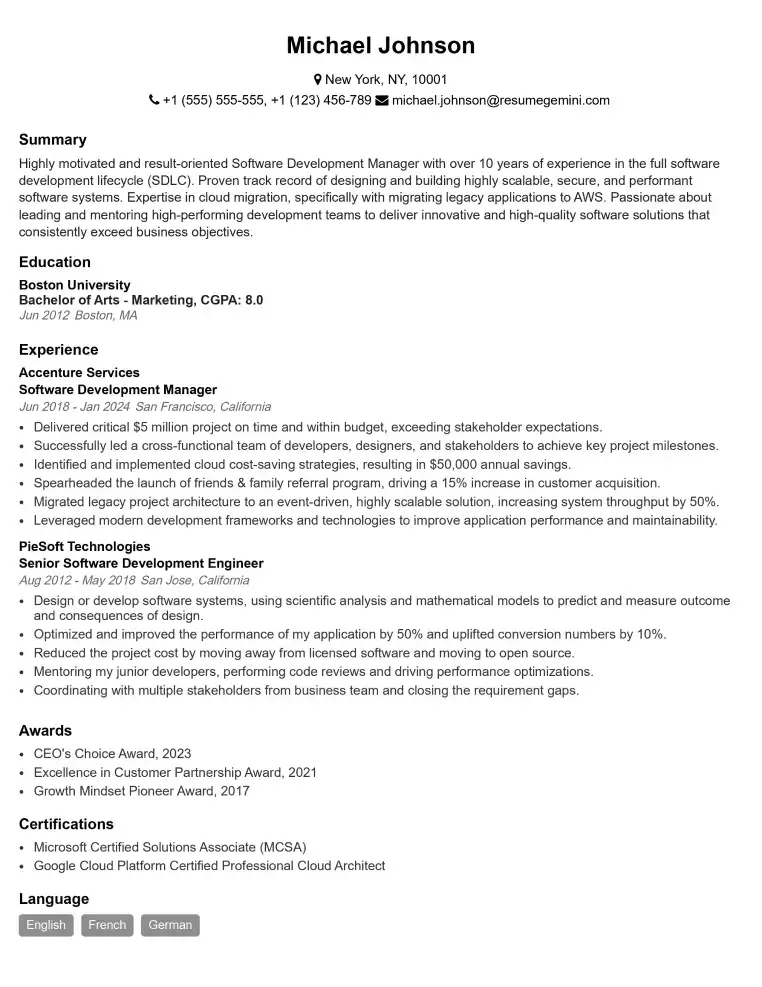
Elevate your job search with our premium resume templates. Here is an amazing resume template that can be used to build a professional and elegant resume. You can build a resume from scratch or revamp your existing resume. Impress hiring managers and secure your next opportunity.
- Top 50 Most Common Interview Questions
- The Psychology of a Great Resume: Hacks to Impress Recruiters
- What Mistakes to Avoid When Writing a Resume: A Comprehensive Guide
- Elevate Your Career with Expert Resume Building: Introducing ResumeGemini
- How to Write a Resume Using Google Gemini: Step-by-Step Guide