





In today’s competitive job market, crafting a resume that stands out from the crowd is more crucial than ever. A well-structured, persuasive resume is the key to unlocking career success, empowering you to showcase your skills, experience, and qualifications in a way that captures the attention of potential employers and propels you towards the next chapter of your professional journey.
Step 1: Identify Your Career Goals
Before you start writing your resume, take some time to reflect on your career goals. What type of job do you want? What industry do you want to work in? What are your long-term career aspirations? Once you have a clear understanding of your goals, you can tailor your resume to target the positions that are the best fit for you.
Step 2: Research Your Target Industry
Once you know what type of job you want, take the time to research the industry you want to work in. What are the key trends in the industry? What are the in-demand skills? What are the typical education and experience requirements? By understanding the industry, you can position yourself as a qualified candidate and highlight the skills and experience that employers are looking for.
Step 3: Highlight Your Transferable Skills
Transferable skills are skills that can be applied to a variety of jobs. These skills are often in high demand, and they can make you a more attractive candidate to employers. Some common transferable skills include communication, problem-solving, teamwork, and leadership. When you’re writing your resume, be sure to highlight your transferable skills and provide specific examples of how you’ve used them in your previous roles.
Step 4: Quantify Your Accomplishments
When you’re describing your accomplishments on your resume, be sure to quantify them whenever possible. This means using numbers to show the impact of your work. For example, instead of saying “I increased sales,” you could say “I increased sales by 15%.” Quantifying your accomplishments makes it easier for employers to see the value that you can bring to their company.
Step 5: Tailor Your Resume to Each Job
Don’t make the mistake of sending the same resume to every job you apply for. Take the time to tailor your resume to each specific job you’re applying for. This means highlighting the skills and experience that are most relevant to the job, and using keywords from the job description in your resume. By tailoring your resume to each job, you can increase your chances of getting noticed by potential employers.
Step 6: Proofread Carefully
Once you’ve finished writing your resume, take some time to proofread it carefully. This is an important step, as even a small error can cost you an interview. Look for any errors in grammar, spelling, or punctuation, and make sure that all of the information on your resume is accurate and up-to-date.
Step 7: Get Feedback from Others
Once you’re happy with your resume, ask a friend, family member, or career counselor to review it and provide feedback. They can help you identify any areas that need improvement, and they can also offer suggestions for how to make your resume more effective. Getting feedback from others can help you create a polished, professional resume that will help you land the job you want.
Career Expert Tips:
- Select the ideal resume template to showcase your professional experience effectively.
- Master the art of resume writing to highlight your unique qualifications and achievements.
- Checkout the resume writing tips for guidance and best practices.
- Make your 2025 brighter with a new job. Build a powerful resume with ResumeGemini and save big, enjoy exclusive discounts on premium templates.
Frequently Asked Questions (FAQ’s)
I’m changing careers – how do I write a resume that highlights my transferable skills?
When transitioning between careers, it’s crucial to emphasize the transferable skills you possess. Begin by identifying skills relevant to your new target role. Highlight these skills in your resume summary, emphasizing their applicability to the desired industry. Use specific examples from your previous experience to demonstrate your proficiency in these transferable skills. Consider tailoring your resume to each job application, menyesuaikan the skills section to align with the requirements of the specific position.
I’m not sure what my career goals are – how can I identify them?
Self-reflection is key to identifying your career goals. Start by exploring your interests, values, and skills. Consider what activities you enjoy, what subjects you excel in, and what you’re passionate about. Research different industries and job roles that align with your interests and skills. Informational interviews with professionals in fields you’re considering can provide valuable insights and help you narrow down your options. Attend career fairs and industry events to connect with potential employers and learn about various career paths.
My resume is not getting noticed – what can I do to improve it?
To enhance your resume’s visibility, consider the following strategies:
- Use keywords relevant to the industry and job roles you’re targeting.
- Quantify your accomplishments whenever possible, using numbers and metrics to demonstrate the impact of your contributions.
- Tailor your resume to each job application, highlighting skills and experience that align with the specific job requirements.
- Proofread your resume carefully for any errors in grammar, spelling, or formatting.
- Seek feedback from professionals in your field or utilize resume critique services to identify areas for improvement.
Should I include my hobbies and interests on my resume?
Including hobbies and interests on your resume can be beneficial in certain situations. If your hobbies or interests are relevant to the job you’re applying for, they can showcase your skills and personality. For example, if you’re applying for a job in marketing, including your experience in social media management or graphic design can be valuable. However, if your hobbies and interests are unrelated to your career goals, it’s best to omit them from your resume to maintain a professional and focused presentation.
Can I use a resume builder to create my resume?
Resume builders can be a helpful tool for creating a professional-looking resume quickly and easily. They provide a structured format and offer a variety of templates and customization options. However, it’s important to use a resume builder as a starting point rather than relying solely on it. Customize the generated resume to highlight your unique skills and experience. Proofread carefully to ensure accuracy and make any necessary adjustments to ensure your resume is tailored to each job application.
What are the most common mistakes to avoid on a resume?
Common mistakes to avoid on a resume include:
- Using a generic or outdated template.
- Including irrelevant or unnecessary information.
- Making grammatical or spelling errors.
- Using too much jargon or technical terms.
- Lacking specific examples or quantifiable results.
- Including a lengthy or overly detailed resume.
The 7-Step Resume Formula for Career Success
Crafting a resume that showcases your skills and experience, propelling you towards a successful career path, is an art that requires careful attention to detail and strategic execution. Our 7-step resume formula provides a comprehensive framework to guide you through this process, empowering you to create a resume that stands out from the crowd and captivates the attention of potential employers.
1. Get to the Point: Craft a Powerful Resume Summary or Objective
Your resume summary or objective serves as a concise and compelling introduction to your professional identity. In a few sentences, this section should effectively convey your career goals, key skills, and most relevant experience. Begin with a strong action verb that highlights your value proposition and aligns with the job requirements. Quantify your accomplishments whenever possible to provide tangible evidence of your impact. For career changers or those with limited work experience, an objective statement can effectively communicate your career aspirations and transferable skills.
2. Showcase Your Skills: Highlight Your Expertise
The skills section is your opportunity to demonstrate your proficiency in the areas most relevant to the job you’re applying for. List both hard skills (technical abilities) and soft skills (interpersonal and communication abilities). Quantify your skills whenever possible, using numbers or specific examples to illustrate your level of expertise. Consider organizing your skills into categories, such as technical skills, communication skills, and management skills. This will make it easier for recruiters to quickly identify your strengths and assess your suitability for the role.
3. Quantify Your Accomplishments: Use Numbers to Tell Your Story
When describing your work experience, focus on quantifying your accomplishments and providing specific examples of your contributions. Use numbers, percentages, or other quantifiable metrics to demonstrate the impact of your work. This will make your accomplishments more tangible and impressive to potential employers. For example, instead of simply stating that you “managed a team,” you could say, “Managed a team of 10 engineers, resulting in a 20% increase in productivity.”
4. Tailor Your Resume to Each Job: Customize for Success
Each job application is an opportunity to showcase your unique fit for the role. Tailor your resume to each specific job description, highlighting the skills and experience that are most relevant to the position. Use keywords from the job description in your resume to ensure that it is relevant to the employer’s needs. Research the company and industry to demonstrate your knowledge and enthusiasm for the opportunity.
5. Proofread Carefully: Avoid Costly Mistakes
A well-written and error-free resume is essential for making a positive impression on potential employers. Proofread your resume carefully for any grammatical errors, spelling mistakes, or formatting issues. Ask a friend, family member, or career counselor to review your resume to ensure that it is polished and professional.
6. Choose the Right Format: Select a Template that Complements Your Content
The format of your resume should complement your content and make it easy for recruiters to read and understand. Choose a resume template that is clean, professional, and visually appealing. Use consistent formatting throughout your resume, including the same font, font size, and section headings.
7. Go the Extra Mile: Showcase Your Uniqueness
To make your resume stand out, consider including additional sections that showcase your unique skills and experience. This could include a section on projects you’ve worked on, awards you’ve received, or volunteer experience that is relevant to the job you’re applying for. These additional sections can provide recruiters with a more comprehensive understanding of your qualifications and make your resume more memorable.
Crafting a resume that effectively showcases your skills, experience, and career goals is crucial for career success. By following our 7-step resume formula, you can create a powerful resume that grabs the attention of potential employers and sets you on the path to landing the job you desire.
With ResumeGemini, creating a professional and impactful resume is easier than ever. Our user-friendly platform and extensive library of pre-built resume samples and templates empower you to build a resume that stands out from the crowd and helps you achieve your career aspirations.
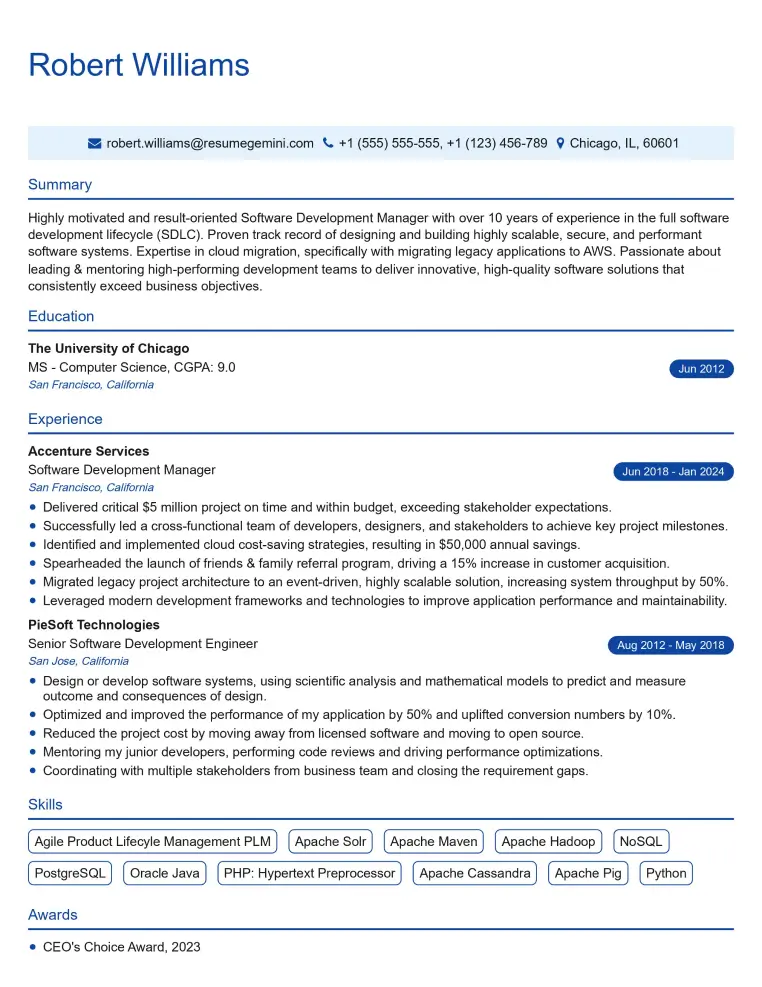
Elevate your job search with our premium resume templates. Here is an amazing resume template that can be used to build a professional and elegant resume. You can build a resume from scratch or revamp your existing resume. Impress hiring managers and secure your next opportunity.
- Top 50 Most Common Interview Questions
- The Psychology of a Great Resume: Hacks to Impress Recruiters
- What Mistakes to Avoid When Writing a Resume: A Comprehensive Guide
- Elevate Your Career with Expert Resume Building: Introducing ResumeGemini
- How to Write a Resume Using Google Gemini: Step-by-Step Guide