





In today’s competitive job market, standing out from the crowd is no easy feat. Your resume is your first chance to make a positive impression and secure the interview that could lead to your dream job. But how do you craft a resume that will guarantee you interviews and, ultimately, land you the job you deserve?
Common reasons why resumes don’t get interviews
Before we dive into the elements of a captivating resume, let’s take a look at some common reasons why resumes fail to generate interviews:
- Lack of focus and clarity: Your resume should be a targeted and concise representation of your skills and experience. Avoid including irrelevant information or jargon that may confuse recruiters.
- Poor formatting and design: A cluttered and visually unappealing resume can make it difficult for recruiters to quickly scan and find the information they are looking for. Use clean fonts, ample white space, and a professional layout.
- Lack of keywords: Many recruiters use Applicant Tracking Systems (ATS) to screen resumes. If your resume doesn’t contain the relevant keywords for the job you’re applying for, it may not make it past the initial screening.
- Grammatical errors and typos: Errors in grammar, spelling, or punctuation can create a negative impression and make it appear as though you lack attention to detail.
Elements of a resume that recruiters look for
Now that we’ve identified some common pitfalls, let’s explore the elements that every interview-winning resume should include:
- Strong resume summary: Your resume summary is a concise and impactful statement that highlights your most relevant skills and experience. It should be tailored to each job you apply for and should entice recruiters to read further.
- Relevant work experience: List your work experience in reverse chronological order, starting with your most recent role. For each position, include the job title, company name, location, and dates of employment.
- Quantified accomplishments: Use specific numbers and metrics to demonstrate the impact of your work. This will help recruiters understand the tangible results you have achieved.
- Education and certifications: List your educational background, including the degree obtained, institution name, and location. Include any relevant certifications or licenses.
- Skills and abilities: Identify your core skills and abilities, both hard and soft. Be specific and use keywords that are relevant to the job you’re applying for.
Tips for writing a powerful resume summary
Your resume summary is one of the most important elements, as it often determines whether a recruiter will read the rest of your resume. Here are some tips for crafting a powerful resume summary:
- Keep it concise: Your summary should be no longer than 2-3 sentences.
- Highlight your most relevant skills: Focus on the skills and experience that are most relevant to the job you’re applying for.
- Quantify your accomplishments: If possible, include specific numbers or metrics to demonstrate your impact.
- Tailor your summary to each job: Take the time to customize your summary for each job you apply for, highlighting the skills and experience that are most relevant to that particular role.
Methods to highlight your accomplishments and quantify results
Highlighting your accomplishments and using quantifiable results is essential for creating a resume that stands out. Here are some methods for doing so:
- Use action verbs: Start your accomplishments with strong action verbs that convey the impact of your work.
- Include specific numbers and metrics: Whenever possible, use specific numbers and metrics to quantify your accomplishments. This will help recruiters understand the tangible results you have achieved.
- Use before-and-after comparisons: Show the impact of your work by comparing the results before and after you implemented your solutions.
- Tell a story: Use storytelling techniques to engage readers and make your accomplishments more memorable.
Strategies for optimizing your resume for ATS and keywords
Optimizing your resume for Applicant Tracking Systems (ATS) and keywords is crucial for increasing your chances of being seen by recruiters. Here are some strategies to do so:
- Research common industry keywords: Identify the keywords that are most commonly used in job descriptions for your desired industry and job title.
- Incorporate keywords throughout your resume: Use the identified keywords naturally throughout your resume summary, work experience descriptions, skills section, and education section.
- Use a reader-friendly format: Use a clear and consistent format that makes it easy for ATS to scan and parse your information.
- Consider using a resume builder: Resume builders like ResumeGemini can help you optimize your resume for ATS and keywords.
How to use social proof and recommendations to enhance your credibility
Social proof and recommendations can add a layer of credibility to your resume and make you stand out from other candidates. Here are some strategies for leveraging social proof and recommendations:
- Include links to your LinkedIn profile and other social media accounts: This will allow recruiters to see your professional network and get a better understanding of your experience and skills.
- Request recommendations from former colleagues, supervisors, or clients: Positive recommendations can provide valuable third-party validation of your skills and accomplishments.
- Include a testimonial section on your resume: You can include brief testimonials or quotes from recommendations in a dedicated section on your resume.
Conclusion:
Creating a resume that guarantees interviews is not an easy task, but by following the tips and strategies outlined in this blog, you can significantly increase your chances of standing out from the crowd and landing the job you deserve. Remember to focus on clarity, relevance, and impact throughout your resume. With a well-crafted resume, you can unlock your career potential and embark on the path to your dream job.
Career Expert Tips:
- Select the ideal resume template to showcase your professional experience effectively.
- Master the art of resume writing to highlight your unique qualifications and achievements.
- Checkout the resume writing tips for guidance and best practices.
- Make your 2025 brighter with a new job. Build a powerful resume with ResumeGemini and save big, enjoy exclusive discounts on premium templates.
Frequently Asked Questions (FAQ’s)
Why is my resume not getting me interviews?
Your resume may not be getting you interviews for several reasons:
- Lack of ATS optimization: Many companies use Applicant Tracking Systems (ATS) to screen resumes. ATSs rely on keywords to identify qualified candidates. If your resume is not optimized with relevant keywords, it may be getting filtered out.
- Poor formatting and design: A visually appealing and well-structured resume is more likely to grab the hiring manager’s attention. If your resume is cluttered or difficult to read, it may be overlooked.
What are the most important elements of a resume?
The most important elements of a resume include:
- Contact information: Make sure your name, email address, and phone number are clearly displayed and easy to find.
- Summary statement: A concise summary statement that highlights your skills, experience, and career goals.
- Work experience: List your relevant work experience in reverse chronological order, including the company name, job title, dates of employment, and a brief description of your responsibilities.
- Education: List your educational background, including the name of your school, degree, and graduation date.
- Skills: A list of your hard and soft skills, which can be separated into categories like technical skills, interpersonal skills, and language proficiency.
How do I write a powerful resume summary?
To write a powerful resume summary, follow these tips:
- Keep it concise: Your summary should be no more than two to three sentences.
- Highlight your most relevant skills and experience: Focus on the skills and experience that are most relevant to the job you are applying for.
- Use strong action verbs: Start your summary with a strong action verb that describes your accomplishments.
- Quantify your results whenever possible: If possible, use numbers to quantify your accomplishments. This makes your results more impactful and credible.
- Proofread carefully: Make sure your summary is free of any errors before submitting it.
How can I highlight my accomplishments and quantify results?
To highlight your accomplishments and quantify results on your resume, use the following tips:
- Use numbers whenever possible: Quantifying your accomplishments makes them more impactful and credible. For example, instead of saying “Increased sales,” you could say “Increased sales by 15%.”
- Use specific metrics: When quantifying your accomplishments, use specific metrics that are relevant to the job you are applying for. For example, if you are applying for a marketing job, you could highlight the number of leads you generated or the increase in website traffic you achieved.
- Use action verbs: When describing your accomplishments, use strong action verbs that convey your impact. For example, instead of saying “Managed a team,” you could say “Led a team of 10 engineers to develop a new product.”
How do I optimize my resume for ATS and keywords?
To optimize your resume for ATS and keywords, follow these tips:
- Use relevant keywords: Include relevant keywords in your resume, such as the job title, industry, and specific skills and experience.
- Use a clear and concise format: ATSs prefer resumes that are easy to read and understand. Use a clear and concise font, and avoid using excessive graphics or images.
- Use a standard file format: Save your resume in a standard file format, such as PDF or DOCX. This will help ensure that the ATS can read it properly.
How can I use social proof and recommendations to improve my resume?
Social proof and recommendations can help your resume stand out and make you a more credible candidate.
- Include testimonials from previous employers or clients: Testimonials from previous employers or clients can provide social proof of your skills and experience.
- Highlight your LinkedIn profile: Your LinkedIn profile is a valuable social proof tool. Make sure it is up-to-date and highlights your skills and experience.
Next Step: Using ResumeGemini to Create an Interview-Winning Resume
Step 1: Choose a Template
Start by choosing one from our 60 unique resume templates. Each template is professionally designed and optimized for ATS, ensuring that your resume stands out.
Step 2: Customize Your Resume
Customize your resume by adding your personal information, work experience, education, and skills. Our easy-to-use editor makes it simple to create a resume that reflects your unique background and career goals.
Step 3: Use Our Advanced Features
Take advantage of our advanced features, such as the resume builder, resume analyzer, and keyword optimizer. These tools will help you create a resume that is tailored to the specific job you are applying for and will increase your chances of getting an interview.
Step 4: Preview and Download Your Resume
Once you are satisfied with your resume, preview it and download it in PDF or DOCX format. You can also choose to share your resume directly with potential employers through our platform.
Unleash Your Career Potential with ResumeGemini
By following our tips and using the advanced features offered by ResumeGemini, you can create an interview-winning resume that will help you land your dream job. Get started today!
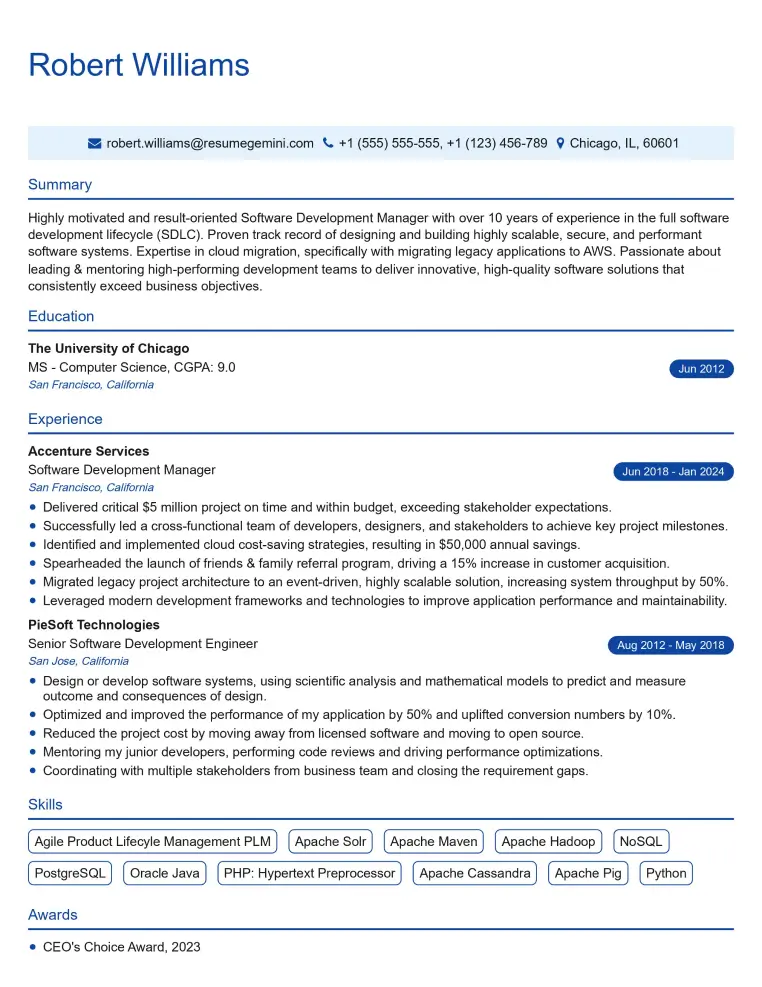
Elevate your job search with our premium resume templates. Here is an amazing resume template that can be used to build a professional and elegant resume. You can build a resume from scratch or revamp your existing resume. Impress hiring managers and secure your next opportunity.
- Top 50 Most Common Interview Questions
- The Psychology of a Great Resume: Hacks to Impress Recruiters
- What Mistakes to Avoid When Writing a Resume: A Comprehensive Guide
- Elevate Your Career with Expert Resume Building: Introducing ResumeGemini
- How to Write a Resume Using Google Gemini: Step-by-Step Guide